

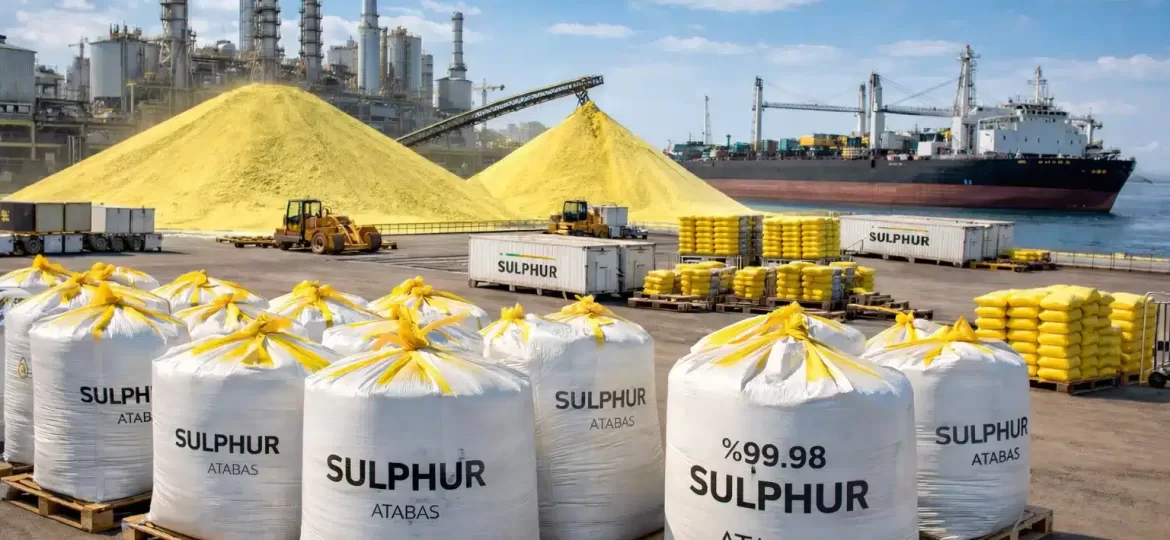
Sulphur Market Outlook: Why the Market Is Gaining Attention
The sulphur market is entering a new phase as fertilizer demand, refinery output, and logistics constraints reshape global trade flows. In 2026, sulphur availability and pricing are becoming increasingly important for buyers across Asia, MENA, and key importing regions.
In this sulphur market outlook, we examine what is driving supply, where demand is growing, and what buyers should expect in the near term.
Current Sulphur Market Situation
Currently, the global sulphur market remains broadly balanced. However, regional tightness is starting to appear.
Several factors are shaping the market:
- Refinery and gas-processing output remains the primary source of sulphur supply
- Fertilizer production, particularly phosphates, continues to support demand
- Logistics and port availability are playing a bigger role than before
As a result, spot availability can vary significantly by region, even when global supply appears sufficient.
Sulphur Supply Dynamics
Sulphur supply is closely linked to refinery throughput and natural gas processing. Therefore, supply does not always respond directly to price signals.
Key supply considerations include:
- Refinery maintenance cycles temporarily reducing output
- Limited flexibility in increasing sulphur production
- Export concentration in a small number of producing regions
Because of this structure, short-term supply disruptions can quickly impact regional prices.
Demand Trends and Fertilizer Link
On the demand side, fertilizer production remains the dominant driver of sulphur consumption.
In particular:
- Phosphate fertilizer demand supports steady sulphur offtake
- Seasonal agricultural cycles influence buying patterns
- Emerging markets continue to expand fertilizer capacity
Consequently, sulphur demand tends to be structurally stable, with periodic spikes linked to fertilizer plant utilization.
Pricing Factors and Cost Pressures
Sulphur pricing is influenced by several overlapping elements:
- Feedstock availability from refineries
- Freight and bulk shipping costs
- Regional stock levels and discharge capacity
Meanwhile, logistics costs increasingly affect delivered prices, especially for buyers dependent on long-haul shipments.
Overall, price movements are often driven more by logistics than by production costs.
Regional Outlook: Asia and MENA
Asia remains the largest consuming region for sulphur, supported by fertilizer and chemical production. At the same time, MENA plays a dual role as both a supplier and a transit hub.
Looking ahead:
- Asian demand is expected to remain stable to firm
- MENA supply flows will depend on refinery utilization and export logistics
- Buyers with flexible delivery windows are likely to secure better terms
Risks Buyers Should Monitor
When assessing the sulphur market outlook, buyers should pay close attention to:
- Unexpected refinery outages
- Port congestion and bulk vessel availability
- Seasonal demand spikes from fertilizer producers
Under these conditions, availability risk may outweigh price risk, particularly for spot cargoes.
Outlook: What Buyers Should Expect in 2026
Looking forward, the sulphur market outlook for 2026 suggests:
- Stable underlying demand
- Periodic regional tightness
- Continued sensitivity to logistics and shipping conditions
While no structural shortage is expected, market conditions can tighten quickly, especially during peak fertilizer demand periods.
Strategic Takeaway
In conclusion, buyers navigating the sulphur market will benefit from:
- Early planning and flexible logistics
- Strong counterparty relationships
- A clear understanding of regional supply dynamics
In a logistics-driven environment, execution capability is as important as price.
About ATABAŞ GRUP
ATABAŞ GRUP supports buyers and corporate clients with spot-oriented commodity trade execution, market intelligence, and advisory services across energy, sulphur, fertilizers, and industrial raw materials in Asia and MENA.
