

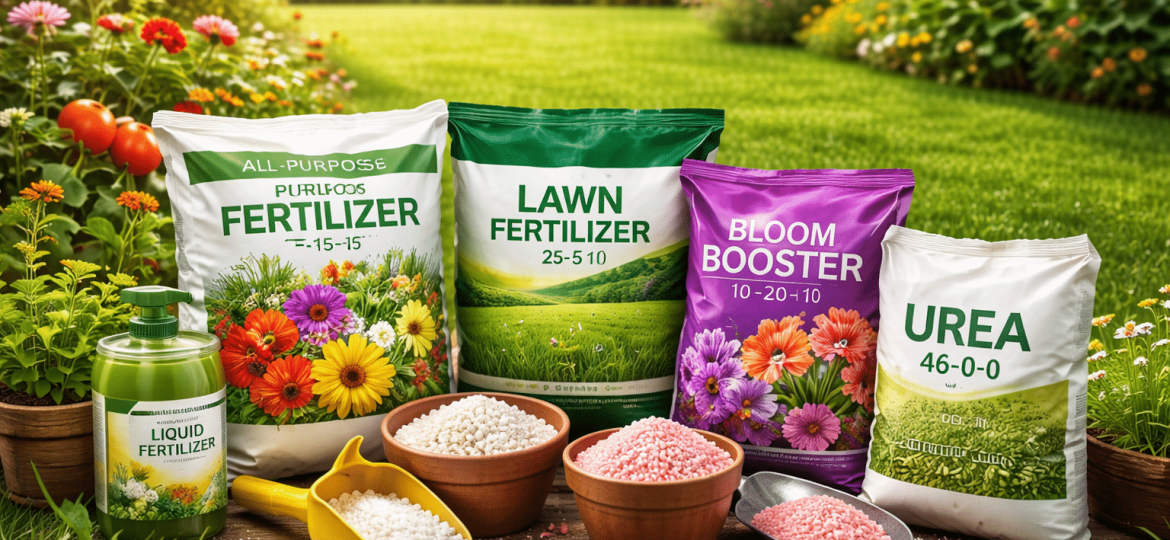
A green lawn and healthy plants do not happen by luck. Instead, they come from correct feeding, correct timing, and a simple plan you can repeat every season. Therefore, the best results usually come from understanding what your soil needs, then choosing a fertilizer that matches that need.
Many people buy a random product and apply it more often than required. As a result, the grass grows too fast, roots stay weak, and plants become sensitive to heat. However, when you follow a clear approach, you get thicker grass, stronger plants, and more stable color across the year.
This guide explains what to buy, why it works, and how to apply it for lawns, grass, and common garden plants. Moreover, you will see practical tables you can follow without guessing.
FAO, plant nutrition and soil fertility resources
USDA, lawn and garden fertilizer guidance
Start with the basics, what N, P, and K actually do
Most fertilizers show three numbers, such as 20 10 10. These numbers are N, P, and K.
Nitrogen supports leaf growth and deep green color.
Phosphorus supports roots and early plant development.
Potassium improves stress tolerance, water balance, and overall strength.
Because lawns are leaf focused, they usually need more nitrogen. In contrast, flowering plants often need more phosphorus at specific stages. Meanwhile, potassium becomes important before heat, drought, or heavy foot traffic.
If you can, start with a simple soil test. Even a basic test helps you avoid over feeding. As a result, you spend less and get better results.
Lawn results depend on timing, not only product choice
The same fertilizer can perform well or poorly depending on timing. Therefore, use a seasonal plan.
Spring, support growth and color
Summer, support stress resistance
Autumn, strengthen roots and prepare for winter
In addition, avoid applying high nitrogen in extreme heat. That is one of the fastest ways to burn grass.
Which fertilizer should you choose, quick decision guide
Use this simple rule.
If the lawn is pale and thin, you need nitrogen.
If plants look weak after heat, add potassium support.
If you seed new grass, use a balanced formula for early root work.
Best fertilizer options and how to use them
Below is a practical table for typical users, home lawns, parks, sports turf, and garden plants.
Fertilizer selection and use table
| Area or goal | Product type | Typical NPK direction | Best time | How to apply | What it improves |
|---|---|---|---|---|---|
| Established lawns that need greener color | High nitrogen lawn feed | Higher N, moderate K | Early spring | Granular spreader, then water | Color, density |
| Lawns that burn easily | Slow release nitrogen | Balanced N with steady release | Spring and early summer | Granular, slow and even | Safer feeding, stable growth |
| New lawns, fresh seeding | Balanced starter | Balanced N and higher P | Seeding period | Light granular, keep moist | Roots, early coverage |
| Heat, drought, heavy use turf | Potassium support | Lower N, higher K | Late summer | Granular, then water | Stress tolerance |
| Leafy garden plants | Nitrogen forward plant feed | Higher N | Growth season | Soil application or liquid | Leaf size, vigor |
| Flowers during bud stage | Bloom support | Higher P | Before bloom | Soil feed, controlled dose | Bloom quantity, bloom size |
| Fruit and vegetable gardens | Balanced with potassium | Balanced, slightly higher K | Growth and fruit stage | Soil feed, split doses | Yield quality, firmness |
Note
Do not chase the highest numbers. Instead, match the ratio to your goal. Moreover, split feeding into smaller applications. As a result, plants absorb more and you reduce waste.
Product forms, granular vs liquid, and when each makes sense
Granular fertilizers work best for lawns and large areas because they spread evenly. In addition, they offer long lasting effect when they include slow release nitrogen.
Liquid fertilizers help when you need fast correction. However, they require accurate dosing. Therefore, use liquids carefully on lawns to avoid stripes or burn.
A simple approach works well for most users.
Use granular as your base plan.
Use liquid only when you need a quick fix.
Common nutrients used in professional programs
Many professional programs use a combination of well known nutrient sources.
Urea, strong nitrogen source for large areas
CAN, safer nitrogen delivery with calcium support
MOP, potassium source for stress resistance and strong roots
Compound NPK, balanced feeding for mixed plant needs
If you want a deeper product level guide, add an internal link here to your Urea article and your MOP article.
Application rules that prevent damage and improve results
These rules make the biggest difference.
Water after application when the product label requires it.
Apply evenly, use a spreader for lawns.
Avoid high nitrogen during heat waves.
Do not fertilize on dry stressed grass.
Do not exceed the label rate.
Moreover, keep a simple schedule. For example, feed lightly more often instead of one heavy dose. Consequently, your lawn stays stable and you avoid sudden growth spikes.
Organic vs mineral fertilizers, what to expect
Organic fertilizers improve soil structure over time. Therefore, they help long term soil health. However, they act slower.
Mineral fertilizers give faster results. As a result, they are useful when you need clear improvement in color or growth.
Many successful programs combine both.
Use organic inputs for long term soil quality.
Use mineral fertilizers for controlled seasonal feeding.
Buying checklist, how to choose with confidence
Before you buy, check these points.
Choose the product form that fits your area size.
Select the ratio that matches your goal.
Prefer slow release for home lawns.
Confirm you can water after application.
Avoid over feeding, more is not better.
Also, choose a supplier that delivers consistent quality. Documentation matters, and so does product cleanliness. In addition, on time delivery matters when you feed seasonally.
Internal link suggestion
Add a hyperlink here to your Contact page so buyers can request a quote and product support.
Why buyers value clean supply and consistent specifications
In fertilizer trade, small differences create big results. Therefore, buyers care about stable quality, clear documents, and clean material.
At ATABAŞ, we focus on reliable sourcing, careful handling, and transparent communication. Moreover, we support clients with practical guidance so they apply products correctly. As a result, customers get stronger results and fewer complaints.
Internal link suggestion
Add a hyperlink here to your Products page and your About page.
Conclusion
Choosing the right fertilizer becomes easy when you follow a simple plan. First, understand N, P, and K. Then, match the ratio to your goal and season. Finally, apply evenly and avoid over feeding.
If you want to improve lawn density, plant strength, and overall performance, use a structured program and buy from a supplier you can trust. For supply, specifications, and shipment planning, contact ATABAŞ and we will guide you based on your target use.
