

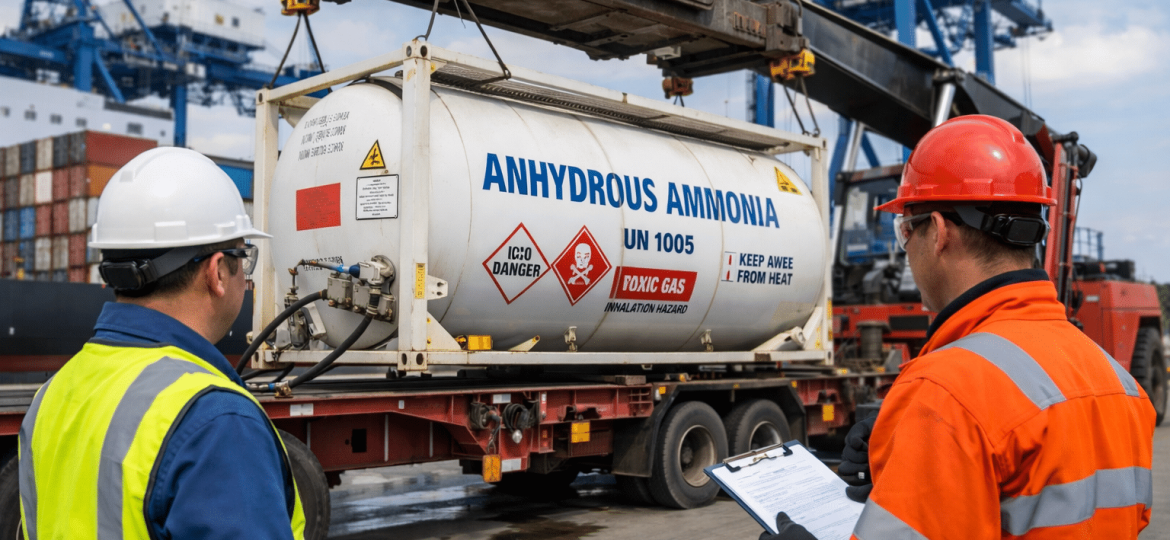
How to Buy Anhydrous Ammonia Safely in ISO Tanks for International Trade is a critical topic for fertilizer producers, industrial users, and global traders. Today, ammonia stands at the center of the nitrogen value chain. Therefore, every purchase decision directly affects supply security, production cost, and operational safety.
Unlike many other bulk chemicals, anhydrous ammonia requires strict control. Because it is pressurized and hazardous, it demands certified equipment and disciplined logistics. For this reason, buyers must combine technical understanding with structured risk management.
In this guide, you will clearly understand what anhydrous ammonia is, why ISO tanks are necessary, which regulations apply, and how to complete a safe international transaction.
What Is Anhydrous Ammonia
Anhydrous ammonia is pure ammonia without water. Its chemical formula is NH3. Under normal atmospheric pressure, ammonia exists as a gas. However, when compressed, it becomes a liquid. As a result, producers store and transport it under pressure.
The term “anhydrous” means “without water.” In contrast, aqueous ammonia contains water and follows different storage rules. Therefore, it is important not to confuse the two.
Most importantly, anhydrous ammonia contains about 82 percent nitrogen. Consequently, it represents the most concentrated nitrogen fertilizer in the market. Moreover, manufacturers use it to produce:
- Urea
- Ammonium nitrate
- UAN solution
- DAP and MAP fertilizers
- Nitric acid
Because ammonia feeds multiple downstream products, its supply stability influences the entire fertilizer industry.
Why ISO Tanks Are Required for International Trade
Anhydrous ammonia cannot travel in IBC containers. IBC systems do not support high pressure gases. Instead, international shipments require certified ISO tanks designed for liquefied gas.
ISO tanks used for ammonia:
- Handle pressurized liquid
- Follow international safety standards
- Include pressure relief valves
- Comply with dangerous goods rules
Most shipments use T50 type ISO tanks. These tanks are specifically engineered for high pressure gas cargo. Therefore, they meet global maritime requirements.
Furthermore, ammonia falls under UN 1005 dangerous goods classification. Because of this classification, shipping lines require complete compliance before loading. Consequently, buyers must verify tank certificates and inspection records in advance.
International Regulations You Must Follow
International ammonia trade operates under strict legal frameworks.
First, maritime shipments follow the IMDG Code.
Second, road transport follows ADR regulations.
Third, rail transport follows RID standards.
In addition, authorities require complete documentation. For example:
- Material Safety Data Sheet
- Certificate of Analysis
- Dangerous Goods Declaration
- Tank inspection certificate
Without these documents, ports may reject the cargo. Therefore, documentation accuracy directly affects delivery timelines.
Step by Step Guide to Buying Anhydrous Ammonia Safely
Buying safely requires a structured approach. Below is a practical process that reduces risk.
Step 1 Define Technical Specifications Clearly
Before signing any agreement, define product specifications. Standard commercial ammonia purity exceeds 99.5 percent. However, some industrial applications demand tighter limits.
Therefore, check:
- Water content
- Oil residue
- Iron level
- Non condensable gases
Clearly include these limits in the contract. As a result, both parties avoid disputes at discharge.
Step 2 Evaluate Supplier Strength
Next, assess supplier reliability carefully. Because ammonia production depends heavily on natural gas, gas supply stability becomes critical.
Therefore, review:
- Production capacity
- Gas source security
- Export track record
- Maintenance schedules
Large integrated producers usually provide stronger supply continuity. Meanwhile, traders without production assets may depend on third party sources.
Step 3 Secure ISO Tank Allocation Early
ISO tank availability often limits shipment schedules. Therefore, secure tank allocation before confirming loading dates.
In addition, verify:
- Pressure rating
- Valve integrity
- Inspection validity
- Cleaning certification
- Previous cargo history
If cleaning documentation remains unclear, contamination risk increases. Consequently, product quality may suffer.
Step 4 Arrange Appropriate Insurance Coverage
Because ammonia is hazardous, cargo insurance must reflect that risk. Standard insurance may not fully protect against leakage or environmental damage.
Therefore, confirm coverage for:
- Leakage incidents
- Environmental liability
- Port delays
- Operational disruption
Moreover, choose the correct Incoterm. For example, FOB transfers responsibility at the loading port. In contrast, CFR includes freight under seller control.
Step 5 Prepare Receiving Infrastructure in Advance
Before cargo arrival, confirm that your storage facilities meet safety standards.
Facilities should include:
- Pressure rated tanks
- Safety valves
- Gas detection systems
- Emergency response plan
Without proper infrastructure, unloading becomes unsafe. Therefore, technical readiness remains essential.
Major Exporting Countries of Anhydrous Ammonia
Several countries dominate global ammonia exports.
United States
The United States benefits from strong shale gas production. Therefore, it provides large and stable export volumes. Moreover, advanced port infrastructure supports reliable shipping.
Russia
Russia offers competitive pricing due to gas availability. However, geopolitical risk requires careful contract structure and payment planning.
Trinidad and Tobago
This country exports ammonia thanks to natural gas reserves. Additionally, its Atlantic location supports efficient transoceanic routes.
Saudi Arabia
Integrated petrochemical complexes support steady output. As a result, Middle Eastern supply remains strong.
Algeria
Algeria supplies Mediterranean markets efficiently because of geographic proximity.
Each origin offers advantages. Nevertheless, diversification reduces dependency risk.
Key Risk Factors in International Ammonia Trade
Several factors influence ammonia pricing and supply.
First, natural gas price changes directly affect production cost. Consequently, ammonia prices may shift rapidly.
Second, seasonal fertilizer demand increases ammonia consumption. Therefore, prices often rise before planting seasons.
Third, geopolitical tensions may disrupt export routes. As a result, buyers should diversify sourcing regions.
Fourth, port congestion or tanker shortages may delay shipments. Consequently, delivery planning must remain flexible.
A balanced strategy combines long term supply contracts with selective spot purchases.
Safety and Operational Considerations
Anhydrous ammonia can cause serious injury if mishandled. Therefore, safety protocols must remain strict.
Exposure may damage lungs and skin. For this reason, workers must wear protective equipment.
In addition, facilities should maintain:
- Emergency water spray systems
- Safety training programs
- Leak detection technology
- Clear evacuation procedures
Strong safety culture protects both people and assets.
Commercial Structuring and Payment Security
International ammonia contracts often use:
- Letter of Credit
- Advance payment
- Bank guarantee
- Independent inspection
Clearly define quantity tolerance, usually plus or minus five percent. Furthermore, specify demurrage responsibility to prevent disputes.
Finally, include international arbitration clauses to protect both parties in case of disagreement.
Strategic Conclusion
Understanding How to Buy Anhydrous Ammonia Safely in ISO Tanks for International Trade requires technical knowledge, disciplined planning, and strong risk management.
Because ammonia sits at the base of the nitrogen industry, safe procurement protects downstream fertilizer production and industrial supply chains. Therefore, buyers must prioritize compliance, infrastructure readiness, and supplier reliability.
In conclusion, successful ammonia trade depends on safety first, regulation compliance always, and structured strategy at every stage of the supply chain.
