

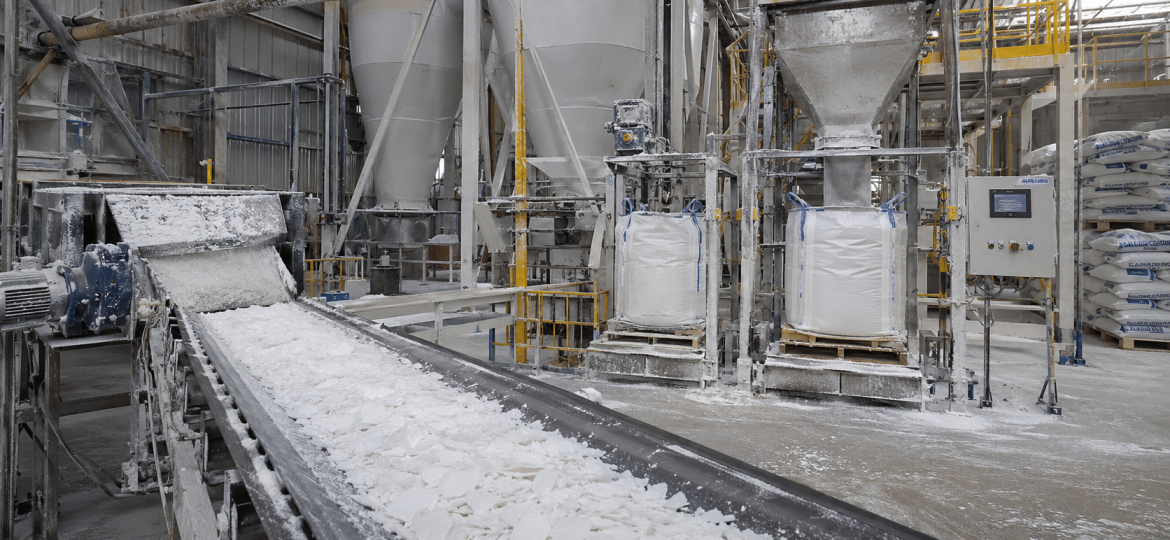
Calcium chloride prices depend on CaCl₂ content, product form, chemical purity, production costs and global demand. Moreover, packing and freight costs play an important role in the final price of bulk chemical orders.
Calcium chloride is a highly soluble inorganic salt with strong moisture absorption properties. For example, industrial plants use this chemical in drilling fluids, cooling systems, road treatment and chemical production.
Meanwhile, approved food-grade calcium chloride serves dairy products and other food applications. Furthermore, selected grades support construction, water treatment and industrial drying.
However, calcium chloride flakes, pellets, granules and liquid solutions contain different amounts of active salt. Therefore, buyers should compare product concentration and technical quality rather than purchase price alone.
In addition, energy costs, seasonal demand and transport conditions can influence international calcium chloride prices.
ATABAŞ GLOBAL combines industrial chemical supply with global trade and freight services. Consequently, we assess product quality, order size and delivery requirements before preparing commercial offers.
1. What Is Calcium Chloride (CaCl₂)?
Calcium chloride is an inorganic salt that contains calcium and chloride ions. Moreover, its chemical formula is CaCl₂.
Unlike many common salts, calcium chloride can absorb large amounts of moisture from the surrounding air. As a result, solid material may eventually form a liquid solution.
Furthermore, calcium chloride dissolves easily in water and releases heat during this process.
Because commercial grades contain different amounts of water, calcium chloride prices vary according to product concentration and physical form.
General Product Information
| Product Information | Description |
|---|---|
| Commercial Name | Calcium Chloride |
| Alternative Name | Calcium Dichloride |
| Chemical Formula | CaCl₂ |
| CAS Number – Anhydrous | 10043-52-4 |
| CAS Number – Dihydrate | 10035-04-8 |
| CAS Number – Hexahydrate | 7774-34-7 |
| EC Number | 233-140-8 |
| HS Code | 282720 |
| Molar Mass – Anhydrous | 110.98 g/mol |
| Chemical Family | Inorganic Salts |
| Appearance | White or off-white |
| Physical Form | Flakes, pellets, granules, powder or liquid |
| Water Solubility | High |
| Moisture Absorption | Strong |
| Food Additive Number | E509 |
| Common Solid Grades | 74–77% and 94–97% |
| Common Packing | 25 kg bags and Big Bags |
Source: PubChem – Calcium Chloride.
However, these general properties do not define every commercial product.
Therefore, buyers should request the actual technical data before comparing calcium chloride prices.
Anhydrous and Hydrated Calcium Chloride
Anhydrous calcium chloride contains no bound water in its ideal chemical formula. In contrast, hydrated forms contain water within their crystal structure.
For example, calcium chloride dihydrate contains two water molecules for each CaCl₂ unit.
Meanwhile, calcium chloride hexahydrate contains six water molecules.
Consequently, different hydrate forms provide different amounts of active salt per metric ton.
2. Physical and Chemical Properties of Calcium Chloride
The physical and chemical properties of calcium chloride determine its value across several industries.
For example, oilfield teams focus on salt concentration and brine density. Meanwhile, road maintenance firms may focus on ice melting and moisture retention.
Furthermore, food plants require suitable purity and safety records.
Therefore, buyers should assess these properties when comparing industrial calcium chloride prices.
Calcium Chloride Physical Properties
| Physical Property | General Reference |
|---|---|
| Appearance | White or off-white |
| Anhydrous Density | Approximately 2.15 g/cm³ |
| Anhydrous Melting Point | Approximately 772°C |
| Water Solubility | High |
| Odour | Generally odourless |
| Moisture Absorption | Strong |
| Heat During Dissolution | Exothermic |
| Flammability | Non-combustible |
| Bulk Density | Product-specific |
| Liquid Density | Concentration and temperature dependent |
| Freezing Point | Concentration dependent |
| pH | Grade and test dependent |
However, anhydrous calcium chloride has different physical properties from hydrated forms.
Moreover, bulk density includes the spaces between solid particles.
Consequently, buyers should use grade-specific density data for packing, storage and process design.
Chemical Composition of Calcium Chloride
The chemical formula of pure anhydrous calcium chloride is:
CaCl₂
Its theoretical chemical composition is as follows.
| Chemical Component | Theoretical Mass Content |
|---|---|
| Calcium (Ca) | 36.11% |
| Chloride (Cl) | 63.89% |
| Total | 100% |
However, commercial calcium chloride can contain water and small amounts of other salts.
Therefore, these theoretical figures do not represent guaranteed commercial product specifications.
Calcium Chloride Hydrate Forms
Calcium chloride can form several hydrates.
| Chemical Form | Formula | Theoretical CaCl₂ Content |
|---|---|---|
| Anhydrous | CaCl₂ | 100% |
| Monohydrate | CaCl₂·H₂O | 86.03% |
| Dihydrate | CaCl₂·2H₂O | 75.49% |
| Tetrahydrate | CaCl₂·4H₂O | 60.63% |
| Hexahydrate | CaCl₂·6H₂O | 50.66% |
Consequently, water within the crystal structure affects the amount of active salt that buyers receive.
However, commercial products may contain mixtures of several hydrate forms.
Therefore, measured CaCl₂ content provides a better basis for comparing calcium chloride prices.
Moisture Absorption and Deliquescence
Calcium chloride has a strong attraction to water.
Furthermore, the solid salt can absorb enough moisture to form a liquid solution. This property is known as deliquescence.
For example, moisture control products use this behaviour to remove water from the surrounding air.
However, uncontrolled moisture uptake can damage the quality of packed solid products.
Consequently, industrial calcium chloride requires suitable moisture-resistant storage.
Heat Released During Dissolution
Calcium chloride releases heat when it dissolves in water.
Moreover, the amount of heat depends on the product’s hydration state and mixing conditions.
For example, anhydrous grades generally release more heat than highly hydrated forms.
However, rapid dissolution can cause a significant rise in temperature.
Therefore, industrial plants should follow approved mixing procedures and use suitable equipment.
3. Commercial Calcium Chloride Grades and Prices
Calcium chloride comes in several commercial forms and concentration levels.
For example, flake grades often serve road treatment and industrial brine preparation. Meanwhile, high-concentration pellets can suit customers that require more active salt per ton.
Furthermore, liquid grades can reduce the need for on-site dissolution.
Consequently, calcium chloride prices depend on the product form, concentration and final application.
Calcium Chloride 74–77% Flakes Prices
Calcium chloride flakes commonly contain around 74–77% CaCl₂ by weight.
Moreover, these products often contain hydrated calcium chloride.
For example, customers may use flake grades in industrial brines, road treatment and selected construction applications.
However, their lower concentration means that each ton contains less active salt than a high-concentration grade.
Therefore, buyers should compare calcium chloride flakes prices on an active salt basis.
Calcium Chloride 83–87% Flakes
Some manufacturers also offer higher-concentration flake products.
Furthermore, these grades provide an intermediate option between standard hydrated flakes and high-concentration pellets.
For example, buyers may select them to balance product cost, storage space and transport weight.
However, available concentrations depend on the producer.
Consequently, customers should request the exact CaCl₂ content before purchase.
Calcium Chloride 94–97% Pellets Prices
High-concentration calcium chloride pellets commonly contain around 94–97% CaCl₂.
Because these grades provide more active salt per ton, they can reduce freight weight for equivalent chemical requirements.
Moreover, suitable pellet sizes can support selected industrial feeding systems.
However, pellets may require more processing and drying than standard flakes.
Therefore, calcium chloride pellets prices often follow a different cost structure.
Anhydrous Calcium Chloride Prices
Anhydrous calcium chloride serves industrial processes that require high salt concentration and low water content.
For example, selected grades can serve drying and chemical production.
Furthermore, these products have strong moisture uptake.
However, exposure to humidity can change their condition during storage.
Consequently, anhydrous calcium chloride prices also reflect suitable drying, handling and packing needs.
Calcium Chloride Granules and Powder
Producers can prepare calcium chloride in granular or powder form.
Moreover, controlled grain size can support dosing and mixing in certain industrial systems.
However, fine particles may absorb moisture quickly and form lumps.
Therefore, buyers should confirm particle size, packing and storage conditions.
Liquid Calcium Chloride Prices
Liquid calcium chloride contains dissolved CaCl₂ in water.
For example, common industrial solutions contain approximately 28–35% active salt, although other concentrations also exist.
Furthermore, liquid products can reduce solid handling and preparation costs at the buyer’s facility.
However, transport costs include the water within the solution.
Consequently, liquid calcium chloride prices should reflect both concentration and freight distance.
Food-Grade Calcium Chloride E509
Approved food-grade calcium chloride serves selected food production processes.
Moreover, food grades must meet applicable purity and safety requirements.
For example, cheese plants and other food producers may request E509-compliant material.
However, a high CaCl₂ percentage alone does not establish food-grade compliance.
Therefore, food-grade calcium chloride prices may reflect additional testing and quality controls.
Commercial Calcium Chloride Grade Comparison
| Grade | Typical CaCl₂ Content | Main Applications |
|---|---|---|
| Standard Flakes | 74–77% | Road treatment and industrial brines |
| Higher-Concentration Flakes | 83–87% | Industrial processing |
| High-Concentration Pellets | 94–97% | Oilfield and industrial use |
| Granules | Grade-specific | Industrial dosing |
| Powder | Grade-specific | Chemical processing |
| Liquid Solution | Commonly 28–35% | Brines and road treatment |
| Food Grade | Specification-dependent | Approved food production |
| Pharmaceutical Grade | Pharmacopeia-dependent | Approved pharmaceutical uses |
| Laboratory Grade | Reagent-specific | Laboratory applications |
However, concentration and application grade represent separate product features.
Therefore, customers should define both before requesting bulk calcium chloride prices.
4. Calcium Chloride Production Methods and Costs
Calcium chloride production involves several industrial processes.
Moreover, producers may use different raw materials and chemical recovery systems.
For example, some plants recover calcium chloride from natural brines, while others use chemical reactions.
Consequently, the production method can affect calcium chloride prices.
Production from Natural Brines
Natural salt-rich water sources can contain calcium chloride and other dissolved minerals.
First, producers recover suitable brine.
Next, treatment systems remove unwanted substances.
Afterwards, plants concentrate the solution to achieve the required CaCl₂ content.
However, the chemical makeup of natural brines varies between sources.
Therefore, purification and concentration costs can differ between plants.
Production from Limestone and Hydrochloric Acid
Calcium carbonate and hydrochloric acid can serve as raw materials for calcium chloride production.
The overall chemical reaction is:
CaCO₃ + 2HCl → CaCl₂ + CO₂ + H₂O
Furthermore, producers can treat and concentrate the resulting solution.
However, raw material quality, acid costs and plant efficiency influence the final production cost.
Consequently, changes in feedstock prices may affect calcium chloride prices.
Production from the Solvay Process
The traditional Solvay soda ash production process can generate calcium chloride within its production streams.
Moreover, suitable recovery systems can convert these streams into commercial calcium chloride products.
However, not every soda ash facility has a calcium chloride recovery plant.
Therefore, available supply depends on the production method and plant design.
Evaporation and Concentration
Chemical plants remove water to increase CaCl₂ concentration.
Furthermore, evaporation requires energy in the form of heat or electricity.
Because high-concentration products require more water removal, energy efficiency plays an important role in production costs.
Consequently, fuel and power prices can influence solid calcium chloride prices.
Flaking and Pellet Production
Flaking systems produce thin solid calcium chloride pieces.
Meanwhile, pellet and granule systems create particles with selected sizes and shapes.
Furthermore, additional drying may help achieve the target salt concentration.
However, physical processing requires suitable equipment and quality checks.
Therefore, different product forms can have different production costs.
General Calcium Chloride Production Stages
A typical supply chain may include:
- Raw material preparation
- Brine recovery or chemical production
- Purification
- Filtration
- Evaporation
- Concentration
- Flaking or granulation
- Drying
- Screening
- Quality checks
- Packing and storage
However, liquid products do not require every solid production stage.
Consequently, production costs depend on the final commercial grade.
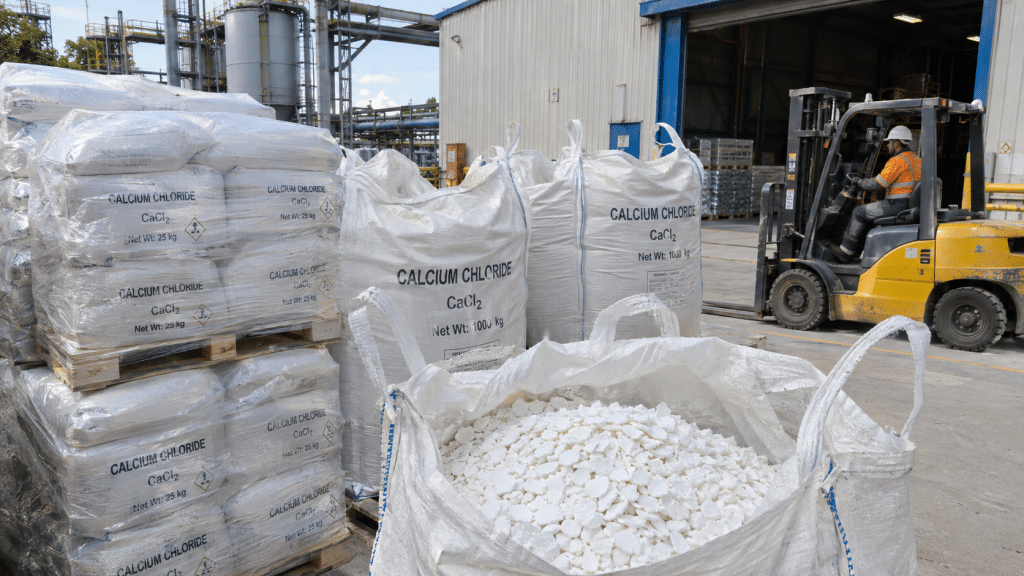
5. Global Calcium Chloride Prices and Market Trends in 2026
Calcium chloride does not have one global exchange price that applies to all product grades and delivery points.
Instead, regional markets offer different prices according to concentration, demand and freight conditions.
Moreover, technical-grade flakes and approved food grades represent different commercial markets.
Therefore, buyers should compare calcium chloride prices using equivalent product specifications.
International Calcium Chloride Price Indicators – Q3 2026
Published market assessments for the quarter ending September 2026 provide the following price references for technical-grade calcium chloride.
| Market | Product and Delivery Basis | Average Price (USD/MT) | Quarterly Change |
|---|---|---|---|
| Japan | CaCl₂ 74–77%, CFR Osaka | 162.33 | −3.56% |
| Netherlands | CaCl₂ 74–77%, FD Rotterdam | 274.00 | +3.01% |
| United States | CaCl₂ 74–77%, DEL Texas | 376.67 | −5.44% |
| Brazil | CaCl₂ 74–77%, CFR Santos | 277.33 | +13.20% |
Source: ChemAnalyst – Calcium Chloride Price Trends.
Although the assessments cover similar concentration grades, they use different regional delivery conditions.
Therefore, the figures do not provide a direct ranking of factory prices.
Furthermore, FD and DEL represent the market data provider’s delivery bases. Buyers should confirm the exact costs that each assessment includes.
Price note: These figures represent published Q3 2026 market assessments rather than current ATABAŞ GLOBAL sale prices or guaranteed commercial offers.
Global Calcium Chloride Export Unit Values – 2025
International customs records provide another way to assess historical chemical trade values.
For example, dividing reported export value by shipment weight gives an average export unit value per metric ton.
| Exporting Country | Export Volume (MT) | Export Value (USD) | Average Value (USD/MT) |
|---|---|---|---|
| China | 1,324,620 | 186,176,130 | 140.55 |
| United States | 652,333 | 175,590,530 | 269.17 |
| Netherlands | 77,510.70 | 51,623,040 | 666.01 |
| Czechia | 23,603.70 | 33,905,480 | 1,436.45 |
| Finland | 133,147 | 29,688,190 | 222.97 |
| Mexico | 81,487.70 | 24,319,880 | 298.45 |
| Egypt | 29,560.90 | 23,096,240 | 781.31 |
Source: World Bank WITS – Global Calcium Chloride Exports 2025.
However, HS 282720 covers several forms and grades of calcium chloride.
Furthermore, differences in product concentration, shipment size and product mix can affect the reported unit values.
Consequently, customs unit values do not represent current prices for equivalent commercial grades.
Calcium Chloride Prices in Türkiye
Türkiye participates in both calcium chloride imports and exports.
Moreover, its chemical supply networks connect several regional and international markets.
The following figures show Türkiye’s reported calcium chloride trade.
| Trade Indicator | 2024 | 2025 |
|---|---|---|
| Export Value | USD 3,979,360 | USD 1,906,690 |
| Export Volume | 5,390.15 MT | Not reliably reported |
| Average Export Unit Value | USD 738.25/MT | Not available |
| Import Value | USD 9,413,920 | — |
| Import Volume | 19,654.60 MT | — |
| Average Import Unit Value | USD 478.97/MT | — |
Sources: WITS – Türkiye Exports 2024, WITS – Türkiye Exports 2025 and WITS – Türkiye Imports 2024.
However, the reported 2025 export weight does not provide a reliable basis for calculating a new average.
Furthermore, the 2024 figures cover different calcium chloride grades and shipment types.
Therefore, current Turkish calcium chloride prices require a direct, grade-specific quotation.
For further trade details, see our article on Calcium Chloride Export from Türkiye and International Trade.
6. Main Factors Affecting Calcium Chloride Prices
Several chemical, production and trade factors influence the final cost of calcium chloride.
For example, high-concentration grades provide more active salt per ton. Meanwhile, food-grade products may require extra quality checks.
Therefore, buyers should assess the full cost of supply.
CaCl₂ Concentration and Chemical Purity
Calcium chloride concentration plays a major role in product value.
For example, one ton of 77% flakes contains approximately 770 kg of CaCl₂.
In contrast, one ton of 95% pellets contains approximately 950 kg.
Consequently, a higher purchase price may still offer a lower cost per ton of active salt.
Product Form and Grain Size
Flakes, pellets, granules and powder require different processing methods.
Moreover, strict particle size limits may require extra screening and testing.
However, the finest or most uniform grade does not always provide the best value.
Therefore, calcium chloride prices should reflect the actual needs of the buyer.
Energy and Raw Material Costs
Chemical plants require energy for purification, evaporation and drying.
Furthermore, calcium carbonate, hydrochloric acid and other input costs may influence production expenses.
However, plants that recover calcium chloride from natural brines may have a different cost structure.
Consequently, price changes can differ between supply sources.
Seasonal Winter Demand
Road treatment creates seasonal demand for calcium chloride in colder regions.
For example, buyers may increase stocks before winter.
Meanwhile, unusually mild weather may reduce short-term demand.
Therefore, seasonal buying patterns can affect calcium chloride prices and product availability.
Oilfield and Industrial Demand
Oil and gas projects create demand for drilling and completion brines.
Furthermore, construction, cooling and chemical plants require regular supplies.
However, industrial activity can change between regions and periods.
Consequently, customers should confirm available stock and shipment dates before purchase.
Freight and Packing Costs
Calcium chloride requires suitable moisture protection during transport.
Moreover, packing materials, pallet weight and inland freight affect final costs.
For example, liquid calcium chloride shipments include the weight of water within the solution.
Therefore, buyers should compare delivered costs on an equivalent active CaCl₂ basis.
7. Calcium Chloride Technical Specifications and Standards
Calcium chloride does not have one universal specification for every industrial application.
For example, road treatment grades may follow national road standards. Meanwhile, food-grade products must meet food additive purity rules.
Furthermore, oilfield buyers may request specific brine and impurity limits.
Consequently, calcium chloride prices should relate to an agreed product specification.
Typical Industrial Grade Specifications
| Quality Parameter | Flake Grade | Pellet Grade |
|---|---|---|
| CaCl₂ Content | 74–77% | 94–97% |
| Appearance | White or off-white flakes | White or off-white pellets |
| Sodium Chloride | Agreed maximum | Agreed maximum |
| Magnesium Salts | Agreed maximum | Agreed maximum |
| Water-Insoluble Matter | Agreed maximum | Agreed maximum |
| Iron Content | Agreed maximum | Agreed maximum |
| pH | Grade-specific | Grade-specific |
| Particle Size | Grade-specific | Grade-specific |
| Moisture | Grade-specific | Grade-specific |
However, manufacturers may offer different technical limits.
Technical note: The table provides general commercial purchase parameters rather than ATABAŞ GLOBAL product guarantees.
Therefore, buyers should request the current Technical Data Sheet and batch-specific Certificate of Analysis.
Food-Grade Calcium Chloride E509 Specifications
European food additive specifications define purity requirements for calcium chloride.
The published E509 reference includes the following parameters.
| Quality Parameter | Published Reference Limit |
|---|---|
| Assay | Min. 93% on an anhydrous basis |
| Magnesium and Alkali Salts | Max. 5% on a dried basis, calculated as sulfates |
| Fluoride | Max. 40 mg/kg |
| Arsenic | Max. 3 mg/kg |
| Lead | Max. 2 mg/kg |
| Mercury | Max. 1 mg/kg |
Source: Commission Regulation (EU) No 231/2012.
However, the assay on an anhydrous basis differs from the CaCl₂ percentage of a hydrated product as received.
Furthermore, buyers must verify current legal requirements and permitted conditions of use.
Therefore, technical-grade calcium chloride cannot automatically replace approved food-grade products.
ASTM D98 and Road Treatment Standards
ASTM D98 covers calcium chloride specifications for relevant applications.
Meanwhile, EN 16811-2 addresses calcium chloride and magnesium chloride products for winter road service.
However, specific contracts may require different limits or test methods.
Consequently, buyers should confirm the applicable standard edition before comparing calcium chloride prices.
Further information is available from ASTM International.
Calcium Chloride Brine Density and Freezing Point
Calcium chloride reduces the freezing point of water.
Moreover, the density of its solutions generally increases with salt concentration at a given temperature.
The following reference values illustrate selected calcium chloride brine properties.
| CaCl₂ Concentration | Approximate Solution Density | Crystallization Temperature |
|---|---|---|
| 10% | 1.085 kg/L | −5.4°C |
| 15% | 1.133 kg/L | −10.3°C |
| 20% | 1.185 kg/L | −18.0°C |
| 25% | 1.234 kg/L | −29.4°C |
| 29.8% | 1.288 kg/L | Around −51°C to −55°C |
Source: Federal Highway Administration – Calcium Chloride Properties.
The calcium chloride–water system reaches its lowest freezing region near 30% CaCl₂.
However, adding more salt beyond this region does not necessarily reduce the freezing point further.
Furthermore, technical references provide slightly different minimum temperature values.
Therefore, engineers should use validated product-specific phase data for actual system design.
Calcium Chloride, Sodium Chloride and Magnesium Chloride
| Property | Calcium Chloride | Sodium Chloride | Magnesium Chloride |
|---|---|---|---|
| Chemical Formula | CaCl₂ | NaCl | MgCl₂ |
| Anhydrous Molar Mass | 110.98 g/mol | 58.44 g/mol | 95.21 g/mol |
| Moisture Uptake | Strong | Lower | Strong |
| Eutectic Concentration | 29.8% | 23.3% | 21.6% |
| Eutectic Temperature | Approx. −51°C | Approx. −21°C | Approx. −33°C |
| Common Applications | Brines, de-icing and industrial use | De-icing and chemical production | De-icing and dust control |
However, eutectic temperature does not represent the guaranteed practical operating temperature of a road treatment product.
Consequently, buyers should assess real operating conditions alongside chemical properties.
8. Industrial Applications of Calcium Chloride
Calcium chloride serves many industries due to its high solubility, moisture uptake and effect on freezing temperature.
Furthermore, its calcium content provides value in selected chemical reactions.
However, different applications require different product grades.
Therefore, buyers should match industrial calcium chloride prices with actual performance needs.
Oil and Natural Gas Drilling
Oilfield teams use calcium chloride in selected drilling fluid systems.
For example, calcium chloride brines can help control water activity in certain mud systems.
Furthermore, dissolved salt can increase fluid density without adding suspended weight material.
However, calcium ions may affect the behaviour of certain drilling additives.
Therefore, engineers should assess the full fluid formulation before use.
Completion and Workover Fluids
Clear calcium chloride brines can serve selected well completion and workover operations.
Moreover, these fluids can provide suitable density with low suspended solids.
However, well conditions, temperature and equipment materials influence product selection.
Consequently, buyers should request suitable oilfield-grade specifications.
Road De-Icing and Snow Control
Calcium chloride helps reduce the freezing temperature of water.
Furthermore, heat released during dissolution can support ice melting.
For example, road maintenance teams may use suitable solid or liquid products during winter.
However, actual performance depends on pavement temperature, weather and treatment rate.
Therefore, road treatment decisions should follow approved local operating plans.
Dust Control and Unpaved Roads
Calcium chloride can retain moisture on selected unpaved road surfaces.
As a result, it may help reduce airborne dust.
Furthermore, mining sites and industrial yards may use suitable calcium chloride solutions.
However, soil properties, rainfall and drainage affect the final results.
Consequently, users should assess site conditions and environmental limits.
Concrete and Construction
Selected calcium chloride products can speed up cement setting and early strength gain.
Moreover, faster setting may offer advantages in certain construction conditions.
However, chloride ions can increase corrosion risks in steel reinforcement.
In particular, calcium chloride use requires strict control in reinforced and prestressed concrete.
Therefore, construction teams must follow applicable engineering standards and project specifications.
Refrigeration and Industrial Cooling
Calcium chloride brines can serve as secondary heat transfer fluids in selected cooling systems.
Furthermore, their low freezing temperatures can support industrial refrigeration.
However, chloride solutions may cause corrosion in unsuitable equipment.
Consequently, engineers should assess materials, solution concentration and corrosion control needs.
Industrial Drying and Moisture Control
Calcium chloride absorbs water from the surrounding air.
For example, suitable products can serve moisture control systems in warehouses and other enclosed spaces.
Moreover, selected grades can support certain industrial drying applications.
However, the solid salt may form a liquid as it absorbs moisture.
Therefore, drying systems should include suitable containment.
Cheese and Dairy Production
Approved food-grade calcium chloride can help support milk coagulation during cheese production.
Furthermore, it may help restore suitable calcium balance in certain milk processing conditions.
However, dairy plants must follow approved food production methods.
Consequently, food-grade calcium chloride prices should reflect the required safety and purity standards.
Fruit and Vegetable Processing
Selected E509 grades can serve as firming agents in approved food applications.
For example, certain processed fruit and vegetable products may contain calcium chloride.
However, permitted uses and amounts depend on local food rules.
Therefore, food producers should verify legal requirements and product suitability.
Water and Wastewater Treatment
Calcium chloride can provide calcium ions for selected water treatment systems.
Moreover, industrial plants may use it to adjust specific aspects of water chemistry.
However, the salt also increases dissolved chloride content.
Consequently, operators should review water quality and discharge limits before use.
Agriculture and Plant Nutrition
Selected calcium chloride formulations can supply calcium to crops.
Furthermore, suitable products may serve approved agricultural applications.
However, excessive chloride can harm sensitive crops or increase soil salt levels.
Therefore, agricultural users should follow crop-specific recommendations and applicable product rules.
Industrial Chemical Production
Chemical plants can use calcium chloride as a raw material or process aid.
For example, calcium ions can support selected industrial reactions.
Moreover, calcium chloride solutions may serve process water and brine preparation.
However, each chemical process requires its own purity limits.
Consequently, customers should define the target quality before requesting bulk calcium chloride prices.
Pharmaceutical and Laboratory Applications
Approved pharmaceutical grades can serve specific medical production processes.
Meanwhile, laboratory grades can support analytical and research work.
However, ordinary industrial products cannot automatically serve pharmaceutical applications.
Furthermore, injectable calcium chloride requires separately approved sterile pharmaceutical products.
Therefore, buyers should confirm the exact grade and applicable quality standard.
9. Global Calcium Chloride Supply and Industrial Demand
The calcium chloride market depends on chemical production, seasonal road treatment and industrial activity.
Moreover, solid and liquid grades serve different supply chains.
However, changes in demand do not affect every market in the same way.
Therefore, suppliers should evaluate product-specific market conditions.
European Calcium Chloride Market
Europe has established chemical, food, construction and refrigeration industries.
Furthermore, winter road maintenance creates seasonal demand in colder regions.
However, chemical safety and product compliance rules affect market access.
Consequently, buyers should confirm the required technical and regulatory documents.
North American Calcium Chloride Market
Road treatment, dust control and oilfield services support calcium chloride demand in North America.
Moreover, industrial customers require several solid and liquid grades.
However, seasonal weather and freight conditions can influence local prices.
Therefore, calcium chloride prices may vary across individual regions.
Middle Eastern Calcium Chloride Market
Oilfield services create demand for suitable calcium chloride grades across the Middle East.
Furthermore, construction and industrial chemical plants may require regular supplies.
For example, drilling customers may request high-concentration solid products for brine preparation.
However, project requirements can differ between buyers.
Consequently, suppliers should confirm the required concentration and quality limits.
Asian Calcium Chloride Market
Asian markets use calcium chloride in chemical processing, construction, winter road treatment and manufacturing.
Moreover, large production facilities can support international supply.
However, export availability may change due to local demand and production costs.
Therefore, buyers should confirm stock and lead times before arranging large orders.
Future Calcium Chloride Market Trends
Future demand will depend partly on oilfield activity, industrial output and seasonal weather.
Meanwhile, energy costs and freight rates can affect production and supply prices.
Furthermore, changes in chemical safety requirements may influence selected commercial markets.
However, forecasts cannot guarantee future calcium chloride prices.
Therefore, customers should request current quotations when planning bulk purchases.
10. Calcium Chloride Quality Control and Laboratory Testing
Stable chemical quality helps industrial plants maintain steady production.
Moreover, changes in concentration and impurity levels can affect product performance.
Therefore, buyers should request suitable laboratory results before comparing calcium chloride prices.
Calcium Chloride Chemical Tests
| Test Parameter | Main Purpose |
|---|---|
| CaCl₂ Content | Active salt concentration |
| Calcium Content | Chemical composition |
| Chloride Content | Salt composition |
| Sodium Chloride | Impurity control |
| Magnesium Salts | Chemical purity |
| Iron Content | Purity and colour |
| Water-Insoluble Matter | Solid impurity control |
| Water Content | Hydration and concentration |
| pH | Solution quality |
| Trace Metals | Application-specific safety |
Furthermore, laboratories may use different methods to determine salt concentration and trace impurities.
However, different test methods may not provide directly comparable results.
Consequently, customers should agree on the required analytical methods.
Physical Quality Tests
Physical testing can help determine whether a calcium chloride grade suits the intended application.
For example, laboratories may assess particle size, bulk density and appearance.
Meanwhile, liquid-grade testing may focus on solution density and concentration.
Furthermore, moisture and packing condition can affect solid product handling.
Therefore, buyers should assess physical and chemical quality together.
Liquid Density and Temperature
The density of calcium chloride brine depends on both concentration and temperature.
Moreover, temperature changes can affect density readings.
However, one density measurement may not establish the full chemical purity of a solution.
Consequently, buyers should confirm the reference temperature and test method.
Pre-Shipment Quality Inspection
First, suppliers should confirm the product grade and batch number.
Next, laboratories can check the agreed concentration and impurity limits.
Furthermore, customers may request independent quality, weight and packing checks.
However, a general Technical Data Sheet cannot replace actual batch results.
Therefore, suppliers should provide a Certificate of Analysis for the relevant shipment.
Product Documentation
A Technical Data Sheet (TDS) provides general product properties.
Meanwhile, a Certificate of Analysis (COA) shows actual batch test results.
The Safety Data Sheet (SDS) also provides information about hazards, storage and safe handling.
Consequently, these documents support both technical approval and commercial purchases.
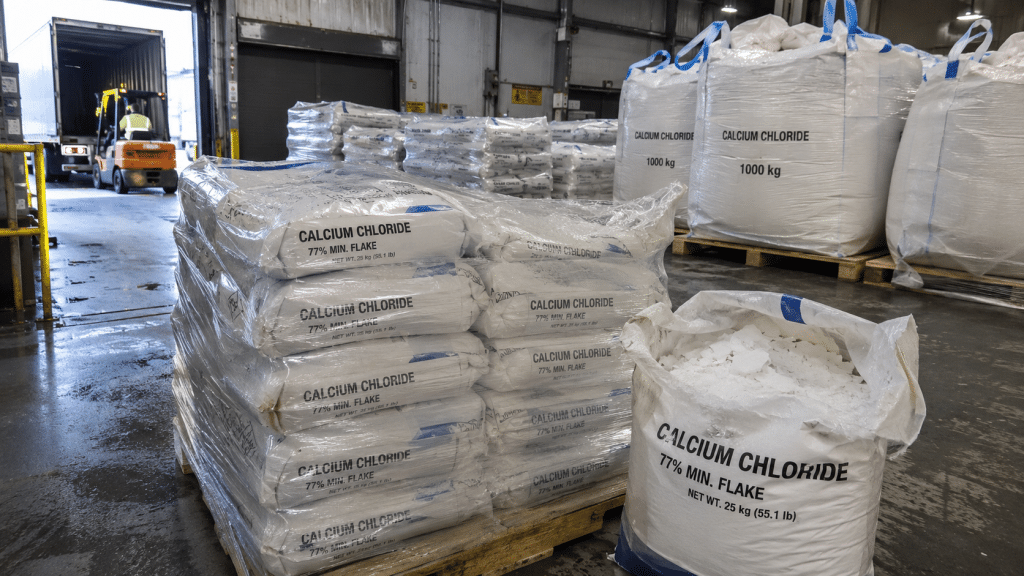
11. Calculating Calcium Chloride Prices and Industrial Usage Costs
The price per metric ton does not always show the true cost of using calcium chloride.
Because grades contain different amounts of active salt, buyers may receive different chemical quantities for the same cargo weight.
Furthermore, packing, freight and preparation costs affect final expenses.
Therefore, buyers should compare calcium chloride prices on an equivalent concentration basis.
Comparing Calcium Chloride 77% and 95% Prices
Consider two hypothetical industrial products.
| Cost Factor | 77% Flakes | 95% Pellets |
|---|---|---|
| Example Purchase Price | USD 200/MT | USD 240/MT |
| CaCl₂ Content | 77% | 95% |
| Active CaCl₂ per Ton | 770 kg | 950 kg |
| Cost per Ton of Active CaCl₂ | USD 259.74 | USD 252.63 |
Although the pellet grade has a higher purchase price, it provides a lower cost per ton of active salt in this example.
However, the comparison does not include differences in handling or application performance.
Consequently, buyers should also review the actual process requirements.
Calcium Chloride Freight Efficiency
Consider an industrial customer that requires 100 metric tons of active CaCl₂.
| Product Grade | Required Commercial Product |
|---|---|
| 74% Calcium Chloride | 135.14 MT |
| 77% Calcium Chloride | 129.87 MT |
| 85% Calcium Chloride | 117.65 MT |
| 94% Calcium Chloride | 106.38 MT |
| 95% Calcium Chloride | 105.26 MT |
| 97% Calcium Chloride | 103.09 MT |
| 30% Liquid Calcium Chloride | 333.33 MT |
Consequently, high-concentration products can reduce the amount of cargo needed to deliver the same active chemical quantity.
For example, 95% pellets require approximately 24.61 fewer metric tons of product than 77% flakes in this comparison.
However, actual supply costs also depend on packing and on-site preparation.
Therefore, higher concentration does not automatically mean the lowest total cost.
Solid and Liquid Calcium Chloride Cost Comparison
Consider three hypothetical product offers.
| Cost Factor | Liquid 30% | Flakes 77% | Pellets 95% |
|---|---|---|---|
| Example Price per MT | USD 80 | USD 200 | USD 240 |
| Active CaCl₂ | 300 kg | 770 kg | 950 kg |
| Cost per MT of Active CaCl₂ | USD 266.67 | USD 259.74 | USD 252.63 |
Although liquid calcium chloride has the lowest purchase price per ton, it contains more water.
Meanwhile, solid grades provide a greater amount of active CaCl₂ per shipment.
However, liquid products can reduce dissolution and solid handling costs.
Therefore, buyers should compare the complete cost of delivery and use.
Calcium Chloride Solution Material Balance
Industrial plants may need different amounts of solid calcium chloride to produce a target solution concentration.
For example, the following calculation compares the theoretical material balance for one metric ton of solution containing 30% CaCl₂.
| Material Balance | 77% Flakes | 95% Pellets |
|---|---|---|
| Final Solution Weight | 1,000 kg | 1,000 kg |
| Required Active CaCl₂ | 300 kg | 300 kg |
| Commercial Solid Required | 389.61 kg | 315.79 kg |
| Additional Water by Mass | 610.39 kg | 684.21 kg |
These calculations assume the stated product concentration and no material losses.
However, actual solution preparation requires suitable equipment and temperature control because dissolution releases heat.
Therefore, this table represents a theoretical mass balance rather than an operational mixing procedure.
Example FOB and CIF Calcium Chloride Price Calculation
International supply costs include more than the chemical purchase price.
For example, a hypothetical export shipment may include the following expenses.
| Cost Component | Example Cost (USD/MT) |
|---|---|
| Packed Product at Warehouse | 180 |
| Inland Transport | 25 |
| Port and Export Costs | 15 |
| Quality Inspection | 5 |
| Illustrative FOB Cost | 225 |
| Ocean Freight | 45 |
| Marine Insurance | 2 |
| Illustrative CIF Cost | 272 |
However, import duties, local taxes and destination transport may add further costs.
Furthermore, freight rates depend on cargo size, route and equipment availability.
Therefore, customers should request a complete quotation for their chosen delivery point.
Calculation note: All cost examples in this section are hypothetical. They do not represent current ATABAŞ GLOBAL sale prices, confirmed freight rates or guaranteed product performance.
12. Bulk Calcium Chloride Prices, Packaging and International Supply
Reliable calcium chloride supply requires stable product quality, protective packing and timely freight.
Moreover, industrial plants may require regular shipments throughout the year.
Therefore, ATABAŞ GLOBAL reviews technical requirements and commercial terms together.
Calcium Chloride Packaging Options
| Packing Type | Common Capacity |
|---|---|
| Small Industrial Bag | 25 kg |
| Industrial Sack | 50 kg |
| Big Bag | 500 kg |
| Jumbo Bag | 1,000 kg |
| Large FIBC | 1,250–1,500 kg, if available |
| Liquid IBC | Commonly 1,000 litres |
| Tank Container | Equipment-specific |
| Road Tanker | Vehicle-specific |
Small bags can suit plants that use limited amounts of solid calcium chloride.
Meanwhile, Big Bags can reduce the number of packages in bulk orders.
Furthermore, liquid products can travel in suitable tanks or IBCs.
However, solid grades require protection from moisture.
Consequently, buyers should confirm suitable packing before comparing bulk calcium chloride prices.
Calcium Chloride Storage and Safe Handling
Warehouses should keep solid calcium chloride in dry and covered areas.
Moreover, workers should protect bags from rain, humidity and physical damage.
Because calcium chloride absorbs moisture, unsuitable storage may cause lumps or liquid formation.
Furthermore, dissolution can release significant heat.
Therefore, workers should follow the current Safety Data Sheet and approved handling procedures.
Suitable eye protection, gloves and dust control may also be necessary.
Container Loading and Liquid Transport
Packed solid calcium chloride can travel in suitable dry freight containers.
For example, palletised bags and Big Bags can serve international chemical shipments.
Meanwhile, liquid grades require compatible tanks and fittings.
However, total cargo weight must remain within equipment, road and port limits.
Furthermore, tank materials must suit the chemical solution.
Consequently, suppliers should confirm loading and unloading conditions before booking freight.
International Shipping and Delivery Terms
ATABAŞ GLOBAL reviews suitable freight routes through Mersin, İskenderun, İzmir, Gebze, İstanbul and other Turkish port regions.
Furthermore, the best route depends on the product source and destination.
For container shipments, we work with established shipping firms such as CMA CGM, Maersk, MSC and Hapag-Lloyd.
Buyers can request different delivery terms according to their freight needs.
For example, EXW allows goods collection at the agreed supply point. Meanwhile, FCA requires delivery to the chosen carrier at the named place.
Under FOB terms, the seller delivers the cargo on board the vessel at the loading port.
Similarly, CFR includes sea freight to the named destination port.
Under CIF terms, the seller also arranges the required marine insurance.
However, under FOB, CFR and CIF, cargo risk passes to the buyer once the goods are on board at the loading port.
Furthermore, FCA, CPT and CIP may better suit certain container shipments.
Therefore, both parties should agree on the exact named delivery point and commercial terms.
Further details are available from the International Chamber of Commerce.
Chemical Trade Documents and Compliance
International calcium chloride shipments may require several technical and commercial documents.
Common documents include:
- Technical Data Sheet
- Certificate of Analysis
- Safety Data Sheet
- Proforma Invoice
- Commercial Invoice
- Packing List
- Certificate of Origin
- Bill of Lading
- Customs Export Declaration
- Independent Inspection Certificate, if required
- Insurance Certificate, where applicable
Furthermore, food-grade buyers may request additional food safety records.
Meanwhile, European chemical shipments may require information related to REACH and CLP rules.
However, document requirements differ between grades and destinations.
Consequently, ATABAŞ GLOBAL reviews product origin, applicable trade rules and sanctions before confirming transactions.
How to Request Current Calcium Chloride Prices
First, customers should confirm the required product form, such as flakes, pellets, granules or liquid solution.
Next, they should provide the target CaCl₂ concentration and intended application.
Furthermore, details about impurities, particle size and technical standards help define product quality.
For example, oilfield customers may require specific brine properties. Meanwhile, food producers should state their food-grade requirements.
In addition, buyers should confirm order quantity, monthly demand and packing.
Finally, the destination, delivery terms, inspection needs and shipment dates help us prepare a suitable commercial offer.
For current calcium chloride prices, CaCl₂ flakes, high-concentration pellets, liquid calcium chloride and international bulk chemical supply, contact ATABAŞ GLOBAL.
13. Frequently Asked Questions About Calcium Chloride Prices
Chemical Properties and Commercial Grades
What is calcium chloride?
Calcium chloride is an inorganic salt with high water solubility. Moreover, it can absorb large amounts of moisture from the air.
What is the chemical formula of calcium chloride?
The chemical formula is CaCl₂.
What is the CAS number of calcium chloride?
Anhydrous calcium chloride commonly uses CAS 10043-52-4. Meanwhile, calcium chloride dihydrate uses CAS 10035-04-8.
Does calcium chloride absorb moisture?
Yes. Furthermore, it can absorb enough water to form a liquid solution.
Does calcium chloride release heat in water?
Yes. Calcium chloride dissolution releases heat. Therefore, industrial preparation requires suitable safety controls.
Current Calcium Chloride Prices
What are the current calcium chloride prices?
Published Q3 2026 data shows regional average values between USD 162.33 and USD 376.67 per metric ton for selected technical grades. However, these assessments use different delivery conditions and do not represent live commercial offers.
What affects calcium chloride prices?
Salt concentration, product form, purity, energy, raw materials, packing, freight and market demand affect prices.
Are calcium chloride pellets more expensive than flakes?
High-concentration pellets may have higher production costs. However, they can offer a lower cost per ton of active CaCl₂.
Can bulk orders reduce calcium chloride prices?
Large orders may reduce certain packing, handling and freight costs per ton. Nevertheless, actual prices depend on the commercial agreement.
How much does calcium chloride cost in Türkiye?
Current Turkish calcium chloride prices depend on grade, quantity, available stock and delivery terms. Therefore, buyers should request a current quotation.
Calcium Chloride Technical Specifications
What is the difference between calcium chloride 77% and 95%?
The main difference is active CaCl₂ concentration. For example, a ton of 77% product contains 770 kg of CaCl₂, while a ton of 95% product contains 950 kg.
What is anhydrous calcium chloride?
Anhydrous calcium chloride has no bound water in its ideal chemical formula.
What is calcium chloride dihydrate?
It is a hydrated form with the formula CaCl₂·2H₂O. Moreover, pure dihydrate contains approximately 75.49% CaCl₂ by weight.
What is liquid calcium chloride?
Liquid calcium chloride is a solution of CaCl₂ in water. Furthermore, industrial suppliers offer several concentration grades.
What is the lowest freezing point of calcium chloride brine?
Technical references place the minimum freezing region near −51°C to −55°C at approximately 30% CaCl₂ concentration. However, actual commercial products may behave differently.
Calcium Chloride Industrial Applications
Why do oilfield teams use calcium chloride?
Calcium chloride can serve drilling and completion brines. Moreover, it can help control fluid density and water activity in selected systems.
Can calcium chloride melt ice?
Yes. It lowers the freezing point of water. However, practical performance depends on weather and surface conditions.
Can calcium chloride reduce dust?
Yes. Its ability to retain moisture can help control dust on suitable road surfaces.
What is calcium chloride E509?
E509 identifies calcium chloride within the European food additive system. However, food applications require approved food-grade products.
Can calcium chloride serve concrete production?
Selected grades can support certain cement mixes. Nevertheless, chloride corrosion risks require strict control, especially in reinforced and prestressed concrete.
Bulk Supply and International Shipping
What is the HS code for calcium chloride?
Calcium chloride generally falls under HS 282720.
What packing options are available?
Common options include industrial bags, Big Bags, liquid IBCs and compatible tanks.
How should warehouses store calcium chloride?
Warehouses should keep solid products dry and tightly sealed. Furthermore, workers should follow the current Safety Data Sheet.
Can buyers request independent calcium chloride testing?
Yes. Buyers can request independent concentration, purity, weight and packing checks under agreed commercial terms.
How can buyers request calcium chloride prices from ATABAŞ GLOBAL?
First, buyers should confirm the product form and concentration. Next, they should provide technical limits, quantity, packing and destination. Finally, ATABAŞ GLOBAL can assess suitable supply and freight options.
