

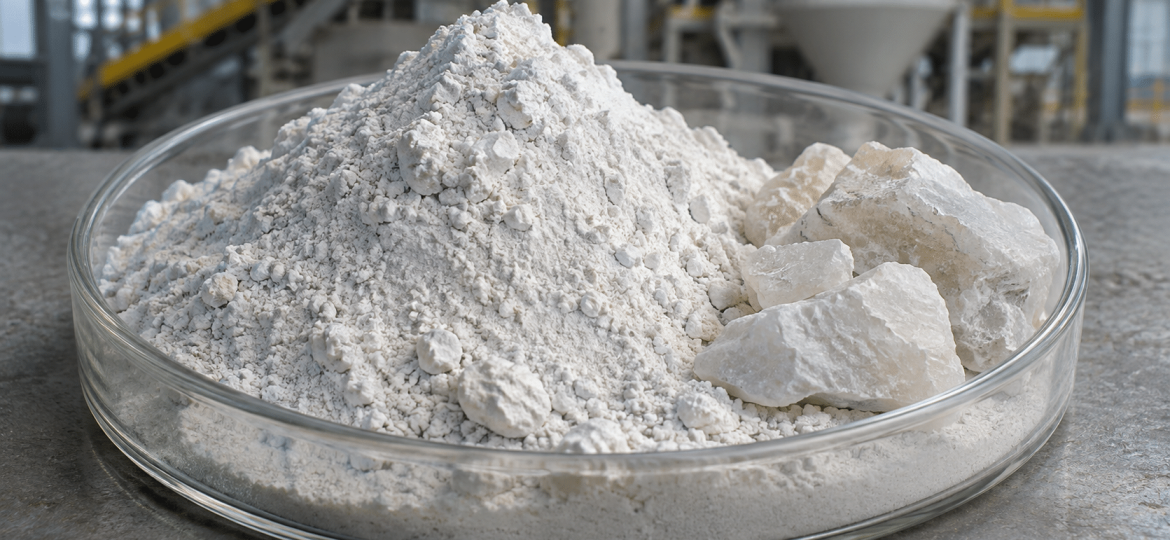
Barite prices depend on mineral density, barium sulfate content, grain size, processing costs and global demand. Moreover, freight costs play a key role in the final price because barite is a heavy industrial mineral.
Oil and gas drilling represents a major market for natural barite. For example, drilling teams use API 4.1 and API 4.2 grades to increase the weight of drilling mud.
Meanwhile, paint, plastic and rubber plants use selected grades as mineral fillers. Furthermore, barite can serve heavy concrete, sound control and radiation shielding projects.
However, not every barite grade offers the same physical and chemical properties. Therefore, buyers should check density, purity, whiteness and grain size before comparing prices.
In addition, mining, grinding, packing and freight affect the final cost of bulk mineral orders.
ATABAŞ GLOBAL combines industrial mineral supply with global trade and freight services. Consequently, we assess product quality, order size and delivery needs before preparing commercial offers.
1. What Is Barite (Barium Sulfate)?
Barite is a natural mineral that mainly consists of barium sulfate (BaSO₄). Moreover, it belongs to the sulfate mineral group.
The name barite comes from a Greek word that means heavy. Because this mineral has a high density, many industries use it to add weight to their products.
Furthermore, pure barium sulfate has very low water solubility.
However, natural barite can contain quartz, calcite, iron minerals and other materials. Therefore, commercial grades may differ in density, purity and colour.
General Product Information
| Product Information | Description |
|---|---|
| Commercial Name | Barite |
| Alternative Names | Barytes, Heavy Spar |
| Chemical Name | Barium Sulfate |
| Chemical Formula | BaSO₄ |
| CAS Number – Natural Barite | 13462-86-7 |
| CAS Number – Barium Sulfate | 7727-43-7 |
| EC Number – Natural Barite | 236-664-5 |
| EC Number – Barium Sulfate | 231-784-4 |
| HS Code – Natural Barite | 251110 |
| HS Code – Chemical Barium Sulfate | 283327 |
| Molar Mass | 233.39 g/mol |
| Mineral Family | Sulfates |
| Crystal System | Orthorhombic |
| Main Forms | Lumps, grains and powder |
| Main Drilling Grades | API 4.1 and API 4.2 |
| Common Packing | 25 kg bags and Big Bags |
Natural barite and chemically produced barium sulfate share the same main chemical formula.
However, their mineral content, production methods and physical traits can differ.
Consequently, buyers should confirm the correct material and customs code.
Barite and Other Drilling Minerals
Barite differs from bentonite, calcium carbonate and other drilling materials.
For example, barite mainly acts as a weight agent. In contrast, bentonite helps build mud viscosity and control fluid loss.
Meanwhile, calcium carbonate can serve as a weight agent or bridging material in selected fluid systems.
Furthermore, hematite provides another high-density mineral option.
Therefore, the drilling fluid design should guide the choice of mineral.
2. Physical and Chemical Properties of Barite
The physical and chemical properties of barite affect its value in industrial markets.
For example, oilfield teams focus on density and grain size. Meanwhile, coating plants may place greater value on purity and whiteness.
Moreover, trace metals and soluble compounds can affect product approval.
Consequently, buyers should review several quality factors together.
Barite Physical Properties
| Physical Property | General Description |
|---|---|
| Appearance | White, cream, grey or brown |
| Physical Form | Crystals, lumps, grains or powder |
| Pure Mineral Density | Around 4.48–4.50 g/cm³ |
| Mohs Hardness | 3–3.5 |
| Crystal System | Orthorhombic |
| Water Solubility | Very low |
| Odour | Generally none |
| Flammability | Non-combustible mineral |
| Bulk Density | Grade and grain size dependent |
| Moisture | Grade-specific |
| pH | Grade and test dependent |
| Whiteness | Grade-specific |
Source: USGS – Barite Mineral Information.
However, the density of pure barite differs from that of commercial mineral blends.
Furthermore, bulk density includes the spaces between particles.
Therefore, buyers should distinguish mineral density from loose or packed bulk density.
Chemical Composition of Barium Sulfate
The chemical formula of pure barium sulfate is:
BaSO₄
Pure BaSO₄ consists of barium, sulfur and oxygen.
| Chemical Component | Theoretical Mass Content |
|---|---|
| Barium (Ba) | 58.84% |
| Sulfur (S) | 13.74% |
| Oxygen (O) | 27.42% |
| Barium Oxide Equivalent (BaO) | 65.70% |
| Sulfur Trioxide Equivalent (SO₃) | 34.30% |
The first three values show the elemental makeup of pure BaSO₄. Meanwhile, the last two values show its makeup on an oxide basis.
However, natural ore may contain other minerals.
Therefore, these figures do not represent guaranteed commercial product limits.
Natural Barite Purity
Commercial barite may contain small or large amounts of other minerals.
For example, quartz increases silica content, while calcite and dolomite can lower the overall density.
Furthermore, iron minerals can affect the colour of white barite.
However, the effect of these minerals depends on their amount and the final use.
Consequently, buyers should request actual mineral and chemical test results.
Barite Density and Specific Gravity
Specific gravity (SG) describes the ratio between the density of a material and the density of water under defined conditions.
In contrast, density expresses mass per unit volume.
For example, API 4.2 barite requires a minimum mineral density of 4.20 g/cm³ under the relevant test method.
However, SG does not directly show the BaSO₄ content.
Therefore, buyers should request both density and purity data when their process requires them.
Grain Size and Surface Area
Fine grinding can increase the total surface area of mineral particles.
Moreover, smaller particles can affect mixing, flow and product finish.
For example, paint plants may request a defined grain size profile to suit their coating mix.
However, very fine particles can also affect viscosity and powder handling.
Therefore, the finest grade is not always the best choice.
3. Commercial Barite Grades and Their Prices
Natural barite comes in several commercial grades.
For example, drilling grades focus on density and mud performance. In contrast, fine filler grades may require high whiteness and strict grain size control.
Furthermore, raw lumps can serve plants that carry out their own grinding.
Consequently, barite prices vary according to the final product form and quality.
API 4.1 Barite Prices
API 4.1 barite has a minimum density of 4.10 g/cm³.
Moreover, this grade must meet the other relevant drilling material limits.
For example, buyers should check coarse grains, fine particles and soluble mineral content.
However, its lower minimum density may affect the volume of solids within a weighted drilling fluid.
Therefore, drilling teams should check whether this grade suits their fluid design.
API 4.2 Barite Prices
API 4.2 barite has a minimum density of 4.20 g/cm³.
Because higher-density solids can help achieve a target mud weight with less mineral volume, many oilfield buyers request this grade.
Furthermore, suitable API 4.2 barite can serve water-based and oil-based mud systems.
However, a higher density alone does not prove that the product meets every drilling requirement.
Consequently, buyers should review the full batch test report.
High-Purity White Barite
White barite refers to light-coloured natural mineral products.
For example, paint and plastic plants may request white or cream-coloured powder.
Moreover, high-purity deposits can support specialty filler grades.
However, whiteness alone does not establish chemical purity.
Therefore, buyers should confirm BaSO₄ content, iron content and colour test results.
Micronized Barite Prices
Producers grind and sort natural barite to create fine mineral powder.
Furthermore, they can control grain size to suit different industrial needs.
For example, buyers may specify D50 and D97 values for coating and plastic grades.
However, fine grinding requires extra power and quality checks.
Consequently, micronized barite prices often differ from those of raw mineral lumps.
Natural Barite Lumps
Raw and crushed barite can serve mineral processing plants.
Moreover, buyers may choose lumps when they have their own grinding systems.
However, raw ore can contain unwanted rock or show changes in density between batches.
Therefore, buyers should confirm lump size, purity and mineral density before placing an order.
Precipitated Barium Sulfate Prices
Producers make precipitated barium sulfate through chemical reactions.
As a result, they can achieve more controlled particle sizes and selected purity levels.
Furthermore, suitable grades can serve fine coatings, plastics and specialty goods.
However, chemical production requires different materials, equipment and quality checks from natural barite processing.
Consequently, precipitated barium sulfate prices should not serve as direct benchmarks for ordinary drilling barite.
Commercial Barite Grade Comparison
| Grade | Main Quality Factor | Typical Use |
|---|---|---|
| API 4.1 Barite | Minimum density of 4.10 g/cm³ | Drilling fluids |
| API 4.2 Barite | Minimum density of 4.20 g/cm³ | Drilling fluids |
| High-Density Barite | Agreed mineral density | Weight agents |
| White Barite | Whiteness and purity | Paints and plastics |
| Micronized Barite | Fine grain size | Industrial fillers |
| Barite Lumps | Ore quality and lump size | Grinding plants |
| Granular Barite | Controlled grain size | Heavy concrete |
| Chemical-Grade Barite | Chemical purity | Barium compounds |
| Precipitated Barium Sulfate | Controlled particle profile | Specialty goods |
However, some commercial grade groups may overlap.
Therefore, buyers should define their technical needs instead of relying on a product name alone.
4. Barite Mining and Production Costs
Barite production begins with the recovery of natural mineral ore.
However, most raw ore needs further work before it can meet industrial grade limits.
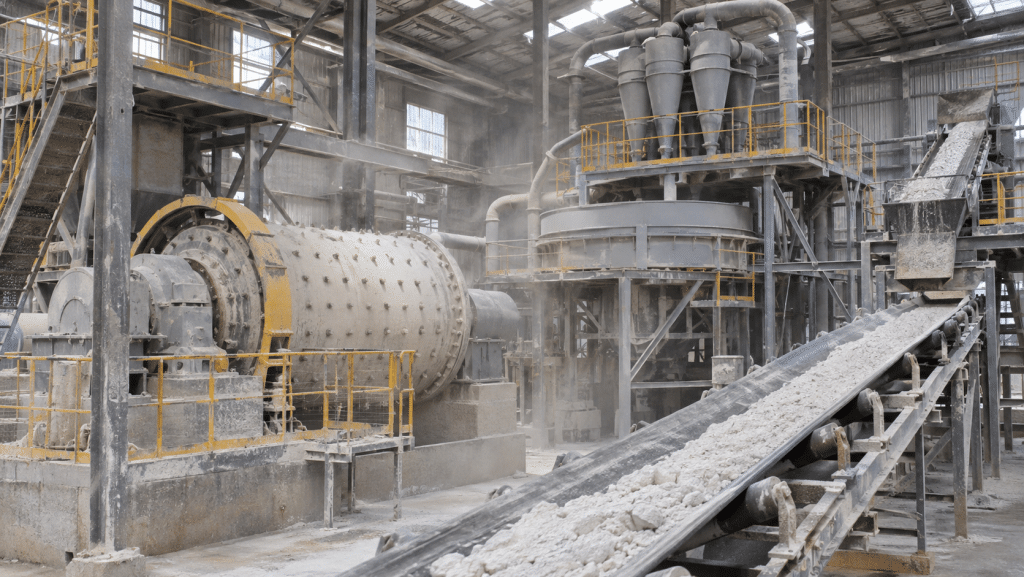
For example, producers may crush, wash, sort and grind the material.
Consequently, the amount of work needed affects finished barite prices.
Natural Barite Mining
Mining teams recover barite from suitable mineral deposits.
First, they identify and extract ore from the target mineral zone.
Next, workers sort the raw ore and remove unwanted rock.
Afterwards, trucks move the material to stock areas or mineral plants.
However, ore quality can vary within the same mine.
Therefore, careful sorting and blending help maintain stable product quality.
Crushing and Mineral Separation
Crushing reduces raw ore to smaller pieces.
Furthermore, plants may use gravity methods, washing or flotation to separate barite from other minerals.
For example, gravity-based systems can make use of the density difference between barite and lighter minerals.
However, not every ore responds to the same process.
Consequently, the mineral content of the deposit helps determine processing costs.
Drying and Moisture Control
Wet mineral ore may require drying before fine grinding.
Moreover, moisture control helps maintain better powder flow during packing.
However, drying requires heat and power.
Therefore, changes in energy costs can affect the price of finished barite.
Grinding and Grain Size Control
Drilling and filler grades often require fine mineral powder.
For example, producers may use mills and sorting systems to reach a target grain size.
Furthermore, specialty filler grades may require extra grinding.
However, more grinding can increase power use and equipment wear.
Consequently, very fine barite may have higher production costs than coarse mineral products.
General Barite Production Stages
A typical natural barite supply chain may include:
- Mineral mining
- Ore sorting
- Crushing
- Mineral separation
- Washing
- Drying
- Grinding
- Grain size control
- Laboratory tests
- Packing and storage
However, some grades do not require every step.
Therefore, each producer selects a process based on ore quality and buyer needs.
5. Global Barite Prices and Market Trends in 2026
Barite does not have one global price that applies to all grades and delivery points.
Instead, the market offers different prices for raw lumps, drilling powder, fine fillers and specialty grades.
Moreover, local mine prices can differ greatly from delivered prices.
Therefore, buyers should compare offers with the same quality limits and trade terms.
International Barite Price Indicators – Q3 2026
Published market data for the quarter ending September 2026 provides the following price references.
| Market | Product and Delivery Basis | Average Price (USD/MT) | Quarterly Change |
|---|---|---|---|
| China | Barite Lump SG 4.2, EXW Tianjin | 147.67 | −11.40% |
| United Arab Emirates | Grey Barite Powder SG 4.2, CFR Jebel Ali | 376.33 | +7.32% |
| United States | Barite spot market indicator | 175.00 | Stable |
Source: ChemAnalyst – Barite Price Trends.
These figures show how barite prices can vary between markets.
However, raw lumps and finished powder do not represent the same commercial product.
Furthermore, EXW and CFR prices include different supply costs.
Consequently, buyers should not use this table as a direct ranking of supplier prices.
Price note: These figures are published market references for Q3 2026. They do not represent current ATABAŞ GLOBAL offers or guaranteed sale prices.
Global Barite Export Unit Values – 2025
Customs records provide another way to assess historical trade values.
For example, dividing the reported export value by shipment weight gives an average export unit value per metric ton.
| Exporting Country | Export Volume (MT) | Export Value (USD) | Average Value (USD/MT) |
|---|---|---|---|
| India | 2,013,890 | 144,310,540 | 71.66 |
| China | 786,871 | 143,066,910 | 181.82 |
| Morocco | 1,102,420 | 129,874,510 | 117.81 |
| Netherlands | 108,687 | 43,869,860 | 403.63 |
| Kazakhstan | 276,473 | 42,577,320 | 154.00 |
Source: World Bank WITS – Global Natural Barite Exports 2025.
However, these figures cover different mineral grades under HS 251110.
Moreover, some countries export products that they first bought from abroad.
Therefore, customs unit values do not represent current prices for equal API barite grades.
Barite Prices in Türkiye
Türkiye has natural barite deposits and mineral processing plants that serve both local and global markets.
In 2024, the country reported natural barite exports worth approximately USD 68.58 million.
Furthermore, the reported export weight reached 338,910 metric tons.
| Trade Indicator | 2024 | 2025 |
|---|---|---|
| Export Value | USD 68,584,370 | USD 33,655,790 |
| Export Volume | 338,910 MT | Not reliably reported |
| Average Export Unit Value | USD 202.37/MT | Not available |
Sources: WITS – Global Barite Exports 2024 and WITS – Global Barite Exports 2025.
However, Türkiye’s 2025 weight record does not provide a reliable basis for a new average.
Furthermore, the 2024 unit value covers several natural barite grades.
Therefore, current Turkish barite prices require a grade-specific supply offer.
For further trade details, see our article on Barite Export from Türkiye and International Trade.
United States Barite Import Values
The United States represents a major barite import market.
In 2025, the country reported natural barite imports of around 2.196 million metric tons, with a total value of USD 271.33 million.
Consequently, the average reported import unit value was around USD 123.56 per metric ton.
However, this annual customs value differs from a current domestic spot price.
Source: World Bank WITS – United States Barite Imports 2025.
6. Main Factors Affecting Barite Prices
Several mineral, production and trade factors influence the final cost of barite.
For example, high-quality ore may need less treatment to reach a target grade.
Meanwhile, grinding, packing and freight may increase the cost of finished powder.
Therefore, buyers should assess the full supply chain.
Mineral Density and Barium Sulfate Content
Density plays a key role in drilling barite prices.
Moreover, high BaSO₄ content can offer value in selected filler and chemical markets.
However, a high purity claim does not prove that a product meets all API limits.
Consequently, buyers should assess density, purity and grain size separately.
Whiteness and Mineral Impurities
Paint and plastic plants often require strict colour limits.
For example, iron minerals can affect the shade of white barite.
Furthermore, removing unwanted minerals may require extra processing.
However, oilfield grades do not always need high whiteness.
Therefore, buyers should avoid paying for properties that their process does not require.
Grinding and Product Fineness
Fine powder often requires more grinding than raw mineral ore.
Moreover, strict grain size limits can require extra sorting and testing.
For example, a micronized coating grade may need a narrow particle size profile.
Consequently, the final grain size affects both product quality and production costs.
Energy, Fuel and Labour Costs
Mining teams use fuel to recover and move heavy mineral ore.
Meanwhile, processing plants use power for crushing, grinding and drying.
Furthermore, labour and equipment costs affect the final product price.
Therefore, changes in these costs may influence barite prices.
Oilfield Demand and Energy Projects
Oil and gas drilling supports a large share of natural barite demand.
For example, new drilling programs can increase the need for weight agents.
Moreover, long-term projects may require regular bulk deliveries.
However, changes in oilfield activity can affect buying plans.
Consequently, demand may rise or fall between periods.
Packing, Freight and Delivery Terms
Barite has a high mineral density, so weight limits play a key role in freight planning.
For example, a heavy mineral cargo may reach the container weight limit before filling its full volume.
Moreover, inland transport, port fees and packing costs affect the delivered price.
Therefore, buyers should compare total supply costs rather than mine prices alone.
7. API 4.1 and API 4.2 Barite Specifications
API Specification 13A defines quality requirements for several drilling fluid materials.
Furthermore, ISO 13500 provides standards for drilling fluid products.
However, buyers should confirm the required edition and any extra project limits.
Therefore, each shipment needs suitable test records.
API Drilling Barite Technical Comparison
| Test Parameter | API 4.1 Barite | API 4.2 Barite |
|---|---|---|
| Mineral Density | Min. 4.10 g/cm³ | Min. 4.20 g/cm³ |
| Water-Soluble Alkaline Earth Metals, as Calcium | Max. 250 mg/kg | Max. 250 mg/kg |
| Residue Above 75 µm | Max. 3.0% | Max. 3.0% |
| Particles Below 6 µm | Max. 30% | Max. 30% |
Sources: ISO 13500 – Barite 4.1 Reference and API 4.2 Barite Product Data.
The main difference between the two grades is their minimum density.
However, both categories also require control of grain size and soluble mineral content.
Furthermore, the four main API parameters do not set a universal minimum BaSO₄ percentage.
Therefore, customers who require a specific BaSO₄ content should include it in their purchase terms.
ATABAŞ GLOBAL Barite Technical Data
The published ATABAŞ GLOBAL Technical Data Sheet describes a Turkish-origin drilling barite grade.
| Quality Parameter | Published Product Limit |
|---|---|
| Chemical Formula | BaSO₄ |
| Natural Barite CAS Number | 13462-86-7 |
| Minimum Density | 4.20 g/mL |
| Soluble Alkaline Earth Metals, as Calcium | Max. 250 mg/kg |
| Residue Above 75 µm | Max. 3.0% |
| Particles Below 6 µm | Max. 30% |
| HS Code | 251110 |
Source: ATABAŞ GLOBAL – Barite Technical Data Sheet, Revision 2, 18 September 2026.
However, buyers should request the current TDS and batch-specific Certificate of Analysis before purchase.
Furthermore, any required licence or formal product approval should remain valid at the time of supply.
Barite Density Testing
Laboratories can use a Le Chatelier flask and a suitable liquid to measure mineral density.
Moreover, the test requires controlled sample preparation and temperature conditions.
However, loose bulk density tests measure a different property.
Therefore, buyers should confirm that the reported density follows the agreed drilling material test method.
Water-Soluble Alkaline Earth Metals
Natural barite may contain small amounts of soluble mineral compounds.
Furthermore, dissolved calcium and similar ions can affect certain drilling fluid systems.
Consequently, API barite includes a limit for soluble alkaline earth metals on a calcium basis.
However, this test does not measure total calcium content.
Therefore, buyers should distinguish soluble mineral results from total chemical analysis.
Coarse and Fine Particle Limits
Wet sieve tests help measure the amount of barite above a set grain size.
Meanwhile, other methods assess very fine particles.
Because particle size affects fluid behaviour, drilling grades need control at both ends of the size range.
However, filler grades may use different grain size methods.
Consequently, buyers should not apply paint-grade limits directly to drilling barite.
API Compliance and Manufacturer Licensing
A product may meet API 13A test limits without carrying a formal API Monogram.
Moreover, a general quality certificate does not establish formal API licensing.
Therefore, buyers should verify the manufacturer’s licence when their contract requires it.
In addition, actual batch test results should support the agreed quality limits.
Official information is available from the American Petroleum Institute.
8. Industrial Applications of Barite
Barite serves a wide range of industries due to its high density and low water solubility.
Furthermore, selected fine grades offer useful filler properties.
However, each industry requires a different balance of density, purity and grain size.
Therefore, the final use should guide product selection.
Barite in Oil and Natural Gas Drilling
Drilling teams use barite to increase mud weight.
Because fluid density affects pressure within a well, barite helps engineers manage the required pressure balance.
Furthermore, suitable grades can serve both water-based and oil-based mud.
However, the final fluid must also have suitable flow and solids control properties.
Consequently, drilling engineers select barite as part of the full mud design.
Barite in Paints and Coatings
Paint plants use selected barite grades as mineral fillers.
For example, fine white powder can help achieve the required surface finish and coating density.
Moreover, low-solubility fillers can serve several paint systems.
However, natural barite does not provide the same hiding power as titanium dioxide.
Therefore, producers should assess its role within the complete coating mix.
Barite in Plastics and Polymers
Plastic plants can use barite to add weight to selected goods.
Furthermore, fine mineral powder may help meet certain product design needs.
For example, high-density polymer sheets can contain mineral fillers.
However, filler content can affect processing flow and mechanical strength.
Consequently, manufacturers should test the final polymer mix.
Barite in Rubber Products
Barite can serve as a mineral filler in selected rubber goods.
Moreover, its high density can help control finished product weight.
However, different filler levels may affect flexibility and strength.
Therefore, rubber plants should select suitable grain sizes and test the final mix.
Barite in Brake Pads and Friction Materials
Selected barite grades serve certain brake pads and clutch products.
For example, barite can form part of a mineral filler blend.
However, these products require strict heat, wear and friction tests.
Consequently, mineral quality alone cannot establish the safety of the finished product.
Barite in Heavy Concrete
Building teams can use barite as a heavy concrete aggregate.
Because this mineral has a high density, it can help increase concrete weight per unit volume.
Furthermore, heavy concrete can serve special building and engineering projects.
However, grain size, water content and mix design affect the final concrete.
Therefore, engineers should approve the aggregate before use.
Barite in Radiation Shielding
Heavy concrete containing barite can help reduce the passage of X-rays and gamma rays.
For example, suitable shielding systems may serve hospitals and research facilities.
However, shielding performance depends on radiation energy, barrier thickness and concrete density.
Furthermore, other materials may be necessary for certain types of radiation.
Therefore, qualified engineers must define the complete shielding design.
Offshore Pipeline Weight Coating
Some subsea pipelines require heavy concrete coatings to help control buoyancy.
Moreover, suitable barite aggregate can increase the weight of selected coating mixes.
However, offshore coatings must also meet strength and durability limits.
Consequently, buyers should select mineral grades that suit the approved pipeline design.
Barite in Barium Chemical Production
Chemical plants can use natural barite as a raw material for certain barium compounds.
Furthermore, suitable ore grades may support different chemical production routes.
However, silica and other mineral impurities can affect these processes.
Therefore, customers should define their raw material purity limits.
Barite in Glass and Ceramics
Selected barium compounds serve specialty glass and ceramic products.
For example, certain grades can help achieve specific physical properties.
However, raw barite does not suit every glass or ceramic mix.
Consequently, producers should confirm the required chemical form and purity.
Barite in Sound Control Products
High-density mineral fillers can add mass to sound barrier sheets.
Moreover, selected barite grades may serve heavy polymer goods for noise control.
However, sound reduction depends on the full barrier design.
Therefore, manufacturers should test the finished product rather than mineral density alone.
Medical-Grade Barium Sulfate
Approved pharmaceutical-grade barium sulfate can serve medical imaging as a contrast agent.
However, these products must meet strict medical purity and safety rules.
Natural industrial barite and drilling-grade barite must never serve as medical contrast agents.
Therefore, medical applications require approved pharmaceutical products.
9. Barite Demand and Global Supply
Global barite demand comes mainly from oilfield and industrial markets.
Moreover, different sectors require different grades and supply plans.
However, mine output and customs shipment figures do not measure the same activity.
Therefore, buyers should review supply and demand at the product-grade level.
Major Global Barite Supply Sources
India, China and Morocco represent major sources of internationally traded barite.
Meanwhile, Türkiye and other mineral-producing countries serve regional and global markets.
Furthermore, mineral plants in importing countries may grind and process raw ore for local users.
However, a country’s export value does not directly show its mine output.
Consequently, buyers should distinguish the mineral source from the place of final processing.
Oil and Gas Market Demand
Oilfield projects create demand for API drilling barite.
For example, large drilling programs may require steady supplies of weight materials.
Moreover, offshore operations can have strict mineral and trace metal limits.
However, project schedules and drilling activity may change.
Therefore, suppliers should review order plans and delivery needs in advance.
Demand from Paints and Plastics
Paint and plastic plants create demand for fine mineral fillers.
Furthermore, some specialty grades require strict colour and grain size control.
However, filler demand depends on the output of the relevant manufacturing sector.
Consequently, these markets may follow different price trends from drilling barite.
Future Barite Market Trends
The future barite market will depend partly on oilfield activity.
Meanwhile, specialty fillers, heavy concrete and other industrial goods may support demand in separate markets.
Furthermore, fuel costs, mineral quality and freight rates can affect supply prices.
However, market forecasts cannot guarantee future prices or stock levels.
Therefore, buyers should use current quotations when planning large purchases.
10. Barite Quality Control and Laboratory Testing
Steady mineral quality supports reliable drilling and factory performance.
Moreover, changes in density, purity or grain size can affect the amount of material required.
Therefore, buyers should request suitable quality checks before placing large orders.
Chemical and Mineral Analysis
Laboratories can use X-ray fluorescence (XRF) to measure chemical content.
Meanwhile, X-ray diffraction (XRD) helps identify mineral phases.
However, these methods provide different types of data.
Consequently, buyers may need both tests to assess the mineral fully.
Barite Quality and Performance Tests
| Test Parameter | Main Purpose |
|---|---|
| BaSO₄ Content | Mineral purity |
| Density | Weight agent quality |
| SiO₂ Content | Silica level |
| Fe₂O₃ Content | Iron content |
| CaO Content | Calcium oxide equivalent |
| Moisture | Water content |
| Wet Sieve Test | Coarse grain content |
| Fine Particle Test | Fine grain content |
| D50 | Median particle size |
| D97 | Upper particle size measure |
| Whiteness | Colour quality |
| Oil Absorption | Filler performance |
| Soluble Alkaline Earth Metals | Drilling quality |
| Mercury and Cadmium | Trace metal control |
| Bulk Density | Packing and storage planning |
However, not every grade requires all these tests.
For example, drilling buyers often focus on API limits. In contrast, paint plants may need more colour and particle size data.
Therefore, the test plan should match the final use.
D50 and D97 Particle Size
D50 describes the size below which 50% of the measured particle distribution falls.
Meanwhile, D97 describes the size below which 97% falls.
Furthermore, laboratories may express these results on a volume, mass or number basis, depending on the method.
However, these values do not always match sieve results.
Therefore, customers should specify the test method and basis when comparing micronized grades.
Heavy Metals and Product Safety
Natural barite may contain trace amounts of mercury, cadmium and other metals.
Moreover, certain offshore projects and industrial uses require strict limits.
However, environmental requirements can differ between countries and projects.
Consequently, customers should confirm the applicable rules and request suitable test data.
Pre-Shipment Barite Quality Checks
First, suppliers should confirm the product grade and batch number.
Next, laboratories can check the agreed density, chemical content and grain size limits.
Furthermore, buyers may request independent quality and weight checks.
However, a general Technical Data Sheet cannot replace actual batch results.
Therefore, suppliers should provide a Certificate of Analysis for the shipment.
11. Calculating Barite Prices and Industrial Usage Costs
The price per metric ton does not always show the true cost of using barite.
Because grades differ in purity, density and moisture, they may require different amounts of material.
Moreover, freight and handling costs affect the final cost.
Therefore, buyers should assess both price and actual product performance.
Comparing Barite Prices by BaSO₄ Content
Consider two hypothetical mineral products with different prices and purity levels.
| Cost Factor | Product A | Product B |
|---|---|---|
| Example Purchase Price | USD 160/MT | USD 170/MT |
| BaSO₄ Content | 90% | 97% |
| BaSO₄ per Ton of Product | 900 kg | 970 kg |
| Cost per Ton of BaSO₄ Content | USD 177.78 | USD 175.26 |
Although Product B has a higher purchase price, it offers a lower cost per ton of BaSO₄ content in this example.
However, purity alone does not establish drilling or filler performance.
Therefore, buyers should also check density, particle size and impurity limits.
Barite Density and Mineral Volume
One metric ton of barite can occupy different solid volumes depending on its actual density.
| Property | Barite A | Barite B |
|---|---|---|
| Mineral Density | 4.10 g/cm³ | 4.20 g/cm³ |
| Solid Mineral Weight | 1,000 kg | 1,000 kg |
| Solid Mineral Volume | 243.90 litres | 238.10 litres |
Consequently, the higher-density product occupies less solid volume for the same weight.
However, these values do not represent loose powder volume or packed cargo volume.
Furthermore, actual drilling mud performance depends on the complete fluid mix.
Therefore, engineers should use the relevant fluid design method.
Moisture and Dry Barite Cost
Moisture affects the amount of dry mineral in each purchased ton.
For example, two products may have different dry material costs despite similar purchase prices.
| Cost Factor | Product A | Product B |
|---|---|---|
| Example Purchase Price | USD 180/MT | USD 182/MT |
| Moisture Content | 3.0% | 1.0% |
| Dry Matter | 97.0% | 99.0% |
| Cost per Ton of Dry Matter | USD 185.57 | USD 183.84 |
Consequently, Product B offers a lower dry material cost in this example.
However, dry matter may include minerals other than BaSO₄.
Therefore, buyers should assess moisture and purity together.
Example FOB and CIF Barite Price Calculation
The final export cost includes more than the mineral purchase price.
For example, a hypothetical bulk shipment may include the following costs.
| Cost Component | Example Cost (USD/MT) |
|---|---|
| Packed Product at Warehouse | 160 |
| Inland Transport | 25 |
| Port and Export Costs | 15 |
| Quality Inspection | 5 |
| Illustrative FOB Cost | 205 |
| Ocean Freight | 45 |
| Marine Insurance | 2 |
| Illustrative CIF Cost | 252 |
However, local taxes, duties and destination freight may add further costs.
Furthermore, freight rates depend on the cargo size and route.
Therefore, buyers should request a complete commercial offer for their chosen delivery point.
Calculation note: All examples in this section are hypothetical. They do not represent current ATABAŞ GLOBAL sale prices, product guarantees or confirmed freight rates.
12. Bulk Barite Prices, Packaging and International Supply
Reliable barite supply requires suitable product quality, safe packing and timely freight.
Moreover, drilling and factory buyers may need regular deliveries.
Therefore, ATABAŞ GLOBAL reviews technical and commercial requirements together.
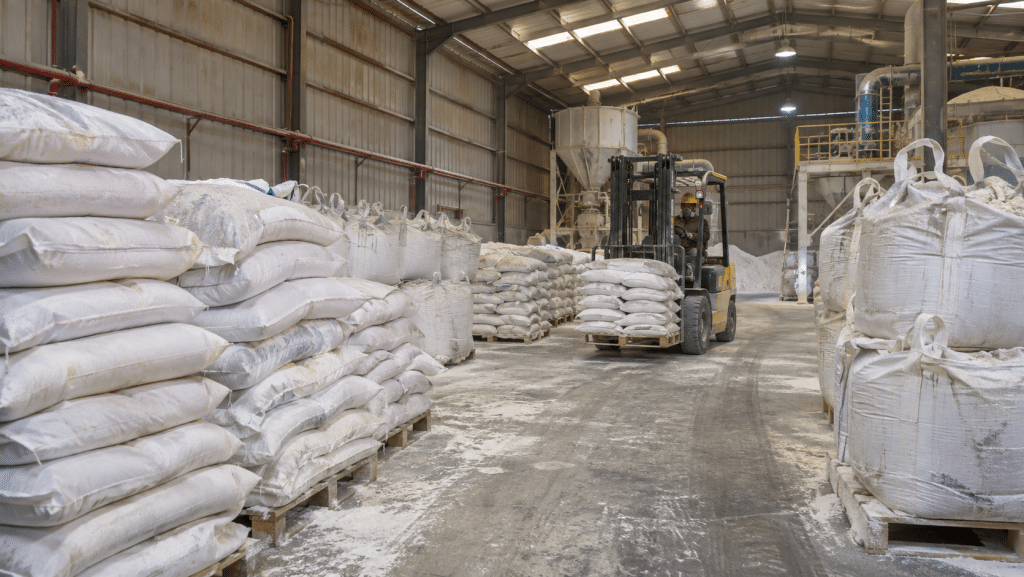
Barite Packaging Options
| Packing Type | Common Net Weight |
|---|---|
| Small Industrial Bag | 25 kg |
| Industrial Sack | 50 kg |
| Big Bag | 500 kg |
| Jumbo Bag | 1,000 kg |
| Large FIBC | 1,250 kg |
| Heavy-Duty Big Bag | 1,500 kg, if available |
| Loose Bulk | Based on cargo size |
Small bags may suit plants that use limited amounts of mineral powder.
Meanwhile, Big Bags may reduce handling time for large orders.
Furthermore, loose bulk cargo can suit buyers with suitable unloading systems.
However, the bag strength and safe working load must match the actual mineral weight.
Therefore, customers should confirm packing before comparing bulk barite prices.
Barite Storage and Safe Handling
Warehouses should keep packed barite in dry and suitable areas.
Moreover, workers should protect bags from damage and contamination.
Because fine mineral dust can harm the lungs, proper dust control is important.
Furthermore, certain natural barite grades may contain crystalline silica.
Therefore, workers should follow the current Safety Data Sheet and local safety rules.
Further details are available from OSHA – Crystalline Silica.
Container Loading and Bulk Vessel Transport
Packed barite can travel in suitable dry freight containers.
For example, 20-foot containers often suit heavy mineral cargo.
However, the cargo weight must remain within container, road and port limits.
Furthermore, bag size and pallet weight affect the final loading plan.
Meanwhile, large mineral orders may travel in bulk vessels.
Consequently, suppliers should assess the cargo weight and unloading needs before booking freight.
International Shipping and Delivery Terms
ATABAŞ GLOBAL reviews freight routes through Mersin, İzmir, Gebze, İstanbul and other suitable Turkish port regions.
Furthermore, the best loading point depends on the mineral source and destination.
For container shipments, we work with established shipping firms such as CMA CGM, Maersk, MSC and Hapag-Lloyd.
Buyers can request different trade terms according to their freight needs.
For example, EXW allows goods collection at an agreed place.
Meanwhile, FCA requires the seller to deliver goods to the chosen carrier at the named point.
Under FOB terms, the seller delivers goods on board the vessel at the loading port.
Similarly, CFR includes sea freight to the named destination port.
Under CIF terms, the seller also arranges the required cargo insurance.
However, under FOB, CFR and CIF, cargo risk passes to the buyer once the goods are on board at the loading port.
Furthermore, FCA, CPT and CIP may better suit container shipments.
Therefore, both parties should agree on the exact named place and trade terms.
Further details are available from the International Chamber of Commerce.
Commercial Documents and Quality Records
A Technical Data Sheet (TDS) provides general product data.
Meanwhile, a Certificate of Analysis (COA) shows actual batch test results.
The Safety Data Sheet (SDS) also explains product risks and safe handling.
Furthermore, global mineral shipments may require invoices, packing lists, origin records and transport documents.
However, document needs differ between markets and grades.
Therefore, both parties should agree on the required records before shipment.
In addition, ATABAŞ GLOBAL reviews product origin, trade rules and sanctions before confirming orders.
How to Request Current Barite Prices
First, customers should confirm the required barite grade and final use.
Next, they should provide the target density and BaSO₄ content.
Furthermore, details about grain size, moisture, whiteness and impurities help define the product.
For example, drilling customers should state whether they require API 4.1 or API 4.2.
Meanwhile, paint plants may need specific D50 and D97 values.
In addition, buyers should confirm order quantity, monthly demand and packing.
Finally, delivery place, trade terms, inspection needs and shipment dates help us prepare a suitable offer.
For current barite prices, API drilling barite, micronized barite, natural barium sulfate and bulk mineral supply, contact ATABAŞ GLOBAL.
13. Frequently Asked Questions About Barite Prices
Barite Properties and Commercial Grades
What is barite?
Barite is a natural mineral that mainly consists of barium sulfate. Moreover, it has a high mineral density.
What is the chemical formula of barite?
The chemical formula is BaSO₄.
What is the CAS number of barite?
Natural barite commonly uses CAS 13462-86-7. Meanwhile, barium sulfate commonly uses CAS 7727-43-7.
What is the density of pure barite?
Pure barite has a density of around 4.48–4.50 g/cm³. However, commercial grades may have lower values.
Does barite dissolve in water?
Barite has very low water solubility. Consequently, it remains mainly in solid form in water.
Current Barite Prices and Market Conditions
What are the current barite prices?
Published Q3 2026 data shows an average of USD 147.67/MT for SG 4.2 barite lumps on an EXW Tianjin basis. However, actual prices depend on grade, quantity and delivery terms.
How much does drilling barite powder cost?
Published Q3 2026 data shows an average of USD 376.33/MT for grey SG 4.2 powder on a CFR Jebel Ali basis. Nevertheless, this figure does not represent a current supplier offer.
What affects barite prices?
Mineral density, purity, grain size, grinding, packing, freight and industrial demand affect prices.
Is micronized barite more expensive?
Fine grinding may increase production costs. However, final prices also depend on mineral quality and market needs.
Can bulk orders reduce barite prices?
Large orders may reduce some handling and freight costs per ton. Nevertheless, the final price depends on the supply agreement.
API Drilling Barite
What is API 4.1 barite?
API 4.1 barite is a drilling material with a minimum density of 4.10 g/cm³ and other defined quality limits.
What is API 4.2 barite?
API 4.2 barite is a drilling material with a minimum density of 4.20 g/cm³ and other defined quality limits.
What is the difference between API 4.1 and API 4.2 barite?
The main difference is their minimum density. However, both grades must meet the relevant test limits.
Does API 13A require a fixed BaSO₄ percentage?
The four main barite parameters do not set a universal BaSO₄ percentage. Therefore, buyers should define any required purity limit separately.
What is barite sag?
Barite sag occurs when weight material settles within a drilling fluid. Furthermore, fluid flow, well angle and particle size can affect this process.
Barite Industrial Applications
Why do drilling teams use barite?
Barite increases mud density. Consequently, it helps engineers achieve required drilling fluid weight targets.
Can barite serve paint production?
Yes. For example, suitable fine white grades can serve as mineral fillers in paints and coatings.
Can barite serve heavy concrete?
Yes. Because barite has a high density, it can help increase concrete weight.
Can barite provide radiation shielding?
Suitable heavy concrete containing barite can help reduce X-ray and gamma-ray transmission. However, qualified engineers must design the complete barrier.
What is precipitated barium sulfate?
It is barium sulfate that producers make through chemical reactions rather than direct mineral grinding.
Bulk Barite Supply and Shipping
What is the HS code for natural barite?
Natural barite generally falls under HS 251110. Meanwhile, chemically produced barium sulfate generally falls under HS 283327.
What packing options are available?
Common options include 25 kg bags, 50 kg sacks, Big Bags and loose bulk cargo.
Can buyers request 1,500 kg Big Bags?
Yes, subject to grade availability, bag strength and the agreed cargo plan.
Can buyers request independent barite testing?
Yes. Buyers can request third-party density, purity, grain size and weight checks under agreed trade terms.
How can buyers request barite prices from ATABAŞ GLOBAL?
First, buyers should confirm the required grade and quality limits. Next, they should provide quantity, packing and destination. Finally, ATABAŞ GLOBAL can assess suitable supply and freight options.
