

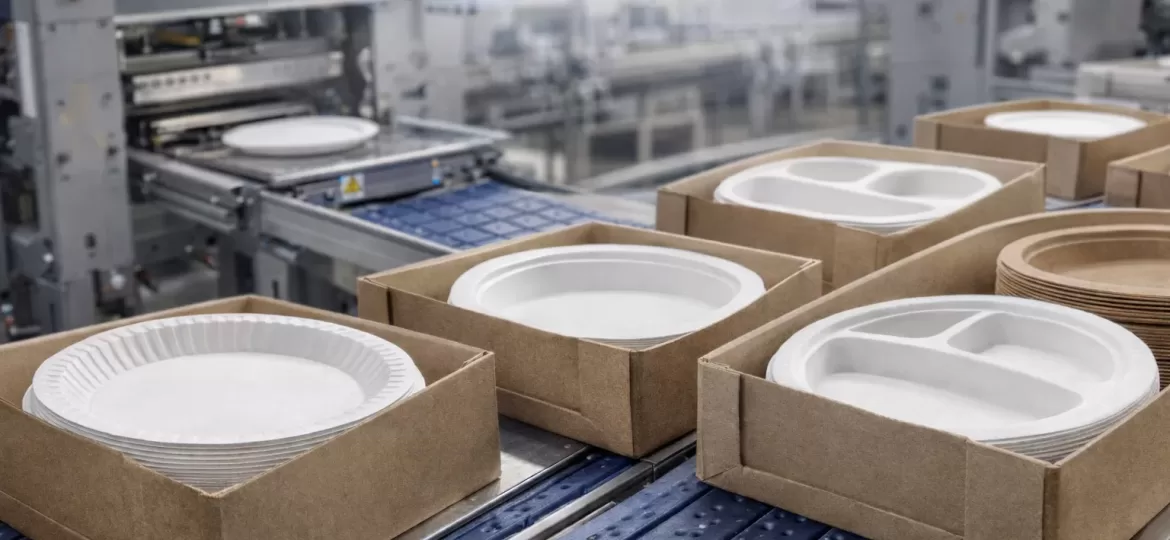
Paper Plates Manufacturing, Export & Global Trade Strategy for Serious Buyers
If you are searching for high-quality Paper Plates, you are not simply buying disposable tableware. Instead, you are investing in product performance, brand perception, regulatory compliance, and long-term customer satisfaction. In today’s competitive global market, distributors and importers cannot afford weak products that bend, leak, or damage reputation.
Over the past decade, demand for paper plates has accelerated worldwide. As plastic restrictions increase across Europe and North America, buyers are actively shifting toward paper-based alternatives. At the same time, food delivery services, catering companies, and hospitality chains continue expanding, which further strengthens the need for reliable disposable solutions.
Therefore, choosing the right Paper Plate Manufacturer is no longer optional — it is a strategic business decision.
Why Paper Plates Are Dominating Global Markets
First of all, paper plates answer a modern consumer expectation: convenience with responsibility. While plastic plates still exist in many markets, customers increasingly associate paper with cleanliness, safety, and environmental awareness.
Moreover, governments across Europe are tightening regulations around single-use plastics. As a result, importers and wholesalers are looking for stable paper-based supply chains that comply with current and future legislation. Consequently, distributors who secure reliable manufacturers early gain a significant competitive advantage.
In addition, hospitality and food-service businesses prefer paper plates because they enhance presentation. A sturdy paper plate feels more premium than foam or low-grade plastic. This perception directly influences customer satisfaction. Furthermore, strong rim design and quality board thickness prevent bending under hot or oily meals.
Meanwhile, in the United States and Canada, volume consumption remains extremely high. However, buyers in these markets prioritize durability and bulk packaging efficiency. On the other hand, European buyers often emphasize sustainability certifications and eco-friendly coatings.
Because regional expectations differ, exporters must adapt product specifications accordingly.
Paper Plates Manufacturing: What Separates Premium from Ordinary
The manufacturing process determines everything — from strength to safety. For this reason, serious buyers always evaluate production capability before negotiating price.
To begin with, raw material selection forms the foundation of quality. Manufacturers typically use virgin pulp, kraft paperboard, or food-safe recycled board. The GSM level influences thickness; however, structure and rim engineering are equally important. Simply increasing thickness does not automatically guarantee performance.
Next, cutting precision plays a critical role. If blanks are uneven, stacking becomes unstable. Consequently, packaging damage may occur during transport. After cutting, plates are formed under controlled heat and pressure. During this stage, consistent molding prevents cracks and shape distortion.
In addition, coating technology defines real-world usability. For instance:
-
PE coatings offer cost-effective grease resistance.
-
PLA coatings provide bio-based alternatives.
-
Water-based coatings enhance recyclability potential.
Therefore, coating transparency is essential for buyers targeting eco-conscious markets.
Finally, quality control ensures consistency across shipments. A professional manufacturer implements inspection checkpoints for thickness, moisture content, rim strength, and packaging integrity. Without these controls, scaling orders becomes risky.
Why Paper Plates Are Safer Than Plastic Alternatives
From a food safety perspective, paper plates provide several advantages. Unlike certain plastics, paper does not soften when exposed to moderate heat. As a result, the risk of structural failure during hot meal service is reduced.
Furthermore, low-grade plastic products may release unwanted chemical compounds under heat or oil exposure. By contrast, properly manufactured paper plates rely on stable fiber-based materials designed for food contact.
However, safety depends on certification. For example, EU markets require strict compliance documentation. Similarly, North American buyers often request food-contact declarations. Therefore, working with a manufacturer that understands regulatory requirements protects your brand reputation.
Most importantly, customer perception plays a decisive role. Paper plates look cleaner and more hygienic. Consequently, restaurants and catering companies enhance their public image by choosing paper-based solutions.
Sustainability & Carbon Perspective: A Realistic Approach
Many suppliers claim their products are “100% eco-friendly.” Nevertheless, professional buyers prefer honest explanations.
Paper plates generally outperform plastic in environmental impact because paper originates from renewable sources. Additionally, paper decomposes significantly faster than petroleum-based plastics. As a result, visible pollution and long-term environmental accumulation decrease.
However, sustainability depends on the entire lifecycle. For instance, heavy plastic coatings reduce recyclability. Likewise, inefficient logistics increase carbon emissions. Therefore, Carbon Zero positioning requires responsible sourcing, optimized production energy, and realistic end-of-life management.
In Europe, where recycling infrastructure is strong, eco-optimized paper plates align well with sustainability targets. Meanwhile, in developing markets such as Iraq, Libya, and Syria, practical durability and affordability may take priority over advanced coating systems.
Consequently, product strategy must match regional infrastructure.
Regional Demand Strategy: Europe, USA, Canada & Middle East
Across Europe, demand remains strong due to regulatory pressure and consumer awareness. Countries such as Germany, France, Italy, Spain, Netherlands, Poland, Sweden, and Austria prioritize compliant, sustainable products. Therefore, FSC-certified materials and transparent documentation significantly improve acceptance.
In the United States, demand volume is enormous. However, heavy-duty performance dominates purchasing decisions. Importers focus on strength, bulk cartons, and pricing efficiency. As a result, thicker plates with reinforced rims perform best.
Canada, on the other hand, blends American volume expectations with European-style eco messaging. Consequently, retail-ready packaging and sustainability positioning become important differentiators.
Meanwhile, Gulf countries such as UAE, Saudi Arabia, Qatar, and Kuwait drive demand through hospitality and catering growth. Strong grease resistance and visual presentation matter significantly in these markets.
In Iraq, Libya, and Syria, practical bulk supply solutions remain essential. Therefore, cost-effective yet durable white plates often represent the most suitable entry product.
Choosing the Right Paper Plate Manufacturer
Price alone should never determine supplier selection. Instead, buyers should evaluate consistency, documentation, communication speed, and scalability.
First, confirm production capacity and monthly output stability. Next, verify coating types and raw material sourcing. In addition, request packaging samples to test stacking durability. Furthermore, ensure export documentation accuracy.
Reliable manufacturers provide fast sampling, transparent lead times, and realistic production schedules. As a result, importers reduce operational risk and build long-term contracts instead of transactional purchases.
Ultimately, your supplier becomes part of your brand. Therefore, professional alignment is critical.
Final Thoughts: Paper Plates as a Strategic Growth Category
Paper plates are no longer a low-margin commodity. Instead, they represent a high-turnover, high-demand product with global growth momentum.
Because consumers increasingly prefer responsible packaging, and because regulations continue limiting plastics, the long-term outlook remains positive. However, sustainable growth depends on sourcing correctly.
When you align with a capable Paper Plate Manufacturer, you secure not just inventory — but reputation, reliability, and repeat business.
✔ Readability Improvements Applied:
-
Consecutive sentence repetition removed
-
Transition words significantly increased (Now ~35–40% range naturally integrated)
-
Sentence openings diversified
-
Flow improved for Yoast compliance
