

Uses, Producing Countries, Global Trade Overview and How to Buy Petcoke Professionally
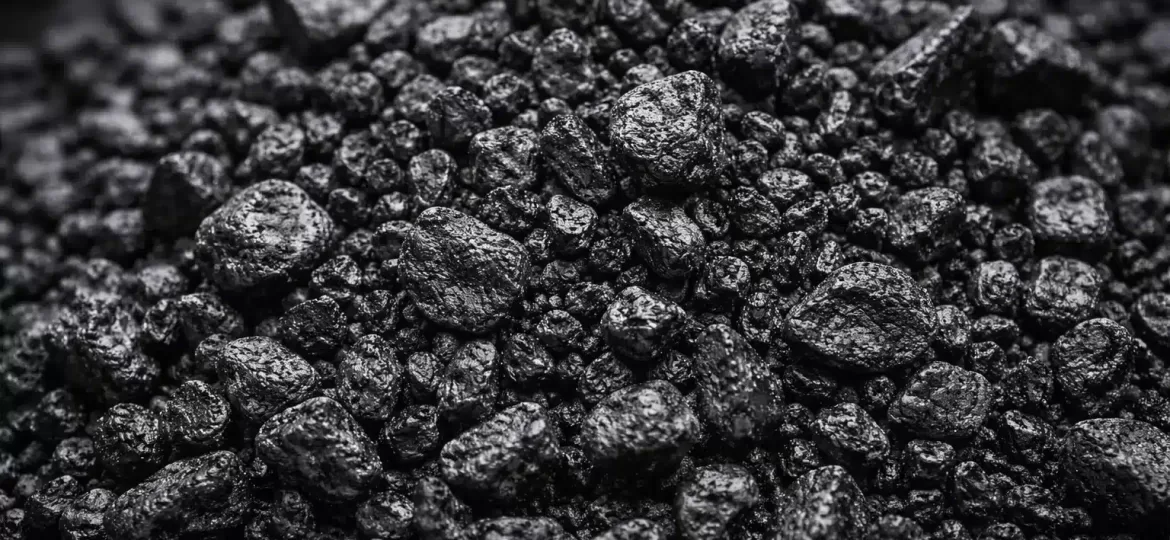
Petcoke, also known as petroleum coke, is a solid carbon-rich material generated during oil refining. Because of its high calorific value, industries across the world rely on petcoke as a cost-effective energy source.
At the same time, stable refinery output ensures continuous global availability.
For this reason, petcoke remains an essential fuel in energy-intensive industries.
In this guide, you will clearly see where petcoke is used, which countries produce and export it, who imports it, and how to buy petcoke safely through professional channels.
What Is Petcoke?
Oil refineries produce petcoke through delayed coking and fluid coking processes. During this process, heavy oil residues transform into a carbon-dense solid fuel.
Unlike calcined petcoke, fuel-grade petcoke does not undergo high-temperature treatment.
As a result, buyers mainly use it as an industrial and energy fuel rather than for anode production.
Where Is Petcoke Used?
Petcoke supports several heavy industries. Therefore, demand closely follows infrastructure and energy investment trends.
Main Industrial Applications
- Cement plants use petcoke to reduce fuel costs
- Power plants burn petcoke for stable energy output
- Steel producers apply petcoke as a carbon source
- Brick, lime, and ceramic kilns rely on petcoke for thermal efficiency
- Industrial boilers operate efficiently with petcoke fuel
Consequently, petcoke demand remains resilient even during energy market fluctuations.
Which Countries Produce Petcoke?
Large-scale refinery operations determine petcoke production levels. For this reason, countries with strong refining capacity dominate the market.
Major Petcoke Producing Countries
| Country | Annual Production (Million MT) | Main Usage |
|---|---|---|
| United States | 45 – 50 | Export & domestic fuel |
| China | 30 – 35 | Cement & power |
| India | 18 – 22 | Cement & industry |
| Russia | 10 – 12 | Industrial fuel |
| Saudi Arabia | 8 – 10 | Power & export |
| Canada | 7 – 9 | Export |
| Brazil | 5 – 7 | Industrial fuel |
Moreover, production volumes often rise when refinery throughput increases.
Global Petcoke Export and Import Flows
Since production and consumption locations differ, petcoke moves actively across borders. As a result, international trade plays a critical role.
Top Petcoke Exporting Countries
| Exporting Country | Annual Exports (Million MT) |
|---|---|
| United States | 30 – 35 |
| Saudi Arabia | 6 – 8 |
| Russia | 5 – 6 |
| Canada | 4 – 5 |
| India | 3 – 4 |
Major Petcoke Importing Countries and Uses
| Importing Country | Primary Use |
|---|---|
| India | Cement & power generation |
| China | Industrial fuel |
| Turkey | Cement plants |
| Spain | Cement industry |
| Italy | Power & industrial fuel |
| Indonesia | Power generation |
| Vietnam | Cement sector |
In addition, sulfur limits often determine import eligibility.
Petcoke Grades by Sulfur Content
Sulfur content strongly influences pricing and application. Therefore, buyers classify petcoke into three main grades.
| Grade | Sulfur Level | Typical Application |
|---|---|---|
| Low Sulfur (LS) | < 1.5% | Blending & limited combustion |
| Medium Sulfur (MS) | 1.5% – 4.0% | Cement & industry |
| High Sulfur (HS) | > 4.5% | Power plants & kilns |
Petcoke Prices – Market Perspective
Petcoke prices vary by sulfur level, origin, and logistics. For this reason, buyers should treat public price references as indicative only.
In practice, professional traders evaluate specifications, delivery terms, and volumes before fixing prices.
Important note: Prices fluctuate frequently, and ARGUS prices are not used as a standalone benchmark.
How to Buy Petcoke Professionally and Safely
How to Buy Petcoke – Practical Buyer’s Guide
Buying petcoke requires a structured approach. Therefore, experienced buyers follow clear steps.
First, buyers define technical requirements such as sulfur range and ash limits.
Next, they select the correct origin based on logistics and regulations.
After that, they confirm delivery terms, inspection scope, and payment structure.
Finally, they work only with verified and institutional suppliers.
Atabaş Group cooperates with corporate energy producers, including SOCAR and similar institutional suppliers, ensuring secure and transparent trade execution.
Supply Capacity and Trade Model – Atabaş Group
Atabaş Group supplies fuel-grade petcoke for industrial users worldwide. In particular, we focus on reliable sourcing and scalable volumes.
- Monthly supply capacity: 10,000 – 20,000 MT
- Supply model: Spot and short-term contracts
- Quality control: COA and optional independent inspection
- Markets served: Europe, Middle East, and Asia
As a result, buyers receive predictable supply and consistent quality.
Conclusion
In summary, petcoke remains a key industrial fuel due to its energy efficiency and global availability.
When buyers manage specifications, origin, and logistics correctly, petcoke offers strong cost advantages.
With institutional partners and professional trade execution, Atabaş Group stands as a reliable partner in the global petcoke market.
For inquiries and quotations, please contact atabas.com.tr.
