

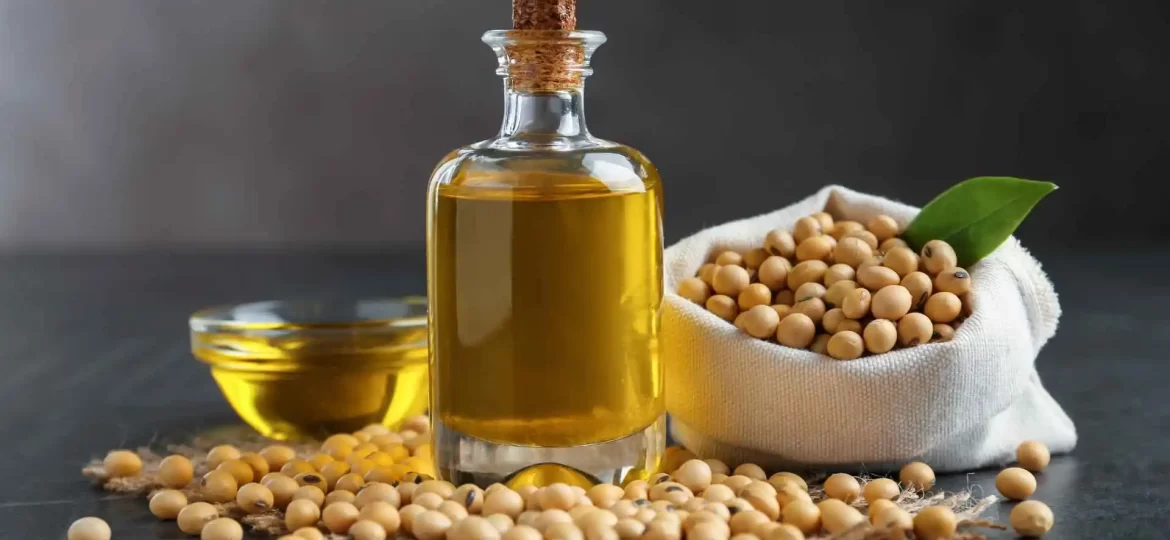
Soybean oil is a versatile vegetable oil produced from soybeans and traded for food, feed, oleochemical, biodiesel, and other industrial applications. Its commercial value, however, depends on much more than appearance or origin. Fatty acid composition, free fatty acids, moisture, oxidation status, phosphorus, impurities, and processing history can all influence suitability.
In addition, buyers can encounter crude, degummed, refined, and application-specific grades. These products serve different purposes and should not automatically be treated as interchangeable.
Therefore, professional evaluation starts with the intended application and continues with measurable technical parameters. This guide explains the essential properties, specifications, grades, processing stages, quality indicators, applications, purchasing criteria, and storage considerations.
1. What Is Soybean Oil?
Soybean oil is a vegetable oil extracted from the seeds of Glycine max, the soybean plant. It consists primarily of triglycerides containing a characteristic mixture of saturated, monounsaturated, and polyunsaturated fatty acids.
Commercial soybean processing separates the bean into two major product streams: an oil fraction and a protein-rich solid fraction. After extraction, processors can further treat the liquid fraction according to the required market and end use.
The resulting commercial products may include crude, degummed, refined, or specially processed grades.
Furthermore, conventional material contains several important fatty acids. Linoleic acid generally represents the largest fraction, while oleic, palmitic, linolenic, and stearic acids also contribute to the overall profile.
Consequently, its composition supports a broad range of applications. Nevertheless, users should select the appropriate grade according to technical and regulatory requirements rather than product name alone.
2. How Is It Produced and Processed?
Production begins with soybean preparation. First, processors clean the beans and remove unwanted foreign material. Next, they crack, condition, and flake the soybeans to prepare them for efficient oil recovery.
Large commercial facilities commonly extract the oil and separate it from the protein-rich solid material. The resulting crude product can then undergo additional processing.
Depending on the required final grade, typical stages may include:
- Degumming
- Neutralization or alternative refining
- Bleaching
- Deodorization
- Winterization or other specialized treatment when required
Degumming reduces phospholipid-containing gums. Meanwhile, refining can reduce free fatty acids and selected impurities. Bleaching helps control pigments and certain trace components. Finally, deodorization removes volatile substances that can influence odor and flavor.
As a result, processing history strongly influences final quality.
3. What Are the Typical Technical Specifications?
Specifications vary according to grade, origin, processing method, contract, and analytical procedure. Therefore, buyers should always use the agreed product specification and batch Certificate of Analysis for final acceptance.
The following table provides a practical technical reference.
| Technical Parameter | Typical or Reference Information |
|---|---|
| Product Type | Vegetable oil |
| Botanical Source | Glycine max |
| Physical State | Liquid under typical ambient conditions |
| Appearance | Yellow to light amber; grade dependent |
| Odor | Characteristic in crude material; mild after appropriate refining |
| Relative Density | Approx. 0.91-0.93; temperature dependent |
| Main Fatty Acid | Generally linoleic acid in conventional grades |
| Iodine Value | Commonly within the range expected for a polyunsaturated vegetable oil |
| Saponification Value | Commonly around 189-195 mg KOH/g |
| Free Fatty Acids | Grade and processing dependent |
| Moisture and Volatile Matter | Controlled according to specification |
| Insoluble Impurities | Controlled according to grade |
| Peroxide Value | Depends on oxidation condition and specification |
| Phosphorus | Particularly important for crude and degummed grades |
| Unsaponifiable Matter | Specification dependent |
| Solubility in Water | Practically insoluble |
| Storage | Controlled conditions appropriate for the specific grade |
These figures provide general guidance rather than guaranteed limits.
Moreover, laboratories may use different analytical methods. Therefore, commercial agreements should identify the relevant test methods when precise compliance limits matter.
4. Which Fatty Acids Define Its Composition?
Fatty acid composition strongly influences nutritional characteristics, oxidation behavior, processing performance, and industrial functionality.
Conventional soy-derived oil mainly contains the following components:
| Fatty Acid | Type | General Presence |
| Linoleic Acid (C18:2) | Polyunsaturated | Major component |
| Oleic Acid (C18:1) | Monounsaturated | Major component |
| Palmitic Acid (C16:0) | Saturated | Significant component |
| Linolenic Acid (C18:3) | Polyunsaturated | Significant component |
| Stearic Acid (C18:0) | Saturated | Smaller major component |
However, exact percentages can change with soybean genetics, climate, growing region, and processing.
For example, high-oleic varieties provide a substantially different balance from conventional soybeans. Therefore, users who depend on a particular fatty acid profile should request analytical confirmation instead of relying on generic averages.
This approach becomes especially important in technical applications where unsaturation directly influences downstream performance.
5. What Is the Difference Between Crude, Degummed, and Refined Grades?
Crude, degummed, and refined products represent different stages of processing.
Crude oil undergoes minimal purification after extraction. Consequently, it may contain higher levels of phospholipids, free fatty acids, pigments, moisture, trace metals, and other naturally occurring components.
Degummed oil undergoes treatment to remove a substantial portion of phospholipid-containing gums. Therefore, processors often use it as an intermediate material for further refining or selected technical applications.
Refined oil receives additional purification to control unwanted components and improve characteristics such as color, odor, and stability.
| Property | Crude Grade | Degummed Grade | Refined Grade |
| Processing Level | Low | Intermediate | Higher |
| Phospholipids | Higher | Reduced | Low |
| Free Fatty Acids | Variable | Variable | Generally lower |
| Color | More pronounced | Improved | Generally lighter |
| Odor | Characteristic | Reduced | Mild |
| Further Processing | Usually required | Often required | Application dependent |
| Typical Role | Refining feedstock | Processing intermediate | Final or formulation use |
Therefore, a buyer should define the required processing stage before comparing commercial offers.
6. Why Do Free Fatty Acids Matter?
Free fatty acids, or FFA, help buyers evaluate oil condition and potential refining requirements.
Most vegetable oil naturally exists as triglycerides. However, hydrolysis can release individual fatty acids from these molecules. Raw material quality, moisture, enzymes, storage, and processing conditions can influence this reaction.
Consequently, crude grades generally tolerate different FFA levels from fully refined products.
Higher FFA may also increase refining requirements. For that reason, processors often establish specific acceptance limits according to the material and intended process.
However, FFA should not serve as the only quality indicator. Instead, buyers should evaluate it together with moisture, impurities, oxidation status, phosphorus, and other relevant parameters.
7. How Do Oxidation and Peroxide Value Affect Quality?
Unsaturated vegetable oils can react with oxygen over time. Heat, light, air exposure, trace metals, and prolonged storage may accelerate this process.
Peroxide value measures primary oxidation products and provides useful information about the current oxidative condition of an oil.
Nevertheless, oxidation is a progressive process. Primary oxidation compounds can later decompose into secondary products. Consequently, peroxide value alone may not describe the complete history of an aged or deteriorated material.
Quality-control programs may therefore combine several indicators when the application requires detailed oxidation assessment.
To reduce unnecessary deterioration, users should control:
- Oxygen exposure
- Excessive temperature
- Light where relevant
- Water contamination
- Trace metal contamination
- Storage duration
Thus, appropriate handling can be as important as initial analytical quality.
8. Which Quality Parameters Matter Most?
The most important parameters depend on the intended application.
For example, a refinery may focus heavily on FFA, phosphorus, moisture, impurities, and color. In contrast, an oleochemical manufacturer may place additional emphasis on fatty acid composition, iodine value, and saponification value.
Important quality indicators can include:
- Fatty acid profile
- Free fatty acids
- Moisture and volatile matter
- Insoluble impurities
- Phosphorus
- Peroxide value
- Iodine value
- Saponification value
- Color
- Density
- Trace metals where relevant
- Oxidation condition
- Batch consistency
Therefore, users should avoid copying a generic specification without considering their actual process.
A technically useful specification identifies parameters that can influence final-product quality, processing efficiency, safety, or regulatory compliance.
9. What Are the Main Food, Feed, and Industrial Uses?
The oil serves several markets because its triglyceride structure and fatty acid composition support both direct use and chemical conversion.
Food Applications
Appropriately refined edible grades can serve as cooking oils and ingredients in food manufacturing, subject to applicable food regulations and specifications.
Animal Nutrition
Suitable feed-grade materials can contribute energy to professionally formulated animal diets. However, feed manufacturers must follow relevant quality and regulatory requirements.
Biodiesel
Vegetable oil triglycerides can serve as feedstock for transesterification processes used in biodiesel manufacturing.
Oleochemicals
Chemical processors can convert triglycerides into fatty acids, esters, soaps, and other useful derivatives.
Coatings and Chemical Manufacturing
Selected industrial applications can use the oil itself or chemically modified derivatives as renewable raw materials.
As a result, the same botanical source can support very different markets. Nevertheless, each application may require a different technical grade.
10. How Does It Compare With Other Vegetable Oils?
Vegetable oils differ in fatty acid composition, oxidative behavior, physical properties, market availability, and processing requirements.
Palm oil, for example, contains a different balance of saturated and unsaturated fatty acids. Sunflower and canola oils also provide distinct fatty acid profiles. Furthermore, specialty high-oleic oils offer additional alternatives for applications that prioritize oxidative stability.
A professional comparison should consider:
- Fatty acid composition
- Degree of unsaturation
- Oxidative stability
- Physical behavior
- Processing requirements
- Availability
- Price
- Regulatory requirements
- Sustainability criteria
- Final-product performance
Therefore, price alone provides an incomplete basis for substitution.
Instead, buyers should evaluate total process performance and the technical requirements of the final product.
11. Does Origin Influence Technical Performance?
Origin can influence composition, although country of origin alone does not determine quality.
Soybean genetics, climate, soil, agricultural conditions, harvest timing, storage before processing, extraction technology, and refining practices can all affect final characteristics.
Potential differences may include:
- Fatty acid profile
- Free fatty acids
- Moisture
- Phosphorus
- Color
- Oxidation status
- Minor components
- Physical characteristics
However, an assumption based solely on geography can be misleading.
Therefore, buyers should compare actual analytical data, supplier performance, traceability, processing capability, and consistency.
For continuous manufacturing, predictable batch-to-batch performance may provide greater practical value than an unusually strong result from a single shipment.
12. What Should Buyers Check Before Purchasing?
Professional procurement starts by defining the required grade.
First, determine whether the application requires crude, degummed, refined, or another specialized material. Next, identify the analytical parameters that directly affect the process.
A practical purchasing checklist includes:
- Product grade
- Fatty acid profile
- Free fatty acids
- Moisture and volatile matter
- Insoluble impurities
- Peroxide value
- Phosphorus
- Iodine value
- Saponification value
- Color
- Relevant contaminant limits
- Origin where required
- Packaging or bulk-delivery conditions
- Analytical methods
- Required quality documentation
Furthermore, contracts should clearly define units and test methods for critical parameters.
As a result, buyers and suppliers can assess compliance using the same technical framework.
13. Which Documents and Laboratory Tests Should Buyers Request?
A clear documentation package helps purchasing and quality teams verify compliance.
The Certificate of Analysis (CoA) can provide batch-specific analytical results. Meanwhile, the agreed product specification defines the required acceptance limits.
Depending on grade and application, useful laboratory tests may include:
- Fatty acid composition
- FFA
- Moisture and volatile matter
- Insoluble impurities
- Peroxide value
- Phosphorus
- Iodine value
- Saponification value
- Color
- Trace metals where relevant
- Application-specific contaminants
In addition, food, feed, fuel, and chemical markets may require different regulatory or quality documents.
Therefore, buyers should develop documentation requirements around the actual end use rather than requesting the same package for every grade.
14. How Should the Oil Be Stored and Handled?
Proper storage helps preserve physical and chemical quality.
First, tanks and containers should remain clean, dry, and compatible with the product. Operators should also prevent water ingress and cross-contamination.
Furthermore, unnecessary exposure to heat and oxygen can accelerate deterioration. Storage managers should therefore control conditions according to the grade, storage duration, climate, and facility design.
Good practices may include:
- Clean storage tanks
- Moisture prevention
- Appropriate temperature control
- Reduced unnecessary air exposure
- Prevention of cross-contamination
- Regular tank inspections
- Controlled transfer procedures
- Stock rotation
- Quality monitoring during extended storage
In addition, heating should remain controlled whenever it is necessary for transfer or handling.
Ultimately, supplier recommendations and applicable safety procedures should guide storage conditions for the specific product.
15. What Should You Know Before Selecting Soybean Oil?
What is soybean oil?
Soybean oil is a triglyceride-rich vegetable oil obtained from soybeans. Conventional grades contain significant amounts of linoleic, oleic, palmitic, linolenic, and stearic fatty acids.
What is the difference between crude and refined material?
Crude material undergoes limited purification after extraction. Refined material receives additional processing to reduce selected impurities, free fatty acids, pigments, and volatile compounds.
What does degummed mean?
Degumming reduces phospholipid-containing gums. Therefore, degummed material often serves as an intermediate for further processing.
What is the main fatty acid?
Linoleic acid generally represents the largest fatty acid fraction in conventional varieties. However, actual composition varies with genetics and origin.
Is it soluble in water?
No. Like other conventional triglyceride oils, it is practically insoluble in water.
Why is iodine value important?
Iodine value indicates the degree of unsaturation. Consequently, it can help with characterization, quality control, and industrial process evaluation.
What does saponification value indicate?
Saponification value measures the amount of potassium hydroxide required to saponify a defined quantity of oil. Therefore, it provides useful characterization data for fats and oils.
Why should buyers monitor FFA?
FFA can influence refining requirements and provide information about hydrolysis. However, buyers should interpret it together with other quality parameters.
Why does phosphorus matter?
Phosphorus commonly relates to phospholipid content and becomes particularly relevant when evaluating crude or degummed grades for downstream processing.
What does peroxide value tell a buyer?
It measures primary oxidation products and helps assess current oxidative condition. Nevertheless, a complete oxidation assessment may require additional indicators.
Can it serve as biodiesel feedstock?
Yes. Suitable vegetable oil grades can provide triglyceride feedstock for biodiesel production.
Can it be used in animal feed?
Suitable grades can contribute dietary energy to professionally formulated feed. However, the material must meet applicable feed requirements.
Are all commercial grades interchangeable?
No. Crude, degummed, refined, food, feed, and industrial grades can have substantially different specifications.
What is the most important purchasing document?
The agreed product specification defines required limits, while a batch-specific CoA helps verify actual analytical results. Therefore, buyers should use both when appropriate.
What is the best way to evaluate soybean oil?
Avoid evaluating the product through a single number. Instead, use a combined technical approach:
Grade + fatty acid profile + FFA + moisture + oxidation status + impurities + processing history + intended application.
This approach helps buyers compare products more accurately while avoiding the assumption that every soy-derived oil provides identical performance.
