


Aggregate export from Türkiye can support large construction and infrastructure projects that need stable supply, suitable material quality and efficient bulk logistics. In particular, crushed stone, limestone aggregate, road base materials and other mineral products can serve roads, ports, concrete works, industrial sites and major civil engineering projects.
Türkiye has an established quarry and construction materials industry. In addition, its access to major maritime routes creates practical options for international shipments. Therefore, buyers can evaluate Turkish aggregate export sources based on production capacity, material quality, port access and total delivered cost.
This approach becomes especially important for African infrastructure projects. For example, large road, port, industrial and urban development works can require substantial volumes of aggregate over long periods. As a result, a successful supply plan must connect quarry production with inland transport, stock management, port operations and vessel planning.
However, aggregate is a high-volume product with a relatively low value per tonne compared with many industrial materials. Therefore, logistics often determine whether an export project is commercially practical.
For this reason, aggregate export from Türkiye requires both technical and logistics planning from the beginning.
1. Why Source Aggregate from Türkiye?
Türkiye has a large construction materials sector supported by quarrying, crushing, screening, cement, concrete and infrastructure industries.
As a result, different regions can offer access to limestone and other rock sources for a wide range of construction uses. Moreover, existing quarry and processing systems can support different aggregate sizes and project needs.
However, geological conditions vary from quarry to quarry. Therefore, buyers should evaluate each source according to the required application rather than assume that all Turkish aggregate has the same properties.
A suitable source for aggregate supply from Türkiye should combine several factors:
- Suitable geology
- Required aggregate properties
- Stable production capacity
- Crushing and screening capability
- Consistent grading
- Quality control
- Quarry-to-port access
- Stock area availability
- Loading capability
- Competitive logistics
Moreover, location can be just as important as material quality.
For example, a suitable quarry located far from the loading port may create high inland transport costs. In contrast, a source with good road access and a shorter port distance may offer a better delivered cost.
Therefore, buyers should compare the complete supply chain rather than the quarry price alone.
2. Aggregate Products for Export Markets
Aggregate is not one standard product. Instead, projects require different materials based on their design, construction method and technical needs.
For example, concrete production may require carefully graded fine and coarse aggregate. Meanwhile, road projects may require broader graded materials for base and subbase layers.
For this reason, Turkish aggregate export can involve several product groups:
| Product | Example Size | Common Use |
|---|---|---|
| Fine Aggregate | 0/4 mm | Concrete and selected construction uses |
| Crushed Aggregate | 4/8 mm | Concrete and construction |
| Crushed Aggregate | 8/16 mm | Concrete and civil works |
| Coarse Aggregate | 16/31.5 mm | Roads and infrastructure |
| Graded Aggregate | 0/31.5 mm | Road base and civil works |
| Graded Aggregate | 0/63 mm | Subbase and infrastructure |
| Limestone Filler | Fine material | Selected asphalt and industrial uses |
| Project-Specific Mix | As specified | Roads, platforms and civil works |
However, these sizes are examples rather than universal requirements.
Therefore, every quotation should follow the buyer’s required grading, specification and intended use.
Moreover, projects may use different terms for similar materials. For this reason, an RFQ should include sieve requirements or a grading curve whenever possible.
As a result, both buyer and supplier can work with the same technical definition from the beginning.
3. Aggregate Export for African Infrastructure Projects
Infrastructure projects across Africa can require large volumes of basic construction materials. Therefore, aggregate export for infrastructure can become relevant when local project needs, technical requirements and delivered costs support international sourcing.
For example, road networks, ports, industrial zones, airports, housing projects, energy sites and urban development can all create demand for aggregate.
In addition, many large civil works require several aggregate grades within the same project.
Typical applications may include:
- Highway construction
- Urban roads
- Road base and subbase
- Asphalt production
- Ready-mix concrete
- Precast concrete
- Bridge works
- Port construction
- Airport infrastructure
- Industrial platforms
- Drainage works
- Railway-related civil works
- Building foundations
- General civil engineering
However, project requirements can vary greatly between countries, contractors and applications.
Therefore, exporters should not approach Africa as one single aggregate market.
Instead, each project needs its own review of specifications, required volume, destination port, local transport conditions and delivery schedule.
Moreover, a buyer may follow EN, ASTM, national standards or a project-specific specification.
As a result, technical documents should always match the actual tender or project requirements.
4. Bulk Aggregate Export and Shipping from Türkiye
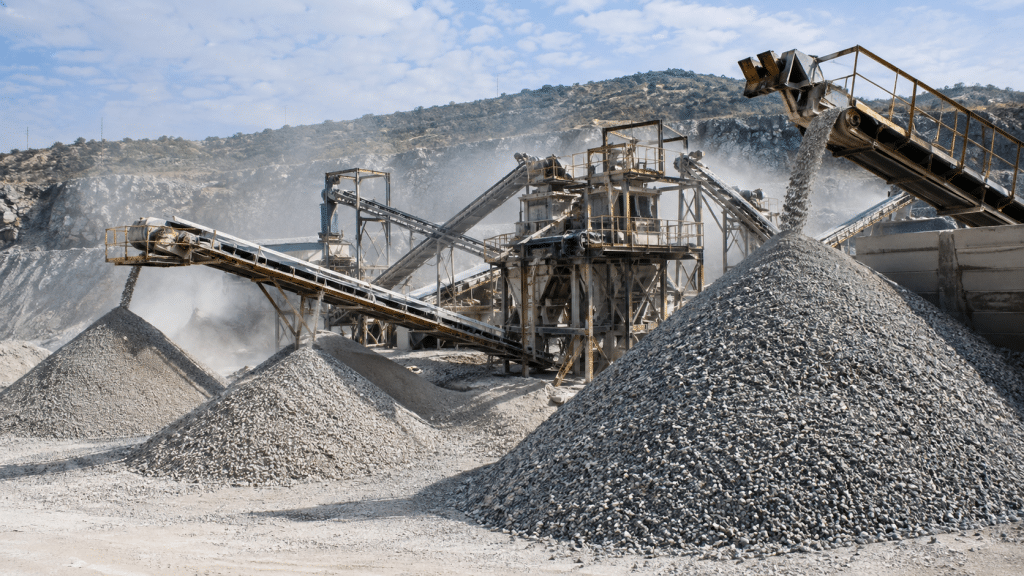
Bulk aggregate export can provide an efficient transport method for large volumes.
Instead of packing the material in bags or loading it into containers, suppliers can move suitable aggregate directly as dry bulk cargo. As a result, this method can reduce packaging and container handling.
Moreover, bulk shipping can support much larger shipment volumes. Therefore, it can become an important part of aggregate export from Türkiye when shipment size and port conditions support the operation.
However, bulk aggregate shipping requires careful coordination.
The basic supply chain may include:
Quarry → Crushing and Screening → Stockpile → Inland Transport → Port Stockpile → Vessel Loading → Sea Freight → Discharge Port → Project Site
Each stage affects cost and delivery performance. Therefore, exporters should plan the full route before confirming the final commercial offer.
For example, a quarry may have enough production capacity. However, the available truck fleet may not move material to the port quickly enough.
Similarly, the port may have enough storage space but limited daily loading capacity.
As a result, production capacity alone does not determine export capacity.
Therefore, successful bulk aggregate export depends on the capacity of the entire supply chain.
5. Choosing the Right Vessel for Aggregate Cargo
Dry bulk vessels can carry large aggregate cargoes, depending on port conditions and shipment size.
For example, possible vessel classes may include smaller bulk carriers, Handysize vessels and larger dry bulk ships where both ports can handle them.
However, the largest vessel does not always provide the lowest total cost.
First, the loading and discharge ports must have suitable draft. In addition, berth length, cargo handling equipment and storage capacity must support the selected vessel.
Moreover, the discharge port must be able to receive the cargo at an acceptable rate.
Therefore, vessel selection should consider:
- Shipment quantity
- Port draft
- Berth restrictions
- Loading rate
- Discharge rate
- Available cranes
- Shore equipment
- Vessel gear
- Stock availability
- Laytime
- Demurrage risk
- Sea freight
- Final delivery schedule
For example, a geared vessel may provide an advantage where shore cranes are limited.
In contrast, a port with strong bulk handling systems may allow a wider range of vessel options.
Therefore, vessel selection should support the complete Turkish construction aggregate supply operation rather than shipment volume alone.
6. Port Logistics for Aggregate Export from Türkiye
Port logistics play a major role in aggregate export from Türkiye.
Because aggregate shipments can involve thousands or tens of thousands of tonnes, the exporter must build enough stock before or during vessel loading.
Therefore, stock planning becomes critical.
A bulk operation may require coordination between:
- Quarry production
- Truck dispatch
- Port entry
- Weighing
- Stock area
- Material separation
- Loading equipment
- Vessel arrival
- Customs procedures
- Survey and inspection
Moreover, different aggregate grades must remain separate.
For example, mixing fine and coarse fractions during transport or port storage can change the grading and create quality problems.
Therefore, clear stock control and loading procedures are essential.
In addition, weather conditions can affect some operations. For example, heavy rain may increase moisture and make some fine materials harder to handle.
As a result, port planning should consider both operational and product-related risks.
7. Technical Requirements for Turkish Aggregate Export
Technical compliance is a key part of Turkish aggregate export because buyers need materials that match the intended application.
For concrete applications, EN 12620 may provide the relevant European framework.
Meanwhile, EN 13043 covers aggregates and filler aggregates for bituminous mixtures and surface treatments for roads, airfields and other trafficked areas.
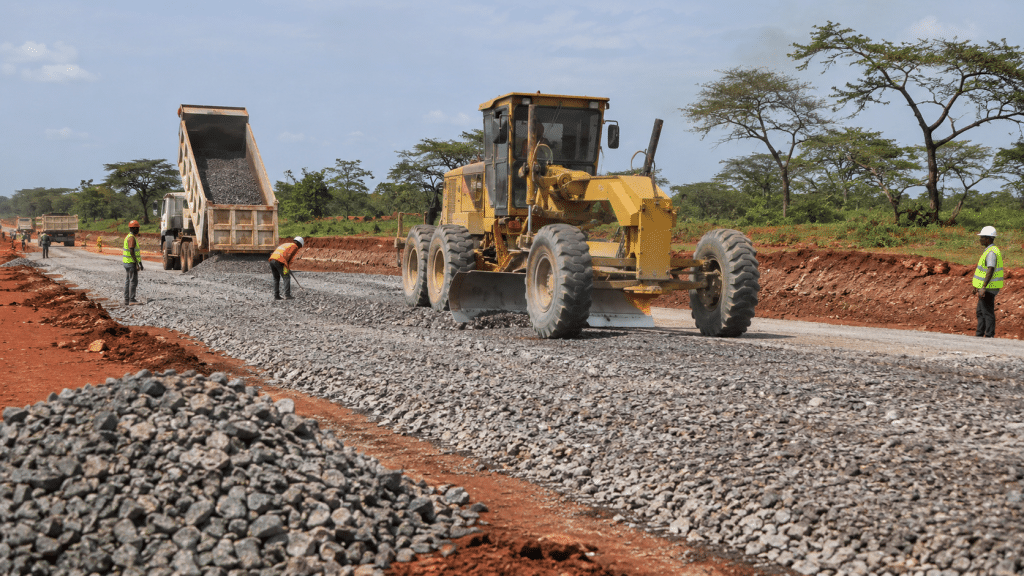
For unbound and hydraulically bound materials used in civil engineering and road construction, EN 13242 may apply.
In addition, final unbound mixtures may involve requirements under EN 13285.
However, the applicable standard depends on the project.
Therefore, suppliers should always follow the buyer’s technical specification and required test categories.
Depending on the application, testing may cover:
- Particle-size distribution
- Fines content
- Particle shape
- Flakiness
- Fragmentation resistance
- Wear resistance
- Particle density
- Water absorption
- Durability
- Chemical properties
- Petrographic properties
- Moisture
- Other project-specific tests
Moreover, a standard name alone does not define every required value.
For example, saying “EN 13242 aggregate” does not automatically establish one universal grading or one fixed Los Angeles value for every road project.
Therefore, the buyer should provide the required categories, grading limits and project specification whenever possible.
As a result, the supplier can evaluate the actual quarry material against the correct technical target.
8. Quality Control Before Bulk Aggregate Export
Bulk aggregate export requires strong quality control because a vessel may carry a large quantity under one contract.
First, the supplier should confirm that the quarry can produce the required material consistently.
Next, the parties should agree on sampling and testing procedures.
Then, depending on the contract, quality control may include:
- Quarry test reports
- Sieve analysis
- Laboratory analysis
- Stockpile sampling
- Pre-shipment inspection
- Loading supervision
- Independent inspection where required
- Weight determination
- Moisture checks where relevant
- Certificate of Analysis
- Other project documents
Moreover, sampling should represent the actual cargo as closely as possible.
For example, a laboratory result from a different quarry zone or an old production batch may not represent the material being shipped.
Therefore, traceability becomes important for large and long-term supply contracts.
In addition, buyers and sellers should agree on the inspection point before signing the contract.
As a result, both sides can reduce the risk of quality disputes after loading.
9. Cost Structure of Aggregate Export from Türkiye
Aggregate export from Türkiye has a different cost structure from many higher-value industrial products.
The material itself may represent only one part of the delivered price.
In addition, exporters may need to calculate:
Quarry Price + Processing + Inland Transport + Port Costs + Storage + Loading + Inspection + Sea Freight + Other Agreed Costs
Therefore, freight and handling can have a major effect on the final price per tonne.
In particular, distance from the quarry to the port can strongly affect inland transport cost.
Moreover, truck payload, road conditions, port waiting time and stock area costs can change the final calculation.
Sea freight can also vary according to:
- Vessel size
- Cargo quantity
- Loading port
- Destination port
- Market conditions
- Vessel position
- Fuel costs
- Port restrictions
- Loading and discharge rates
- Laytime terms
Therefore, exporters should calculate aggregate projects on a shipment-specific basis.
Otherwise, a fixed freight assumption may quickly become inaccurate.
As a result, the lowest quarry price does not always provide the lowest delivered price.
10. Long-Term Aggregate Supply from Türkiye
Large infrastructure projects may need regular aggregate deliveries rather than one shipment. Therefore, long-term aggregate supply from Türkiye should begin with realistic production and logistics planning.
For example, a project requiring 50,000 MT per month needs more than a quarry that can produce 50,000 MT.
In addition, the supply chain must move, store and load that quantity within the required schedule.
Therefore, long-term planning should review:
- Monthly quarry output
- Crushing capacity
- Screening capacity
- Stockpile capacity
- Truck availability
- Daily inland transport capacity
- Port storage
- Daily vessel loading rate
- Vessel availability
- Destination discharge rate
- Local transport at destination
Moreover, seasonal conditions may affect both quarry production and logistics.
For this reason, buyers and suppliers may need safety stock or flexible shipment windows.
As a result, a reliable monthly program depends on the weakest part of the supply chain, not only on quarry capacity.
Therefore, every stage should support the planned monthly volume before the parties commit to a long-term schedule.
11. Information Needed for an Aggregate Export RFQ
A detailed RFQ helps suppliers prepare a more accurate offer for aggregate export for infrastructure projects.
Therefore, buyers should provide as much technical and logistics information as possible.
A professional aggregate inquiry should include:
- Product type
- Intended application
- Required particle size
- Grading limits
- Applicable standard
- Technical specification
- Required tests
- Total quantity
- Monthly quantity where applicable
- Trial quantity if required
- Packing or bulk shipment
- Destination country
- Destination port
- Required Incoterm
- Target shipment period
- Expected discharge rate
- Inspection requirements
- Required documents
In addition, the buyer should provide the project specification or tender document when available.
This allows the supplier to compare the quarry material with the actual technical requirements.
As a result, both sides can identify unsuitable products before spending time on freight and commercial negotiations.
Moreover, complete RFQ information makes freight planning more accurate because vessel size and loading plans depend on quantity and destination.
12. Aggregate Supply from Türkiye with ATABAŞ GLOBAL
Aggregate supply from Türkiye requires more than finding a quarry.
Instead, the operation must connect product quality, production capacity, inland transport, port handling and sea freight.
Therefore, ATABAŞ GLOBAL supports international sourcing and trade coordination for aggregate requirements based on customer and project specifications.
Depending on the project, the coordination process can cover:
- Product requirement review
- Quarry and supply-source evaluation
- Aggregate grading review
- Technical document coordination
- Production planning
- Quantity planning
- Inland logistics
- Port selection
- Bulk shipment planning
- Vessel and freight coordination
- Inspection planning
- Commercial terms
- Delivery schedule
Moreover, African infrastructure projects may involve high volumes and long supply periods.
Therefore, ATABAŞ GLOBAL evaluates the supply chain as a complete operation rather than considering only the material price.
For example, a suitable quarry may still require further review if inland transport or port loading cannot support the planned volume.
Likewise, attractive sea freight may not create a competitive delivered price if the destination has slow discharge conditions.
As a result, bulk project planning should connect the technical and logistics sides from the beginning.
Therefore, buyers can evaluate aggregate export from Türkiye on both technical and commercial grounds before moving to the contract stage.
13. Frequently Asked Questions About Aggregate Export from Türkiye
Can aggregate be exported from Türkiye in bulk?
Yes. Bulk aggregate export can be suitable for large orders when the quarry, loading port and destination port can support the required operation. However, commercial feasibility depends heavily on inland and sea freight costs. Therefore, each route and shipment size should be evaluated separately.
Which aggregate products can be supplied for infrastructure projects?
Depending on the available quarry and project specification, products may include fine aggregate, crushed limestone aggregate, coarse aggregate, road base, subbase materials and project-specific graded products. In addition, different fractions may be combined where the production setup and project specification allow it.
What is the minimum quantity for bulk aggregate shipment?
There is no universal minimum quantity. Instead, the practical shipment size depends on vessel availability, port conditions, freight economics and project needs. Therefore, each route should be evaluated separately.
Which standards apply to aggregate?
The required standard depends on the application. For example, EN 12620 relates to concrete aggregates, EN 13043 to aggregates for bituminous mixtures and surface treatments, and EN 13242 to aggregates for unbound and hydraulically bound materials in civil engineering and road construction. Therefore, the buyer should identify the intended application before confirming the technical standard.
Can Turkish aggregate be supplied for African road projects?
Potentially, yes. However, the material must meet the project’s technical specification. In addition, the quarry-to-destination logistics must be commercially workable. Therefore, both technical and logistics conditions need review.
Why is bulk shipping suitable for large aggregate projects?
Bulk shipping removes the need for individual packaging and can move large cargo volumes in one shipment. As a result, it may provide more efficient logistics for suitable high-volume projects.
Is the lowest FOB price always the best option?
No. Inland transport, port costs, loading rates, vessel freight and discharge conditions can significantly affect the final delivered cost. Therefore, buyers should compare the complete logistics chain rather than the FOB price alone.
What documents should buyers request?
Depending on the project, buyers may request technical data, grading results, laboratory test reports, inspection documents, a Certificate of Analysis and other contract documents. In addition, independent inspection may be required for some projects.
Can aggregate specifications be customized for a project?
Quarries may produce different crushed and screened fractions if their equipment, raw material and production setup allow it. However, suppliers should confirm technical feasibility before accepting a custom grading requirement. Therefore, buyers should provide the full grading specification at the inquiry stage.
What information does ATABAŞ GLOBAL need to evaluate an aggregate inquiry?
First, the buyer should provide the product type, intended use, grading and technical specification. In addition, quantity, destination port, delivery schedule, Incoterm and inspection requirements are important. Finally, a project specification or tender document can support a more accurate technical review.
