

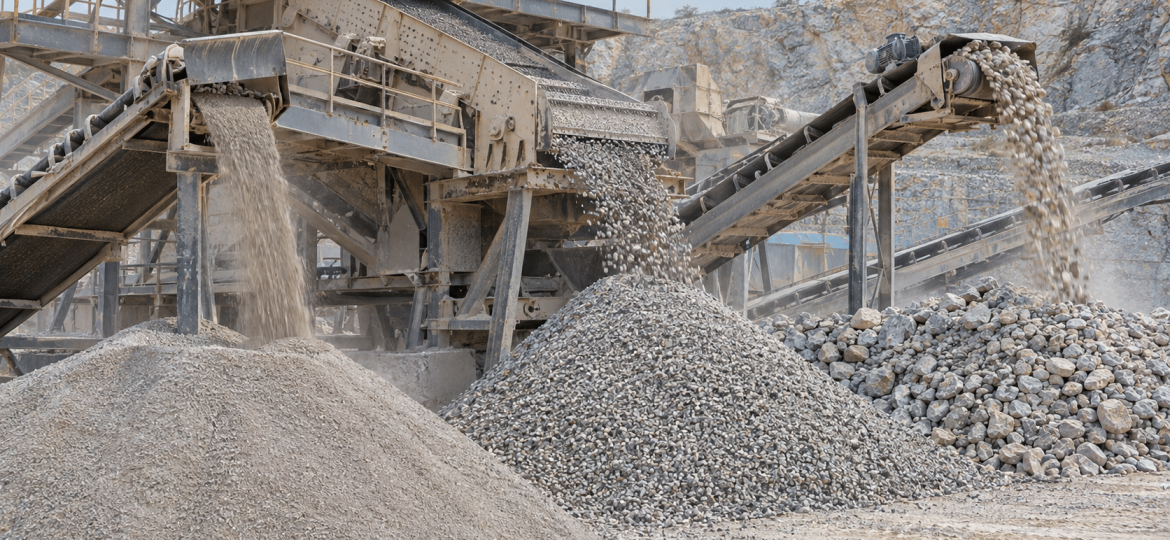
Limestone aggregate sizes play an important role in determining how crushed limestone performs in construction, road building, concrete, asphalt and civil engineering applications. Although all these materials may originate from the same limestone quarry, crushing and screening processes create products with very different particle-size distributions and technical functions.
For example, filler, crushed stone and by-pass material provide good examples of these differences. Filler consists predominantly of very fine mineral particles. In contrast, crushed stone, commonly referred to as “mıcır” in Türkiye, includes controlled aggregate fractions produced through crushing and screening. By-pass material, on the other hand, generally describes material separated during an early stage of quarry processing, and its grading can vary considerably between production plants.
Therefore, buyers should not select aggregate only by commercial product name.
Instead, they should consider particle size, grading, fines content, mechanical properties, intended application and the relevant technical specification.
Moreover, European aggregate standards classify materials according to their characteristics and intended use rather than relying on local commercial terminology.
Consequently, understanding limestone aggregate sizes provides a stronger technical basis for selecting the right material for each project.
1. Understanding Limestone Aggregate Sizes
Aggregate production starts with natural rock extracted from a quarry. First, crushers reduce the rock to smaller particles, while screens separate the crushed material according to defined size ranges.
A typical process can follow this sequence:
Quarry Extraction → Crushing → Screening → Size Classification → Stockpiling → Quality Control → Delivery
However, crushing does not create particles of one identical size. Instead, each aggregate fraction contains particles within a specified grading range.
For this reason, European aggregate specifications commonly use the d/D designation.
In this designation:
- d represents the lower sieve size.
- D represents the upper sieve size.
For example, a 4/8 mm aggregate represents a fraction designated between the 4 mm and 8 mm sieves according to the applicable grading requirements.
Likewise, 8/16 mm and 16/31.5 mm identify progressively coarser aggregate fractions.
Nevertheless, nominal designation does not mean every individual particle has an exact dimension between these two numbers. Instead, applicable grading tolerances and oversize or undersize limits depend on the relevant standard and declared category.
Therefore, buyers should evaluate the complete sieve analysis rather than relying only on the commercial size name.
2. Limestone Filler and Aggregate Particle Sizes
Limestone filler is a very fine mineral aggregate produced from limestone.
Under European aggregate terminology, filler aggregate generally refers to aggregate whose particles predominantly pass the 0.063 mm sieve and which manufacturers can add to construction materials for specific technical purposes.
As a result, this fine particle size gives filler very different characteristics from conventional coarse crushed stone.
Depending on the intended application, limestone filler can contribute to:
- Particle packing
- Void filling
- Mixture consistency
- Mineral skeleton optimization
- Surface characteristics
- Workability or processing behavior
However, filler should not be confused with uncontrolled quarry dust.
Although both materials may contain very fine limestone particles, technically specified filler requires controlled characteristics appropriate to its intended application.
For example, filler aggregate for bituminous mixtures falls within the scope of EN 13043, while aggregates for concrete fall under EN 12620. Therefore, the required characteristics depend on where the project will use the material.
Consequently, buyers should specify both the intended application and applicable standard when requesting limestone filler.
3. Crushed Limestone Aggregate Sizes
“Mıcır” is a widely used Turkish commercial term for crushed stone aggregate.
However, it does not define one universal particle size.
Instead, a quarry can produce several crushed limestone fractions that the market may collectively describe as mıcır.
Typical examples can include:
| Aggregate Type | Example Size | General Description |
|---|---|---|
| Fine Fraction | 0/4 mm | Fine crushed aggregate |
| Small Crushed Stone | 4/8 mm | Small coarse fraction |
| Medium Crushed Stone | 8/16 mm | Medium coarse fraction |
| Coarse Crushed Stone | 16/31.5 mm | Larger coarse fraction |
| All-in Aggregate | 0/31.5 mm | Combined fine and coarse grading |
| All-in Aggregate | 0/63 mm | Larger combined grading |
However, these sizes are examples rather than universal specifications.
Moreover, different markets may use commercial names such as No. 1, No. 2 or No. 3 crushed stone. As a result, such names can create confusion because their actual grading may differ between suppliers and countries.
Therefore, international quotations should preferably state the d/D aggregate designation instead of relying only on local names.
For example, “Crushed Limestone Aggregate 8/16 mm” provides much clearer technical information than simply writing “No. 2 Mıcır.”
4. By-Pass Aggregate Sizes and Grading
By-pass requires particular attention because the term does not represent a universal EN aggregate size category.
In quarry operations, producers commonly use the term for material that bypasses or leaves the main crushing and screening circuit at an earlier processing stage.
Consequently, depending on the quarry configuration, this material can contain a broad mixture of:
- Fine particles
- Sand-sized material
- Small crushed stone
- Larger particles
- Natural quarry fines
Therefore, one quarry’s by-pass material may differ substantially from another quarry’s product.
Moreover, this distinction becomes especially important in international trade.
For this reason, a buyer should not assume that “by-pass” automatically means 0/25 mm, 0/31.5 mm, 0/38 mm or another specific grading unless the supplier confirms that grading through technical documentation.
Instead, the supplier should provide a sieve analysis or grading curve.
In addition, engineers should examine fines content and material characteristics before approving by-pass material for a structural application.
Consequently, by-pass should function as a commercial or processing description, while laboratory results should determine its actual technical classification and suitability.
5. Limestone Aggregate Grades: Filler, Crushed Stone and By-Pass
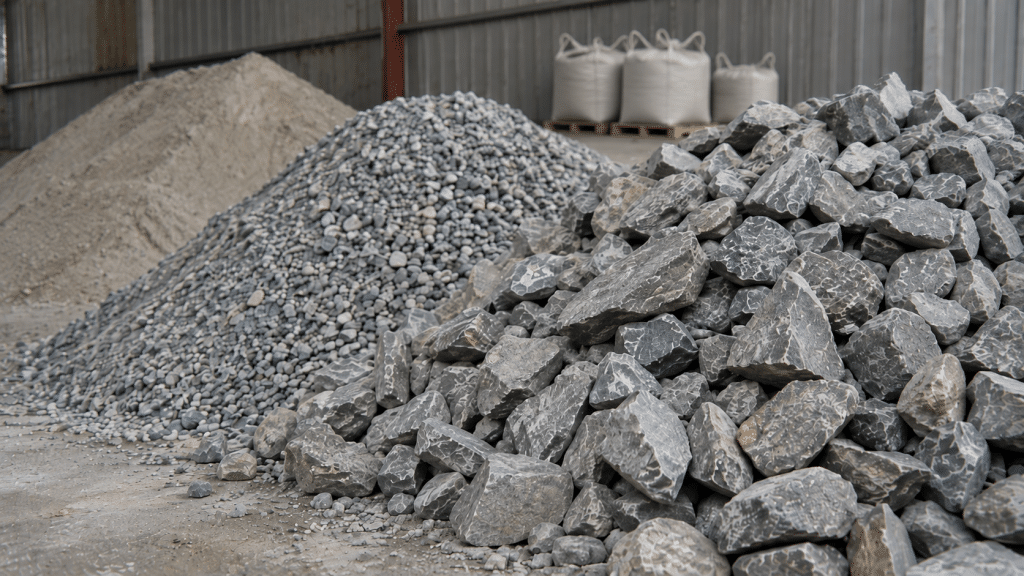
Although all three materials may originate from limestone, they differ significantly in grading, production route and intended function.
| Characteristic | Limestone Filler | Crushed Stone Aggregate | By-Pass |
|---|---|---|---|
| General Particle Character | Very fine | Controlled crushed fractions | Mixed grading |
| Typical Production | Fine processing/classification | Crushing and screening | Separated during processing |
| Size Consistency | Controlled | Controlled by screens | Can vary considerably |
| Main Technical Basis | Fine mineral fraction | Defined d/D grading | Sieve analysis required |
| Common Use | Asphalt, concrete and industrial mixtures | Concrete, asphalt, roads and civil works | Selected road/fill applications subject to testing |
| EN Classification | Depends on application | Depends on application | Not a standalone EN product class |
| Technical Verification | Required | Required | Particularly important |
Therefore, product names alone cannot determine interchangeability.
For example, limestone filler cannot simply replace 0/4 mm aggregate because the two materials have different particle-size distributions and functions.
Likewise, engineers should not automatically treat by-pass material as equivalent to a specified 0/D road-base aggregate.
Instead, the project specification should determine the appropriate product.
6. Fine, Coarse and All-in Limestone Aggregate Sizes
Understanding the broader aggregate classifications makes limestone aggregate sizes easier to evaluate.
Fine Limestone Aggregate
Fine aggregate generally has d = 0 and an upper size D that falls within the limits defined by the relevant aggregate standard.
For example, a 0/4 mm limestone fraction represents a common fine aggregate designation.
In addition, fine aggregate can contribute to particle packing and fill spaces between larger particles in concrete, asphalt and granular mixtures.
Coarse Limestone Aggregate
In contrast, coarse aggregate consists primarily of larger particles.
Examples can include:
- 4/8 mm
- 8/16 mm
- 16/31.5 mm
However, the project determines which fractions it requires.
All-in Limestone Aggregate
All-in aggregate contains both fine and coarse particles.
For example, available materials may include 0/31.5 mm or 0/63 mm.
Therefore, these materials can provide continuous grading for selected civil engineering and road applications when they meet the relevant specification.
Consequently, the difference between fine, coarse and all-in aggregate depends on grading rather than appearance alone.
7. Why Limestone Aggregate Grading Matters
Grading describes the distribution of particle sizes within an aggregate.
Therefore, it has a major influence on how aggregate behaves during mixing, placement and compaction.
For example, a well-designed granular mixture can allow smaller particles to occupy some of the spaces between larger particles.
As a result, the material can develop a denser granular structure under suitable compaction conditions.
However, uncontrolled grading can cause several problems.
For instance, excessive fine material may alter moisture behavior, while insufficient fines can leave excessive void space. Likewise, segregation can cause different parts of the same stockpile to show different particle distributions.
Therefore, producers should control crushing, screening, stockpiling and loading operations.
Moreover, buyers should request a grading curve when particle distribution directly affects project performance.
In particular, this becomes important when evaluating by-pass and all-in limestone aggregate sizes.
8. Limestone Aggregate Sizes for Concrete, Asphalt and Roads
The correct aggregate fraction depends primarily on the intended application.
Limestone Aggregate for Concrete
Concrete production can combine fine and coarse limestone fractions to create the aggregate skeleton required by the mix design.
In this case, relevant specifications may include EN 12620.
Therefore, concrete producers may evaluate grading, particle shape, fines, fragmentation resistance, density, water absorption and other characteristics according to the required category.
Limestone Aggregate for Asphalt
Similarly, asphalt production combines different aggregate fractions with bituminous binder to create a designed mineral structure.
EN 13043 covers aggregates and filler aggregates for bituminous mixtures and surface treatments for roads, airfields and other trafficked areas.
Consequently, asphalt applications may require carefully controlled coarse aggregate, fine aggregate and filler.
Limestone Aggregate for Road Base
Meanwhile, aggregates for unbound and hydraulically bound materials in civil engineering work and road construction fall within the scope of EN 13242.
For example, road-base and subbase applications may use continuously graded aggregate such as selected 0/D materials.
However, the final unbound mixture may also need to comply with requirements under EN 13285 or relevant national road specifications.
Therefore, selecting limestone aggregate sizes should always start with the intended application rather than the quarry’s available product list.
9. How to Select the Correct Limestone Aggregate Size
A professional aggregate inquiry should answer several technical questions before price comparison begins.
First, the buyer should identify the intended application.
Next, the buyer should define the required grading or aggregate size.
After that, the technical team should determine the relevant standard and performance categories.
Important selection criteria can include:
- Intended application
- d/D designation
- Grading curve
- Fines content
- Fines quality
- Particle shape
- Percentage of crushed particles
- Fragmentation resistance
- Wear resistance
- Particle density
- Water absorption
- Durability
- Chemical characteristics where relevant
- Required quantity
- Delivery schedule
Moreover, the buyer should consider whether the project requires separate aggregate fractions or a continuously graded material.
For instance, an asphalt plant may purchase several controlled fractions separately and combine them according to its mix design.
In contrast, a road project may require a specified all-in aggregate for a granular layer.
Consequently, there is no single “best” limestone aggregate size for every project.
10. Quarry Production and Limestone Aggregate Size Consistency
Aggregate quality does not depend only on geology.
In addition, production control plays an important role.
For example, crusher settings influence particle shape and size, while screens determine how the plant separates different fractions.
Moreover, worn screens, changing feed material or inconsistent crusher settings can alter product grading.
Likewise, stockpile management matters.
For instance, when operators repeatedly drop aggregate from excessive height or mix different fractions during loading, segregation and contamination can occur.
Therefore, reliable aggregate supply requires control throughout the production chain.
Quarries should monitor:
- Raw material characteristics
- Crusher settings
- Screen condition
- Grading
- Fines
- Stockpile separation
- Moisture
- Loading procedures
- Laboratory results
As a result, buyers can achieve greater consistency between initial samples and commercial deliveries.
11. Technical Documents for Limestone Aggregate Grades
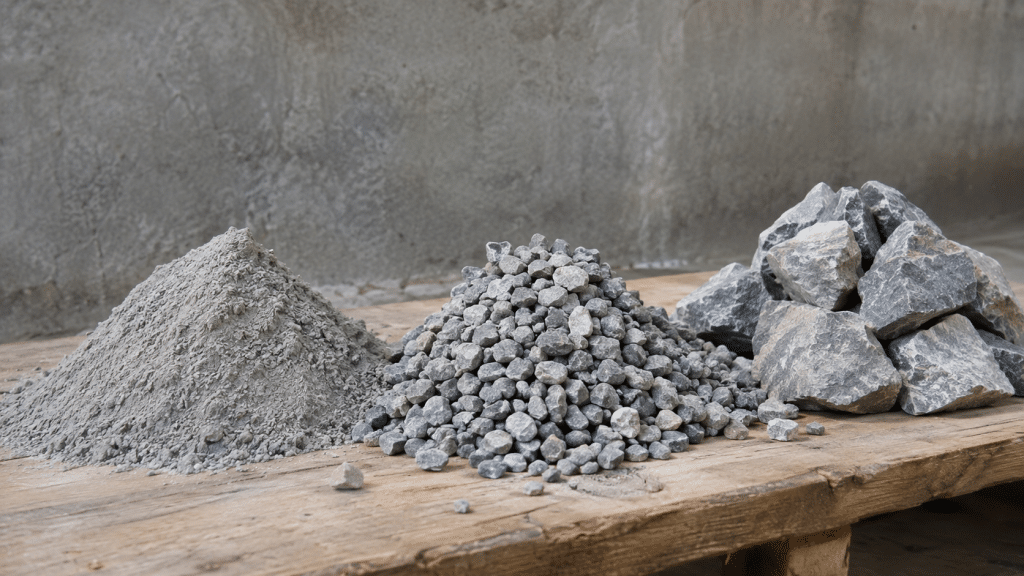
A product photograph cannot establish whether aggregate meets a technical specification.
Therefore, professional procurement should rely on technical documentation.
Depending on the application, buyers may request:
- Product data sheet
- Aggregate designation
- Sieve analysis
- Grading curve
- Fines content
- Fines quality results
- Particle shape results
- Fragmentation resistance
- Wear resistance
- Particle density
- Water absorption
- Petrographic information
- Relevant chemical characteristics
- Durability test results
- Declaration of Performance, where applicable
- Relevant conformity documentation
- Country of origin
- Recent laboratory reports
In particular, for by-pass material, a current sieve analysis becomes valuable because the commercial name alone does not define the grading.
Likewise, buyers should verify whether test reports represent the actual quarry and product offered.
Therefore, documentation and physical supply should remain traceable throughout the procurement process.
12. Limestone Aggregate Sourcing with ATABAŞ GLOBAL
International aggregate procurement requires both technical evaluation and logistics planning.
Therefore, ATABAŞ GLOBAL supports international sourcing and trade coordination for limestone aggregates according to project specifications and commercial requirements.
The sourcing process can evaluate:
- Required limestone aggregate sizes
- Filler requirements
- Fine and coarse aggregate fractions
- All-in grading
- By-pass specifications
- Applicable EN standards
- Quarry production capacity
- Laboratory documentation
- Monthly or project quantity
- Stock availability
- Loading capacity
- Inland logistics
- Port infrastructure
- Bulk vessel feasibility
- Containerized shipment where commercially suitable
- Delivery schedule
- Incoterms
Moreover, logistics require particular attention because aggregates combine relatively low unit value with high shipment weight.
As a result, freight can represent a substantial part of the delivered cost.
For example, a technically suitable quarry located far from the loading port may not always provide the most competitive delivered solution.
Consequently, ATABAŞ GLOBAL evaluates technical requirements and logistics conditions together when coordinating limestone aggregate sourcing.
13. Frequently Asked Questions About Limestone Aggregate Sizes
What are the main limestone aggregate sizes?
Common examples include 0/4 mm, 4/8 mm, 8/16 mm, 16/31.5 mm, 0/31.5 mm and 0/63 mm. However, actual available fractions depend on quarry production and project specifications.
What does 8/16 mm aggregate mean?
The 8/16 mm designation describes an aggregate fraction using the d/D system. In other words, 8 mm represents the lower sieve designation, while 16 mm represents the upper sieve designation.
What is limestone filler?
Limestone filler consists predominantly of very fine limestone particles. In European aggregate terminology, filler aggregate predominantly passes the 0.063 mm sieve.
Is filler the same as quarry dust?
Not necessarily. Quarry dust is a broad commercial term, while technically specified filler must satisfy the characteristics required for its intended application.
What is crushed limestone aggregate?
Crushed limestone aggregate consists of limestone processed through crushing and screening into controlled particle-size fractions. In Türkiye, the market commonly uses the term “mıcır” for these crushed stone products.
What is by-pass aggregate?
By-pass generally describes quarry material separated during an earlier processing stage. Consequently, its particle-size distribution can vary according to the quarry and production process.
Does by-pass have a standard particle size?
No universal size applies to all by-pass materials. Therefore, buyers should request the actual sieve analysis instead of relying on the product name.
What is all-in aggregate?
All-in aggregate contains both fine and coarse particles within a broader grading range. For example, available gradings can include 0/31.5 mm and 0/63 mm, depending on the project.
Which aggregate standard applies to concrete?
EN 12620 covers aggregates for concrete. Therefore, buyers should refer to its relevant requirements when specifying aggregate for concrete applications.
Which standard applies to asphalt aggregate?
EN 13043 covers aggregates and filler aggregates for bituminous mixtures and surface treatments for roads, airfields and other trafficked areas. Consequently, asphalt aggregate specifications should reflect the relevant EN 13043 categories.
Which standard applies to road-base aggregate?
EN 13242 covers aggregates for unbound and hydraulically bound materials for civil engineering work and road construction. In addition, standards including EN 13285 may apply to finished unbound mixtures.
How should buyers select the correct limestone aggregate size?
First, buyers should identify the intended application. Then, they should consider d/D grading, fines, mechanical characteristics, durability, relevant standards, project specifications and logistics rather than selecting material only by commercial product name.
