


Carboxymethyl cellulose prices depend on product purity, viscosity, degree of substitution, production costs and delivery terms. Moreover, differences between food, pharmaceutical and industrial grades create several pricing levels within the global CMC market.
Because CMC helps control viscosity, retain water and bind materials, manufacturers use it in many production processes. For example, food producers use approved grades to improve texture, while oilfield companies use technical grades to control drilling fluids.
Similarly, detergent manufacturers use CMC to help prevent dirt from settling back onto fabrics. In addition, its binding properties support paper, textile, ceramic and battery production.
However, not every CMC grade offers the same level of performance. Therefore, buyers should compare technical quality, product purity and total purchase costs before selecting a supplier.
Furthermore, raw material costs, energy prices and international freight rates can influence carboxymethyl cellulose prices.
ATABAŞ GLOBAL develops industrial raw material supply solutions according to customer needs. Consequently, we evaluate product grades, technical requirements, packing and shipping options before preparing commercial offers.
1. What Is Carboxymethyl Cellulose (CMC)?
Carboxymethyl cellulose is a modified cellulose polymer that manufacturers produce from plant-based raw materials. In commercial trade, however, CMC usually refers to sodium carboxymethyl cellulose.
Suppliers also use the names sodium CMC, NaCMC and cellulose gum. Moreover, approved food-grade sodium CMC carries the food additive code E466 or INS 466.
Unlike untreated cellulose, sodium CMC can form thick solutions in water. Therefore, manufacturers use it to control flow, texture and stability.
Depending on the product grade, CMC may appear as a white, cream or slightly yellow powder. In addition, some grades come in granular or fine fibrous forms.
General Product Information
| Product Information | Description |
|---|---|
| Commercial Name | Carboxymethyl Cellulose |
| Abbreviation | CMC |
| Common Chemical Form | Sodium Carboxymethyl Cellulose |
| Alternative Names | Sodium CMC, NaCMC, Cellulose Gum |
| Product Group | Cellulose Ethers |
| HS Code | 391231 |
| CAS Number | 9004-32-4 for Sodium CMC |
| Food Additive Code | E466 / INS 466 |
| Ionic Character | Anionic |
| Appearance | White to slightly yellow |
| Physical Form | Powder, granules or fibres |
| Water Behaviour | Forms viscous solutions or dispersions |
| Ethanol Solubility | Insoluble |
| Raw Material | Plant-based cellulose |
| Main Functions | Thickening, binding and water retention |
| Common Packaging | 25 kg bags |
Because commercial grades have different chemical and physical properties, they may also have different prices.
For instance, high-purity food grades require different quality checks from standard industrial products.
Consequently, buyers should consider the intended use when comparing carboxymethyl cellulose prices.
Further product information is available from Nouryon – Carboxymethyl Cellulose.
2. Physical and Chemical Properties Affecting CMC Prices
CMC has several properties that make it suitable for water-based industrial products. In particular, its ability to control fluid thickness supports a wide range of manufacturing processes.
Moreover, CMC can retain water, bind particles and form films under suitable conditions.
However, product behaviour depends on molecular weight, purity and the degree of substitution. Therefore, manufacturers should review these properties together.
Physical Properties of CMC
Sodium CMC generally appears as a white or cream-coloured material. Because it can absorb moisture from the air, suppliers should keep the powder in dry conditions.
Furthermore, CMC can dissolve in cold or warm water, depending on the grade and mixing conditions.
For example, some grades form thick solutions at relatively low concentrations. In contrast, other grades provide lower viscosity under similar conditions.
Particle size also affects how quickly the powder mixes with water. However, finer particles may form lumps when manufacturers add them too quickly.
Therefore, proper mixing methods remain important during industrial use.
Chemical Structure and Composition
Manufacturers produce sodium CMC by adding carboxymethyl groups to the cellulose structure.
As a result, the material gains different water-related properties from untreated cellulose.
The general chemical formula of sodium carboxymethyl cellulose is:
[C₆H₇O₂(OH)x(OCH₂COONa)y]n
In this formula, x + y equals 3, while y represents the degree of substitution and n represents the number of repeating units in the polymer chain.
Because CMC contains polymer chains of different lengths and substitution levels, it does not have a single fixed molecular weight.
Moreover, commercial products may contain moisture, residual sodium chloride and sodium glycolate.
Consequently, differences in purity and chemical structure can influence both product performance and carboxymethyl cellulose prices.
Water Solubility and Film Formation
CMC forms viscous mixtures in water. However, it does not dissolve in ethanol under normal conditions.
Furthermore, suitable grades can form films as water leaves the mixture.
For example, paper and textile producers can benefit from these film-forming properties.
Similarly, selected adhesive and coating products use CMC to support binding and flow control.
Nevertheless, the final performance depends on the complete formulation.
3. Technical Specifications and Their Impact on Carboxymethyl Cellulose Prices
Technical quality plays a major role in CMC pricing. For example, higher purity may require more washing and tighter process control.
Similarly, special viscosity grades may require careful control during production.
Therefore, buyers should compare products with similar technical properties rather than focus only on the price per metric ton.
General CMC Technical Specifications
| Technical Parameter | Typical Value or Requirement |
|---|---|
| Appearance | White to slightly yellow powder |
| Chemical Identity | Sodium carboxymethyl cellulose |
| CAS Number | 9004-32-4 |
| Purity | Depends on commercial grade |
| Viscosity | Low to very high |
| Degree of Substitution | Depends on grade |
| Moisture | According to agreed limits |
| pH | Based on grade and test conditions |
| Sodium Chloride | Grade-specific maximum |
| Sodium Glycolate | Grade-specific maximum |
| Particle Size | According to mesh or micron range |
| Bulk Density | Depends on powder form |
| Water Behaviour | Viscous solutions or dispersions |
| Ethanol Solubility | Insoluble |
| Microbial Limits | Based on intended use |
| Heavy Metals | According to applicable standards |
However, these properties do not have one universal set of values for every commercial product.
Consequently, buyers should obtain a Technical Data Sheet (TDS) and Certificate of Analysis (COA) for the requested grade.
Viscosity Grades and CMC Prices
Viscosity describes the resistance of a liquid to flow. Therefore, a high-viscosity CMC grade generally produces a thicker solution than a low-viscosity grade under the same test conditions.
However, the measured result depends on solution concentration, temperature and test equipment.
For instance, a supplier may measure viscosity in a 1% solution, while another supplier may use a 2% solution.
Furthermore, spindle speed and mixing time can affect the result.
Consequently, buyers should compare viscosity figures only when the test conditions match.
| Illustrative Viscosity Classification | Example Range (mPa·s) |
|---|---|
| Very Low Viscosity | Below 50 |
| Low Viscosity | 50–200 |
| Medium Viscosity | 200–1,000 |
| High Viscosity | 1,000–3,000 |
| Very High Viscosity | Above 3,000 |
These ranges illustrate common ways to describe solution thickness rather than an official universal CMC classification. In addition, actual commercial grades may overlap depending on the test method.
For example, one manufacturer publishes a viscosity range of 100–2,000 mPa·s for a selected CMC product, using a 1% solution at 25°C with a Brookfield LV instrument.
Therefore, buyers should specify the required test method when requesting carboxymethyl cellulose prices.
Degree of Substitution (DS)
The degree of substitution describes the average number of carboxymethyl groups attached to each cellulose glucose unit.
Because each glucose unit has three available hydroxyl groups, the theoretical maximum DS is 3.
However, commercial products use lower values according to their intended purpose.
For example, the JECFA specification for food-grade sodium CMC identifies a DS range of 0.2–1.5.
Moreover, changes in substitution levels can affect water solubility, salt tolerance and other solution properties.
Nevertheless, a higher DS does not automatically guarantee better performance in every application.
Consequently, manufacturers should consider DS alongside viscosity, purity and the complete product formulation.
Purity, Moisture and Residual Salts
Purity determines the amount of active CMC within a commercial product. Therefore, products with different purity levels may require different amounts during use.
Furthermore, moisture affects the amount of dry material that buyers receive in each shipment.
Residual sodium chloride and sodium glycolate may also influence certain industrial mixtures.
For example, a sensitive production process may require strict limits on residual salts.
As a result, higher purity and tighter quality limits may influence carboxymethyl cellulose prices.
4. CMC Production Process and Its Impact on Carboxymethyl Cellulose Prices
CMC production begins with the selection of cellulose from suitable plant-based sources. Moreover, raw material quality influences the properties of the finished product.
Because producers supply different commercial grades, manufacturing and cleaning steps may vary between production facilities.
Raw Material Selection and Chemical Treatment
Manufacturers commonly use suitable wood pulp or cotton-derived cellulose.
First, they prepare the cellulose for chemical treatment. Next, they treat it with an alkali, commonly sodium hydroxide.
Afterwards, producers use monochloroacetic acid or its sodium salt to introduce carboxymethyl groups into the cellulose structure.
As a result, the chemical treatment produces a modified cellulose polymer.
However, this process can also generate residual salts and other by-products.
Therefore, producers apply suitable cleaning steps according to the required product grade.
Purification, Drying and Grinding
Higher-purity CMC products generally require additional cleaning and process control.
For example, food and pharmaceutical grades may require stricter limits on residual materials.
Furthermore, washing helps remove certain unwanted compounds from the product.
Manufacturers then dry the material according to the required moisture limits. Afterwards, grinding and screening help achieve the target particle size.
Finally, laboratory checks confirm whether the product meets the agreed technical specification.
The general production process follows this sequence:
Cellulose Selection → Alkali Treatment → Chemical Modification → Purification → Drying → Grinding → Screening → Quality Control → Packaging
Manufacturing Costs and Sodium CMC Prices
Cellulose pulp represents an important raw material cost. Moreover, sodium hydroxide and other chemicals contribute to manufacturing expenses.
Energy costs also influence drying, grinding and other production stages.
For instance, tighter moisture limits may require more drying. Similarly, finer powder grades may require extra grinding and screening.
Furthermore, high-purity products may require more washing and additional quality checks.
Because these steps affect manufacturing costs, they can also influence carboxymethyl cellulose prices.
However, greater processing does not necessarily provide more value in every application. Therefore, buyers should select the grade that meets their actual technical needs.

5. Carboxymethyl Cellulose Prices by Commercial Grade
CMC manufacturers offer several grades for different industries. However, commercial grade names do not always define universal quality limits.
For this reason, buyers should review the actual product specification before making price comparisons.
Commercial Carboxymethyl Cellulose Grades
| Commercial Grade | Main Application | General Cost Position |
|---|---|---|
| Technical Grade | General industrial use | Lower to medium |
| Food Grade | Food and beverages | Purity-dependent |
| Pharmaceutical Grade | Drug products and excipients | Generally higher |
| CMC-LV / LVT | Drilling fluid-loss control | Performance-dependent |
| CMC-HV / HVT | Drilling viscosity control | Performance-dependent |
| Detergent Grade | Laundry products | Grade-dependent |
| Textile Grade | Yarn sizing and printing | Grade-dependent |
| Paper Grade | Coating and fibre binding | Grade-dependent |
| Ceramic Grade | Ceramic bodies and glazes | Grade-dependent |
| Cosmetic Grade | Personal care products | Purity-dependent |
| Construction Grade | Selected building materials | Grade-dependent |
| Battery Grade | Electrode binders | Often higher |
| Mining Grade | Mineral processing | Performance-dependent |
| High-Purity Grade | Specialty products | Generally higher |
The cost positions describe possible commercial differences rather than current supplier quotations.
Moreover, the actual price depends on product quality, order quantity and supply conditions.
Food and Pharmaceutical Grade CMC Prices
Food-grade sodium CMC requires suitable purity and compliance with relevant food additive rules.
Furthermore, pharmaceutical products may require specific compendial standards and additional quality records.
For example, some pharmaceutical buyers require USP–NF or European Pharmacopoeia compliance.
Consequently, extra production and testing requirements may affect the final product price.
Technical and Drilling Grade CMC Prices
Industrial CMC grades serve applications where buyers focus on specific process needs.
For instance, oilfield companies may prioritize fluid-loss control and viscosity. In contrast, detergent producers may focus on dirt control during washing.
Moreover, ceramic and paper manufacturers may require suitable binding properties.
Therefore, technical-grade pricing depends on the required product performance rather than purity alone.
Specialty and Battery Grade CMC Prices
Selected battery grades require careful control of purity, molecular weight and viscosity.
In addition, manufacturers may specify strict impurity limits.
Because these requirements can involve tighter production controls, specialty grades may have higher costs.
Nevertheless, a standard industrial product may suit applications that do not require such limits.
As a result, comparing carboxymethyl cellulose prices requires an understanding of the intended industrial use.
6. Carboxymethyl Cellulose Prices and Global Market Trends
Carboxymethyl cellulose prices vary between countries, commercial grades and supply routes.
Unlike exchange-traded commodities, CMC does not have a single international benchmark price that applies to every product.
Instead, suppliers prepare offers according to the requested grade and commercial terms.
Furthermore, regional production costs and industrial demand influence local pricing.
International CMC Prices in 2026
According to the published IMARC Group pricing report, the following regional CMC price indicators apply to March and June 2026.
| Country | March 2026 (USD/MT) | June 2026 (USD/MT) |
|---|---|---|
| United States | 3,574 | 3,690 |
| China | 4,655 | 4,722 |
| Germany | 2,967 | 3,036 |
| India | 1,815 | 1,849 |
| Brazil | 3,550 | 3,697 |
Source: IMARC Group – Carboxymethyl Cellulose Pricing Report.
The published indicators increased across these five markets between March and June 2026.
However, regional figures may reflect different product grades and market conditions.
Therefore, buyers should not treat them as firm offers for a specific CMC product.
Furthermore, this table presents historical 2026 market indicators rather than verified November 2026 spot prices.
Average CMC Export Values by Country – 2025
International trade statistics provide another way to assess general commercial value.
For example, dividing the reported export value by the recorded shipment volume produces an average export unit value.
| Exporting Country | Export Volume (MT) | Export Value (USD) | Average Value (USD/MT) |
|---|---|---|---|
| China | 120,951.00 | 269,085,310 | 2,225 |
| Finland | 43,166.60 | 134,336,870 | 3,112 |
| Netherlands | 14,607.40 | 85,023,790 | 5,820 |
| France | 14,131.00 | 80,498,390 | 5,697 |
| United States | 3,978.77 | 22,371,780 | 5,623 |
Source: World Bank WITS – Global CMC Export Statistics 2025.
However, HS 391231 includes different grades of CMC and its salts in primary forms.
Consequently, these average values combine products with different commercial and technical properties.
Moreover, the figures do not identify the grade, viscosity, purity or sales terms of each shipment.
- Important: Average customs values are not current market prices or grade-specific supplier offers.
Carboxymethyl Cellulose Prices in Türkiye
Türkiye participates in international CMC trade through production, imports, exports and distribution.
According to World Bank WITS, Türkiye recorded approximately USD 61.2 million in CMC exports under HS 391231 in 2025.
However, the national export quantity record contains missing or inconsistent data.
Therefore, this article does not calculate a national average export price for Türkiye using that quantity record.
Source: World Bank WITS – Türkiye CMC Exports 2025.
Actual CMC prices in Türkiye depend on the requested product grade, origin, stock level, order quantity and delivery conditions.
Furthermore, packaging and freight costs may affect the final commercial offer.
For this reason, international buyers should request current carboxymethyl cellulose prices based on their own technical and commercial requirements.
7. Main Factors Affecting Carboxymethyl Cellulose Prices
Several technical and commercial factors determine the final cost of CMC.
For example, changes in cellulose pulp costs can affect manufacturing expenses. Meanwhile, industrial demand may influence product availability.
Therefore, buyers should consider both material quality and market conditions.
Raw Material and Energy Costs
Cellulose pulp, sodium hydroxide and carboxymethylating agents represent key production inputs.
Because changes in raw material costs affect manufacturing expenses, they may also affect supplier quotations.
Furthermore, energy costs influence drying, grinding and production equipment.
Consequently, changes in utility costs can create additional pricing pressure.
Impact of Purity on CMC Prices
Higher-purity grades may require more cleaning and tighter quality controls.
Similarly, products with special viscosity or substitution requirements may need careful process control.
For example, battery-grade CMC may require strict impurity limits, whereas a standard industrial grade may follow different requirements.
However, the highest-purity product is not always the most suitable option.
Therefore, buyers should compare carboxymethyl cellulose prices alongside the actual needs of their production process.
Industrial Demand and Product Availability
Food production, oilfield projects, detergents and other industries contribute to CMC demand.
For instance, changes in drilling activity may influence demand for selected oilfield grades.
Similarly, growth in battery manufacturing may affect the availability of specialty grades.
However, demand does not change at the same rate across all markets.
Consequently, price trends may differ between commercial grades and regions.
Bulk CMC Prices, Packing and Freight
Larger orders may reduce some handling and transport costs per metric ton.
Moreover, regular purchase programs can help suppliers plan stock and production needs.
However, special packing, pallet use and independent inspections may increase shipment costs.
Ocean freight rates and inland transport charges also influence delivered prices.
As a result, the final cost depends on the entire supply chain rather than the product price alone.
For this reason, buyers should request comparable quotations under the same delivery terms.
8. CMC Prices and Industry Quality Standards
Different industries follow specific quality and safety requirements.
Therefore, manufacturers should select CMC grades according to the relevant technical and regulatory standards.
Food Grade CMC – E466 and INS 466
Food-grade sodium carboxymethyl cellulose serves as a thickener, stabilizer and suspending agent in permitted food products.
Moreover, international food standards define specific chemical and purity limits.
| JECFA Quality Parameter | Specification |
|---|---|
| Food Additive Code | INS 466 |
| CAS Number | 9004-32-4 |
| Sodium CMC Assay | Minimum 99.5% on dried basis |
| Degree of Substitution | 0.2–1.5 |
| Appearance | White to slightly yellow |
| Physical Form | Powder, granules or fine fibres |
| Water Behaviour | Viscous aqueous dispersions |
| Ethanol Solubility | Insoluble |
Source: FAO/WHO JECFA Monographs – Sodium Carboxymethyl Cellulose.
Similarly, the European Union defines purity requirements for E466 under Regulation (EU) No 231/2012.
However, food additive approval does not permit every possible food application or dose.
Therefore, producers should also check the rules for the intended food category and destination market.
Further information is available from the European Union – Food Additive Specifications.
Pharmaceutical Grade Standards
Drug manufacturers may use sodium CMC as a thickener, binder or suspending agent.
For example, certain liquid drug products require suitable flow and suspension properties.
Furthermore, pharmaceutical buyers may require compliance with USP–NF or European Pharmacopoeia standards.
Microbial quality, traceability and production controls may also affect product acceptance.
However, food-grade CMC does not automatically meet pharmaceutical requirements.
Similarly, sodium CMC differs from croscarmellose sodium, which has a cross-linked structure.
Consequently, buyers should confirm the exact chemical identity and relevant standard before placing an order.
API 13A and Oilfield CMC Grades
Oilfield companies use CMC in selected water-based drilling fluid systems.
For instance, low-viscosity technical grades may help control fluid loss without adding too much thickness.
In contrast, high-viscosity grades may also contribute to fluid thickness.
| Oilfield Product | Main Function |
|---|---|
| CMC-LVT | Fluid-loss control with limited viscosity increase |
| CMC-HVT | Fluid-loss and viscosity control |
| PAC-LV | Related low-viscosity cellulose additive |
| PAC-HV | Related high-viscosity cellulose additive |
The American Petroleum Institute identifies technical low-viscosity and high-viscosity CMC as separate product categories within API Specification 13A.
However, suppliers should not claim API compliance without proper test records.
Furthermore, drilling fluid performance depends on the complete fluid system and field conditions.
Therefore, buyers should evaluate the relevant performance tests when comparing drilling-grade carboxymethyl cellulose prices.
Further information is available from the American Petroleum Institute.
9. Industrial Applications of Carboxymethyl Cellulose
CMC serves a broad range of industries because it can control flow, retain water and bind materials.
Moreover, the availability of different commercial grades allows manufacturers to select products according to their technical needs.
However, successful use requires suitable grade selection and testing.
Food and Beverage Industry
Food producers use approved cellulose gum to improve texture and stability.
For example, selected CMC grades may help control the thickness of sauces, dressings and dairy products.
Similarly, dessert manufacturers may use suitable grades to maintain product texture.
In addition, CMC can help control particle suspension in certain drinks.
However, the permitted use depends on local food rules and the product category.
Therefore, food manufacturers should review both technical suitability and legal requirements.
Oil and Gas Drilling
CMC helps control water-based drilling fluid properties.
For instance, suitable grades may reduce fluid loss into surrounding formations.
Furthermore, high-viscosity grades can help increase fluid thickness and support selected drilling fluid functions.
However, temperature, salt content and other additives may affect performance.
Consequently, engineers should test the complete drilling fluid system before field use.
Detergent Manufacturing
Laundry detergent producers use CMC as an anti-redeposition additive.
During washing, dirt separates from fabrics. However, some particles may settle back onto the textile surface.
Suitable CMC grades can help reduce this effect.
As a result, detergent manufacturers may improve washing performance in compatible mixtures.
Moreover, product selection depends on detergent composition and washing conditions.
Textile Industry
Textile producers use CMC in yarn sizing, printing and selected finishing processes.
For example, its binding properties can support fibre handling during production.
Similarly, its ability to control flow can help manufacturers prepare printing mixtures.
However, different fabrics and printing methods may require different viscosities.
Therefore, textile producers should choose the appropriate grade according to their process needs.
Paper and Packaging Industry
Paper mills use selected CMC grades in surface treatment and paper coating.
Moreover, the material may support fibre binding and coating flow control.
For instance, manufacturers may use CMC to improve selected surface properties.
However, the final performance depends on paper quality and other coating ingredients.
Consequently, producers should test the complete coating system before changing their formulation.
Ceramic Industry
Ceramic manufacturers use CMC in selected ceramic bodies and glaze mixtures.
For example, the material can help bind particles before firing.
Furthermore, its water retention properties can support shaping and coating processes.
However, different ceramic raw materials require different binder levels.
Therefore, producers should select the correct grade and addition rate.
Cosmetics and Personal Care
Personal care producers use suitable CMC grades to control product texture and flow.
For instance, toothpaste manufacturers may use CMC to support a consistent paste structure.
Similarly, selected lotions, creams and shampoos may contain CMC as a thickener or stabilizer.
In addition, its film-forming properties can support certain cosmetic formulations.
Nevertheless, manufacturers must confirm product safety, ingredient compatibility and the relevant market rules.
Pharmaceutical Industry
Drug manufacturers use suitable sodium CMC grades in selected solid and liquid products.
For example, some liquid preparations require a suspending agent to help keep particles evenly distributed.
Moreover, selected grades may serve as binders or film-forming materials.
However, these uses require pharmaceutical quality controls.
Therefore, manufacturers should verify the relevant compendial standard and technical records.
Construction, Paints and Adhesives
Selected building materials may benefit from the water retention and binding properties of CMC.
For example, manufacturers may use it to control flow in certain water-based compounds.
Similarly, paint producers may use suitable grades to adjust viscosity.
Water-based adhesive manufacturers can also benefit from its binding properties.
However, other cellulose ethers may offer better performance in some construction products.
For this reason, manufacturers should test the most suitable additive for each formulation.
Lithium-Ion Battery Manufacturing
Selected high-purity CMC products serve as binders and dispersants in water-based electrode mixtures.
For example, battery producers may combine CMC with styrene-butadiene rubber (SBR) in graphite anodes.
Furthermore, suitable grades can help support particle distribution and electrode coating.
However, standard technical CMC does not automatically meet battery quality requirements.
Consequently, buyers should review purity, viscosity, molecular weight and relevant impurity limits.
Mining and Mineral Processing
Mining companies may use selected CMC grades as flotation depressants.
For instance, suitable products may help control the flotation behaviour of certain unwanted minerals.
However, mineral types and process conditions affect the results.
Therefore, mining companies should test the selected grade within their actual processing system.
Other Industrial Uses
CMC can also serve selected welding electrode coatings, printing products and specialty chemical mixtures.
Moreover, its binding and flow properties create opportunities in other water-based industrial systems.
Because these uses may require specific product features, technical testing remains important.
As a result, different industrial needs create different levels of demand and influence carboxymethyl cellulose prices across commercial grades.
10. CMC Prices, Industrial Performance and Cost Efficiency
CMC offers manufacturers several potential benefits. However, these benefits depend on the selected grade and complete formulation.
Therefore, buyers should evaluate product performance alongside its commercial cost.
Main Industrial Benefits of CMC
| Material Property | Potential Industrial Benefit |
|---|---|
| Viscosity Control | Adjusts solution thickness |
| Water Retention | Helps manage moisture |
| Binding | Supports particle or fibre bonding |
| Film Formation | Helps form selected surface films |
| Suspension | Helps keep particles dispersed |
| Flow Control | Supports processing needs |
| Stabilization | May reduce unwanted separation |
| Anti-Redeposition | Helps prevent dirt return to fabrics |
| Grade Selection | Supports different production needs |
For example, a food producer may select CMC to improve texture, while an oilfield company may prioritize fluid-loss performance.
Similarly, a ceramic manufacturer may focus on binding and water retention.
However, one commercial grade may not provide all these benefits equally.
Consequently, buyers should select products according to their actual production requirements.
Comparing CMC Prices and Active Material Content
The price per metric ton does not always show the true cost of using CMC.
For example, a product with higher active material content may require a smaller amount during production.
Consider two hypothetical products with different dry-basis purity levels.
| Comparison Factor | Product A | Product B |
|---|---|---|
| Example Dry Product Price (USD/MT) | 1,800 | 2,000 |
| Active CMC Content | 85% | 99.5% |
| Cost per MT of Active CMC | 2,118 USD | 2,010 USD |
Although Product A has a lower purchase price, Product B has a lower cost per metric ton of active CMC in this example.
However, purity alone does not establish the actual industrial performance of either product.
Furthermore, differences in viscosity, substitution levels and impurities may affect the amount of product required.
Therefore, buyers should evaluate the complete formulation cost instead of comparing carboxymethyl cellulose prices alone.
- Calculation note: These figures are hypothetical examples on a dry-product basis. They exclude moisture differences and do not represent current commercial offers.
Product Limitations and Mixing Conditions
CMC may form lumps when manufacturers add powder to water too quickly.
Moreover, temperature, pH and salt content can affect solution properties.
For example, certain dissolved salts may reduce viscosity or change polymer behaviour.
Similarly, strongly acidic conditions may affect the stability of selected CMC solutions.
However, different commercial grades respond differently to these conditions.
For this reason, manufacturers should follow the supplier’s mixing instructions and perform suitable trials before full-scale production.
11. Calculating Carboxymethyl Cellulose Prices and Delivered Costs
International buyers should evaluate the total purchase cost from the supply point to the final delivery location.
For example, a low EXW quotation may appear attractive at first. However, transport and export costs can increase the final amount.
Similarly, a higher FOB quotation may offer better overall value if the loading port has competitive sea freight rates.
Therefore, buyers should compare offers using the same commercial basis.
CMC Price Calculation
The total purchase cost may include the following elements:
Product Price + Packaging + Inland Transport + Export Costs + Inspection + Freight + Insurance + Destination Costs
However, buyers should avoid adding costs that the supplier already includes in the commercial offer.
Furthermore, each Incoterm has a different cost and risk structure.
Consequently, the final calculation must reflect the actual sales agreement.
Illustrative Carboxymethyl Cellulose Cost Calculation
The following example demonstrates how transport and related costs may affect the price of a CMC shipment.
| Cost Component | Example Cost (USD/MT) |
|---|---|
| Packed CMC at Warehouse | 1,800 |
| Inland Transport | 35 |
| Export and Port Costs | 25 |
| Quality Inspection | 10 |
| Illustrative FOB Cost | 1,870 |
| Ocean Freight | 90 |
| Marine Insurance | 8 |
| Illustrative CIF Cost | 1,968 |
For instance, a rise in freight charges would increase the final CIF cost even if the product price remained stable.
In addition, import duties, local taxes, destination charges and inland delivery may affect the final landed cost.
Therefore, CIF prices do not always represent the full cost at the buyer’s factory.
- Price disclaimer: This calculation uses hypothetical values for illustration. It does not represent an actual market price or an ATABAŞ GLOBAL quotation.
Delivery Terms and Sodium CMC Prices
Buyers may request EXW when they prefer to collect goods from an agreed supply point.
Under FCA terms, however, the seller delivers the goods to the nominated carrier at the agreed place.
FOB applies when the seller delivers the cargo on board the vessel at the loading port.
Similarly, CFR requires the seller to arrange and pay for sea freight to the named destination port.
Under CIF terms, the seller also arranges the required marine insurance. Nevertheless, cargo risk passes to the buyer when the goods are on board the vessel at the loading port.
Furthermore, CPT and CIP can provide suitable options for different transport methods.
For containerized cargo, FCA, CPT or CIP may better reflect the point where the seller hands the goods to the carrier.
Consequently, buyers should confirm the named delivery point and commercial duties before comparing carboxymethyl cellulose prices.
Further information is available from the International Chamber of Commerce – Incoterms Rules.
12. Bulk CMC Prices and Supply with ATABAŞ GLOBAL
Successful industrial CMC supply requires more than a competitive product price.
Moreover, buyers need consistent quality, secure packing, accurate trade records and suitable delivery schedules.
Therefore, ATABAŞ GLOBAL evaluates technical and commercial requirements together.
CMC Packaging and Storage
Suppliers commonly offer CMC in 25 kg multiwall paper bags.
Furthermore, polyethylene inner liners can provide additional moisture protection.
Woven bags with suitable liners may also serve industrial users. For example, certain factories may prefer this packing format because of their handling systems.
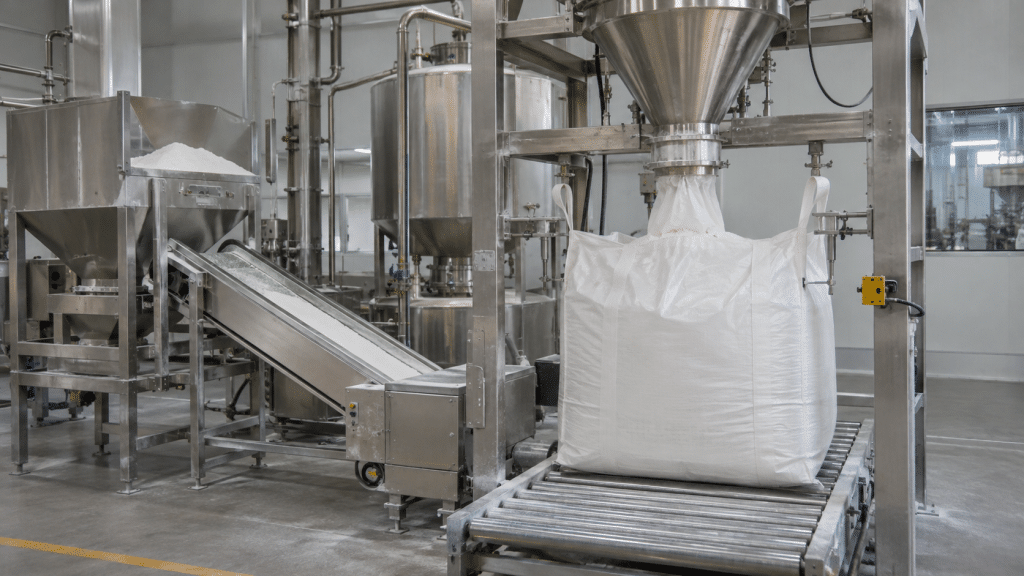
In addition, suppliers may offer 500–1,000 kg Big Bags for selected grades and bulk orders.
However, food and pharmaceutical products may require specific packing materials and hygiene controls.
Because CMC can absorb moisture from the air, warehouses should provide clean and dry storage areas.
Moreover, fine organic powders may create combustible dust hazards under certain conditions.
Therefore, workers should follow the actual Safety Data Sheet and applicable workplace safety rules.
Further safety guidance is available from OSHA – Combustible Dust.
Quality Control and Technical Documents
Quality checks help confirm whether the material meets the agreed specification.
First, suppliers should confirm the chemical identity and requested product grade.
Next, laboratory tests can establish viscosity, purity, moisture and the degree of substitution.
Furthermore, selected grades may require sodium chloride, sodium glycolate, particle size or microbial tests.
However, general technical data cannot replace batch-specific laboratory results.
Therefore, buyers should request a current Certificate of Analysis.
In addition, the Technical Data Sheet and Safety Data Sheet provide important product and handling information.
Independent inspection companies can also perform agreed quality and quantity checks.
Consequently, proper testing and documentation help reduce the risk of commercial disputes.
International Shipping and Bulk CMC Prices
ATABAŞ GLOBAL coordinates international shipments through Mersin, İzmir, Gebze and İstanbul port regions.
Furthermore, we work with international shipping companies such as CMA CGM, Maersk, MSC and Hapag-Lloyd.
Our professional customs brokers also support export documents and customs procedures.
For example, buyers can request individual container shipments or regular monthly deliveries.
However, the best transport plan depends on cargo weight, packing dimensions and destination.
Therefore, we review alternative loading ports and vessel schedules whenever commercially feasible.
Moreover, ATABAŞ GLOBAL follows applicable international trade restrictions and sanctions requirements.
As a result, we review product origins, suppliers, buyers and shipping arrangements before confirming transactions.
How to Request Current Carboxymethyl Cellulose Prices
A detailed Request for Quotation (RFQ) helps us select suitable product grades and prepare accurate offers.
First, buyers should identify the required grade and intended industrial use.
For example, a food manufacturer may request E466 compliance, whereas a drilling company may require CMC-LVT or CMC-HVT.
Next, buyers should provide the required viscosity and test conditions.
Furthermore, the degree of substitution, purity, moisture, pH and particle size help define the product quality.
In addition, customers should identify any specific limits for residual salts, microbial content or other impurities.
After confirming the technical details, buyers should share the total order quantity and expected monthly demand.
Packing requirements, destination and delivery terms also help determine freight costs.
Finally, both parties should agree on shipment schedules, inspection needs and the required trade documents.
Because detailed product information reduces uncertainty, it helps support faster and more accurate commercial offers.
For current carboxymethyl cellulose prices, bulk sodium CMC supply, technical inquiries and international delivery solutions, contact ATABAŞ GLOBAL.
13. Frequently Asked Questions About Carboxymethyl Cellulose Prices
CMC Properties and Technical Information
What is carboxymethyl cellulose?
CMC is a modified cellulose polymer that helps control viscosity, retain water and bind materials. Moreover, its sodium salt serves many food and industrial uses.
Is CMC soluble in water?
Sodium CMC can form viscous solutions in water. However, its behaviour depends on the grade and mixing conditions.
Which CAS number applies to sodium CMC?
The CAS number is 9004-32-4. Buyers should also confirm the chemical identity through the product Safety Data Sheet.
How does viscosity affect CMC performance?
Higher-viscosity grades generally produce thicker solutions under the same test conditions. Therefore, manufacturers should select a grade that meets their process needs.
Why is the degree of substitution important?
This value describes the average number of carboxymethyl groups attached to each cellulose glucose unit. Consequently, it influences several water-related product properties.
What is the HS code for CMC?
Carboxymethyl cellulose and its salts in primary forms generally fall under HS 391231. However, formulated mixtures may require another customs code.
Carboxymethyl Cellulose Prices and Commercial Grades
What are the current carboxymethyl cellulose prices?
CMC prices depend on purity, viscosity, grade, order quantity and delivery conditions. Therefore, buyers should request a current commercial offer based on their specific needs.
Does food-grade CMC cost more than technical-grade CMC?
Food grades may require additional cleaning and quality checks. However, actual price differences depend on the complete product specification.
Why can pharmaceutical-grade CMC have a higher price?
Pharmaceutical grades may require tighter quality controls and specific compendial standards. Furthermore, additional testing may increase production costs.
Can larger orders reduce CMC prices?
Larger orders may reduce some handling and transport costs per metric ton. Nevertheless, the final price depends on product availability and delivery terms.
How does purity affect the cost of CMC?
Higher purity increases the proportion of active CMC within the product. Therefore, buyers should compare active material costs alongside the total purchase price.
Industrial Applications and Product Standards
Where do manufacturers use CMC?
Major industries include food, oilfield drilling, detergents, textiles, paper, ceramics and cosmetics. In addition, selected grades serve pharmaceutical and battery production.
Can technical-grade CMC serve food production?
Technical-grade products do not automatically meet food safety rules. Consequently, food producers should select grades that comply with the applicable food standards.
What is the difference between CMC-LVT and CMC-HVT?
CMC-LVT helps control fluid loss with a limited increase in viscosity. In contrast, CMC-HVT can also contribute to greater drilling fluid thickness.
Does CMC have applications in battery manufacturing?
Selected high-purity grades serve as binders and dispersants in water-based electrode mixtures. However, battery manufacturers must confirm specific quality limits.
Packaging, Purchasing and International Supply
Which packaging options are available?
Suppliers commonly offer 25 kg industrial bags with suitable inner liners. Furthermore, larger bags may be available according to the grade and order size.
Can buyers request independent quality inspections?
Customers can request quality and quantity checks according to agreed commercial terms. Moreover, ATABAŞ GLOBAL can coordinate relevant inspection arrangements.
Does ATABAŞ GLOBAL arrange regular bulk CMC supply?
We assess recurring supply programs according to product availability, monthly demand and shipping schedules. Consequently, each supply plan reflects the customer’s requirements.
How can buyers obtain a CMC price quotation?
First, customers should share the grade, viscosity and technical limits. Next, they should confirm quantity, packing and destination. Finally, ATABAŞ GLOBAL can assess suitable supply options and prepare a commercial offer.
