

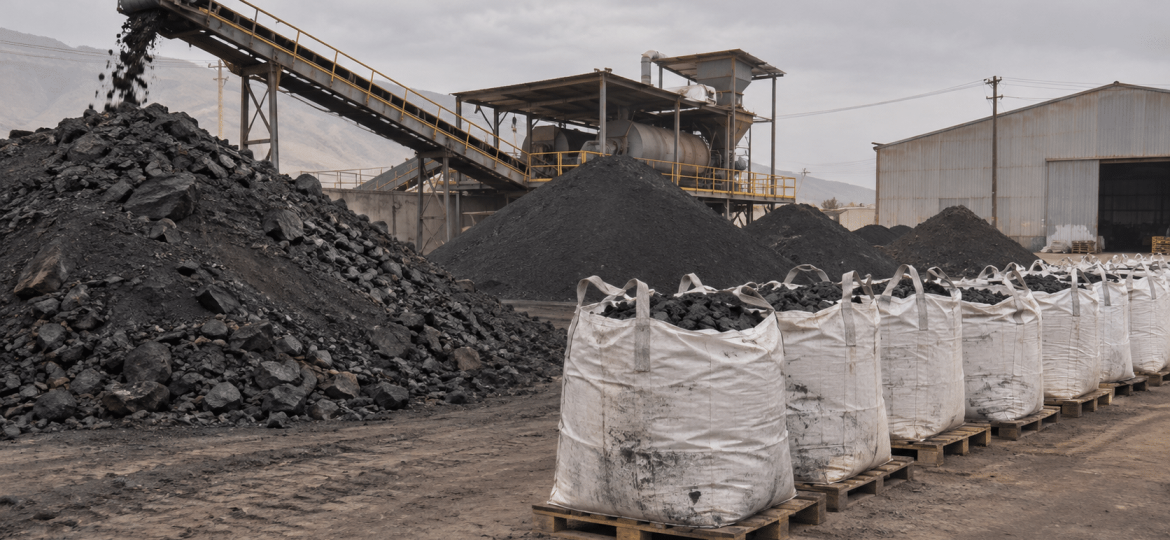
Gilsonite prices depend on mineral quality, ash content, softening point, particle size, processing costs and delivery terms. Therefore, industrial buyers should consider both technical properties and total purchase costs before selecting a product grade.
Gilsonite is a natural solid hydrocarbon resin that serves several major industries. For example, manufacturers use it in asphalt binders, drilling fluids, printing inks, industrial paints and foundry materials.
Moreover, its high softening point and natural resin structure make it useful in many industrial mixtures. Similarly, its water resistance supports selected protective coatings and waterproofing products.
However, not every natural asphalt grade offers the same performance. Therefore, buyers should review the actual product specification before placing an order.
In addition, grinding, packing and transport costs can affect the final purchase price. As a result, the most suitable supply option depends on both commercial and technical needs.
ATABAŞ GLOBAL offers international sourcing and supply solutions for industrial raw materials. Furthermore, we coordinate quality checks, packing and shipping according to customer requirements.
1. What Is Gilsonite (Natural Asphalt)?
Gilsonite is a natural solid hydrocarbon resin within the asphaltite group. More specifically, uintaite is a mineral within this group, although commercial markets sometimes use the name gilsonite more broadly.
Unlike petroleum bitumen, natural asphaltite comes from geological deposits. Therefore, its properties depend largely on the mineral source.
Raw gilsonite generally appears as a black, brittle solid. However, grinding produces a fine powder that may have a black or dark brown colour.
Moreover, the material contains organic compounds that allow manufacturers to modify suitable industrial binders.
For example, producers can use natural asphaltite to increase binder hardness. Similarly, selected grades can support the development of heat-resistant compounds.
| Product Information | Description |
|---|---|
| Commercial Name | Gilsonite |
| Alternative Names | Natural Asphalt, Natural Bitumen |
| Mineral Name | Uintaite, where mineral identity applies |
| Product Group | Natural Hydrocarbon Materials |
| General HS Code | 2714.90 |
| CAS Number | 12002-43-6 for uintaite |
| Appearance | Black or dark brown |
| Physical Form | Lumps, granules and powder |
| Water Solubility | Insoluble |
| Material Source | Natural mineral deposits |
| Primary Function | Binder and industrial additive |
For instance, coarse material may suit industrial grinding operations. In contrast, fine powder can support direct use in suitable mixtures.
Furthermore, low-ash grades may offer advantages in products that require strict control of mineral residue.
Consequently, buyers should select the material according to its actual properties rather than its commercial name alone.
- Important: Natural asphalt is a broad product group. Therefore, buyers should not assume that all natural asphalt products have the same composition as true uintaite.
For more information about uintaite, visit the American Gilsonite Company.
2. Physical and Chemical Properties of Gilsonite
Gilsonite has a natural resin structure that supports several industrial uses. In particular, its hardness and relatively high softening point allow manufacturers to modify suitable binders.
Furthermore, its brittle structure makes it suitable for crushing and grinding. As a result, suppliers can prepare different powder sizes according to customer needs.
However, natural deposits vary in quality and composition. Therefore, the chemical properties of commercial grades may also differ.
Main Physical Properties
| Property | Industrial Importance |
|---|---|
| High Softening Point | Supports heat resistance in suitable mixtures |
| Brittleness | Allows crushing and grinding |
| Water Insolubility | Supports selected moisture barrier products |
| Natural Resin Structure | Allows binder modification |
| High Organic Content | Supports various industrial mixtures |
| Controlled Ash Content | Helps manage mineral residue |
| Adjustable Particle Size | Supports different mixing methods |
| Solvent Solubility | Influences compatibility with selected binders |
For example, a high softening point may help reduce unwanted binder flow at high temperatures.
Similarly, low mineral content may support certain industrial mixtures.
However, greater hardness can also reduce flexibility. Therefore, manufacturers should consider the full range of product properties before changing a mixture.
In addition, particle size can affect how easily the material mixes with other raw materials.
Consequently, both physical quality and processing needs influence grade selection.
Chemical Composition
Gilsonite consists mainly of carbon and hydrogen. In addition, it contains varying amounts of nitrogen, oxygen, sulfur and mineral matter.
| Chemical Component | General Description |
|---|---|
| Carbon | Main part of the organic structure |
| Hydrogen | Part of the natural hydrocarbon structure |
| Nitrogen | Present in varying amounts |
| Oxygen | Depends on material composition |
| Sulfur | Varies according to source and grade |
| Mineral Matter | Contributes to ash content |
| Asphaltenes | Important part of the resin structure |
However, the amount of each component may differ between mineral sources.
For example, one grade may contain less mineral matter than another. Similarly, sulfur content may vary between deposits.
Therefore, chemical tests can help buyers select the correct grade.
Furthermore, accurate test results allow customers to compare gilsonite prices on a consistent quality basis.
3. Technical Specifications and Their Impact on Gilsonite Prices
Technical quality plays an important role in determining gilsonite prices.
For example, low mineral content may require more selective sourcing. Similarly, fine powder grades may involve higher grinding costs.
Moreover, special softening point requirements can limit the number of suitable supply options.
Therefore, buyers should define their technical needs before requesting a commercial offer.
Typical Gilsonite Specifications
The following table provides broad examples of commercial grade properties. However, individual products may fall outside these ranges.
| Technical Parameter | Indicative Specification | Test Method |
|---|---|---|
| Appearance | Black or dark brown powder | Visual inspection |
| Softening Point | 150–220°C for selected grades | ASTM D36 or ASTM E28 |
| Ash Content | Commonly 0.5–12% for selected grades | ASTM D3174 or agreed method |
| Moisture Content | Commonly 0.5–3.5% | Agreed moisture test |
| Specific Gravity | Approximately 1.04–1.06 for selected grades | Suitable density test |
| Particle Size | 100–200 mesh or custom size | ASTM E11-compliant sieves |
| Water Solubility | Insoluble | Product-specific test |
| Solvent Solubility | Grade and solvent dependent | Agreed solubility test |
| Fixed Carbon | Grade-specific | Proximate analysis |
| Volatile Matter | Grade-specific | Agreed test method |
| Sulfur Content | Grade-specific | Suitable sulfur test |
| Penetration | Product-specific | ASTM D5 where applicable |
Moreover, commercial specifications should identify the actual test methods.
For instance, different test methods may produce different results. Therefore, buyers should compare values on the same testing basis.
In addition, suppliers may offer products with similar names but different quality limits.
Consequently, commercial grade names alone cannot confirm material quality.
Particle Size and Mesh Selection
| Mesh Size | Approximate Sieve Opening |
|---|---|
| 50 Mesh | 300 µm |
| 100 Mesh | 150 µm |
| 150 Mesh | 106 µm |
| 200 Mesh | 75 µm |
| 325 Mesh | 45 µm |
These values provide approximate sieve openings under commonly used sieve conventions.
However, a mesh number alone does not show the full particle-size range. Therefore, buyers should specify both the sieve standard and the required passing percentage.
For example, some manufacturers may require most of the material to pass through a specific sieve.
Similarly, other buyers may need tighter limits on oversized particles.
Furthermore, sample tests help manufacturers check whether the powder suits their production equipment.
As a result, buyers can make more accurate technical and commercial decisions.
For further information, visit ASTM International and published gilsonite physical property references.
- Quality requirement: The final product specification must follow the agreed technical limits and batch-specific Certificate of Analysis (COA).
4. Gilsonite Production Process and Manufacturing Costs
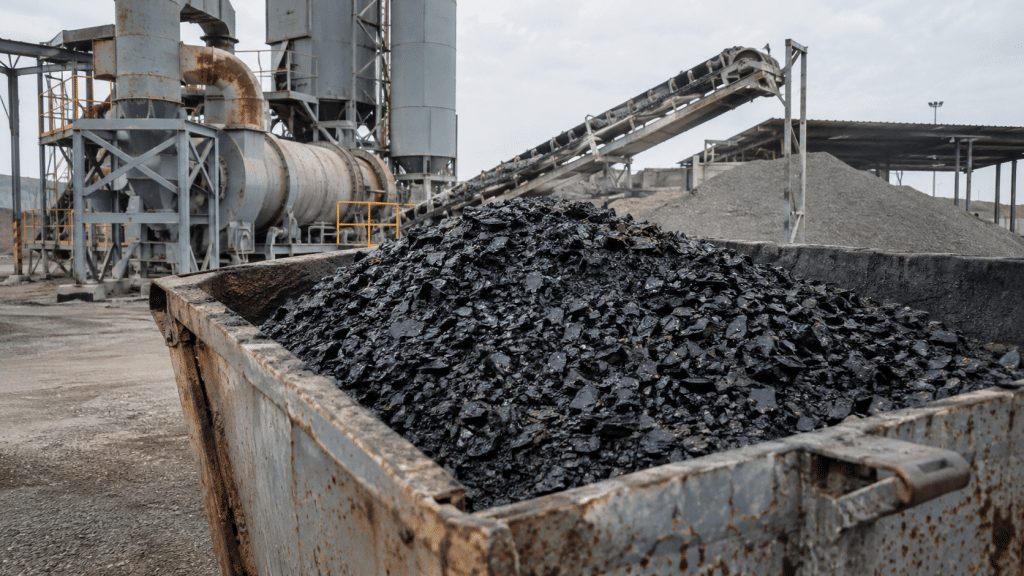
Gilsonite production starts with the extraction of natural asphaltite from mineral deposits. Depending on the source, producers use suitable mining methods to obtain the raw material.
First, they select mineral material that meets the required quality level. Next, crushing reduces large pieces into smaller particles.
Afterwards, grinding and screening help producers achieve the target particle size. Finally, laboratory checks confirm whether the material meets the agreed product specification.
The general production process follows this sequence:
Mineral Extraction → Raw Material Selection → Crushing → Grinding → Screening → Quality Control → Packaging → Storage
| Production Stage | Main Purpose |
|---|---|
| Mineral Extraction | Obtaining natural asphaltite |
| Material Selection | Choosing suitable raw material |
| Crushing | Reducing large mineral pieces |
| Grinding | Producing fine powder |
| Screening | Controlling particle size |
| Classification | Separating commercial grades |
| Quality Testing | Checking material properties |
| Packaging | Preparing products for sale |
| Storage | Protecting product quality |
Moreover, natural mineral properties may vary within the same deposit. Therefore, producers need regular quality checks throughout the process.
For example, different mineral sections may contain different ash levels.
Similarly, changes in grinding conditions can affect powder quality.
Furthermore, fine grinding requires more energy and tighter process control. Consequently, micronized products may involve higher processing costs.
In addition, the selection of low-ash material may affect production yield and supply capacity.
As a result, differences in processing requirements can influence gilsonite prices even when products come from similar mineral sources.
However, additional processing does not guarantee better results in every application. Therefore, buyers should select grades according to their actual production needs.
5. Commercial Gilsonite Grades and Price Differences
Industrial suppliers offer several gilsonite grades to meet different market needs. However, commercial grade names do not define universal quality standards.
For example, an asphalt grade may require different ash levels and particle sizes from an ink grade.
Similarly, oilfield products may require specific performance tests in addition to basic chemical analysis.
Therefore, buyers should consider the intended use before choosing a commercial grade.
| Commercial Grade | Main Application | Indicative Cost Position |
|---|---|---|
| Raw Lump Gilsonite | Industrial grinding | Lower processing cost |
| Granular Gilsonite | Binder modification | Low to medium |
| Powder Gilsonite | General industrial use | Medium |
| Micronized Gilsonite | Fine powder applications | Generally higher |
| Low-Ash Gilsonite | Low mineral residue products | Generally higher |
| Drilling Grade Gilsonite | Drilling fluid additives | Specification-dependent |
| Cementing Grade Gilsonite | Oilwell cementing | Specification-dependent |
| Asphalt Grade Gilsonite | Road binder modification | Medium |
| Foundry Grade Gilsonite | Casting sand additives | Specification-dependent |
| Ink Grade Gilsonite | Printing ink production | Quality-dependent |
| Paint Grade Gilsonite | Industrial paint production | Quality-dependent |
| Pipe Coating Gilsonite | Protective coatings | Specification-dependent |
| Waterproofing Grade | Bituminous compounds | Specification-dependent |
| Sealer and Filler Grade | Selected sealing products | Specification-dependent |
The cost positions in this table reflect general differences in processing and quality needs rather than current market quotations.
However, a high-priced product may not provide additional value if the intended application does not require its special properties.
For instance, a coarse industrial grade may suit a buyer with suitable grinding equipment. In contrast, another buyer may prefer a ready-to-use powder.
Furthermore, low-ash grades may require more selective mineral sourcing.
Similarly, micronized grades may require additional screening and testing.
Consequently, grade selection can influence both gilsonite prices and the total cost of industrial production.
- Commercial consideration: Buyers should compare technical specifications and intended uses rather than rely only on product names.
6. Main Industrial Applications of Gilsonite
Gilsonite serves a wide range of industries because manufacturers can use it to modify suitable binders and industrial mixtures.
For example, road builders use natural asphaltite to change asphalt binder properties. Meanwhile, oilfield companies use selected grades in drilling and cementing operations.
In addition, the material supports several paint, ink, foundry and waterproofing applications.
| Industry | Application | Main Function |
|---|---|---|
| Road Construction | Asphalt binders | Supports stiffness and heat resistance |
| Oil and Gas | Drilling fluids | Supports fluid-loss control |
| Oilwell Cementing | Cement slurry | Helps manage circulation losses |
| Foundry | Casting sand | Supports casting surface quality |
| Printing | Printing inks | Resin and binder modification |
| Paint Industry | Industrial paints | Supports selected film and binder properties |
| Pipeline Industry | Protective coatings | Modifies bituminous compounds |
| Waterproofing | Bituminous membranes | Supports moisture barrier products |
| Roofing | Roof sealants | Modifies binder properties |
| Construction | Protective mastics | Supports sealing applications |
| Metal Protection | Industrial primers | Modifies protective coating mixtures |
| Mineral Processing | Briquette binders | Supports material binding |
| Adhesives | Selected industrial mixtures | Modifies binder behaviour |
| Wood Products | Selected board binders | Supports water-resistant formulations |
However, each industry requires a different balance of material properties. Therefore, manufacturers should select grades according to their production needs.
Asphalt and Road Construction
Road construction represents an important market for natural asphaltite.
In particular, suitable grades can increase asphalt binder stiffness and improve resistance to deformation at higher temperatures.
For example, roads with heavy traffic may require binders that resist permanent deformation.
However, excessive stiffness can also affect performance in cold weather. Therefore, engineers should evaluate both high-temperature and low-temperature properties.
Moreover, gilsonite can serve as a binder additive in selected recycled asphalt mixtures.
Nevertheless, the correct dosage depends on the pavement design and test results.
Further technical research is available in this review of gilsonite-modified bitumen.
Oil and Gas Drilling
Drilling fluids help manage well conditions during oil and gas operations.
For example, gilsonite may support filter cake formation and reduce fluid loss in suitable fluid systems.
Furthermore, selected grades can help seal small openings within certain rock formations.
However, drilling conditions differ from one well to another. Therefore, the required product properties may also vary.
In addition, buyers should evaluate particle size, temperature limits and fluid compatibility before selecting a drilling grade.
Oilwell Cementing
Selected gilsonite grades can serve as additives in oilwell cement mixtures.
For instance, suitable products may help manage circulation losses or adjust slurry density.
Moreover, different cement mixtures may require different product grades.
However, cement performance depends on the full mixture and well conditions.
Therefore, engineers should confirm the final cement design through appropriate tests.
Foundry and Metal Casting
Foundry producers use carbon-rich additives in selected casting sand mixtures.
For example, suitable gilsonite grades may support the formation of carbon-rich layers during casting.
As a result, they can help improve the surface finish of certain cast metal parts.
However, different casting methods may require different material properties.
Therefore, the correct addition rate depends on the metal type, sand system and casting process.
Printing Inks, Paints and Coatings
Gilsonite can act as a natural resin additive in compatible ink and paint mixtures.
Moreover, it may support pigment dispersion and binder properties.
Similarly, manufacturers can use selected grades in black protective paints, industrial primers and pipe coatings.
In addition, suitable products can help modify coating hardness.
However, not all paint systems suit natural asphaltite.
Consequently, manufacturers should test solvent compatibility and finished coating performance before commercial use.
Waterproofing and Construction Materials
Natural asphaltite also supports selected bituminous membranes, roofing compounds and protective mastics.
For example, suitable grades may help improve hardness and control material flow under heat.
However, waterproofing products often require flexibility.
Therefore, producers should also assess the risk of brittleness.
In addition, the quality of other raw materials can affect the final product.
As a result, the best formulation depends on the balance between hardness, adhesion and flexibility.
7. Industrial Benefits and Product Performance
Manufacturers use gilsonite because its physical and chemical properties can support several industrial processes.
Moreover, the product offers different commercial grades that allow buyers to select materials according to their technical needs.
| Potential Benefit | Industrial Contribution |
|---|---|
| Higher Binder Stiffness | Supports resistance to deformation |
| Increased Softening Point | Improves selected heat-related properties |
| Fluid-Loss Control | Supports suitable drilling fluid systems |
| Natural Resin Properties | Allows binder modification |
| Water Resistance | Supports selected barrier products |
| Controlled Particle Size | Helps improve mixing consistency |
| Carbon-Rich Structure | Supports selected foundry applications |
| Pigment Dispersion | May support compatible ink mixtures |
| Flexible Grade Selection | Meets different production needs |
| Potential Cost Benefits | May reduce total formulation costs |
However, gilsonite does not provide identical benefits in every mixture.
For example, an asphalt producer may benefit from increased binder stiffness. In contrast, a coating producer may require greater flexibility.
Similarly, a drilling fluid producer may prioritize fluid-loss performance over other properties.
Therefore, buyers should assess the value of each grade through application-specific tests.
Moreover, the amount of gilsonite within a mixture can affect the finished product.
For instance, adding more material may improve hardness but reduce flexibility.
Consequently, manufacturers should check the finished product before changing their production formula.
Furthermore, they should compare product performance with the total formulation cost.
As a result, the lowest gilsonite prices do not always represent the most economical production option.
8. Gilsonite Prices and Global Market Factors
Gilsonite prices vary according to mineral quality, processing costs, international demand and transport conditions.
Unlike crude oil, natural asphaltite does not have a single global exchange price that applies to every commercial grade.
Instead, suppliers generally prepare quotations based on product specifications, order quantity and delivery terms.
Moreover, differences in ash content and softening point can create significant price differences between products.
Main Factors Affecting Gilsonite Prices
| Pricing Factor | Effect on Product Cost |
|---|---|
| Mineral Source | Extraction and sourcing costs |
| Ash Content | Mineral purity and selection costs |
| Softening Point | Grade availability and quality needs |
| Moisture Content | Drying and storage costs |
| Particle Size | Grinding and screening costs |
| Sulfur Content | Technical suitability and sourcing |
| Solvent Solubility | Grade-specific requirements |
| Processing Level | Energy and production costs |
| Order Quantity | Potential volume-based savings |
| Packaging | Bag, pallet and handling costs |
| Quality Inspection | Laboratory and inspection costs |
| Inland Transport | Distance to loading point |
| Ocean Freight | Shipping route and carrier rates |
| Exchange Rates | Currency-related cost changes |
| Delivery Terms | Costs included in the quotation |
For example, a low-ash micronized product may require more processing than a standard granular grade.
Similarly, an order with special packing needs may involve additional preparation costs.
Furthermore, changes in energy prices and freight rates can affect the cost of future shipments.
In addition, mineral availability may influence the price of certain commercial grades.
Consequently, buyers should check the validity period of each quotation.
Current Gilsonite Prices in 2026
Current gilsonite prices require a commercial assessment based on the actual product grade and shipment details.
However, some suppliers publish indicative prices online that may represent sample values rather than genuine sales offers.
Moreover, public customs records include several types of natural asphalt under the same HS code.
Therefore, average trade values cannot establish an exact market price for a specific gilsonite grade.
For example, raw mineral products and fine industrial powders may have different market values.
Similarly, two shipments with identical product names may involve different quality requirements.
Consequently, a direct price comparison may provide misleading results.
ATABAŞ GLOBAL evaluates current supply options according to technical quality, order size, packing and delivery location.
For this reason, buyers should request a direct quotation rather than rely on general online price lists.
- Current pricing: Contact ATABAŞ GLOBAL for grade-specific gilsonite prices under EXW, FCA, FOB, CFR or CIF delivery terms.
9. Comparing Gilsonite Prices by Grade and Purchase Volume
Different commercial grades involve different mining, processing and quality control needs.
Therefore, buyers should assess price differences alongside the technical properties of each material.
For example, raw lump material generally requires less grinding than micronized powder.
In contrast, fine powders may save processing time for buyers who lack their own grinding facilities.
Technical Factors and Commercial Value
| Product Requirement | Potential Commercial Effect |
|---|---|
| Lower Ash Content | More selective mineral sourcing |
| Finer Particle Size | Additional grinding costs |
| Narrow Particle Distribution | More screening and quality checks |
| Special Softening Point | More limited grade availability |
| Low Sulfur Content | Additional source selection |
| High Solvent Solubility | Tighter material quality control |
| Consistent Batch Quality | Regular laboratory testing |
| Customized Packing | Additional material and handling costs |
Moreover, larger orders may allow suppliers to spread certain handling costs across greater quantities.
However, bulk purchases also require suitable storage capacity and working capital.
For instance, a buyer may obtain a lower unit price by ordering a larger shipment.
Nevertheless, long storage periods may increase overall inventory costs.
In addition, some buyers may need smaller deliveries to match their production schedules.
Consequently, regular monthly deliveries may suit some manufacturers better than one large purchase.
Spot Purchases and Long-Term Supply
| Purchasing Model | Main Advantage |
|---|---|
| Trial Order | Product testing before regular purchases |
| Spot Purchase | Meets immediate material needs |
| Full Container Order | Potential transport efficiency |
| Bulk Purchase | Potential unit cost savings |
| Monthly Supply | Supports regular production needs |
| Annual Supply Agreement | Supports long-term planning |
Furthermore, long-term supply agreements may allow both parties to plan production and transport more effectively.
For example, early purchase forecasts can help suppliers prepare the required stock.
Similarly, buyers can plan their warehouse operations around agreed delivery dates.
However, freight rates and material availability may change over time.
Therefore, both parties should agree on suitable price and delivery terms.
For this reason, ATABAŞ GLOBAL reviews spot orders and regular supply programs according to customer needs.
10. Calculating Gilsonite Prices and Total Delivered Costs
The raw material price represents only one part of the total purchase cost.
Therefore, industrial buyers should assess all expenses from the supply point to the final delivery location.
For example, a low EXW price may appear attractive at first. However, inland transport and export costs can increase the final price.
Similarly, a higher FOB price may offer better overall value when the loading port provides competitive freight rates.
Consequently, buyers should compare commercial offers on the same delivery basis.
Gilsonite Price Calculation
Total procurement cost may include:
Product Price + Packaging + Inland Transport + Port Costs + Inspection + Freight + Insurance + Destination Costs
However, buyers should avoid adding costs that the supplier already includes in the quotation.
Furthermore, different delivery terms include different cost elements.
Therefore, a clear understanding of the quotation helps buyers calculate the total purchase cost.
Illustrative Gilsonite Cost Calculation
The following table shows a hypothetical cost model. However, these figures do not represent actual market prices or an ATABAŞ GLOBAL quotation.
| Cost Component | Example Cost (USD/MT) |
|---|---|
| Packed Gilsonite at Warehouse | 350 |
| Inland Transport | 25 |
| Export and Port Costs | 20 |
| Quality Inspection | 5 |
| Illustrative FOB Cost | 400 |
| Ocean Freight | 65 |
| Marine Insurance | 3 |
| Illustrative CIF Cost | 468 |
For instance, a rise in sea freight would increase the final CIF cost even if the raw material price remained stable.
Similarly, changes in inland transport costs can affect the FOB price.
In addition, import duties, local taxes and inland delivery charges may affect the total landed cost.
Consequently, CIF prices do not always represent the final cost at the buyer’s factory.
International Delivery Terms
| Incoterm | Main Commercial Scope |
|---|---|
| EXW | Collection from the agreed premises |
| FCA | Delivery to the nominated carrier |
| FOB | Delivery on board the vessel |
| CFR | Ocean freight to the destination port |
| CIF | Ocean freight and marine insurance |
| CPT | Carriage to the named destination |
| CIP | Carriage and insurance to the named destination |
Moreover, buyers should distinguish between transport costs and cargo risk.
Under CIF terms, for example, the seller arranges freight and insurance to the named destination port.
However, cargo risk transfers when the goods are on board the vessel at the loading port.
In contrast, other delivery terms may involve different risk transfer points.
Therefore, both parties should understand the agreed delivery terms before signing a contract.
Further information is available from the International Chamber of Commerce – Incoterms Rules.
11. Quality Control, Packaging and Safe Storage
Consistent material quality supports stable industrial production. Therefore, buyers should establish clear product limits before confirming a commercial order.
For example, differences in ash content may affect the amount of mineral residue in a mixture.
Similarly, changes in particle size may influence mixing efficiency and finished product quality.
Furthermore, consistent quality can help manufacturers maintain stable production conditions.
Gilsonite Quality Control Requirements
| Quality Parameter | Main Purpose |
|---|---|
| Ash Content | Checking mineral residue |
| Moisture Content | Checking water content |
| Softening Point | Evaluating thermal properties |
| Particle Size | Confirming powder fineness |
| Sulfur Content | Checking chemical suitability |
| Solvent Solubility | Assessing selected material properties |
| Fixed Carbon | Reviewing carbon-related properties |
| Visual Inspection | Checking appearance and contamination |
| Batch Identification | Supporting product traceability |
| Weight Verification | Confirming order quantity |
| Independent Inspection | Contract-specific quality checks |
Moreover, laboratory samples should represent the actual production batch.
However, general technical data may not reflect every shipment.
Therefore, buyers should request a current Certificate of Analysis.
In addition, independent quality checks may provide further assurance when the sales agreement requires them.
Consequently, both parties should agree on suitable testing methods before shipment.
Industrial Packaging Options
| Packaging Type | Typical Capacity | Main Advantage |
|---|---|---|
| Industrial Bags | 25 kg | Controlled material dosing |
| Large Bags | As agreed | Flexible material handling |
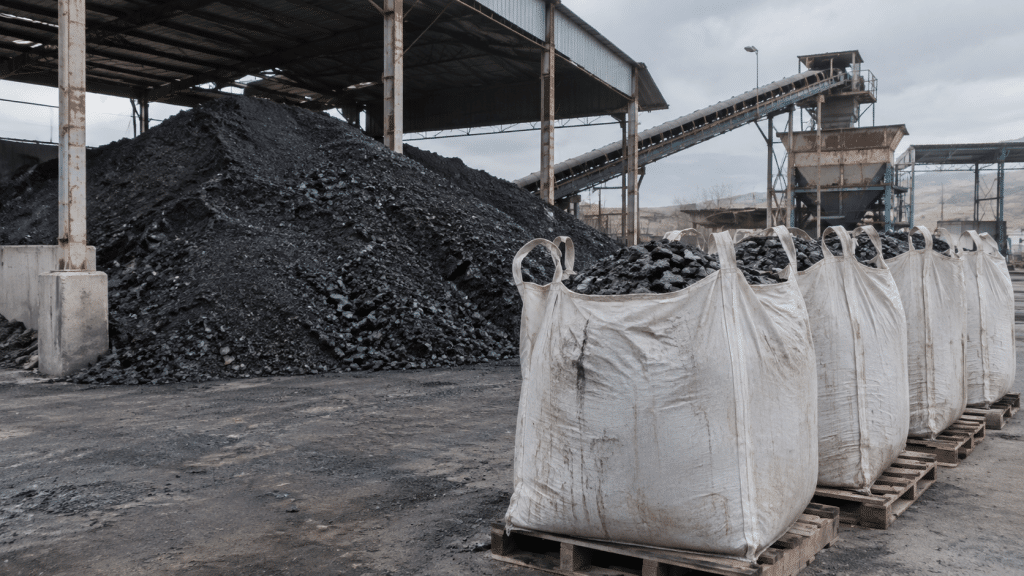
| Big Bags | 1,000 kg | High-volume industrial use |
| Palletized Bags | According to loading plan | Easier warehouse handling |
| Customized Packing | As specified | Customer-specific needs |
For example, smaller bags may suit manufacturers that use controlled amounts during each production cycle.
In contrast, Big Bags can support high-volume industrial operations.
Furthermore, pallet dimensions and bag weights influence container loading capacity.
Similarly, bag strength can affect product protection during transport.
Therefore, buyers should select packing options that match their warehouse facilities and handling equipment.
As a result, proper packing can support both product quality and transport efficiency.
Safe Storage and Handling
Fine gilsonite powder can create combustible dust hazards under certain conditions.
Therefore, industrial facilities must follow the actual product Safety Data Sheet.
In addition, suitable dust control, ventilation and ignition-source management help reduce workplace risks.
Moreover, storage conditions can affect product quality.
For example, damaged bags may expose the material to moisture or outside contamination.
Consequently, companies should protect bags from physical damage and unsuitable storage conditions.
Further safety information is available from OSHA – Combustible Dust.
- Safety requirement: Always follow the product-specific SDS and applicable workplace safety rules during storage, transport and processing.
12. Gilsonite Prices and Bulk Supply with ATABAŞ GLOBAL
Purchasing natural asphalt requires more than comparing the price per metric ton.
In addition, buyers need suitable technical quality, reliable documents, secure packing and well-planned transport.
Therefore, ATABAŞ GLOBAL develops sourcing and international supply solutions according to customer requirements.
First, we assess the intended industrial application. Next, we review the required grade, technical properties and order quantity.
Afterwards, we evaluate packing options, transport routes and delivery terms. Finally, we prepare a commercial offer according to the agreed requirements.
Furthermore, we review both individual purchases and regular industrial supply programs.
International Supply and Shipping Services
ATABAŞ GLOBAL coordinates international shipments through Mersin, İzmir, Gebze and İstanbul port regions.
Moreover, we work with established international shipping companies, including:
In addition, our professional customs brokers support export documents and customs procedures.
However, international buyers have different delivery needs.
Therefore, we evaluate alternative ports and vessel schedules whenever possible.
For example, one buyer may require the earliest available shipment. Meanwhile, another customer may prefer regular monthly deliveries.
Similarly, different destinations may require different shipping routes.
Consequently, our shipping plans reflect cargo readiness, freight options and customer needs.
As a result, we can support both individual orders and regular supply programs.
How to Request Current Gilsonite Prices
A detailed Request for Quotation (RFQ) helps us assess suitable product grades and prepare accurate commercial offers.
Therefore, buyers should provide the following information whenever possible.
| Required Information | Description |
|---|---|
| Product Name | Gilsonite or natural asphalt |
| Product Grade | Asphalt, drilling, ink, foundry or other grade |
| Intended Application | Specific industrial use |
| Ash Content | Maximum acceptable percentage |
| Softening Point | Required temperature range |
| Moisture Content | Maximum acceptable percentage |
| Particle Size | Required mesh or micron size |
| Sulfur Content | Required maximum level |
| Solvent Solubility | Required test limits |
| Technical Specification | Product quality requirements |
| Order Quantity | Total requirement in metric tons |
| Monthly Demand | Regular supply requirements |
| Packaging | Bags, Big Bags or custom packing |
| Destination | Country and delivery port |
| Delivery Terms | Requested Incoterm |
| Shipment Schedule | Required delivery period |
| Inspection | Required quality checks |
| Documentation | Technical and trade documents |
Furthermore, buyers can provide a reference sample or detailed product specification.
For example, a sample may help identify the required powder size.
Similarly, a detailed technical document can help establish suitable quality limits.
Consequently, both parties can identify suitable materials before completing the purchasing process.
Moreover, ATABAŞ GLOBAL follows applicable international trade restrictions and sanctions requirements.
Therefore, we review product origins, suppliers, customers and shipping arrangements before confirming transactions.
In addition, international supply plans must reflect the actual commercial and transport conditions.
For this reason, our approach combines technical quality, accurate documents and flexible shipping plans.
For current gilsonite prices, natural asphalt supply, technical inquiries and international bulk purchasing solutions, contact ATABAŞ GLOBAL.
13. Frequently Asked Questions About Gilsonite Prices and Applications
Product Properties and Industrial Applications
What is gilsonite?
Gilsonite is a natural solid hydrocarbon resin within the asphaltite group. Moreover, manufacturers use suitable grades in road construction, oilfield drilling, foundry work, printing inks and protective coatings.
Is gilsonite the same as petroleum bitumen?
No. Gilsonite comes from natural mineral deposits, whereas petroleum bitumen generally comes from crude oil refining. Therefore, their physical properties and production methods differ.
Is every natural asphalt product gilsonite?
Natural asphalt covers several different materials. Therefore, buyers should not assume that every natural asphalt product is gilsonite. Furthermore, they should confirm the actual mineral identity and technical properties before purchase.
Which industries use gilsonite?
Major industries include road construction, oil and gas, metal casting, printing, paint production and waterproofing. In addition, selected grades support specialized industrial binder applications.
Why do manufacturers use gilsonite in asphalt?
Suitable grades can increase binder stiffness and improve selected high-temperature properties. However, excessive stiffness may affect flexibility. Therefore, manufacturers should also assess low-temperature performance.
Can gilsonite be used in paint production?
Yes, suitable grades can serve as natural resin additives in compatible industrial paints. Moreover, they may support pigment dispersion and selected coating properties. However, manufacturers should confirm material compatibility before use.
Gilsonite Prices and Commercial Grades
What are the current gilsonite prices?
Current prices depend on ash content, particle size, softening point, order quantity and delivery terms. Furthermore, freight and packing costs affect the final price. Therefore, buyers should request a commercial quotation based on their actual requirements.
Why does low-ash gilsonite generally cost more?
Low-ash grades may require more selective mineral sourcing and tighter quality checks. In addition, processing requirements may increase costs. Consequently, these grades may have a higher commercial value.
Does particle size affect gilsonite prices?
Fine grinding and screening can increase processing costs. Moreover, special particle-size requirements may affect product availability. As a result, finer grades may cost more than standard powders.
Is lump gilsonite cheaper than powder gilsonite?
Raw lump material generally requires less grinding. Therefore, it may involve lower processing costs. However, actual prices depend on product quality, mineral origin and commercial conditions.
Can bulk orders reduce the price per metric ton?
Larger orders may reduce some handling and transport costs per metric ton. Nevertheless, the final price depends on availability, packing and delivery terms. Therefore, buyers should compare offers based on their actual order volume.
Purchasing, Quality and International Supply
What is the HS code for gilsonite?
Natural, unblended gilsonite generally falls under HS 271490. However, processed mixtures may require another customs code. Therefore, exporters should confirm the correct classification before shipment.
What is the minimum order quantity for gilsonite?
There is no universal minimum order quantity because supply and transport conditions vary. Consequently, the practical shipment size depends on the selected grade and packing requirements.
Which documents should gilsonite buyers request?
Buyers should request a Technical Data Sheet, Certificate of Analysis and Safety Data Sheet. In addition, international shipments may require customs and transport documents.
Can customers request product samples and independent inspections?
Sample availability depends on the grade and commercial conditions. Furthermore, customers can request independent inspections according to the agreed contract. As a result, buyers can assess material quality before regular purchases.
Can ATABAŞ GLOBAL arrange regular gilsonite supply?
We evaluate recurring supply programs according to monthly demand, product availability and shipping schedules. Moreover, we assess suitable stock and transport options. Consequently, each supply plan reflects customer needs.
How can buyers obtain a current gilsonite price quotation?
First, buyers should provide the requested grade and technical specification. Next, they should confirm order quantity, packing and destination. Finally, ATABAŞ GLOBAL can assess suitable supply options and prepare a commercial offer.
