

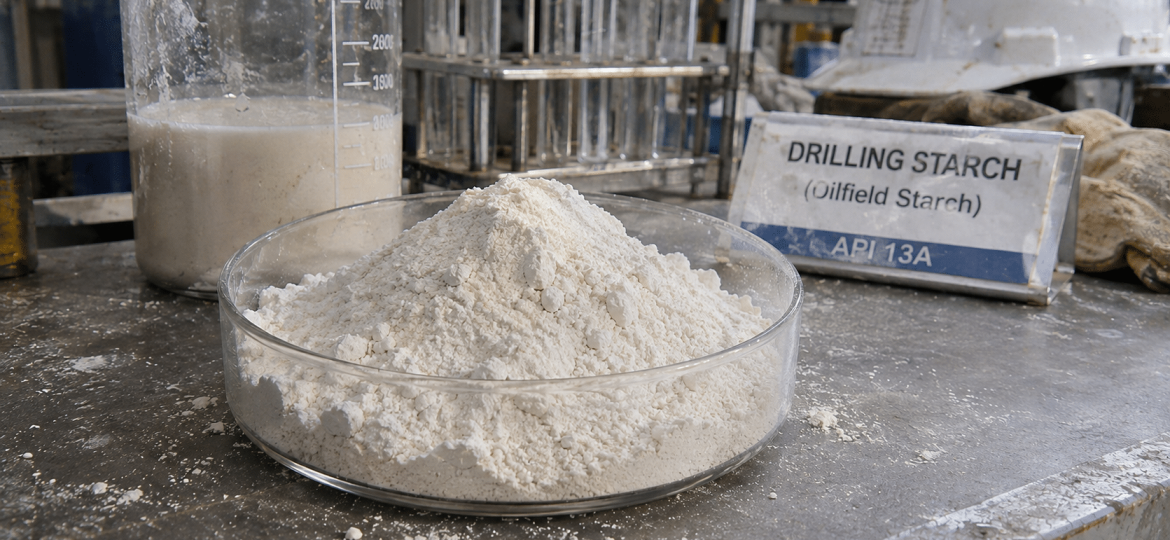
Drilling starch export from Türkiye supports the global supply of drilling fluid additives for oil, natural gas and other well construction projects. Moreover, the material plays an important role in fluid-loss control and the performance of water-based drilling muds.
Because drilling fluids can lose water into surrounding rock, engineers use suitable additives to control filtration. For example, drilling starch helps reduce fluid loss and supports the formation of a protective filter cake along the well wall.
Furthermore, selected modified starch grades can work in freshwater, saltwater and saturated brine systems. However, their performance depends on the product grade, salt content, temperature and other mud components.
Therefore, international buyers should assess technical data, filtration results and product quality before placing bulk orders.
Türkiye offers established industrial supply networks and access to major international shipping routes. Consequently, these advantages support drilling starch export to several energy and industrial markets.
ATABAŞ GLOBAL combines industrial chemical supply with international trade and shipping services. As a result, we develop supply plans according to the technical and commercial needs of global buyers.
1. What Is Drilling Starch?
Drilling starch is a plant-based polymer additive that mainly serves water-based drilling fluids.
Unlike ordinary native starch, drilling-grade products undergo treatment to improve their performance in cold water and drilling mud systems.
For example, manufacturers can use heat treatment to produce pregelatinized starch. Furthermore, chemical changes can improve selected properties such as salt tolerance and heat stability.
Consequently, drilling starch can help control fluid loss without causing an excessive increase in mud viscosity.
General Product Information
| Product Information | Description |
|---|---|
| Commercial Name | Drilling Starch |
| Alternative Name | Oilfield Starch |
| Chemical Family | Polysaccharides |
| Basic Starch Formula | (C₆H₁₀O₅)ₙ |
| Native Starch CAS Number | 9005-25-8 |
| Modified Starch CAS Number | Grade-specific |
| Common HS Code | 350510 |
| Appearance | White to pale yellow |
| Physical Form | Powder or fine granules |
| Main Raw Materials | Corn, potato, cassava and wheat starch |
| Water Behaviour | Cold-water hydration, grade-specific |
| Main Function | Fluid-loss control |
| Main Industry | Oil and gas drilling |
| Main Technical Standard | API Specification 13A |
| Common Packaging | 25 kg bags |
However, chemically modified starch products may have different CAS numbers and chemical structures.
Therefore, buyers should confirm product identity through the current Safety Data Sheet (SDS).
Drilling Starch and Native Starch Differences
Native starch contains natural carbohydrate polymers from plant sources.
However, ordinary native starch generally does not hydrate effectively in cold water without further treatment.
In contrast, pregelatinized drilling starch can hydrate under suitable cold-water mixing conditions.
Moreover, chemical treatment can improve performance in more demanding mud systems.
Consequently, ordinary food or industrial starch should not automatically replace drilling-grade starch.
Furthermore, drilling starch must meet the filtration and mud performance limits required by the project.
Further technical information is available from the SLB Energy Glossary.
2. Drilling Starch Export from Türkiye
Türkiye has an established agricultural processing and industrial chemical supply sector.
Moreover, access to domestic and imported starch sources supports the supply of several modified starch products.
However, the availability of ordinary starch does not automatically establish the availability of API-grade drilling starch.
Therefore, buyers should confirm the actual manufacturer, product grade and technical test results.
Turkish Starch Supply and Industrial Processing
Corn, wheat, potato and other plant materials provide raw materials for starch production.
Furthermore, starch processing plants can produce different products for food, paper, textiles and technical applications.
For drilling use, however, the material requires suitable treatment and performance checks.
For example, manufacturers may apply physical treatment, chemical modification or a combination of both.
Consequently, drilling starch export requires a supply chain that can meet specific oilfield requirements.
Advantages of Drilling Starch Export from Türkiye
Türkiye connects European, Middle Eastern, African and Asian markets through established trade routes.
Moreover, its major ports support international container shipping and other cargo services.
For example, Mersin provides access to Mediterranean and Middle Eastern trade routes.
Meanwhile, İstanbul, Gebze and İzmir offer additional shipping options.
Furthermore, buyers can request packed cargo, trial orders or regular monthly shipments.
However, actual availability depends on the required grade and supply source.
Therefore, ATABAŞ GLOBAL reviews each technical and commercial inquiry before confirming an offer.
3. Global Drilling Starch Export Market and Trade Statistics
International drilling starch trade forms part of the wider modified starch market.
However, the six-digit international customs system does not provide a separate code for every drilling starch grade.
Consequently, HS 350510 offers a broad trade reference rather than a direct measure of global oilfield starch consumption.
Global Modified Starch Export Statistics – 2025
| Country | Export Volume (MT) | Export Value (USD) |
|---|---|---|
| Thailand | 1,071,520 | 882,866,030 |
| Netherlands | 443,130 | 750,812,830 |
| Germany | 264,881 | 527,971,720 |
| United States | 288,565 | 477,139,290 |
| France | Not reported | 361,996,160 |
| China | 176,508 | 216,690,640 |
| Belgium | Not reported | 168,426,230 |
| Italy | 110,237 | 121,217,810 |
| Sweden | 46,894.60 | 95,412,370 |
| Türkiye | Not reliably reported | 44,183,490 |
Source: World Bank WITS – Modified Starch Exports 2025.
Thailand leads the reported national export rankings by value. Meanwhile, the Netherlands, Germany and the United States also maintain significant export activity.
However, the European Union reports combined trade figures separately. Therefore, the table excludes the EU aggregate to avoid double counting.
Understanding Drilling Starch Export Data
HS 350510 covers dextrins and other modified starches.
For example, this group includes products for food manufacturing, paper production, adhesives, textiles and industrial processes.
Moreover, certain drilling-grade modified starches may fall within the same group.
However, customs figures do not identify the final use of every shipment.
Therefore, the trade figures in this article represent the wider modified starch category, not verified drilling starch export volumes.
Furthermore, export totals may include goods that a country previously imported.
Consequently, buyers should combine customs data with grade-specific market information.
4. Global Drilling Starch Import Markets
Demand for drilling-grade starch mainly follows oilfield activity, well construction and the use of water-based drilling fluids.
Meanwhile, the broader modified starch market includes many other industrial sectors.
Therefore, international import figures provide useful background information but cannot directly establish oilfield demand.
Global Modified Starch Import Statistics – 2025
| Country | Import Volume (MT) | Import Value (USD) |
|---|---|---|
| China | Not reported | 470,688,520 |
| Germany | 307,795 | 437,043,690 |
| Japan | 417,871 | 403,218,410 |
| United States | 179,489 | 375,186,080 |
| France | 107,985 | 173,321,720 |
| South Korea | Not reported | 169,637,770 |
| Indonesia | 168,014 | 162,951,440 |
| Canada | 106,121 | 161,940,280 |
| United Kingdom | Not reported | 154,638,340 |
| Netherlands | 105,031 | 154,052,920 |
| Türkiye | Not reliably reported | 97,302,550 |
Source: World Bank WITS – Modified Starch Imports 2025.
China leads the reported national import rankings by value. Furthermore, Germany, Japan and the United States represent major markets within this product group.
However, these figures cover several types of modified starch.
Therefore, they should not serve as a ranking of drilling starch consumption.
Middle Eastern Drilling Starch Markets
Middle Eastern oil and gas projects create demand for drilling fluid chemicals.
For example, oilfield service companies in Saudi Arabia, Oman, Kuwait, Qatar and the United Arab Emirates may require filtration control additives.
Moreover, deep wells and salt-rich formations can create demand for specialty grades.
However, individual projects may require approved suppliers and specific product tests.
Consequently, drilling starch export to these markets requires careful technical assessment.
African and Asian Drilling Starch Markets
Oil and gas projects in North Africa can provide opportunities for drilling fluid suppliers.
Similarly, energy development in parts of Asia may support demand for modified starch and other mud additives.
Furthermore, selected water well and geothermal projects may use suitable starch-based materials.
However, industrial needs vary between countries and drilling conditions.
Therefore, suppliers should confirm the intended application before preparing quotations.
European and American Markets
Europe and North America have established drilling fluid and chemical supply networks.
Moreover, buyers in these regions may require detailed product records and consistent batch quality.
For example, offshore projects can require specific environmental acceptance.
In addition, reservoir drilling may require filter cake removal and formation compatibility tests.
Consequently, product performance and legal compliance remain important for international sales.
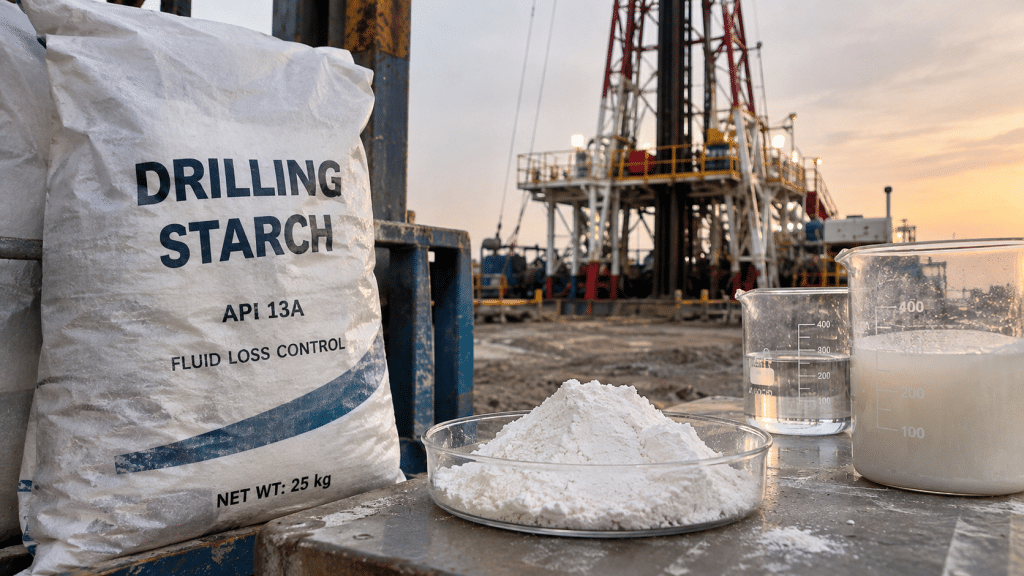
5. Türkiye Drilling Starch Export Statistics and Customs Regulations
Türkiye participates in both the export and import of modified starch products.
Furthermore, its trade records show established commercial links with European, African and Middle Eastern markets.
However, these figures cover the complete HS 350510 product group.
Türkiye Modified Starch Trade – 2024 and 2025
| Trade Indicator | 2024 | 2025 |
|---|---|---|
| Export Value | USD 38,789,610 | USD 44,183,490 |
| Export Volume | 58,256 MT | Not reliably reported |
| Import Value | USD 97,781,340 | USD 97,302,550 |
| Import Volume | Not reported | Not reliably reported |
| HS Code | 350510 | 350510 |
Sources: Türkiye Exports 2024, Türkiye Imports 2024, Türkiye Exports 2025 and Türkiye Imports 2025.
Türkiye’s reported modified starch export value increased between 2024 and 2025.
Meanwhile, its import value remained relatively stable.
However, incomplete national weight records prevent a reliable comparison of total annual shipment volumes.
Leading Modified Starch Export Destinations from Türkiye – 2025
| Destination | Export Volume (MT) | Export Value (USD) |
|---|---|---|
| Netherlands | 10,419.00 | 6,199,020 |
| Algeria | Not reliably reported | 5,980,210 |
| Egypt | 7,414.41 | 5,500,480 |
| Tunisia | Not reliably reported | 3,245,220 |
| Spain | 2,694.04 | 2,374,830 |
| South Africa | 2,173.39 | 1,836,190 |
Source: World Bank WITS – Türkiye Modified Starch Export Destinations 2025.
These records show trade links with several industrial markets.
However, missing weight records do not indicate that no physical shipments took place.
Furthermore, the data does not identify which shipments contain drilling-grade material.
Drilling Starch Export HS Code and GTIP
Modified drilling starch commonly falls under HS 350510, depending on its actual composition and processing method.
| Product | Possible HS Code |
|---|---|
| Modified Starch and Dextrins | 350510 |
| Native Wheat Starch | 110811 |
| Native Corn Starch | 110812 |
| Native Potato Starch | 110813 |
| Native Cassava Starch | 110814 |
| Other Native Starches | 110819 |
| Certain Formulated Drilling Fluid Additives | Classification depends on composition |
However, the correct customs code depends on product identity rather than its commercial name alone.
Furthermore, blends containing several drilling chemicals may require a different tariff classification.
Therefore, exporters should confirm the applicable Turkish GTIP and destination customs code before shipment.
Drilling Starch Export Quotas and Trade Rules
Reported export volumes do not represent legal export quotas.
Moreover, starch products can face different customs rules depending on their composition, origin and destination.
For example, certain markets may apply customs duties or trade measures to specific agricultural or processed products.
However, no dedicated drilling starch quota has been confirmed for this article.
Therefore, buyers should check the latest national customs rules before placing an order.
Official information is available from the Republic of Türkiye Ministry of Trade and the WTO Quantitative Restrictions Database.
6. Drilling Starch Export Grades and Technical Specifications
Drilling starch comes in several commercial grades for different mud systems.
For example, standard pregelatinized products can support general filtration control.
Meanwhile, chemically modified grades can provide additional salt tolerance or heat resistance.
Therefore, buyers should select products according to actual drilling conditions.
Pregelatinized Drilling Starch Export
Manufacturers treat native starch to improve its hydration in cold water.
Consequently, the resulting product can disperse and form a hydrated polymer system without conventional cooking at the drilling site.
Moreover, suitable grades help control filtration in water-based muds.
However, standard pregelatinized products may remain sensitive to heat and microbial activity.
Therefore, engineers should confirm the operating limits before use.
Carboxymethyl Starch (CMS)
Carboxymethyl starch contains chemical groups that change the behaviour of native starch.
For example, suitable CMS grades can improve water interaction and filtration control.
Furthermore, selected products can work in saltwater drilling systems.
However, CMS is not the same product as carboxymethyl cellulose (CMC).
While CMS uses starch as its polymer base, CMC uses cellulose.
Consequently, buyers should not treat their technical specifications as interchangeable.
Hydroxypropyl Starch (HPS)
Hydroxypropyl starch represents another chemically modified starch family.
Moreover, selected grades can offer useful performance in brine-based fluids and reservoir drilling systems.
For example, chemical treatment may improve hydration and stability under specific conditions.
However, hydroxypropyl content alone does not establish drilling performance.
Therefore, buyers should request relevant filtration and compatibility tests.
High-Temperature and Salt-Tolerant Drilling Starch
Specialty grades can serve drilling systems with increased temperature or salt content.
Furthermore, some manufacturers offer products with improved resistance to microbial activity.
However, these properties depend on the actual treatment method and commercial grade.
For example, a supplier may publish a higher temperature limit under specific test conditions.
Consequently, buyers should confirm the test fluid, exposure period and required additives.
Drilling Starch Grade Comparison
| Commercial Grade | Main Characteristics | Typical Application |
|---|---|---|
| Pregelatinized Starch | Cold-water hydration | General water-based muds |
| API-Grade Drilling Starch | Defined filtration and viscosity limits | Standard oilfield drilling |
| Carboxymethyl Starch | Chemically modified starch | Water-based and saline fluids |
| Hydroxypropyl Starch | Modified polymer structure | Selected brine and drill-in fluids |
| Salt-Tolerant Starch | Performance in saline systems | Saltwater drilling |
| High-Temperature Starch | Improved heat resistance | Selected deep wells |
| Fermentation-Resistant Grade | Improved microbial stability | Extended fluid use |
| Reservoir Drill-In Grade | Controlled filtration and cake removal | Reservoir drilling |
However, several commercial categories can overlap.
Therefore, a single product may belong to more than one grade category.
7. Drilling Starch Production Process and Chemical Properties
Drilling starch production begins with the recovery or purchase of suitable plant-based starch.
Moreover, manufacturers select their processing method according to the required product performance.
Because native starch has limited cold-water hydration, further treatment plays a key role in drilling-grade production.
Raw Materials for Drilling Starch
Corn, potato, wheat and cassava provide common starch sources.
However, their natural polymer ratios and grain structures may differ.
Furthermore, starch quality can vary according to crop type and processing conditions.
Consequently, manufacturers assess raw material quality before production.
Amylose and Amylopectin Structure
Starch contains two main carbohydrate polymers: amylose and amylopectin.
Amylose mainly has a linear chain structure. In contrast, amylopectin has a highly branched structure.
Moreover, both polymers contain glucose units linked together through chemical bonds.
Their general repeating-unit formula is:
(C₆H₁₀O₅)ₙ
However, starch does not have a single fixed molecular weight.
Furthermore, chemically modified grades contain additional chemical groups.
Therefore, the basic formula describes the native starch structure rather than every modified drilling product.
Pregelatinization and Chemical Modification
First, manufacturers select and prepare the native starch.
Next, controlled heat and moisture treatment can change the structure of starch granules.
Afterwards, drying and grinding produce a material suitable for cold-water hydration.
Alternatively, chemical treatment can introduce new groups into the polymer structure.
Furthermore, certain grades may undergo several physical and chemical treatment steps.
Finally, manufacturers check the finished product before packing.
General Drilling Starch Production Stages
The main production stages can include:
- Raw starch selection
- Cleaning and preparation
- Physical or chemical treatment
- Product recovery
- Drying
- Grinding and screening
- Laboratory testing
- Packaging
However, not every plant uses all these stages in the same order.
Consequently, the actual process depends on the raw material and target grade.
Moreover, manufacturers can adjust physical properties such as grain size and moisture through production control.
8. API 13A Standards for Drilling Starch Export
API Specification 13A defines quality requirements for several drilling fluid materials.
Furthermore, it includes a specific category for drilling-grade starch.
Because filtration control plays a key role in drilling fluid performance, these requirements focus on both fluid loss and viscosity.
Therefore, international buyers frequently request API 13A test results when selecting a product.
API 13A Drilling Starch Technical Requirements
| Test Parameter | Requirement |
|---|---|
| Viscometer Reading at 600 rpm in 40 g/L Salt Water | Maximum 18 |
| Viscometer Reading at 600 rpm in Saturated Salt Water | Maximum 20 |
| Filtrate Volume in 40 g/L Salt Water | Maximum 10 mL |
| Filtrate Volume in Saturated Salt Water | Maximum 10 mL |
| Residue Above 2,000 µm | None |
These requirements refer to the starch category in API Specification 13A, 19th edition.
However, the stated limits only have meaning when the laboratory follows the defined test procedure.
Furthermore, field results can differ from standard laboratory tests.
Therefore, buyers should confirm the applicable standard edition and any additional project requirements.
Official standards information is available from the American Petroleum Institute.
Published Commercial Drilling Starch Specifications
The following table illustrates technical data from two commercial products.
| Technical Parameter | Bluecraft Drilling Starch | Di-Corp Modified Starch |
|---|---|---|
| Appearance | Off-white granular powder | Off-white powder |
| Moisture | Max. 10% | 6–10% |
| Bulk Density | Not stated | 480–640 kg/m³ |
| pH | Not stated | 9.0–10.5 |
| Water Solubility | Not stated separately | Water-soluble |
| Filtrate Volume, 40 g/L Salt Water | Max. 10 mL | Not stated |
| Filtrate Volume, Saturated Salt Water | Max. 10 mL | Not stated |
| Packaging | 25 kg sacks | 50 lb sacks |
Sources: Bluecraft Agro – Drilling Starch Technical Data and Di-Corp – Modified Starch Product Sheet.
However, these products have different commercial specifications.
Therefore, the table should not serve as a direct performance ranking.
Temperature Resistance and Microbial Stability
Standard drilling starch can lose performance at elevated temperatures.
For example, the SLB technical glossary identifies a general starch heat stability limit of approximately 121°C.
Meanwhile, Di-Corp publishes a limit of up to 150°C for its modified starch when the fluid includes an oxygen scavenger.
However, this higher value applies to a specific product and treatment condition.
Furthermore, ordinary starch may suffer microbial breakdown.
Consequently, buyers should confirm heat stability and fermentation resistance through grade-specific data.
API Compliance and Product Certification
A supplier may state that a drilling starch grade meets API 13A requirements.
However, meeting technical limits does not automatically establish that the manufacturer holds an API Monogram licence.
Furthermore, a general product statement cannot replace batch test results.
Therefore, customers should verify the relevant certificates, licence scope and agreed quality records.
9. Industrial Applications of Drilling Starch
Drilling starch mainly serves water-based fluids in oilfield and well construction operations.
Moreover, selected chemically modified grades can support reservoir drilling and completion systems.
However, the actual product must suit the fluid composition and operating conditions.
Oil and Natural Gas Drilling
Oilfield engineers use suitable drilling starch grades to reduce mud filtration into surrounding rock.
Consequently, the material can help limit unwanted water loss from the drilling fluid.
Furthermore, it supports the formation of a filter cake along the well wall.
However, overall performance also depends on other mud additives and operating conditions.
Water-Based Drilling Fluids
Water-based mud represents a major application for drilling starch.
For example, suitable grades can help control fluid loss in clay-based and polymer-based fluids.
Moreover, they may provide filtration control with a limited effect on viscosity.
Therefore, engineers can consider drilling starch alongside other fluid-loss additives.
Saltwater and Saturated Brine Systems
Some drilling projects require fluids with high salt content.
However, salt can affect the performance of certain polymers.
Consequently, engineers select grades that can maintain filtration control under saline conditions.
Moreover, API 13A saltwater tests help buyers assess suitable drilling starch products.
Onshore Oilfield Operations
Onshore drilling projects encounter different rock formations and water conditions.
For example, weak or permeable formations may require improved filtration control.
Furthermore, suitable starch-based additives can support water-based mud performance.
However, fluid design should reflect the actual geological conditions.
Therefore, product selection requires project-specific assessment.
Offshore Drilling
Offshore projects may require stable fluid performance and regular chemical deliveries.
Moreover, long supply routes can increase the importance of suitable packing and stock planning.
However, offshore operations may also face strict environmental rules.
Consequently, buyers should confirm both technical suitability and local approval requirements.
Reservoir Drill-In Fluids
Reservoir drilling requires careful control of fluid invasion into productive rock.
For example, suitable modified starch grades can help form a filter cake with controlled filtration properties.
Furthermore, certain systems allow the removal of starch-based filter cakes using compatible treatment methods.
However, formation damage cannot be ruled out solely because a product contains starch.
Therefore, reservoir compatibility tests remain important.
Completion and Workover Fluids
Selected modified starch grades can serve completion and workover operations.
Moreover, these products may help control filtration in suitable brine systems.
However, completion fluids have different technical needs from standard drilling muds.
Consequently, engineers should confirm fluid compatibility and filter cake removal requirements.
Horizontal and Directional Drilling
Long and deviated wells can require stable mud properties throughout the drilling process.
Furthermore, filtration control can help maintain suitable fluid performance.
However, starch does not replace dedicated lubricants or other essential drilling additives.
Therefore, engineers should assess the complete fluid system.
Geothermal Drilling
Geothermal wells may expose drilling fluids to high temperatures.
Because ordinary starch has heat stability limits, these projects may require specialty grades.
Moreover, the length of heat exposure affects product performance.
Consequently, geothermal drilling teams should review relevant temperature and filtration test results.
Water Well Drilling
Suitable starch products may support filtration control in selected water well projects.
However, wells intended for drinking water can require approved materials.
Furthermore, local rules may restrict the chemicals that operators can use.
Therefore, buyers should confirm the applicable water well standards before purchase.
10. Drilling Starch and Other Drilling Fluid Additives
Drilling fluid systems often contain several materials that perform different functions.
For example, bentonite helps build mud viscosity, while starch mainly supports filtration control.
Moreover, PAC and CMC can provide filtration control and changes in mud flow properties.
Consequently, engineers should select additives according to the full fluid design.
Drilling Starch, PAC, CMC and Sulfonated Asphalt
| Drilling Additive | Main Function |
|---|---|
| Drilling Starch | Fluid-loss control |
| PAC-LV | Filtration control with limited viscosity increase |
| PAC-HV | Filtration control and viscosity |
| CMC-LVT | Fluid-loss control |
| CMC-HVT | Fluid-loss and viscosity control |
| Xanthan Gum | Low-shear viscosity and solids suspension |
| Bentonite | Mud viscosity and filter cake support |
| Sulfonated Asphalt | Shale and filtration control |
| Gilsonite | Sealing and filtration support |
| Soda Ash | Calcium control and alkalinity adjustment |
Although several materials share certain functions, their chemical properties and operating limits differ.
Therefore, buyers should not select direct substitutes without suitable tests.
Compatibility with Other Drilling Chemicals
Drilling starch can work alongside other polymers and mineral-based additives.
For example, selected starch grades may complement PAC in water-based mud systems.
Furthermore, combinations of suitable additives can help balance filtration and viscosity.
However, salt content, pH and dissolved calcium can influence the final result.
Consequently, laboratory compatibility tests should support product selection.
For further information, see our articles on Polyanionic Cellulose (PAC), Carboxymethyl Cellulose (CMC), Sulfonated Asphalt and Soda Ash.
Filtration Control and Filter Cake Formation
Fluid loss occurs when the liquid portion of drilling mud enters surrounding rock.
Consequently, excessive filtration can affect certain formations and drilling operations.
Suitable drilling starch grades can help reduce the amount of fluid that passes through the filter cake.
Moreover, they can support filtration control without a large increase in mud viscosity.
However, the final filter cake also depends on solids, other polymers and fluid chemistry.
Therefore, engineers should evaluate the complete mud system rather than starch content alone.
11. Drilling Starch Export Quality Control, Packaging and Storage
Consistent product quality supports reliable drilling fluid performance.
Furthermore, proper packing helps protect starch from moisture and contamination.
Because drilling projects often require stable product properties between shipments, quality checks remain important throughout the supply chain.
Pre-Shipment Drilling Starch Quality Tests
First, suppliers should confirm the actual product grade and batch number.
Next, laboratories can check appearance, moisture and grain size.
Furthermore, viscosity and filtration tests help establish performance in standard saltwater systems.
Depending on the order, buyers may also request pH, heat stability and microbial resistance tests.
However, a general Technical Data Sheet cannot replace actual batch results.
Therefore, suppliers should provide a Certificate of Analysis for the relevant shipment.
In addition, independent inspection can support agreed quality and weight checks.
Drilling Starch Export Packaging Options
| Packaging Type | Common Net Weight |
|---|---|
| Multiwall Paper Bag | 25 kg |
| Woven Bag with Inner Liner | 25 kg |
| Industrial Sack | 50 lb / 22.68 kg |
| Large Industrial Bag | 50 kg, if available |
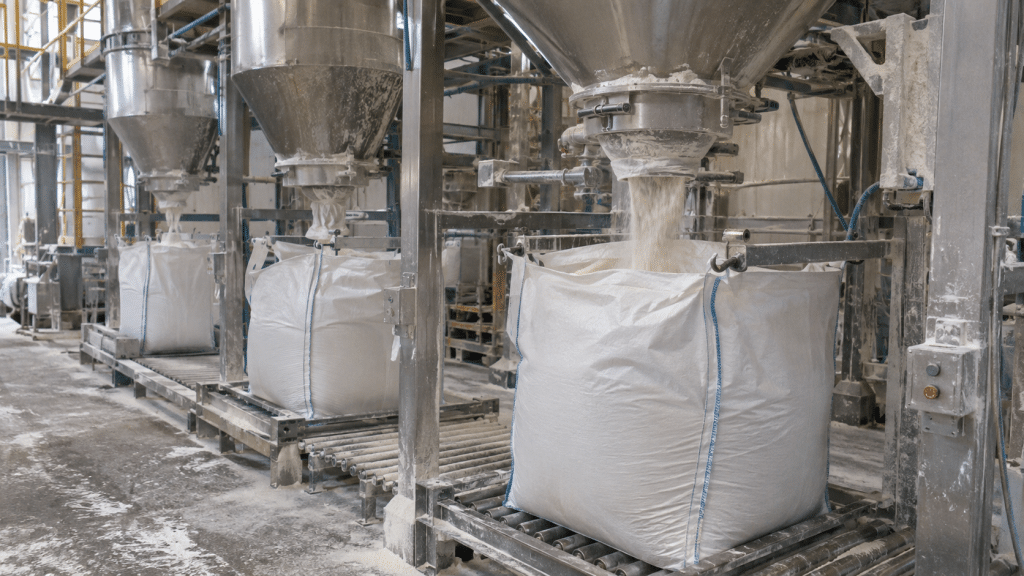
| Big Bag | 500 kg, if available |
| Jumbo Bag | 1,000 kg, if available |
Smaller bags offer flexibility for drilling site handling.
Meanwhile, large bags may suit customers with dedicated bulk handling equipment.
However, packing availability depends on the supplier and product grade.
Therefore, buyers should confirm bag size, inner liners and pallet requirements before shipment.
Warehouse Storage and Safe Handling
Drilling starch requires dry storage and protection from moisture.
Moreover, warehouse teams should protect bags from physical damage and contamination.
Because starch powder can create combustible dust under certain conditions, workers should follow the relevant safety procedures.
Furthermore, suitable ventilation and dust control help reduce workplace exposure.
However, shelf life and storage limits can differ between grades.
Consequently, users should follow the current product Safety Data Sheet and manufacturer instructions.
Further information is available from OSHA – Combustible Dust.
Container Loading and Cargo Planning
Packed drilling starch can travel in suitable dry freight containers.
For example, suppliers may use 20-foot, 40-foot or high-cube containers, depending on the loading plan.
However, bulk density and packing dimensions affect the net cargo weight.
Furthermore, pallet size and local road weight limits may influence container use.
Therefore, both parties should agree on the loading plan before shipment.
12. International Drilling Starch Export and Bulk Supply with ATABAŞ GLOBAL
Reliable drilling chemical supply requires more than a competitive purchase price.
Moreover, buyers need stable technical quality, suitable packaging and dependable shipment dates.
Therefore, ATABAŞ GLOBAL reviews product and trade requirements together.
Turkish Ports and Drilling Starch Export Logistics
ATABAŞ GLOBAL evaluates international shipments through Mersin, İzmir, Gebze, İstanbul and other suitable Turkish port regions.
Furthermore, we work with established shipping companies such as CMA CGM, Maersk, MSC and Hapag-Lloyd.
For example, buyers may request a trial container shipment before arranging regular supply.
Meanwhile, large industrial users may require several shipments during an extended drilling program.
However, the best transport plan depends on product availability, order quantity and destination.
Consequently, we assess suitable routes and shipping schedules before confirming delivery plans.
International Delivery Terms
International buyers can request different Incoterms according to their transport needs.
For example, EXW allows collection from an agreed supply point.
Under FCA terms, however, the seller delivers goods to the nominated carrier at the named place.
FOB requires delivery on board the vessel at the loading port.
Similarly, CFR requires the seller to arrange and pay for sea freight to the named destination port.
Under CIF terms, the seller also arranges the required marine insurance.
Nevertheless, cargo risk passes to the buyer when the goods are on board the vessel at the loading port.
Furthermore, FCA, CPT and CIP may better suit certain container shipments.
Therefore, customers should confirm the named delivery point and agreed trade terms.
Further information is available from the International Chamber of Commerce.
Drilling Starch Export Documents
A Technical Data Sheet provides the general product specification.
Meanwhile, a Certificate of Analysis shows the test results for a particular batch.
The Safety Data Sheet also explains product hazards and handling needs.
Furthermore, international shipments commonly require the following commercial records:
- Proforma Invoice
- Commercial Invoice
- Packing List
- Certificate of Origin
- Bill of Lading or other transport document
- Customs Export Declaration
- Inspection Certificate, if required
- Insurance Certificate, where applicable
In addition, customers may request API compliance reports and other technical records.
However, an A.TR movement certificate does not establish the country of origin.
Therefore, exporters should confirm the correct origin and customs documents for each destination.
ATABAŞ GLOBAL also reviews applicable trade restrictions, product origin and sanctions requirements before confirming transactions.
Long-Term Drilling Starch Supply
Regular chemical deliveries can help drilling companies maintain suitable stock levels.
For example, oilfield service companies may require monthly shipments throughout a drilling program.
Similarly, distributors may need regular container deliveries to support several customers.
However, supply conditions and freight rates can change during the year.
Therefore, early purchase planning helps support reliable delivery arrangements.
Furthermore, agreed technical limits help maintain consistency between shipments.
How to Request a Drilling Starch Export Quotation
A detailed Request for Quotation (RFQ) helps identify suitable drilling starch products.
First, customers should confirm the required product grade and API specification.
Next, they should provide the target filtration and viscosity limits.
Furthermore, information about salt content, pH and operating temperature helps define the technical requirements.
For example, reservoir drilling may require additional compatibility and filter cake removal tests.
In addition, buyers should confirm the total order quantity, monthly demand and packaging requirements.
Finally, the destination, delivery terms, inspection needs and shipment schedule help us assess the commercial offer.
For drilling starch export from Türkiye, API-grade modified starch, oilfield chemicals and international bulk supply solutions, contact ATABAŞ GLOBAL.
13. Frequently Asked Questions About Drilling Starch Export
Drilling Starch Properties and Commercial Grades
What is drilling starch?
Drilling starch is a plant-based polymer additive for drilling fluids. Moreover, it mainly helps control fluid loss in water-based muds.
What is the chemical formula of drilling starch?
Native starch has the general repeating-unit formula (C₆H₁₀O₅)ₙ. However, chemically modified grades contain additional chemical groups.
What is the CAS number of drilling starch?
Native starch commonly uses CAS 9005-25-8. Nevertheless, modified drilling starch grades may have different CAS numbers.
What is pregelatinized drilling starch?
It is starch that undergoes treatment to improve cold-water hydration. Consequently, it can serve suitable water-based drilling systems.
Is drilling starch the same as ordinary corn starch?
No. Drilling-grade starch requires suitable treatment and technical performance. Therefore, ordinary corn starch does not automatically meet oilfield requirements.
API 13A Drilling Starch Standards
Does API 13A cover drilling starch?
Yes. API Specification 13A includes physical and performance requirements for drilling-grade starch.
What is the API filtration limit for drilling starch?
The referenced API 13A requirements specify a maximum filtrate volume of 10 mL in both defined saltwater test systems.
Does API compliance mean API certification?
No. Technical compliance and formal manufacturer licensing are different matters. Therefore, buyers should verify each claim separately.
What temperature can drilling starch withstand?
Conventional products generally have limited heat stability. However, selected modified grades can work at higher temperatures under specified conditions.
Can drilling starch resist bacterial breakdown?
Some specialty grades offer improved microbial resistance. Nevertheless, ordinary starch may require suitable protection in certain mud systems.
Drilling Starch Applications and Performance
Can drilling starch work in saltwater mud?
Yes. Suitable grades can support filtration control in saltwater and saturated brine systems.
Does drilling starch increase mud viscosity?
Drilling starch mainly serves filtration control. However, its effect on viscosity depends on the grade and fluid composition.
Can drilling starch replace PAC?
Selected starch products may complement or partly replace PAC in certain systems. Nevertheless, engineers should confirm equivalent performance through testing.
Can drilling starch serve reservoir drilling?
Suitable modified grades can serve reservoir drill-in fluids. However, formation compatibility and filter cake removal require separate assessment.
Can drilling starch serve oil-based muds?
Conventional drilling starch mainly serves water-based fluids. Therefore, buyers should not assume compatibility with oil-based systems.
Drilling Starch Export and Customs Rules
What is the HS code for drilling starch?
Modified drilling starch commonly falls under HS 350510. However, the correct classification depends on composition and processing.
Does HS 350510 cover only drilling starch?
No. It also covers other modified starches and dextrins. Consequently, the trade figures do not represent drilling starch alone.
Does Türkiye export modified starch?
Yes. Türkiye reported approximately USD 44.18 million in modified starch exports in 2025.
Can buyers request independent product inspection?
Yes. Customers can request independent quality and weight checks according to the agreed purchase terms.
Bulk Drilling Starch Export and Supply
What packaging options are available?
Common options include 25 kg bags and 50 lb sacks. Furthermore, Big Bags may be available for selected grades.
How should warehouses store drilling starch?
Warehouses should protect the product from moisture and contamination. Moreover, workers should follow the current Safety Data Sheet.
Does ATABAŞ GLOBAL arrange regular drilling starch supply?
We assess regular supply plans according to product grade, availability, monthly demand and destination.
How can international buyers request a quotation?
First, customers should confirm the required grade and technical limits. Next, they should provide the quantity, packing and destination. Finally, ATABAŞ GLOBAL can assess suitable supply and shipping options.
