

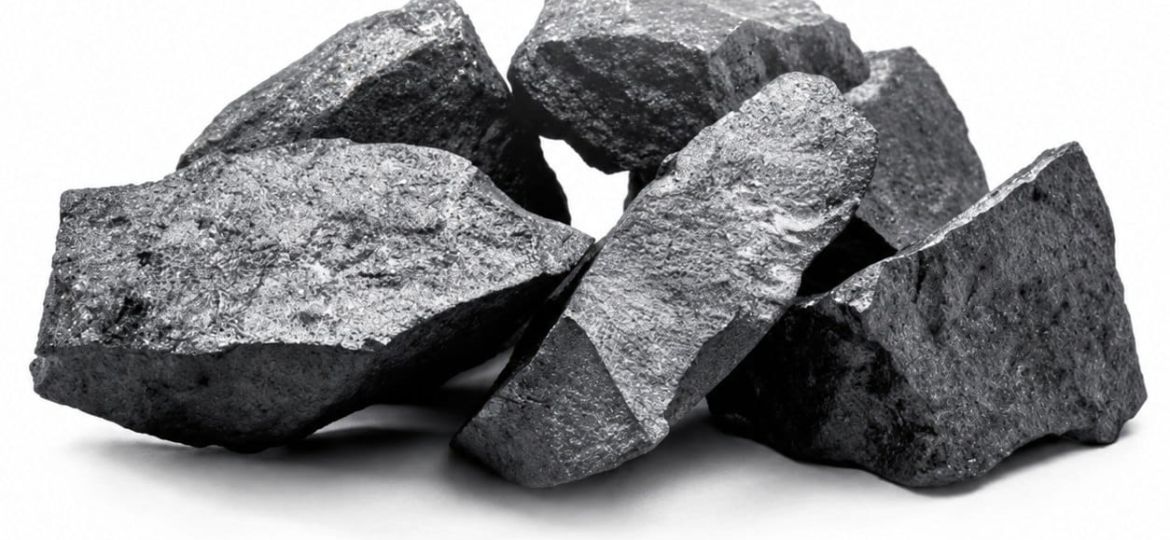
Ferro silico manganese plays an important role in modern steel production. Steelmakers use this ferroalloy to add manganese and silicon while also supporting the removal of unwanted oxygen from molten steel.
The alloy combines manganese, silicon, iron, and controlled amounts of other elements. Therefore, it gives steel producers an efficient way to improve both the production process and the properties of the final steel.
Moreover, the global steel industry creates strong demand for this material. Major producers supply steel plants across Europe, Asia, the Middle East, and the Americas.
This guide explains its properties, common specifications, uses, quality factors, purchasing criteria, and role in international trade.
What Is Ferro Silico Manganese?
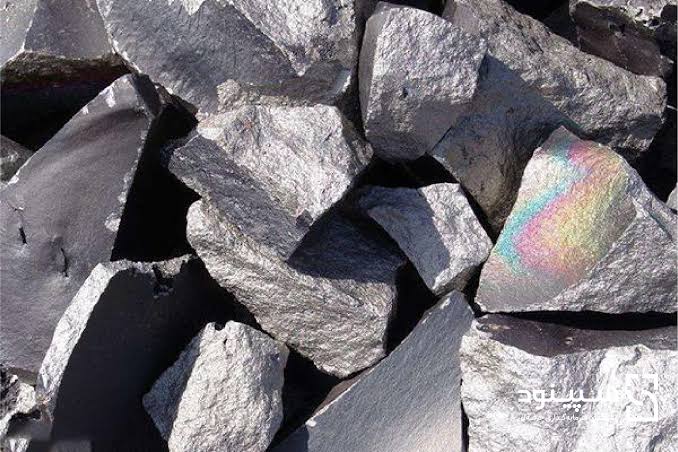
Ferro silico manganese, also known as silicomanganese or SiMn, is a ferroalloy that mainly contains manganese, silicon, and iron.
Producers manufacture the alloy by smelting manganese-bearing raw materials with silicon-bearing materials and carbon sources at high temperatures. The process creates an alloy that steelmakers can add directly to molten metal.
Manganese and silicon perform important functions during steel production. Manganese helps improve the required properties of steel. Meanwhile, silicon has a strong affinity for oxygen and supports the deoxidation process.
As a result, steelmakers can use one alloy to introduce both elements.
The exact chemical composition changes according to grade and customer needs. Therefore, buyers should always define the required specification before ordering.
Ferro Silico Manganese Technical Specifications
Chemical composition has a direct effect on product performance. However, exact limits can vary by producer, grade, steel plant, and contract.
A widely traded commercial grade often contains about 65% manganese and 16–17% silicon. Buyers commonly refer to this type as SiMn 65/17.
The following table provides general reference values rather than a supplier-specific specification.
| Specification | Typical / General Value |
|---|---|
| Product Name | Ferro Silico Manganese |
| Common Name | Silicomanganese / SiMn |
| Manganese (Mn) | Approx. 60–70% |
| Silicon (Si) | Approx. 14–20% |
| Carbon (C) | Commonly up to about 2.0–2.5%, depending on grade |
| Phosphorus (P) | Controlled according to grade |
| Sulfur (S) | Controlled at low levels |
| Main Base | Manganese, silicon, and iron |
| Appearance | Metallic alloy in lump form |
| Common Size | Depends on buyer and producer requirements |
| HS Code | 720230 |
| Main Application | Steel and alloy production |
These figures serve as general market references. Therefore, industrial buyers should always review the producer’s Technical Data Sheet and Certificate of Analysis before confirming an order.
In addition, buyers should specify the required particle size. Size distribution can affect handling, furnace charging, and production control.
What Is Ferro Silico Manganese Used For?
Steel production represents the main application for this alloy.
During steelmaking, producers need to control both the chemistry and cleanliness of molten steel. Oxygen can create unwanted effects during the process. Therefore, steelmakers add suitable materials to control oxygen and reach the required chemical composition.
Silicon supports deoxidation because it reacts strongly with oxygen. At the same time, manganese contributes to the required composition and performance of the steel.
Consequently, SiMn provides two important alloying elements through a single addition.
Steelmakers can use different grades according to the type of steel they produce. For example, carbon steel, structural steel, and other grades may require different manganese and silicon levels.
Therefore, producers select the alloy according to their furnace practice and final steel specification.
Main Industrial Applications
Although steelmaking creates most of the demand, the material can support several related metallurgical applications.
| Industry / Application | Main Purpose |
|---|---|
| Carbon Steel Production | Adds manganese and silicon while supporting deoxidation |
| Structural Steel | Helps achieve the required chemical composition |
| Alloy Steel | Supplies controlled manganese and silicon |
| Steel Foundries | Supports alloy adjustment and melt treatment |
| Long Steel Products | Supports production of bars, rods, and related products |
| Flat Steel Products | Contributes to selected steel compositions |
| Metallurgical Processing | Acts as a manganese and silicon source |
| Special Steel Grades | Supports specific alloy requirements when suitable |
The required grade depends on the production process. Therefore, steelmakers should define chemical limits before selecting a supplier.
Why Is Ferro Silico Manganese Important in Steelmaking?
Steel producers need accurate control over the chemical composition of molten steel. Even small changes can affect the final product.
This ferroalloy provides both manganese and silicon in a practical form. As a result, steelmakers can use it to support alloy adjustment and deoxidation at the same time.
Manganese also has an important role in steel chemistry. It helps control the effects of sulfur and contributes to the required mechanical properties of many steel grades.
Meanwhile, silicon acts as an effective deoxidizing element. Therefore, it helps steelmakers manage oxygen during production.
The alloy can also simplify raw material additions. Instead of introducing manganese and silicon only through separate materials, producers can use SiMn when its composition fits the production target.
Consequently, the product remains an important part of many steelmaking operations.
Key Benefits in Metallurgical Production
The alloy offers several practical benefits for steel manufacturers.
First, it supplies two major alloying elements in one material. Therefore, steelmakers can manage manganese and silicon additions more efficiently.
Second, it supports deoxidation. This function helps producers control oxygen during steelmaking.
Moreover, the product comes in different chemical grades and size ranges. Buyers can therefore select material that matches their production needs.
Another benefit comes from its established global supply chain. Major producing countries serve steel markets around the world.
However, buyers should not choose a product based only on price. Chemical consistency, particle size, phosphorus level, carbon content, and supply reliability can also affect production results.
Therefore, a complete technical and commercial review usually creates better long-term value.
Key Quality Parameters
Industrial buyers should review the complete chemical profile before purchasing.
Manganese and silicon content rank among the first values to check. However, carbon, phosphorus, sulfur, and particle size can also play important roles.
Buyers should normally evaluate:
- Manganese content
- Silicon content
- Carbon content
- Phosphorus level
- Sulfur level
- Particle size
- Fines percentage
- Chemical consistency
- Moisture and storage condition
- Country of origin
- Certificate of Analysis
- Supply capacity
Phosphorus requires particular attention because steel producers often set strict limits according to their final steel grade.
Likewise, particle size matters during furnace charging and handling. Too many fines may create operational problems in some processes.
Therefore, buyers should define both chemical and physical requirements in the purchase contract.
Moreover, a batch-specific Certificate of Analysis helps the buyer confirm that each shipment meets the agreed limits.
Storage, Handling and Transportation
Companies should store ferroalloys in clean and dry conditions. Good storage helps prevent contamination and supports efficient material handling.
First, warehouse teams should keep the material separate from unwanted foreign materials. They should also protect it from conditions that could affect handling or quality.
Moreover, workers should use suitable equipment when moving large quantities. Industrial alloy shipments can involve heavy bulk loads, big bags, or other forms of commercial packing.
Dust and fines may also require control during handling. Therefore, companies should follow site safety procedures and the supplier’s safety information.
For international shipments, buyers and sellers should agree on packaging, weight tolerance, loading method, inspection terms, and shipping documents before dispatch.
Clear terms reduce the risk of commercial disputes and help both parties manage the shipment more efficiently.
Global Ferro Silico Manganese Import Markets
International trade provides a useful view of global steelmaking demand.
The HS 720230 customs category directly covers ferro-silico-manganese. Therefore, trade data under this code provides a more focused view of international product flows.
According to 2024 WITS/UN Comtrade data, the following markets ranked among the largest importers:
| Major Import Market | 2024 Import Value | Quantity |
|---|---|---|
| European Union | USD 636.54 million | Not reported in aggregate result |
| United States | USD 417.44 million | 358.13 million kg |
| Turkey | USD 291.68 million | 254.64 million kg |
| Japan | USD 260.00 million | 243.93 million kg |
| Italy | USD 225.85 million | 212.05 million kg |
| Germany | USD 182.12 million | 169.86 million kg |
| South Korea | USD 177.38 million | 160.89 million kg |
The figures show strong demand across Europe, North America, and Asia.
The European Union recorded the highest aggregate import value in the dataset. However, the EU figure represents a regional trading bloc rather than a single country.
Among individual countries, the United States ranked first by reported import value. Turkey followed with about USD 291.68 million, while Japan imported about USD 260.00 million.
Therefore, major steel-producing markets create significant international demand for the alloy.
Major Ferro Silico Manganese Exporting Countries
Production and raw material access shape the global export market. In addition, energy costs and steel industry demand can affect supply patterns.
According to 2024 trade data, the leading exporters included:
| Major Exporter | 2024 Export Value | Quantity |
|---|---|---|
| India | USD 1.006 billion | 1.105 billion kg |
| Malaysia | USD 383.93 million | 401.85 million kg |
| Norway | USD 377.72 million | 323.88 million kg |
| Georgia | USD 311.58 million | 275.69 million kg |
| Kazakhstan | USD 120.37 million | 126.61 million kg |
| Poland | USD 120.37 million | 101.75 million kg |
| Zambia | USD 99.45 million | 112.02 million kg |
India held a clear lead in 2024. The country exported more than 1.1 billion kg, with a reported value of just over USD 1 billion.
Moreover, Malaysia and Norway held strong positions in the international market. Georgia also played an important role, especially in supply to Turkey and the United States.
These figures show that buyers can source the product from several regions. However, each origin may offer different grades, logistics routes, lead times, and commercial terms.
Therefore, professional buyers should compare the total landed cost rather than the product price alone.
Turkey’s Role in Ferro Silico Manganese Trade
Turkey represents a significant import market due to its large steel industry.
In 2024, Turkey imported approximately USD 291.68 million and 254.64 million kg under HS 720230.
Georgia represented a major source of supply to Turkey. Trade data shows Georgian exports to Turkey of about USD 144.46 million and 129.13 million kg in 2024. India also supplied a significant volume, followed by Norway and European suppliers.
At the same time, Turkey exported material to several markets.
| Main Destination for Turkish Exports | 2024 Export Value | Quantity |
|---|---|---|
| Netherlands | USD 12.11 million | 10.09 million kg |
| Iraq | USD 2.42 million | 2.02 million kg |
| Albania | USD 1.97 million | 1.62 million kg |
| Algeria | USD 1.37 million | 1.30 million kg |
| Egypt | USD 1.18 million | 0.96 million kg |
Turkey reported total exports of approximately USD 19.40 million and 16.29 million kg in 2024.
As a result, Turkey acts mainly as a major importing market while also serving selected export destinations.
Its location also provides access to Europe, the Middle East, North Africa, the Black Sea region, and the Balkans. Therefore, logistics can play an important role in regional ferroalloy trade.
How to Choose a Ferro Silico Manganese Supplier
A reliable sourcing process should start with technical requirements.
First, buyers should define the required manganese and silicon ranges. Next, they should set maximum limits for carbon, phosphorus, sulfur, and other controlled elements.
Particle size also matters. Therefore, the purchase specification should clearly state the required size range and acceptable fines.
After the technical review, buyers should compare commercial terms. Important factors include price, origin, minimum order quantity, production capacity, payment terms, Incoterms, loading port, lead time, and transport cost.
Documentation also matters. Buyers should request a Certificate of Analysis and other documents required for the shipment.
Moreover, industrial users should consider batch consistency. A low-priced material can create additional costs if its composition changes significantly between shipments.
Therefore, buyers should evaluate quality, consistency, logistics, and commercial terms together before choosing a long-term supplier.
Packaging and Bulk Supply
Packaging depends on the supplier, customer requirements, transport method, and shipment size.
Producers may supply the alloy in bulk or suitable industrial bags. However, buyers should confirm the exact packaging format and net weight before ordering.
Large steel plants often focus on efficient unloading and furnace feeding. Therefore, packaging should fit the customer’s storage and handling systems.
Particle size also requires attention during transportation. Repeated handling can create additional fines. As a result, buyers may define size tolerances and fines limits in their contracts.
For international trade, both parties should also agree on container or bulk loading, inspection, weight determination, shipping documents, and Incoterms.
Clear shipment terms help buyers control costs and reduce delays.
Frequently Asked Questions About Ferro Silico Manganese
What is ferro silico manganese?
It is a ferroalloy that mainly contains manganese, silicon, and iron. Steelmakers use it to introduce manganese and silicon while supporting deoxidation during steel production.
What is SiMn 65/17?
SiMn 65/17 generally refers to a commercial grade with about 65% manganese and 17% silicon. However, carbon, phosphorus, sulfur, and other limits can vary. Therefore, buyers should always check the exact specification.
What is its main application?
Steelmaking represents its main use. Producers use the alloy in carbon steel, structural steel, alloy steel, and other suitable metallurgical applications.
What is the HS code?
The international HS code for ferro-silico-manganese is 720230.
Which country exports the most?
According to 2024 WITS/UN Comtrade data, India ranked as the largest exporter, with reported exports of about USD 1.006 billion and 1.105 billion kg.
Which markets import the most?
The European Union recorded the largest aggregate import value in 2024. Among individual countries, major markets included the United States, Turkey, Japan, Italy, Germany, and South Korea.
What should buyers check before ordering?
Buyers should check manganese, silicon, carbon, phosphorus, sulfur, particle size, and fines. In addition, they should compare the COA, origin, price, Incoterms, lead time, logistics, and supplier capacity.
Conclusion
Ferro silico manganese remains a key ferroalloy for the global steel industry. It provides manganese and silicon while also supporting important metallurgical processes during steelmaking.
Moreover, its broad international supply chain connects major producers with steel markets across Europe, Asia, North America, and other regions.
India leads global exports, while the United States, Turkey, Japan, and major European markets create strong import demand. Therefore, international trade plays an important role in balancing regional production and consumption.
For industrial buyers, however, price represents only one part of a successful purchase. Chemical composition, particle size, batch consistency, origin, logistics, and supply reliability can directly affect production.
Therefore, an effective sourcing strategy should combine reliable specifications, consistent quality, competitive commercial terms, efficient logistics, and stable long-term supply.
