

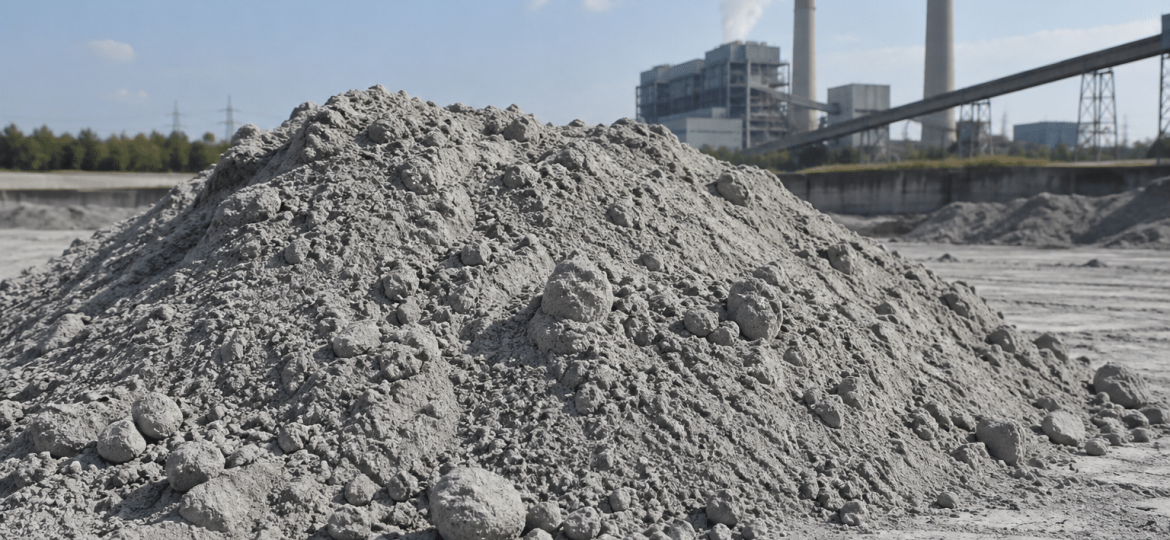
Fly Ash is a fine mineral material mainly collected during coal combustion in power plants. Although it starts as a combustion by-product, suitable grades can become valuable raw materials for concrete, cement, road construction, and other industrial uses.
Its performance depends on its chemical composition, fineness, carbon content, and source. Therefore, buyers should select the material according to the final application rather than price alone.
In particular, the construction industry values this material for its pozzolanic or cementitious properties. As a result, suitable grades can partly replace Portland cement in concrete and support more efficient use of industrial resources.
1. What Is Fly Ash?
Fly Ash is the fine ash carried with flue gases during coal combustion. Collection systems such as electrostatic precipitators or fabric filters capture these fine particles before the gas leaves the plant.
The material mainly contains oxides of silicon, aluminum, iron, and calcium. However, its exact composition changes with coal type and combustion conditions.
Particles are generally very fine, and many have a spherical shape. This physical structure can help improve the workability of suitable concrete mixes.
In addition, the material can react with compounds formed during cement hydration. Therefore, selected grades can act as useful supplementary cementitious materials in concrete.
2. Main Types and Properties
The industry commonly evaluates coal Fly Ash for concrete under standards such as ASTM C618.
Two well-known groups are Class F and Class C.
Class F usually comes from bituminous or anthracite coal and generally has lower calcium content. In contrast, Class C commonly comes from sub-bituminous coal and usually contains more calcium.
| Property | Class F | Class C |
|---|---|---|
| General Character | Low-calcium | Higher-calcium |
| Typical Main Components | Silica and alumina rich | Silica, alumina and higher calcium |
| SiO2 + Al2O3 + Fe2O3 | Min. 70%* | Min. 50%* |
| SO3 | Max. 5%* | Max. 5%* |
| Moisture | Max. 3%* | Max. 3%* |
| Loss on Ignition | Max. 6%* | Max. 6%* |
| Fineness, retained on 45 μm sieve | Max. 34%* | Max. 34%* |
| Strength Activity Index, 7 days | Min. 75%* | Min. 75%* |
| Strength Activity Index, 28 days | Min. 75%* | Min. 75%* |
*Values summarize key ASTM C618 requirements for concrete use. Buyers should always check the current applicable standard, supplier TDS, and project specification before approval.
3. Fly Ash Technical Specifications
Chemical composition alone does not define product quality. Physical performance is also important.
For example, fineness can influence reaction rate and concrete performance. Meanwhile, high loss on ignition may indicate higher levels of unburned carbon.
A practical quality review may include the following parameters:
| Parameter | Why It Matters |
|---|---|
| SiO2 + Al2O3 + Fe2O3 | Helps define chemical class and pozzolanic character |
| CaO | Helps indicate calcium level |
| SO3 | Important for specification control |
| Loss on Ignition (LOI) | Helps monitor unburned carbon and other volatile matter |
| Moisture | Supports storage and handling control |
| Fineness | Influences performance and consistency |
| Strength Activity Index | Helps assess performance with cement |
| Water Requirement | Supports concrete mix evaluation |
| Density | Useful for mix design and quality control |
Therefore, buyers should review both chemical and physical test results. The Technical Data Sheet (TDS) and Certificate of Analysis (CoA) should match the required application.
4. How Is Fly Ash Produced and Collected?
Coal-fired power plants produce ash during combustion.
Fine mineral particles travel with the flue gas. Then, pollution-control systems capture these particles before the gas reaches the atmosphere.
After collection, suppliers may store the material in silos and prepare it for industrial use. Depending on quality needs, additional processing can include classification, drying, blending, or carbon reduction.
However, not every collected ash has the same quality. Coal source, boiler conditions, collection method, and processing all affect the final material.
For this reason, consistent sourcing and quality control play an important role in commercial supply.
5. Where Is Fly Ash Used?
Construction represents the main beneficial-use market for suitable grades.
However, the material also serves several other applications.
| Application | Typical Role |
|---|---|
| Ready-Mix Concrete | Partial cement replacement / supplementary cementitious material |
| Cement Production | Blended cement or raw material |
| Precast Concrete | Cementitious component |
| Roads | Base, sub-base, embankment, or stabilization applications |
| Flowable Fill | Cementitious or filler component |
| Bricks and Blocks | Mineral raw material |
| Asphalt | Mineral filler in selected applications |
| Grouts | Cementitious component |
| Structural Fill | Engineering fill where permitted |
| Plastics and Rubber | Mineral filler in selected formulations |
The correct application depends on product quality and local rules. Therefore, companies should confirm technical and environmental requirements before use.
6. Use in Concrete and Cement
Concrete is one of the most important markets for this material.
Suitable grades can replace part of the Portland cement in a concrete mix. In addition, fine spherical particles can improve workability in properly designed mixes.
Pozzolanic reactions can also contribute to later-age strength and durability. However, performance depends on ash quality, replacement level, cement type, mix design, and curing conditions.
Therefore, concrete producers should determine the correct dosage through laboratory testing and project specifications.
EPA continues to recognize the use of suitable coal ash as a Portland cement replacement in concrete as an appropriate beneficial use when relevant standards and design requirements are met.
7. Use in Roads and Infrastructure
Road construction provides another important application area.
Depending on project requirements, the material can serve in road base, sub-base, stabilized layers, embankments, structural fill, and flowable fill.
In addition, engineers may use suitable ash in concrete for highways, bridges, pavements, and other infrastructure.
However, each project has different performance requirements. Therefore, contractors should evaluate strength, moisture, compaction, environmental conditions, and local specifications before use.
This approach helps ensure both technical performance and safe material management.
8. Other Industrial Applications
The material can also support industries outside conventional concrete production.
For example, manufacturers may use selected grades in bricks, blocks, lightweight aggregates, asphalt, plastics, and rubber.
Cement plants can also use suitable material as part of their raw material or blended cement systems.
Moreover, some applications help convert an industrial secondary material into a useful production input. This approach can reduce the need for virgin raw materials and avoid some landfill disposal.
However, technical suitability remains essential. Companies should not assume that every ash source fits every industrial application.
9. Major Import Markets
International trade data for this product require careful interpretation.
There is no globally consistent six-digit HS code that isolates coal Fly Ash from every other type of ash. HS 262100 covers “other slag and ash, including seaweed ash,” so it is broader than the target product.
Still, the category provides useful context for international trade in relevant ash materials. According to World Bank WITS 2024 data, the leading country-level importers under HS 262100 included:
| Rank | Importing Country | 2024 Import Value | Reported Quantity |
|---|---|---|---|
| 1 | Netherlands | US$57.33 million | 93,469 tonnes |
| 2 | United States | US$44.25 million | 900,928 tonnes |
| 3 | Germany | US$33.26 million | 353,265 tonnes |
| 4 | United Kingdom | US$25.66 million | 335,861 tonnes |
| 5 | Belgium | US$21.50 million | 453,720 tonnes |
The European Union reported a higher aggregate value of about US$108.28 million. However, the EU is an economic bloc rather than a single country, so it is excluded from the country ranking.
These figures should be treated as a trade-market indicator rather than Fly Ash-only trade data, because HS 262100 contains other slag and ash products as well.
10. Major Exporting Countries
The same HS-code limitation applies to export data.
According to World Bank WITS 2024 records for HS 262100, India and China were the largest country-level exporters by reported trade value.
| Rank | Exporting Country | 2024 Export Value | Reported Quantity |
|---|---|---|---|
| 1 | India | US$73.99 million | 5.607 million tonnes |
| 2 | China | US$63.76 million | 1.326 million tonnes |
| 3 | Germany | US$30.30 million | 754,349 tonnes |
| 4 | Netherlands | US$26.27 million | 23,862 tonnes |
| 5 | United States | US$23.82 million | 143,653 tonnes |
The European Union also reported approximately US$32.05 million in exports, but it is not included in the country ranking.
The data show significant international movement of materials within this ash category. However, buyers should use national tariff codes, customs records, or supplier-specific data when they need a precise view of Fly Ash trade.
11. How to Check Fly Ash Quality
Quality control should begin with the final application.
For concrete use, buyers should review the relevant standard and check chemical composition, fineness, moisture, LOI, strength activity, and water requirement.
Consistency also matters. Large changes between batches can affect concrete mix design and final performance.
Therefore, buyers should request a current TDS, SDS, and CoA. Project-specific test reports may also be necessary.
In addition, purchasing teams should confirm the ash source and applicable standard before approving a supplier.
12. Storage, Handling and Safety
Proper storage helps maintain product quality.
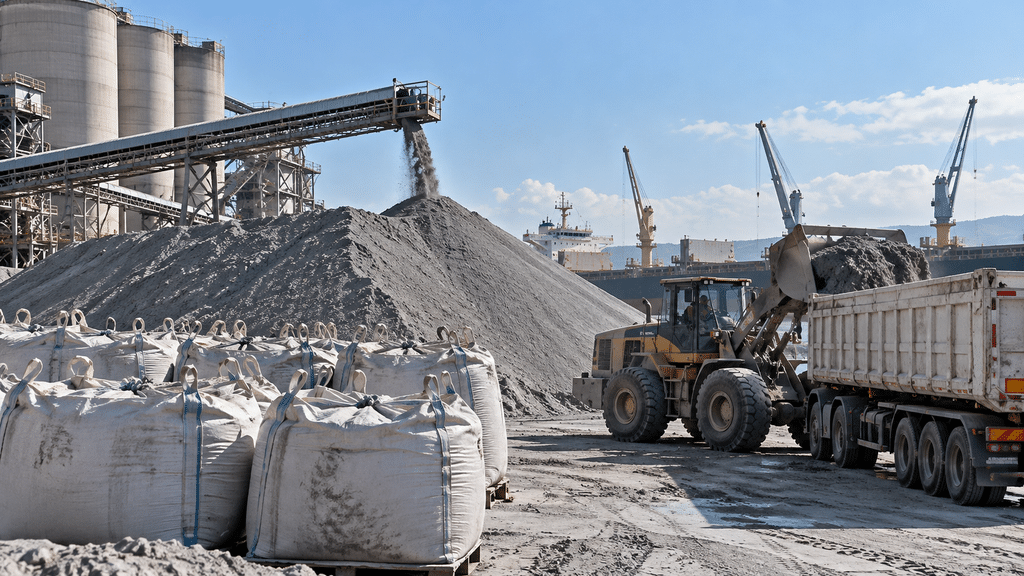
Companies normally keep dry material in closed silos or suitable sealed systems. Moisture control is important because unwanted water can affect handling and product consistency.
Because the product consists of fine particles, dust control is also necessary during loading, unloading, and transfer.
Therefore, workers should follow the current Safety Data Sheet (SDS) and use suitable engineering controls and personal protective equipment.
Companies must also follow local environmental, storage, transport, and workplace safety rules.
13. How to Buy the Right Fly Ash
A professional purchasing process starts with technical requirements.
First, buyers should define the application and required standard. Next, they should review class, chemical composition, fineness, LOI, moisture, performance data, and product consistency.
Logistics are equally important because this is a high-volume bulk material. Therefore, buyers should compare source location, silo availability, transport method, loading capacity, delivery time, and total delivered cost.
Documentation should also support the buying decision. TDS, SDS, CoA, test reports, and origin information can help reduce technical and supply risks.
Atabaş supports industrial buyers by bringing technical requirements, product quality, documentation, commercial terms, and logistics together in a well-managed procurement process.
14. Why Is Fly Ash Important for Industry?
Fly Ash creates value by turning a combustion by-product into a useful industrial material.
Its largest role is in concrete and cement. However, suitable grades also support road construction, infrastructure, bricks, blocks, fills, and selected industrial formulations.
Moreover, its use can reduce demand for some virgin materials and support more efficient resource use. Still, successful use depends on consistent quality and the correct application.
For this reason, buyers should combine technical evaluation with reliable sourcing and logistics.
For companies that value secure sourcing and professional supply management, Atabaş offers reliable support for Fly Ash procurement and industrial raw material supply.
