

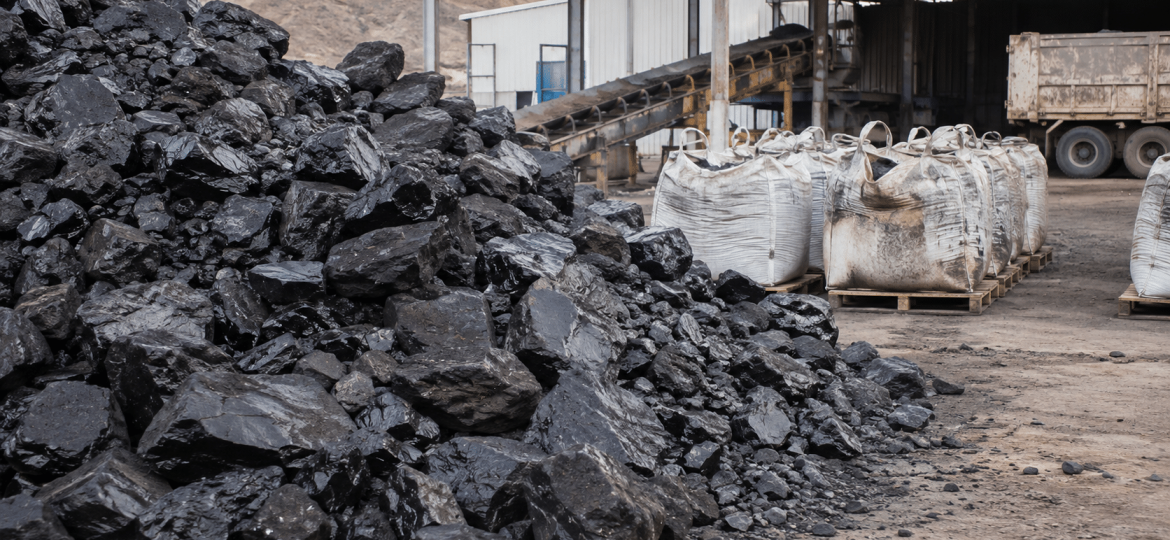
Gilsonite export from Türkiye provides industrial buyers with access to natural asphalt for road construction, oilfield drilling, industrial coatings, printing inks and foundry applications. Moreover, its natural properties make this material a valuable raw material for many industries.
Unlike common petroleum bitumen, gilsonite comes from natural mineral deposits. Therefore, its mineral content, softening point and chemical properties vary according to the source and processing method.
For example, road builders use natural asphalt to improve binder properties. Similarly, industrial producers use suitable grades to develop special coatings and other compounds.
Furthermore, different product grades allow buyers to choose materials that meet their production needs. In addition, buyers can select different powder sizes and ash levels for their specific uses.
Türkiye offers access to major shipping routes, industrial warehouses and professional customs services. As a result, international customers can compare several supply and delivery options.
However, successful gilsonite export requires careful planning of product quality, trade terms and shipping. For this reason, ATABAŞ GLOBAL develops supply solutions according to each customer’s needs.
1. What Is Gilsonite (Natural Asphalt)?
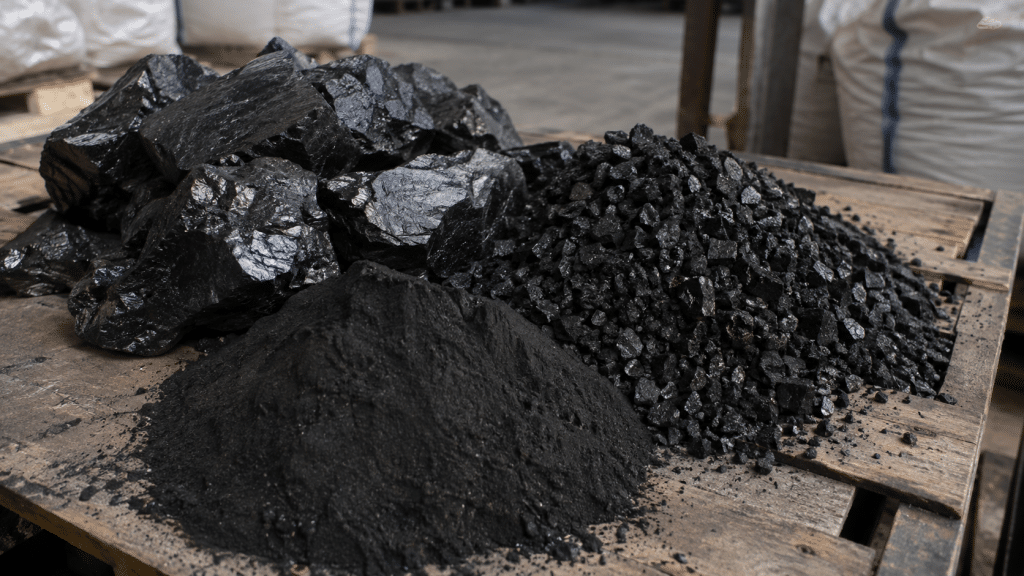
Gilsonite, also known as uintaite, is a natural solid hydrocarbon resin within the asphaltite group. In its original form, it appears as a black, brittle mineral with a shiny fracture surface.
However, grinding turns this material into a fine black or dark brown powder. Therefore, suppliers offer different particle sizes according to industrial demand.
The material contains complex organic compounds, including asphaltenes. Moreover, its high softening point sets it apart from many common petroleum bitumen grades.
For example, road builders can use gilsonite to improve asphalt binder properties. Similarly, oilfield companies can use selected grades to support drilling fluid performance.
In addition, paint and ink producers can use suitable grades in their product mixtures.
| Product Information | Description |
|---|---|
| Commercial Name | Gilsonite |
| Alternative Names | Natural Asphalt, Natural Bitumen, Uintaite |
| Product Group | Natural Hydrocarbon Materials |
| General HS Code | 2714.90 |
| CAS Number | 12002-43-6 |
| Appearance | Black or dark brown |
| Physical Form | Lumps, granules and powder |
| Water Solubility | Insoluble |
| Material Source | Natural mineral deposits |
| Main Industrial Function | Binder modification and industrial additives |
| Commercial Packaging | Industrial bags and Big Bags |
Furthermore, gilsonite differs from other natural asphalt products in its chemical content and physical properties. Therefore, buyers should check the actual material type before choosing a product grade.
For instance, two natural asphalt products may look similar but have different ash levels. Likewise, their softening points may differ.
In addition, their particle sizes may affect how they behave during mixing. Consequently, materials with similar names may not offer the same industrial results.
As a result, buyers should review both the product name and its test results. Moreover, early sample tests can help prevent unsuitable material choices.
- Important: Natural asphalt is a broader material group. Therefore, not every natural asphalt product qualifies as gilsonite.
2. Advantages of Gilsonite Export from Türkiye
Türkiye connects European, Asian, African and Middle Eastern markets through its strong transport network. Moreover, its industrial facilities support product storage, packing and international cargo movement.
For example, suppliers can prepare materials at suitable warehouses before moving them to the loading port. Similarly, access to different sea routes allows exporters to compare freight rates and shipping dates.
In addition, Türkiye offers several benefits for customers who need regular international shipments.
| Commercial Advantage | Contribution to International Supply |
|---|---|
| Geographical Location | Access to different regional markets |
| International Ports | Alternative sea routes |
| Industrial Warehouses | Storage and cargo preparation |
| Road Transport | Inland cargo movement |
| Container Shipping | Flexible shipment sizes |
| Customs Services | Professional document support |
| Quality Inspection | Independent testing support |
| Flexible Packaging | Customer-specific packing options |
| Regular Supply Planning | Support for repeat orders |
However, the shipping country does not always indicate the natural origin of the product. Therefore, international buyers should understand the difference between product origin, processing location and export country.
Furthermore, transport costs may vary according to the warehouse location and destination port.
For example, a nearby port may reduce inland transport costs. In contrast, another port may offer lower sea freight rates.
Similarly, a direct sea route may provide a shorter delivery time. However, routes with port transfers may sometimes offer better freight rates.
Consequently, early shipping plans can help buyers reduce their overall costs. In addition, regular orders require careful stock and delivery planning.
For this reason, ATABAŞ GLOBAL reviews product availability, technical quality and transport options together.
3. Global Gilsonite Export Market
International natural asphalt trade reflects demand from several major industries. In particular, road projects, oilfield work and industrial production support global demand.
Moreover, countries take part in this trade through mineral production, processing and distribution.
However, some countries also export products that they previously imported. Therefore, national export figures do not always represent local mineral production.
Major Exporting Countries – 2025
The following table presents selected national exporters under HS 271490, according to available 2025 trade records.
| Country | Annual Export Volume (MT) | Export Value (USD) |
|---|---|---|
| United States | 28,136.00 | 29,278,780 |
| South Africa | 18,875.70 | 12,534,250 |
| Belgium | 147,797.00 | 10,468,820 |
| Malaysia | 13,488.40 | 9,543,260 |
| United Kingdom | Not reported | 6,689,460 |
| Singapore | 13,480.70 | 5,627,650 |
Source: World Bank WITS – UN Comtrade Export Statistics 2025.
Among these countries, the United States records the highest export value. Meanwhile, Belgium reports a large shipment volume within the same product group.
However, different natural asphalt products may have very different market values.
For example, fine low-ash gilsonite may cost more than some raw natural asphalt products. Similarly, packing and processing costs can affect the value of exported goods.
Furthermore, trade hubs may record high export volumes without producing large amounts of natural asphalt locally.
In other words, a country’s export volume does not always reflect its mineral reserves. Likewise, a high export value does not necessarily indicate a higher product quality.
As a result, buyers should review the actual product origin and quality alongside global trade figures.
In addition, customs values do not provide exact prices for individual grades. Therefore, companies involved in gilsonite export should use trade data as a general market guide rather than a direct price list.
- Statistical scope: HS 271490 covers natural bitumen, natural asphalt and asphaltite products. Consequently, these figures do not represent pure gilsonite alone.
4. Major Importing Countries and Global Demand
Global demand for natural asphalt depends on road building, energy projects and industrial production.
For example, road projects may require asphalt additives, while oilfield operations may need special drilling materials.
Similarly, printing ink and foundry producers need raw materials with specific technical properties.
Furthermore, countries with limited local mineral sources may rely on overseas suppliers. As a result, natural asphalt trade connects suppliers with many different industrial markets.
Major Importing Countries – 2025
| Country | Annual Import Volume (MT) | Import Value (USD) |
|---|---|---|
| Philippines | 141,592.00 | 62,186,490 |
| Uruguay | 72,396.80 | 42,657,360 |
| United States | 90,973.00 | 35,748,870 |
| Denmark | 59,014.20 | 31,092,010 |
| Oman | 74,850.10 | 27,306,070 |
| Poland | 40,927.40 | 23,182,520 |
Source: World Bank WITS – UN Comtrade Import Statistics 2025.
These figures show the wide reach of global natural asphalt trade. However, import volumes do not identify the final use of each shipment.
Therefore, exporters should study the needs of each market before preparing sales offers.
For instance, oilfield customers may need fluid-loss control. In contrast, road builders may focus on binder strength and resistance to heat.
Moreover, ink producers may require low mineral content and suitable resin properties. Likewise, coating producers may need specific softening points and particle sizes.
In addition, seasonal road projects may affect purchasing demand. Meanwhile, industrial plants may require regular deliveries throughout the year.
Consequently, different industries create demand for different commercial grades. For this reason, successful gilsonite export depends on matching the right product with the intended industrial use.
5. Türkiye’s Gilsonite Trade and Export Quotas
Türkiye takes part in international natural asphalt trade through imports, exports and distribution.
Moreover, its transport network supports the movement of mineral and hydrocarbon products.
However, annual trade figures may change according to demand, product supply and market conditions. Therefore, buyers should review both trade values and shipment volumes.
Türkiye’s Natural Asphalt Trade – 2025
| Trade Indicator | Reported Data |
|---|---|
| Annual Export Value | USD 174,050 |
| Annual Export Volume | Not reliably reported |
| Annual Import Value | USD 521,650 |
| Annual Import Volume | 344.91 MT |
| General Product Classification | HS 271490 |
Sources:
World Bank WITS – Türkiye Export Statistics 2025
World Bank WITS – Türkiye Import Statistics 2025
The reported export quantity shows differences between the national total and individual destination records.
Therefore, this table excludes an unreliable annual export volume. Nevertheless, the available trade values show Türkiye’s role in international natural asphalt trade.
Gilsonite Export Quotas and Trade Rules
An export quota sets a legal limit on the amount of a product that exporters can sell abroad.
In contrast, annual export figures show actual trade activity. Therefore, annual shipment volumes and legal export limits represent different concepts.
| Country | Product-Specific Quantitative Export Quota |
|---|---|
| Türkiye | Not verified |
| United States | Not verified |
| South Africa | Not verified |
| Belgium | Not verified |
| Malaysia | Not verified |
| United Kingdom | Not verified |
| Singapore | Not verified |
The available sources do not confirm a numerical export quota for these markets. However, this does not guarantee unrestricted exports.
Moreover, national authorities may change mining rules, customs laws or trade limits.
For example, a country may require special export documents. Similarly, another country may apply additional rules to imported mineral products.
In addition, the final use of a product may affect certain trade requirements. Consequently, buyers should review more than the general customs code.
Therefore, exporters should check the current requirements before accepting an order. Likewise, buyers should review the customs rules of their destination country.
For further information, consult the following official sources:
Republic of Türkiye Ministry of Trade
WTO Quantitative Restrictions Database
- Trade compliance: Every international order requires a review of product origin, customs classification, destination and current trade rules.
6. Gilsonite Export Grades and Technical Specifications
Industrial customers require different grades because their production methods depend on specific material properties.
For example, drilling fluid producers may focus on particle size and fluid-loss control. In contrast, asphalt producers may need a higher softening point.
Similarly, printing ink producers may require lower ash content. Therefore, suppliers should review technical needs before confirming product availability.
Commercial Gilsonite Grades
| Commercial Grade | Main Industrial Application |
|---|---|
| Raw Lump Gilsonite | Industrial processing and grinding |
| Granular Gilsonite | Binder modification |
| Powder Gilsonite | General industrial use |
| Drilling Grade Gilsonite | Drilling fluid additives |
| Cementing Grade Gilsonite | Oilwell cementing |
| Asphalt Grade Gilsonite | Road binder modification |
| Foundry Grade Gilsonite | Casting sand additives |
| Ink Grade Gilsonite | Printing ink production |
| Paint Grade Gilsonite | Industrial paint production |
| Pipe Coating Gilsonite | Protective bituminous coatings |
| Low-Ash Gilsonite | Uses requiring low mineral content |
| Micronized Gilsonite | Uses requiring fine particles |
However, commercial grade names do not define universal quality standards.
Therefore, buyers should compare actual laboratory results instead of relying only on product names.
Moreover, two grades with similar names may offer different technical properties. For instance, one grade may contain less ash but have a different softening point.
Typical Technical Specifications
The following values provide examples of commercial specifications for selected natural asphaltite grades.
| Technical Parameter | Indicative Specification | Test Method |
|---|---|---|
| Appearance | Black or dark brown powder | Visual inspection |
| Softening Point | 150–220°C | ASTM D36 or ASTM E28 |
| Ash Content | Grade-specific, commonly 0.5–12% | Agreed ash test |
| Moisture Content | Grade-specific, commonly 0.5–3.5% | Agreed moisture test |
| Specific Gravity | Approximately 1.04–1.10 | Suitable density test |
| Particle Size | 100–200 mesh or custom size | Sieve analysis |
| Water Solubility | Insoluble | Product-specific test |
| Solvent Solubility | Grade and solvent dependent | Agreed solubility test |
| Volatile Matter | Grade-specific | Agreed laboratory test |
| Fixed Carbon | Grade-specific | Proximate analysis |
| Sulfur Content | Grade-specific | Suitable sulfur test |
| Packaging | 25 kg bags or 1 MT Big Bags | Commercial specification |
However, some commercial grades may fall outside these ranges.
For example, a low-ash grade may suit a specific paint mixture. Meanwhile, another producer may require a higher softening point.
In addition, a fine powder may improve mixing in certain production systems. Nevertheless, finer particles do not always provide better results.
Therefore, buyers should define the required sieve passing rate instead of providing only a mesh number.
Technical Testing and Product Selection
Furthermore, sample tests can help confirm material quality before commercial use.
For instance, ash tests show the amount of mineral residue in the product. Similarly, moisture tests help buyers check the water content.
Meanwhile, softening point tests provide useful information about the material’s behaviour under heat.
In addition, solubility tests may help assess whether the product suits a specific binder system.
However, no single test can confirm suitability for every use. Therefore, buyers should review all relevant results together.
Consequently, both parties can establish clear technical limits before shipment.
Further technical information is available from ASTM International and published gilsonite physical property references.
- Quality requirement: ATABAŞ GLOBAL reviews the agreed product specification and batch-specific Certificate of Analysis before confirming technical suitability.
7. Industrial Applications and Commercial Opportunities
Gilsonite serves many industries because its natural hydrocarbon structure supports different production methods.
For example, road builders can use suitable grades to improve asphalt binder properties. Similarly, oilfield companies may use natural asphaltite in drilling fluids and well cementing.
Furthermore, selected grades support printing inks, industrial paints and protective coatings.
| Industry | Application | Main Function |
|---|---|---|
| Road Construction | Asphalt binder modification | Supports high-temperature properties |
| Oil and Gas Drilling | Drilling fluid additives | Supports fluid-loss control |
| Oilwell Cementing | Cement slurry additives | Helps manage circulation losses |
| Foundry | Casting sand additives | Supports casting surface quality |
| Printing | Printing ink production | Resin and binder modification |
| Paint Industry | Industrial paints | Supports binder and pigment dispersion |
| Pipeline Industry | External protective coatings | Modifies bituminous compounds |
| Waterproofing | Bituminous membranes | Changes binder properties |
| Roofing | Roofing compounds | Supports thermal properties |
| Construction | Foundation protection | Supports moisture barrier materials |
| Industrial Chemicals | Resin-based mixtures | Binder modification |
| Metal Protection | Protective mastics and primers | Changes coating properties |
| Mineral Processing | Briquette and pellet binders | Supports binding in suitable mixtures |
However, final product performance depends on the complete mixture. Therefore, producers should carry out laboratory tests before large-scale production.
Road Construction and Oilfield Applications
Road building represents an important market for natural asphaltite. In particular, suitable grades can improve the high-temperature properties of compatible asphalt binders.
For example, gilsonite may help increase binder stiffness and reduce deformation under certain conditions.
However, producers must also consider flexibility and low-temperature performance. Therefore, laboratory tests should guide the final addition rate.
Moreover, road conditions and local climate can affect binder choice. Consequently, different road projects may require different material grades.
Meanwhile, oilfield applications require other material properties.
For instance, selected gilsonite grades may support filter cake development and wellbore stability. In addition, certain grades may help manage fluid losses during drilling.
Nevertheless, the correct product depends on drilling conditions, fluid content and project needs.
Paints, Printing Inks and Protective Coatings
Gilsonite can also serve as a resin additive in selected black paints and printing inks.
For example, its properties may support pigment dispersion in suitable mixtures. Similarly, paint producers can use natural asphaltite to change the physical properties of certain protective coatings.
Furthermore, manufacturers may use it in pipe enamels, waterproofing products and protective mastics. In addition, compatible grades may help improve hardness and heat resistance.
However, each finished product requires its own quality tests. For this reason, producers should check binder compatibility before changing their mixtures.
As a result, paints, inks and protective coatings create further opportunities for gilsonite export.
Foundry and Waterproofing Applications
In foundry work, suitable gilsonite grades can serve as additives in casting sand mixtures. For example, they may help improve the surface finish of certain cast metal parts.
Similarly, waterproofing producers can use natural asphaltite in suitable bituminous compounds.
However, the correct material depends on the finished product and its intended use. Therefore, producers should test each grade under actual working conditions.
More information about industrial applications is available from American Gilsonite Company.
8. Packaging, Storage and Pre-Shipment Quality Control
Proper packing helps protect product quality during storage and international transport.
In particular, fine gilsonite powder requires secure bags to reduce dust release and contamination.
Moreover, packing choices affect container loading and warehouse operations. Therefore, buyers should consider their storage space, handling equipment and production needs.
Industrial Packaging Options
| Packaging Type | Typical Capacity | Main Advantage |
|---|---|---|
| Industrial Bags | 25 kg | Controlled material use |
| Large Industrial Bags | As agreed | Flexible handling |
| Big Bags | 1,000 kg | High-volume handling |
| Palletized Bags | According to loading plan | Easier warehouse handling |
| Customized Packaging | As specified | Customer-specific needs |
For example, smaller bags may suit producers that use limited amounts during each production cycle.
In contrast, Big Bags offer a practical option for large industrial plants. Furthermore, pallets can make unloading easier.
However, their size and weight may reduce the available net cargo capacity.
In addition, bag strength and sealing quality can affect product protection. Therefore, suppliers should choose packing materials that match the powder grade.
Consequently, packing and container loading require joint planning.
Quality Control Before Shipment
Consistent quality plays an important role in gilsonite export. Therefore, suppliers should check that the prepared cargo meets the agreed technical specification.
| Quality Control Parameter | Main Purpose |
|---|---|
| Ash Content | Checking mineral residue |
| Moisture Content | Checking water content |
| Softening Point | Checking thermal properties |
| Particle Size | Confirming powder fineness |
| Solvent Solubility | Checking selected material properties |
| Visual Inspection | Finding signs of contamination |
| Batch Identification | Supporting product traceability |
| Packaging Inspection | Checking packaging condition |
| Weight Verification | Confirming shipment quantity |
Moreover, laboratory samples should represent the actual cargo.
For example, test results from an older batch may not reflect the quality of a new shipment. Therefore, buyers should request batch-specific test reports.
In addition, customers can request independent inspections according to the sales agreement.
Similarly, clear batch labels help buyers match the delivered material with its test results.
As a result, proper quality checks can help reduce trade disputes.
Safe Storage and Handling
Fine gilsonite powder may create combustible dust hazards under certain conditions. Therefore, companies must follow the product-specific safety instructions.
Furthermore, suitable ventilation and dust control help reduce workplace risks. Similarly, safe storage conditions help protect the material from moisture and outside contamination.
In addition, workers should follow the required personal safety measures during handling.
However, safety needs may vary according to the product form and workplace conditions. Consequently, industrial users should review the actual product safety documents before use.
For further safety information, visit OSHA – Combustible Dust.
- Safety requirement: Industrial users should follow the actual Safety Data Sheet (SDS) and current workplace safety rules.
9. Gilsonite Export Logistics and Turkish Ports
International shipping requires close cooperation between suppliers, warehouses, transport companies, customs brokers and shipping lines.
Moreover, packaged gilsonite can travel through established container shipping networks.
However, freight costs and transit times may differ between routes. Therefore, exporters should review available shipping options before preparing an offer.
A typical export supply chain follows this sequence:
Product Sourcing → Quality Control → Packaging → Inland Transport → Customs Clearance → Port Loading → Sea Freight → Destination Port
Major Turkish Export Ports
ATABAŞ GLOBAL coordinates international shipments through Mersin, İzmir, Gebze and İstanbul port regions.
Furthermore, we review different loading options according to cargo location and customer needs.
| Export Gateway | Main Logistics Advantage |
|---|---|
| Mersin | Eastern Mediterranean shipping routes |
| İzmir and Aliağa | Aegean and Mediterranean connections |
| Gebze and Kocaeli | Industrial areas and container terminals |
| İstanbul and Ambarlı | International container shipping networks |
In addition, we work with major international shipping companies, including:
Moreover, our professional customs brokers support export documents and customs clearance.
As a result, we can compare different routes and shipping options according to the agreed trade terms.
Container Shipping and Flexible Delivery
Container selection depends on cargo density, bag size and permitted loading weight.
For example, a 20-foot container may suit dense industrial materials. Meanwhile, a 40-foot container may provide more space when cargo weight allows it.
However, the actual net loading capacity depends on the container and transport rules. Therefore, exporters should prepare a loading plan before booking transport.
Furthermore, the nearest port may not always offer the lowest total cost.
For instance, another port may provide lower sea freight rates. Similarly, direct shipping services may offer shorter transit times.
In addition, early freight booking may help secure suitable vessel space. Nevertheless, shipping dates can change because of port conditions or carrier schedules.
Therefore, customers should allow for possible changes when planning production and stock levels.
Moreover, customers may require different shipping dates according to their production needs. Consequently, ATABAŞ GLOBAL reviews alternative ports and vessel schedules whenever possible.
- Flexible shipment planning: Delivery dates depend on customer needs, cargo readiness, shipping availability and agreed trade terms.
10. International Delivery Terms and Export Documentation
International buyers follow different purchasing and transport plans.
For example, some customers prefer to arrange their own sea freight. In contrast, others ask the supplier to manage shipping.
Therefore, both parties should agree on the correct delivery term before confirming an order.
International Delivery Terms
| Incoterm | Commercial Delivery Scope |
|---|---|
| EXW | Collection from the agreed premises |
| FCA | Delivery to the nominated carrier |
| FOB | Delivery on board the vessel at the loading port |
| CFR | Ocean freight paid to the destination port |
| CIF | Ocean freight and insurance paid to the destination port |
| CPT | Carriage paid to the named destination |
| CIP | Carriage and insurance paid to the named destination |
For example, FCA, CPT and CIP may suit container shipments. In contrast, FOB, CFR and CIF apply to sea and inland waterway transport.
Furthermore, buyers should understand the difference between transport costs and cargo risk.
Under CIF terms, for instance, the seller arranges freight and insurance to the named destination port. However, cargo risk passes to the buyer when the goods are on board the vessel at the loading port.
In addition, the choice of delivery term affects the costs that each party must cover.
Consequently, both parties should understand their duties before signing a contract.
Further information is available from the International Chamber of Commerce – Incoterms Rules.
Documents Required for Gilsonite Export
Accurate documents support international customs clearance and trade. Moreover, technical records help buyers assess product quality before use.
| Document | Main Purpose |
|---|---|
| Proforma Invoice | Initial trade terms |
| Commercial Invoice | Final sales details |
| Packing List | Cargo and packing details |
| Technical Data Sheet (TDS) | General product properties |
| Certificate of Analysis (COA) | Batch-specific test results |
| Safety Data Sheet (SDS) | Safety and handling information |
| Bill of Lading (B/L) | Sea transport document |
| Certificate of Origin | Product origin, where required |
| Customs Declaration | Official customs information |
| Inspection Certificate | Independent quality or quantity checks |
| Insurance Certificate | Cargo insurance, where applicable |
| Additional Certificates | Destination-specific needs |
Furthermore, some destination countries may require extra documents. Therefore, exporters should check these requirements before preparing the cargo.
For example, incorrect product names may cause delays during customs checks. Similarly, differences in cargo weight may create issues with shipping documents.
In addition, the product origin must match the supporting records.
Likewise, batch details on the COA should match the actual shipment.
For this reason, buyers and suppliers should agree on document requirements before loading.
As a result, careful document checks help reduce avoidable shipping delays.
11. Long-Term Gilsonite Supply and International Trade Compliance
Industrial producers often need regular raw material deliveries because stable supply supports continuous production.
Therefore, long-term gilsonite export requires careful stock, quality and transport planning.
For instance, a supplier may have enough stock for one large order. However, monthly shipments may require more processing and storage capacity.
Moreover, changes in vessel schedules may affect future delivery dates.
Industrial Supply Planning
| Planning Factor | Commercial Requirement |
|---|---|
| Monthly Purchase Volume | Clear demand forecasts |
| Product Availability | Confirmed supply capacity |
| Processing Capacity | Suitable production plans |
| Technical Specification | Consistent product quality |
| Batch Control | Reliable test results |
| Packaging | Suitable industrial bags |
| Warehouse Capacity | Proper stock planning |
| Inland Transport | Coordinated cargo movement |
| Ocean Freight | Available shipping services |
| Delivery Schedule | Realistic shipment dates |
| Documentation | Accurate trade records |
Furthermore, early purchase forecasts help suppliers plan stock levels. Similarly, regular contact between buyers and suppliers supports better shipping plans.
In addition, flexible delivery dates may help manage changes in production demand.
For example, a buyer may need extra stock before a planned rise in production. Meanwhile, another customer may prefer smaller shipments at regular intervals.
Therefore, supply plans should reflect actual customer needs.
Consequently, a clear supply plan can reduce the risk of production delays.
International Trade Compliance
ATABAŞ GLOBAL follows current international trade rules and sanctions requirements.
In particular, we review product origins, suppliers, buyers, shipping companies and vessels before confirming transactions.
Moreover, customs codes may differ when products contain other materials.
For example, natural unblended gilsonite generally falls under HS 271490. However, processed bituminous mixtures may require a different customs code.
Therefore, each shipment requires its own trade and customs review.
In addition, product origin, processing location and export country must match the actual trade records.
Furthermore, changes in trade rules may affect future shipments. For this reason, regular supply contracts also require ongoing compliance checks.
Consequently, clear documentation and correct product details remain important parts of our supply process.
12. Gilsonite Export with ATABAŞ GLOBAL
Successful gilsonite export requires more than competitive product prices.
In addition, industrial buyers need suitable technical quality, accurate documents, secure packing and reliable shipping plans.
Therefore, ATABAŞ GLOBAL develops supply options according to customer needs.
First, we review the intended use and required product grade. Next, we check technical properties, product availability and packing options.
Afterwards, we compare transport routes and delivery terms. Finally, we prepare an offer based on the agreed requirements.
Furthermore, we review both single orders and long-term supply programs.
Information Required for a Gilsonite Export Quotation
A detailed Request for Quotation helps us choose suitable materials and prepare accurate offers.
For this reason, buyers should provide the following details whenever possible.
| Required Information | Description |
|---|---|
| Product Name | Gilsonite or natural asphalt |
| Product Grade | Drilling, asphalt, foundry, ink or other grade |
| Intended Application | Specific industrial use |
| Ash Content | Maximum acceptable percentage |
| Softening Point | Required temperature range |
| Moisture Content | Maximum acceptable percentage |
| Particle Size | Required mesh or micron size |
| Solubility | Required solvent and test limits |
| Sulfur Content | Maximum acceptable level, if applicable |
| Technical Specification | Required quality limits |
| Order Quantity | Total requirement in metric tons |
| Monthly Demand | Regular purchase requirements |
| Packaging | Bags, Big Bags or custom packing |
| Destination | Country and delivery port |
| Delivery Terms | Requested Incoterm |
| Shipment Schedule | Target delivery period |
| Inspection Requirements | Agreed independent quality checks |
| Documentation | Required technical and trade documents |
Moreover, customers can provide a reference sample or a detailed technical specification. Consequently, both parties can identify suitable grades before completing the sales process.
In addition, early shipping plans allow us to compare loading ports and freight options.
For example, urgent orders may require the earliest available vessel. Meanwhile, regular buyers may benefit from planned monthly shipments.
Furthermore, different packing options may help meet customer handling needs.
Similarly, clear technical limits allow suppliers to prepare more accurate commercial offers.
Therefore, our supply approach combines product quality, trade compliance and flexible shipping plans.
As a result, buyers can review suitable product and delivery options before making a purchasing decision.
For gilsonite export from Türkiye, natural asphalt supply, technical inquiries, bulk orders and international shipping solutions, contact ATABAŞ GLOBAL.
13. Frequently Asked Questions About Gilsonite Export
Product Information and Technical Quality
What is gilsonite?
Gilsonite is a natural solid hydrocarbon resin within the asphaltite group. Moreover, producers use it in asphalt, drilling fluids, printing inks, foundry materials and industrial coatings.
Is gilsonite the same as natural asphalt?
Gilsonite belongs to the natural asphalt family. However, natural asphalt includes several different materials. Therefore, buyers should check the actual mineral type before purchasing.
What is the difference between gilsonite and petroleum bitumen?
Gilsonite comes from natural mineral deposits, whereas petroleum bitumen generally comes from crude oil refining. Consequently, their physical properties and production methods differ.
What is the HS code for gilsonite?
Natural, unblended gilsonite generally falls under HS 271490. However, manufactured mixtures may require a different customs code. Therefore, exporters should confirm the correct code before shipment.
Which industries use gilsonite?
Major uses include road building, oilfield drilling, well cementing, foundry work, printing inks and industrial paints. In addition, selected grades support protective coatings and waterproofing products.
International Trade and Export Logistics
Which countries are major exporters of natural asphalt?
According to available 2025 trade records, the United States, South Africa, Belgium and Malaysia are among the major exporters under HS 271490. However, these figures cover a wider product group than gilsonite alone.
Does gilsonite have an export quota?
The available information does not confirm a numerical export quota for the selected markets. Nevertheless, national trade rules may change. Therefore, exporters should check current rules before each order.
Can gilsonite travel from Türkiye in containers?
Yes, container shipping provides a practical option for packed gilsonite. However, the final loading quantity depends on bag sizes, cargo density and transport limits. Therefore, suppliers should prepare a suitable loading plan before shipment.
Which Turkish ports does ATABAŞ GLOBAL use?
Our shipping network includes Mersin, İzmir, Gebze and İstanbul. Moreover, we review loading options according to customer needs and vessel schedules. Consequently, the best loading port may differ between orders.
What packaging options are available for gilsonite export?
Common options include 25 kg industrial bags and 1 MT Big Bags. In addition, palletized shipments and custom packing may be available according to the sales agreement.
Purchasing and Long-Term Supply
What is the minimum order quantity for gilsonite?
There is no universal minimum order quantity because product supply and transport costs vary. Therefore, the suitable shipment size depends on the grade, packing and delivery terms.
Can customers request independent quality inspections?
Yes, customers can request independent quality and quantity checks according to the sales agreement. Furthermore, ATABAŞ GLOBAL can coordinate inspection plans and technical documents.
What documents should international gilsonite buyers request?
In particular, buyers should request a Technical Data Sheet, Certificate of Analysis and Safety Data Sheet. Moreover, international shipments may require extra origin, customs and shipping documents.
Can ATABAŞ GLOBAL arrange regular gilsonite deliveries?
We review regular supply programs according to product availability, monthly demand and shipping dates. Furthermore, we assess stock and transport options for repeat orders. As a result, each supply program reflects the customer’s actual production needs.
How can buyers request a gilsonite export quotation?
First, buyers should provide the required product grade and technical specification. Next, they should confirm the order quantity, packing and destination. Finally, ATABAŞ GLOBAL can review suitable supply and shipping options.
