

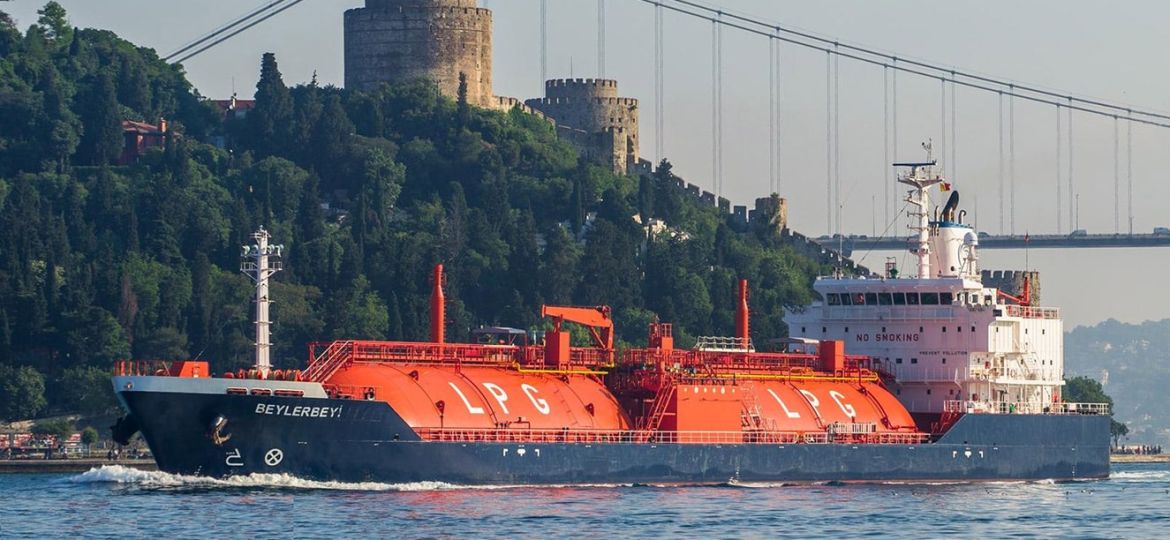
Liquefied Petroleum Gas (LPG) is an important energy product used in residential, commercial, industrial, agricultural, transportation, and petrochemical markets. Its ability to remain in liquid form under suitable pressure or refrigeration makes large-scale storage and marine transportation practical. As a result, LPG plays an important role in markets that need flexible and efficient energy supply.
International trade mainly involves propane, butane, or blends of both products. Depending on the buyer’s requirements, commercial programs may include 50/50, 70/30, 80/20, or 40/60 propane-butane ratios. However, the blend ratio alone does not define cargo quality. Buyers must also consider composition, sulfur content, vapor pressure, density, moisture, inspection standards, and other contractual parameters.
Atabaş approaches international LPG supply with a strong focus on product quality, commercial clarity, logistics, documentation, and regulatory compliance. Therefore, each transaction begins with a clear understanding of the buyer’s required specification, quantity, destination, delivery terms, and operating conditions.
1. What Is Liquefied Petroleum Gas (LPG)?
Liquefied Petroleum Gas (LPG) is a hydrocarbon product composed mainly of propane and butane. Under normal atmospheric conditions, these hydrocarbons exist as gases. However, pressure or refrigeration can convert them into liquid form, which greatly reduces the volume required for storage and transportation.
This characteristic makes LPG suitable for both regional distribution and large international cargoes. Moreover, it allows suppliers to transport substantial quantities of energy by sea and then distribute the product through terminals, storage facilities, trucks, cylinders, or other systems.
Propane and butane have different physical properties. Propane has a lower boiling point and higher vapor pressure, while butane generally performs well in warmer conditions. Consequently, climate, storage design, end use, and local market requirements can influence the preferred composition.
For commercial purposes, buyers should always define the required product rather than treating every LPG cargo as identical.
2. Propane, Butane, and Commercial (LPG) Blends
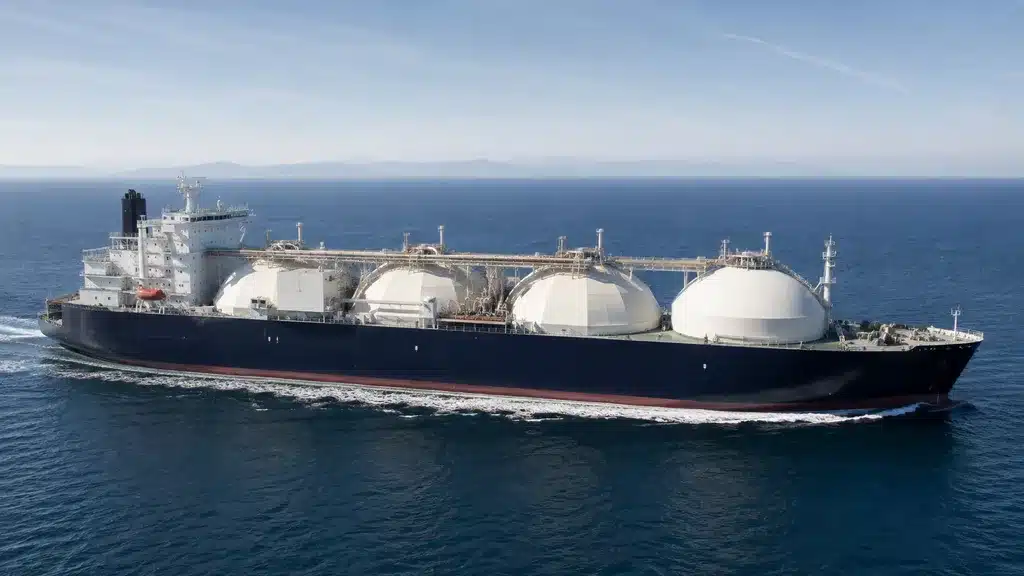
Propane and butane form the basis of most Liquefied Petroleum Gas (LPG) supply programs. Suppliers can deliver them separately or combine them according to the technical and commercial requirements of the destination market.
Common blend requirements may include 50% propane / 50% butane, 70% propane / 30% butane, 80% propane / 20% butane, or 40% propane / 60% butane. Nevertheless, these ratios should serve as commercial starting points rather than complete product specifications.
For example, a 50/50 blend still requires defined limits for sulfur, hydrogen sulfide, vapor pressure, heavier hydrocarbons, water, and other quality parameters. In addition, the parties should establish the permitted tolerance for the propane-butane ratio before loading.
Seasonal conditions can also influence demand. Markets with colder climates may favor a higher propane content because propane vaporizes effectively at lower temperatures. By contrast, warmer markets can use higher butane proportions where local infrastructure and end-use requirements allow.
Therefore, the final blend should always match the receiving market, technical specification, and storage system.
3. Propane Specifications and Quality Control
Propane quality involves much more than the percentage of propane in the cargo. A professional specification should address hydrocarbon composition, density, vapor pressure, sulfur, hydrogen sulfide, corrosion behavior, residue, and moisture.
The following table shows an example of quality values that can apply to a fully refrigerated commercial propane cargo:
| Propane Quality Parameter | Example Result |
|---|---|
| Ethane | 0.40 Liq. Vol% |
| Propane | 99.21 Liq. Vol% |
| Butanes | 0.39 Liq. Vol% |
| Density at 15°C | 0.5078 kg/L |
| Vapor Pressure at 100°F | 176 psig |
| Total Sulfur | 2.0 ppm wt |
| Hydrogen Sulfide | Negative |
| Copper Corrosion, 1 hr at 100°F | No. 1 |
| Volatile Residue | −41°F |
| Residue “R” | 0 |
| Oil Stain “O” | 0 |
| Moisture / Dryness Test | Pass |
These figures represent an example cargo specification, not a universal specification for every propane transaction. Therefore, the contract, agreed specification, and final Certificate of Quality should determine acceptance.
In practice, buyers should review quality requirements before agreeing on price because a technically unsuitable cargo can create operational problems even when the commercial terms appear attractive.
4. Butane Specifications and Quality Control
Butane requires the same level of technical attention. Commercial quality can include normal butane, iso-butane, limited propane, and small quantities of heavier hydrocarbons.
An example commercial butane analysis is shown below:
| Butane Quality Parameter | Example Result |
|---|---|
| Propane | 0.82 Liq. Vol% |
| Iso-Butane | 33.55 Liq. Vol% |
| Normal Butane | 64.61 Liq. Vol% |
| Pentanes | 1.02 Liq. Vol% |
| Density at 15°C | 0.5774 kg/L |
| Vapor Pressure at 100°F | 45 psig |
| Total Sulfur | 2.0 ppm wt |
| Hydrogen Sulfide | Negative |
| Copper Corrosion, 1 hr at 100°F | No. 1 |
| Volatile Residue | +33°F |
| Residue “R” | 0 |
| Oil Stain “O” | 0 |
| Free Water | Nil |
Typical commercial parameters may also require at least 96.0 liquid vol% butane, no more than 2.0% propane, no more than 2.0% pentane plus, maximum vapor pressure of 70 psig at 100°F, and maximum total sulfur of 15 ppm by weight.
However, buyers should never assume that one typical specification automatically applies to every origin or supplier. Instead, both parties should agree on the exact specification before contract execution.
5. Main Uses of Liquefied Petroleum Gas
The flexibility of Liquefied Petroleum Gas (LPG) allows it to serve many sectors. In addition to household energy, LPG supports industrial production, commercial operations, agriculture, transportation, and petrochemical processing.
| Market | Main LPG Applications |
|---|---|
| Residential | Cooking, water heating, and space heating |
| Commercial | Restaurants, hotels, kitchens, and heating |
| Industrial | Boilers, furnaces, process heat, and manufacturing |
| Petrochemical | Feedstock and chemical processing |
| Agriculture | Crop drying, heating, and thermal operations |
| Automotive | Autogas in compatible vehicles and markets |
| Construction | Portable heating and selected site applications |
| Remote Energy | Fuel supply where pipeline gas is unavailable |
The required propane-butane balance may change according to the application. For this reason, buyers should consider climate, equipment design, storage conditions, vaporization requirements, and national standards when selecting a product.
Ultimately, the best commercial blend is the one that meets both technical requirements and market conditions.
6. LPG Cargo Sizes and Marine Transportation
International LPG trading relies heavily on specialized gas carriers. Depending on the commercial program and vessel availability, shipments can involve approximately 22,000 MT, 44,000 MT, or 46,000 MT.
A typical large cargo can combine separate propane and butane parcels. For example, one shipment structure may include approximately 22,378 MT of propane and 22,558 MT of butane, resulting in a total Bill of Lading quantity of approximately 44,936 MT.
This example also explains why commercial discussions may refer to a “44,000 MT cargo” even though the final loaded quantity can differ. Vessel capacity, product density, terminal conditions, safe loading limits, operational tolerance, and final measurements influence the Bill of Lading quantity.
Similarly, a 22,000 MT program may suit a smaller parcel requirement, while approximately 44,000 MT or 46,000 MT can support larger international supply programs.
Consequently, vessel planning should begin only after the parties understand the required cargo composition and destination terminal.
7. Loading, Inspection, and Cargo Measurement
Loading a large Liquefied Petroleum Gas (LPG) cargo requires close coordination between the terminal, vessel, inspection company, supplier, buyer, and logistics teams.
Before loading begins, operators check vessel and tank conditions. During the operation, terminal and vessel teams monitor temperatures, pressure, quantities, and cargo distribution. Afterwards, inspectors and authorized personnel calculate the final loaded quantity according to the agreed measurement procedures.
Independent inspection can add another level of control. Depending on the contract, inspectors may verify cargo quality, quantity, sampling, shore-tank measurements, vessel figures, and supporting documentation.
Furthermore, reconciliation between shore and vessel figures helps identify measurement differences. Small variations can occur because terminals and vessels may use different measurement systems, calculation routines, temperatures, or correction methods.
For this reason, the sales contract should clearly define which quantity measurement governs the commercial settlement.
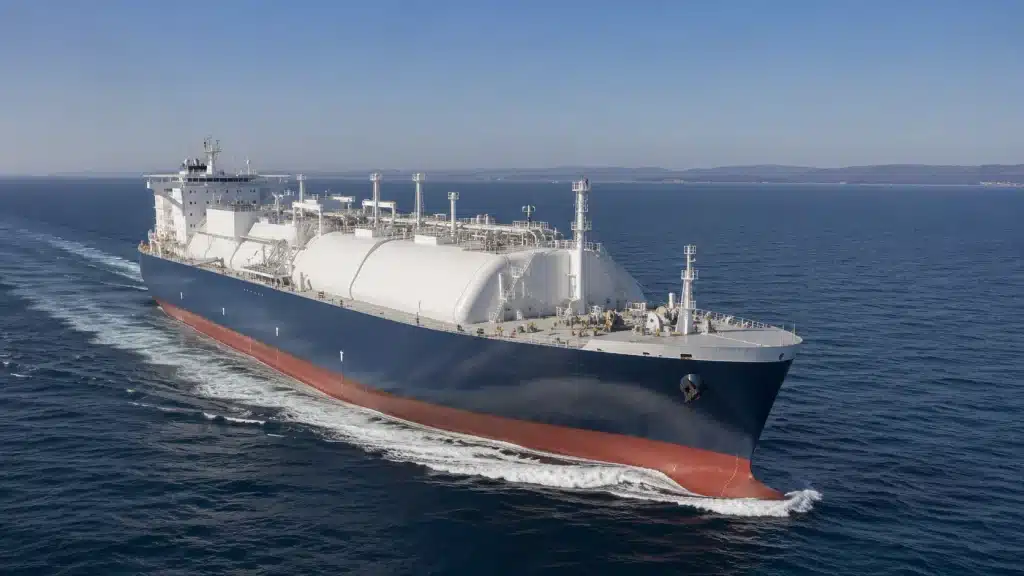
8. Global Sources of LPG Supply
The international LPG market connects major producing regions with large consumer markets. The Middle East, North Africa, and the United States play important roles in global supply.
The UAE has significant gas production, processing, storage, and export infrastructure, with ADNOC serving as a major energy participant. Likewise, Qatar operates one of the world’s most important gas and energy export systems, with Ras Laffan functioning as a major industrial and export center.
In North Africa, Sonatrach represents Algeria’s major state energy company and participates across the hydrocarbon value chain. Meanwhile, the United States has become an important source of international propane and LPG exports, supported by extensive production and export infrastructure. Large energy companies, including ExxonMobil, participate across different parts of the U.S. and global energy industry.
Nevertheless, the presence of these companies in global energy markets does not mean every cargo originates from or carries an allocation from a specific company. Each transaction must establish its actual source, seller, specification, terminal, and contractual chain through appropriate documentation.
9. LPG Trade with India, Indonesia, and Malaysia
Asian markets account for substantial Liquefied Petroleum Gas (LPG) demand. Population growth, household consumption, industrial activity, refining, and petrochemical production support large import programs across the region.
India operates one of the world’s largest LPG markets and has extensive import, storage, distribution, and petrochemical infrastructure. Reliance Industries is also a major participant in India’s energy and petrochemical sector.
Similarly, Indonesia represents an important LPG market. Pertamina has a major position in the country’s energy industry, while Indonesia’s geography creates significant logistical requirements for energy distribution.
Malaysia also maintains a developed oil, gas, refining, and petrochemical industry in which Petronas plays a central role.
Large international cargo programs serving Asian markets can reach approximately 44,000 MT or more, subject to vessel and terminal capabilities. Therefore, successful deliveries require careful coordination of berth compatibility, vessel acceptance, storage capacity, discharge rates, import procedures, and local regulations.
10. Documentation in International LPG Transactions
Documentation provides the commercial and technical foundation of a professional LPG transaction.
A Certificate of Quality confirms the tested characteristics of the cargo, while a Certificate of Quantity records the measured amount. Depending on the transaction, additional documents may include the Bill of Lading, Certificate of Origin, commercial invoice, packing or cargo information, inspection certificates, ullage reports, shore-tank calculations, and other shipping records.
Consistency across these documents matters. For example, product description, vessel name, loading port, quantities, dates, and contractual parties should align throughout the document chain.
Moreover, buyers should verify important documents through reliable channels instead of accepting unverified copies at face value.
Clear documentation also improves communication between the supplier, buyer, banks, inspectors, terminal operators, and shipping companies. As a result, both parties can reduce avoidable misunderstandings during execution.
11. OFAC Compliance and Responsible LPG Trading
International energy trade requires strict attention to sanctions, counterparty risk, and regulatory compliance. Atabaş conducts its international trading activities with attention to applicable OFAC rules and sanctions requirements, together with other relevant legal and regulatory obligations.
Compliance review should cover more than the buyer and seller. Depending on the transaction, screening may include the vessel, registered owner, beneficial owner, operator, manager, banks, intermediaries, loading terminal, discharge destination, and other parties in the commercial chain.
In addition, transaction documents should accurately represent the product’s origin, destination, counterparties, and payment structure. Attempts to conceal material information or bypass applicable sanctions controls create unacceptable legal and commercial risks.
Atabaş therefore treats compliance as part of the transaction process rather than as a final administrative check.
This approach supports transparent, responsible, and sustainable international LPG trade.
12. Commercial Terms for Safe LPG Procurement
A successful Liquefied Petroleum Gas (LPG) purchase begins with a detailed inquiry.
The buyer should identify the required propane-butane ratio, total quantity, destination, specification, delivery period, preferred Incoterm, and inspection requirements. Furthermore, receiving-terminal conditions should be reviewed before vessel nomination.
For example, a requirement for 50/50 LPG should define whether the ratio has an acceptable tolerance. Likewise, a request for 44,000 MT should state whether the quantity is fixed or subject to an operational tolerance.
Payment procedures also require clear agreement. Both parties should understand the sequence of contract execution, compliance checks, vessel nomination, inspection, loading, shipping-document presentation, payment, and discharge.
Consequently, buyers should compare offers on the same commercial basis. A headline price has limited meaning when competing offers use different Incoterms, origins, specifications, freight structures, payment conditions, or inspection procedures.
13. Vessel Selection and Delivery Planning
Selecting the right vessel is essential for safe and efficient LPG transportation.
Programs of approximately 22,000 MT, 44,000 MT, or 46,000 MT require different commercial and operational planning. In addition, the propane-butane allocation affects cargo volume because propane and butane have different densities.
For mixed cargoes, suitable tank configuration allows the vessel to carry propane and butane in separate parcels. Temperature control, pressure management, refrigeration capability, and cargo segregation must also match the planned products.
Meanwhile, both loading and discharge terminals need to accept the nominated vessel. Draft restrictions, berth dimensions, manifold arrangements, storage capacity, discharge rates, terminal regulations, and port conditions can all influence vessel selection.
Therefore, freight planning should not begin with vessel price alone. A technically unsuitable ship can create delays or prevent the proposed operation altogether.
Effective delivery planning combines cargo requirements, terminal compatibility, vessel capability, sailing time, and commercial scheduling.
14. Atabaş and Professional Liquefied Petroleum Gas Supply
Atabaş approaches Liquefied Petroleum Gas (LPG) procurement as an integrated international trade process. Product specifications, supply sources, vessel planning, inspection, documentation, regulatory compliance, and commercial terms all require coordinated management.
Depending on supply availability and buyer requirements, commercial discussions may involve propane, butane, or blends such as 50/50, 70/30, 80/20, and 40/60. Likewise, marine programs can be structured around approximately 22,000 MT, 44,000 MT, or 46,000 MT, subject to the final product, vessel, terminal, quantity tolerance, and contractual conditions.
Atabaş also evaluates international transactions with attention to applicable OFAC requirements, counterparty screening, shipping conditions, and documentation. Consequently, commercial opportunities must meet both business and compliance requirements before execution.
A professional LPG transaction should provide more than a competitive price. It should combine a clearly defined product, verifiable quality, transparent documentation, suitable shipping arrangements, responsible compliance procedures, and commercially workable delivery terms.
Buyers seeking a secure and professionally coordinated Liquefied Petroleum Gas order can contact Atabaş to discuss the required LPG specification, propane-butane ratio, quantity, destination, vessel size, inspection requirements, Incoterm, and delivery schedule.
