

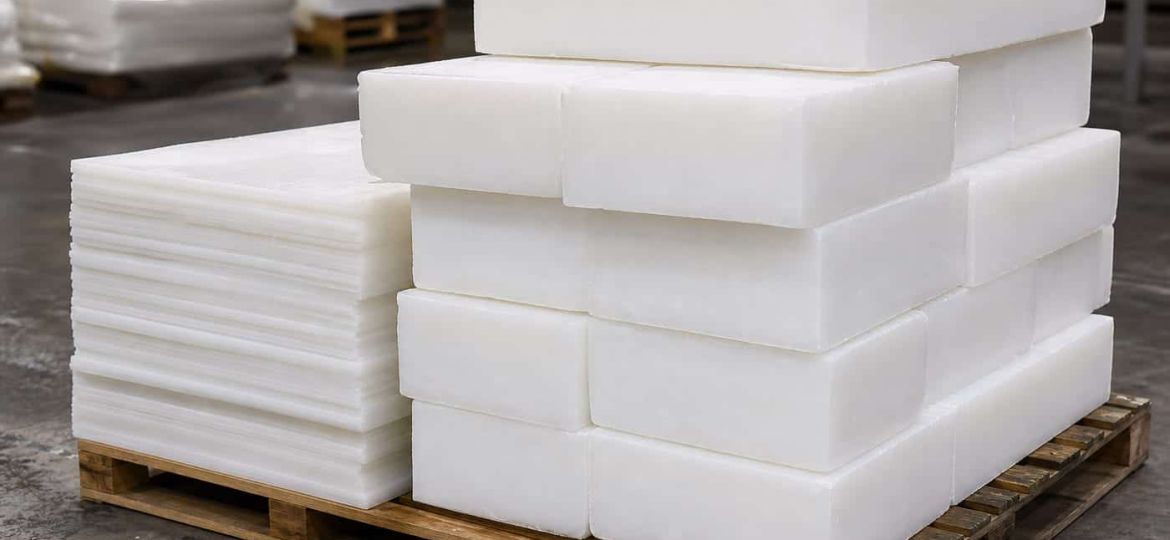
Paraffin wax is a widely used industrial raw material with applications across many sectors. Candle makers, packaging companies, cosmetic producers, rubber manufacturers, and other industries use it for its useful physical properties and flexible performance.
The material mainly consists of saturated hydrocarbons and usually has a solid, wax-like form at room temperature. Moreover, producers can offer different grades based on melting point, oil content, color, and level of refining.
As a result, buyers can select a grade that matches their production needs. However, they should always compare technical data before choosing a product.
This guide explains its main properties, specifications, uses, quality factors, packaging options, and position in global trade.
What Is Paraffin Wax?
Paraffin wax is a petroleum-based wax that mainly contains saturated hydrocarbon chains. Refineries produce it during the processing and treatment of petroleum-derived materials.
At room temperature, the product usually has a solid form. Depending on the grade, its color can range from white to slightly off-white. In addition, manufacturers can control several properties during refining.
The level of refining plays an important role in the final product. For example, fully refined grades generally contain less oil and offer a cleaner appearance. Meanwhile, semi-refined grades may contain more oil and suit applications with different technical needs.
Therefore, industrial buyers should select the product according to the final application rather than choosing a grade based only on price.
Paraffin Wax Technical Specifications
Technical values can vary according to grade, refinery, feedstock, and production method. Therefore, buyers should always review the supplier’s Technical Data Sheet (TDS) and batch-specific Certificate of Analysis (COA).
The table below shows common reference values for fully refined commercial grades.
| Specification | Typical / General Value |
|---|---|
| Product Name | Paraffin Wax |
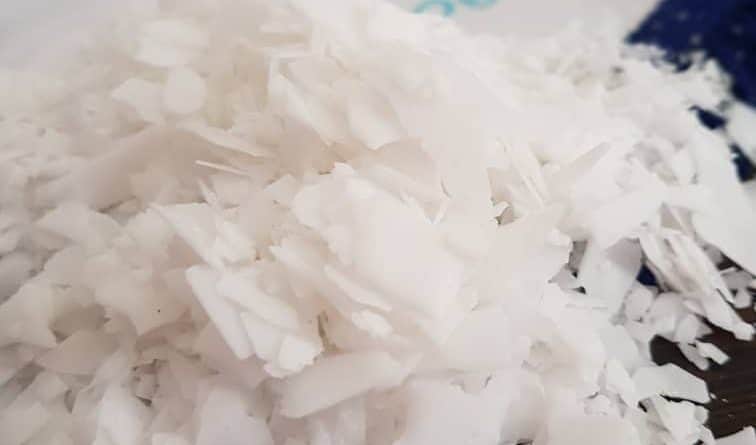
| Form | Solid slabs, granules, pellets, or other commercial forms |
| Appearance | White to off-white solid |
| Oil Content | Commonly ≤ 0.5% for fully refined grades |
| Common Melting Point Grades | Approx. 52°C–70°C |
| Odor | Low / characteristic |
| Solubility in Water | Insoluble |
| Main Composition | Saturated hydrocarbons |
| Refining Grades | Fully refined / semi-refined |
| Main Applications | Candles, packaging, cosmetics, rubber, coatings, and industrial products |
These values provide a general reference only. Actual specifications can vary between producers and grades.
Therefore, buyers should confirm the melting point, oil content, color, penetration, and other required values before ordering. In addition, they should request a COA for each shipment when product consistency plays an important role in production.
What Is Paraffin Wax Used For?
Industries use this material because it offers a useful mix of physical and chemical properties. It can provide moisture resistance, surface protection, controlled melting behavior, lubrication, and a smooth finish.
For example, candle producers value its predictable melting behavior and ability to work with colors and fragrances. Packaging companies, on the other hand, may use wax-based coatings to improve moisture resistance.
Moreover, rubber and tire manufacturers can use selected wax grades as processing or protective materials. Cosmetic and personal care manufacturers also use suitable grades in certain formulas.
As a result, the material serves both consumer product manufacturing and large-scale industrial processes.
Where Is Paraffin Wax Used?
The product supports a wide range of applications. However, the required grade can change significantly from one industry to another.
| Industry / Application | Main Purpose |
|---|---|
| Candle Manufacturing | Provides fuel and structure for candles |
| Packaging | Supports moisture-resistant coatings |
| Cosmetics & Personal Care | Used in suitable creams, treatments, and related formulas |
| Rubber & Tire Industry | Supports processing and surface protection in selected uses |
| Paper & Board | Provides coating and moisture barrier properties |
| Wood Products | Supports surface treatment and protection |
| Polishes | Helps provide surface finish and consistency |
| Crayons | Supports structure and controlled application |
| Industrial Coatings | Provides protective and water-resistant properties |
| Hot-Melt Systems | Can support selected wax-based formulas |
Each application requires different performance levels. Therefore, manufacturers should match the grade with their process, temperature range, and final product needs.
Fully Refined vs. Semi-Refined Paraffin Wax
Buyers often compare fully refined and semi-refined grades. The main differences relate to oil content, refining level, appearance, and final use.
Fully refined material usually has a lower oil content and cleaner appearance. Therefore, manufacturers often choose it when color, consistency, and purity matter more.
Semi-refined grades generally contain more oil. As a result, they may offer a practical option for certain industrial applications where very low oil content is not essential.
| Feature | Fully Refined | Semi-Refined |
|---|---|---|
| Refining Level | Higher | Moderate |
| Oil Content | Lower | Higher |
| Appearance | Usually cleaner and whiter | May vary by grade |
| Consistency | Generally high | Depends on grade |
| Common Use | Candles, coatings, selected personal care and industrial uses | Candles and various industrial uses |
| Price Position | Often higher | Often more economical |
However, buyers should not select a product based on these general categories alone. Instead, they should compare the exact TDS with their production needs.
Key Benefits for Industrial Applications
Paraffin wax offers several practical benefits, which explains its wide use across different industries.
First, it provides predictable melting behavior when buyers choose the correct grade. This feature helps manufacturers control production more effectively.
Second, the material can help create a moisture barrier. Therefore, packaging and coating applications can benefit from its water-resistant properties.
Moreover, manufacturers can combine it with other raw materials in many formulas. This flexibility supports a broad range of industrial applications.
The product also comes in several melting point ranges. As a result, buyers can select a grade according to climate, production temperature, processing method, and end use.
Finally, a broad international supply base gives industrial buyers several sourcing options. However, buyers should compare quality consistency as carefully as they compare prices.
Key Quality Parameters
Quality control plays an important role when buying industrial waxes. Small changes in physical properties can affect processing and finished-product performance.
Therefore, buyers should check several factors before placing an order.
- Melting point
- Oil content
- Color
- Penetration
- Appearance
- Odor
- Product form
- Batch consistency
- Packaging
- TDS and SDS documents
- Certificate of Analysis
- Country of origin
Melting point ranks among the most important factors because it can affect production conditions and product performance.
Oil content also matters. For example, manufacturers that need fully refined material often require very low oil levels.
In addition, color can play an important role in candles and other products where appearance matters.
Therefore, professional buyers should compare the complete technical profile instead of focusing on one specification.
Storage, Handling and Transportation
Companies should store the product in a clean, dry, and suitable area. Good storage practices help protect its physical quality and reduce contamination risks.
First, companies should keep the material away from excessive heat and direct sources of ignition. They should also protect the packaging from damage during storage.
Moreover, workers should follow the instructions in the supplier’s Safety Data Sheet. The SDS provides important information about safe handling, fire response, storage, and other safety measures.
Temperature also matters during bulk handling. Therefore, companies that use molten material should control heating conditions carefully and use suitable equipment.
For international shipments, buyers should confirm packaging, loading conditions, shipping documents, and destination requirements before dispatch.
Global Paraffin Wax Import Markets
International trade data provides useful insight into major demand centers.
For a clear comparison, HS 271220 covers paraffin wax containing less than 0.75% oil. Therefore, the figures below refer specifically to trade reported under this customs category.
According to 2024 international trade data, the leading import markets included:
| Major Import Market | 2024 Import Value | Quantity |
|---|---|---|
| European Union | USD 331.12 million | 211.38 million kg |
| Mexico | USD 253.17 million | 209.68 million kg |
| United States | USD 198.81 million | 113.49 million kg |
| Poland | USD 129.13 million | 93.60 million kg |
| Canada | USD 126.51 million | 94.23 million kg |
| Netherlands | USD 115.52 million | 64.72 million kg |
| Germany | USD 114.86 million | 71.97 million kg |
| Italy | USD 77.84 million | 52.32 million kg |
| Brazil | USD 52.55 million | 35.09 million kg |
| Spain | USD 43.67 million | Not reported in source result |
The figures show strong demand across North America and Europe. Moreover, Mexico stands out as a major individual importing country.
However, import value alone does not show the complete market picture. Buyers and suppliers should also consider volume, local production, average prices, product grade, and supply routes.
Major Paraffin Wax Exporting Countries
Global exports show a strong supply base across Asia, Europe, and Africa.
In 2024, the leading exporters under HS 271220 included:
| Major Exporter | 2024 Export Value | Quantity |
|---|---|---|
| China | USD 769.47 million | 666.90 million kg |
| Malaysia | USD 150.56 million | 103.73 million kg |
| Germany | USD 130.30 million | 64.39 million kg |
| South Africa | USD 118.73 million | 67.28 million kg |
| Netherlands | USD 111.70 million | 67.02 million kg |
China held a clear lead in this trade category during 2024. In fact, its reported export value and volume remained far above those of the other leading suppliers.
Meanwhile, Malaysia ranked second by export value. Germany, South Africa, and the Netherlands also played important roles in international supply.
Therefore, buyers can source material from several regions. However, origin alone should not determine a purchasing decision. Product grade, quality, freight, lead time, and supplier reliability can matter just as much.
Turkey’s Role in Paraffin Wax Trade
Turkey acts as both an importer and exporter within the regional wax market.
In 2024, Turkey imported about USD 19.66 million and 8.55 million kg under HS 271220. At the same time, Turkish-origin material reached several markets, especially in Europe.
Reported 2024 destinations for exports from Turkey included:
| Export Destination from Turkey | Trade Value | Quantity |
|---|---|---|
| Spain | USD 1.70 million | 1.35 million kg |
| Bulgaria | USD 0.99 million | 0.92 million kg |
| Romania | USD 0.41 million | 0.66 million kg |
| Slovenia | USD 0.37 million | 0.30 million kg |
| United Kingdom | USD 0.29 million | 0.19 million kg |
The European Union as a group reported about USD 4.29 million and 3.75 million kg of imports from Turkey under this category.
Therefore, European markets form an important part of Turkey’s export network. In addition, Turkey’s location can support trade with nearby markets in Europe, the Middle East, North Africa, and the Balkans.
How to Choose a Paraffin Wax Supplier
A professional purchasing process should cover technical, commercial, and logistics factors.
First, buyers should define the required melting point and oil content. These two factors can quickly narrow the available grades.
Next, buyers should review the product’s TDS and compare it with their production requirements. They should also request an SDS for safe handling and a COA to confirm batch quality.
In addition, international buyers should review:
- Product grade
- Melting point
- Oil content
- Country of origin
- Minimum order quantity
- Packaging type
- Price
- Payment terms
- Incoterms
- Loading port
- Production lead time
- Transit time
- Shipping documents
- Supply capacity
- Batch consistency
Price remains important. However, the cheapest quotation may not provide the lowest total cost.
For example, poor batch consistency can create production problems. Likewise, long lead times can increase inventory needs.
Therefore, buyers should evaluate the full supply package before choosing a long-term partner.
Packaging and Bulk Supply
Suppliers can provide paraffin wax in several commercial forms and packaging types.
Depending on the producer and grade, buyers may receive the material as slabs, pellets, granules, or other solid forms. In addition, large industrial users may use bulk or molten supply systems where suitable infrastructure exists.
Common packaging solutions can include bags, cartons, or other industrial packs. However, exact net weights and formats vary between suppliers.
Buyers should therefore confirm packaging details before placing an order.
For export shipments, packaging must also suit handling and transport conditions. Moreover, buyers should consider pallet type, container loading, storage space, and unloading methods.
Good packaging planning can reduce damage, simplify warehouse operations, and improve supply efficiency.
Frequently Asked Questions About Paraffin Wax
What is paraffin wax made from?
It mainly consists of saturated hydrocarbons and generally comes from petroleum refining processes. Producers refine and process the material to create different commercial grades.
What is the main use of paraffin wax?
Candle production represents one of its best-known applications. However, manufacturers also use it in packaging, coatings, cosmetics, rubber products, crayons, polishes, and many industrial formulas.
What is fully refined paraffin wax?
Fully refined material goes through a higher level of refining and generally has low oil content. As a result, it often provides a cleaner appearance and more consistent properties.
What melting points are available?
Commercial grades cover different melting ranges. Common products often fall between about 52°C and 70°C, although exact ranges depend on the supplier and grade.
Therefore, buyers should select the melting point according to their production process and final product.
Is paraffin wax soluble in water?
No. The material does not dissolve in water. This property helps make it useful in several moisture-barrier and coating applications.
Which country exports the most paraffin wax?
Under HS 271220, China ranked as the leading exporter in 2024, with reported exports of about USD 769.47 million and 666.90 million kg.
Which markets import the most?
In 2024, major reported markets included the European Union, Mexico, the United States, Poland, Canada, the Netherlands, and Germany.
What should buyers check before ordering?
Buyers should first confirm the required melting point, oil content, color, and grade. Next, they should check the TDS, SDS, and COA.
Moreover, international buyers should review packaging, Incoterms, lead time, freight, origin, and shipping documents.
Conclusion
Paraffin wax remains an important raw material for many industries because it offers flexible performance, controlled melting properties, and broad application potential.
Candle makers represent a major user group. However, packaging, cosmetics, rubber, paper, coatings, and other industrial sectors also create significant demand.
Global trade data also shows a broad international market. China leads exports under the low-oil paraffin wax category, while Europe and North America contain several of the world’s major import markets.
For buyers, however, successful sourcing requires more than finding a competitive price. Companies should compare melting point, oil content, grade, batch consistency, packaging, documents, and logistics.
Therefore, a strong purchasing strategy should combine consistent quality, suitable specifications, competitive terms, reliable logistics, and stable supply. This approach helps industrial buyers protect production quality while building a more efficient long-term supply chain.
