

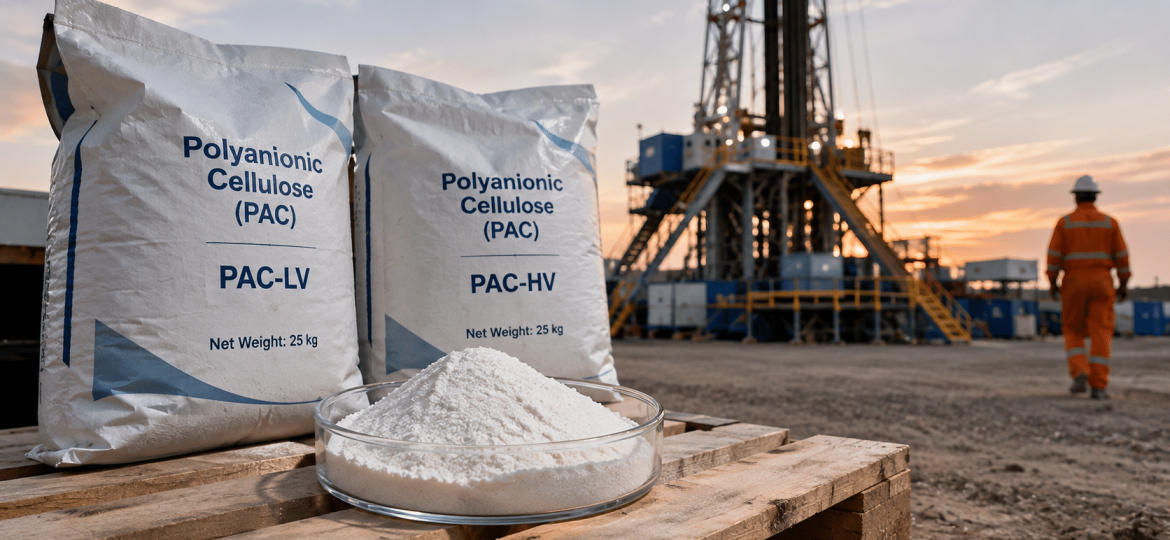
Polyanionic cellulose prices depend on product purity, viscosity, fluid-loss control, raw material costs and delivery terms. Moreover, differences between PAC-LV and PAC-HV create distinct price levels within the global drilling chemical market.
Because drilling projects need stable fluid systems, engineers use PAC to control water loss and mud flow. For example, low-viscosity grades help reduce fluid loss without making drilling mud too thick.
In contrast, high-viscosity grades help control both fluid loss and mud thickness. Furthermore, suitable PAC products can work in freshwater, seawater and selected saltwater systems.
However, not every PAC grade offers the same level of performance. Therefore, buyers should review product quality and test results before comparing prices.
In addition, order size, packing, product origin and shipping costs can influence the final purchase price.
ATABAŞ GLOBAL combines industrial chemical supply with global trade and shipping services. Consequently, we assess product grades, technical needs and delivery options before preparing commercial offers.
1. What Is Polyanionic Cellulose (PAC)?
Polyanionic cellulose is a water-soluble polymer with a negative charge. Manufacturers produce it from plant-based cellulose through chemical treatment.
In particular, drilling companies use PAC to control fluid loss and adjust drilling mud properties.
Moreover, PAC belongs to the cellulose ether family and shares a close chemical link with sodium carboxymethyl cellulose (CMC).
However, oilfield PAC grades follow specific performance limits.
Because PAC can help form a thin filter cake along the well wall, it may reduce water flow into nearby rock and soil.
Depending on the grade, PAC appears as a white, cream or slightly yellow powder. In addition, some suppliers offer granular products.
General Product Information and PAC Prices
| Product Information | Description |
|---|---|
| Commercial Name | Polyanionic Cellulose |
| Abbreviation | PAC |
| Alternative Name | Poly Anionic Cellulose |
| Chemical Family | Cellulose Ethers |
| Chemical Identity | Modified Sodium Carboxymethyl Cellulose |
| Common CAS Number | 9004-32-4 |
| Common HS Code | 391231 |
| Ionic Character | Anionic |
| Appearance | White to off-white |
| Physical Form | Powder or granules |
| Water Solubility | Water-soluble |
| Main Grades | PAC-LV and PAC-HV |
| Main Functions | Fluid-loss and viscosity control |
| Main Industry | Oil and gas drilling |
| Relevant Standards | API Spec 13A / ISO 13500 |
| Common Packaging | 25 kg bags |
Many PAC products share the chemical identity of sodium CMC. However, buyers should confirm the actual product content through its Safety Data Sheet.
Furthermore, mixed products may require a different customs code.
Therefore, correct product details remain important when comparing polyanionic cellulose prices.
Differences Between PAC and CMC
PAC and CMC belong to the same broad chemical family. However, they may follow different quality and performance standards.
For example, drilling-grade PAC often focuses on fluid-loss control in saltwater and other drilling mud systems.
Similarly, technical CMC can help control fluid loss and viscosity.
Nevertheless, the test methods and quality limits may differ.
The American Petroleum Institute lists PAC-LV, PAC-HV, CMC-LVT and CMC-HVT as separate product groups.
Consequently, buyers should not replace one grade with another without suitable tests.
For more details, see our article on Carboxymethyl Cellulose (CMC) Export from Türkiye and International Trade.
2. Physical and Chemical Properties Affecting PAC Prices
PAC has several properties that make it useful in water-based drilling fluids.
For example, it can help control water loss, mud thickness and particle suspension.
Moreover, suitable grades can work in several types of saltwater systems.
However, product quality depends on purity, molecular weight and chemical structure.
Therefore, buyers should assess these properties together.
Physical Properties and Their Impact on PAC Prices
PAC generally appears as a fine white or off-white powder.
Because it can absorb water from the air, suppliers should store the material in dry areas.
Furthermore, PAC dissolves in water under suitable mixing conditions.
For instance, PAC-HV can produce thicker solutions than PAC-LV under comparable test conditions.
However, water quality, mixing time and salt levels may affect the results.
In addition, adding the powder too quickly may cause lumps.
Consequently, proper mixing methods play an important role in product performance.
Chemical Formula and Structure
Manufacturers produce PAC by adding carboxymethyl groups to the cellulose structure.
As a result, the material gains new water-related properties.
The general formula for sodium carboxymethyl cellulose-based PAC is:
[C₆H₇O₂(OH)x(OCH₂COONa)y]n
In this formula, x + y equals 3, while y shows the degree of substitution.
Meanwhile, n represents the number of repeating units in the polymer chain.
Because PAC contains chains of different lengths, it does not have a single fixed molecular weight.
Moreover, the number of carboxymethyl groups can affect its behaviour in water.
Therefore, changes in chemical structure may influence both product performance and polyanionic cellulose prices.
Degree of Substitution and Its Effect on PAC Prices
The degree of substitution, also known as DS, shows the average number of carboxymethyl groups attached to each cellulose glucose unit.
For example, some commercial drilling grades specify a minimum DS of 0.90.
However, buyers should not use this value as a universal limit for every PAC product.
Furthermore, molecular weight plays an important role in solution thickness.
Because both properties affect product performance, engineers should review them alongside viscosity and fluid-loss test results.
Consequently, the correct PAC grade depends on the intended use rather than a single chemical value.
3. Technical Specifications and Polyanionic Cellulose Prices
Technical quality plays a major role in PAC pricing.
For example, high-purity products may require more washing and tighter quality checks during production.
Similarly, special viscosity grades may require more control during chemical treatment.
Therefore, buyers should compare products that meet similar test limits.
General PAC Technical Specifications
| Technical Parameter | Typical Requirement |
|---|---|
| Appearance | White to off-white powder |
| CAS Number | Commonly 9004-32-4 |
| Purity | Based on commercial grade |
| Degree of Substitution | Grade-specific |
| Moisture | Agreed maximum |
| Apparent Viscosity | Based on PAC grade |
| Filtrate Volume | According to test limits |
| pH | Based on product grade |
| Sodium Chloride | Grade-specific limit |
| Sodium Glycolate | Grade-specific limit |
| Particle Size | According to buyer needs |
| Water Solubility | Water-soluble |
| Salt Tolerance | Based on test results |
| Heat Stability | Grade and fluid dependent |
These details provide a general product guide. However, they do not define one fixed standard for every PAC grade.
Therefore, buyers should request the actual Technical Data Sheet (TDS) and Certificate of Analysis (COA).
PAC-LV and PAC-HV Prices and Technical Comparison
The following table presents widely used commercial limits based on API 13A-related product specifications.
| Test Parameter | PAC-LV | PAC-HV |
|---|---|---|
| Apparent Viscosity | Max. 40 mPa·s | Min. 50 mPa·s |
| Fluid Loss | Max. 16 mL | Max. 23 mL |
| Moisture | Max. 10% | Max. 10% |
| Starch Test | Negative | Negative |
| Example Purified Grade | Min. 95% | Min. 95% |
| Example Degree of Substitution | Min. 0.90 | Min. 0.90 |
Source: Bisley International – Polyanionic Cellulose Technical Data Sheet.
However, these limits do not apply to every commercial PAC product.
In particular, purity and DS values may differ between suppliers and product grades.
Moreover, buyers should confirm the relevant API edition and test method.
Consequently, they can make more accurate comparisons between PAC-LV and PAC-HV prices.
Viscosity and Fluid-Loss Tests
Viscosity describes how much a fluid resists flow.
For example, PAC-HV generally produces a higher apparent viscosity than PAC-LV under the same test conditions.
However, water quality, polymer content, heat and mixing time may affect the result.
Similarly, fluid-loss tests measure the amount of liquid that passes through a filter under set conditions.
Because test conditions influence the results, buyers should compare products using the same method.
Therefore, product test reports play an important role when reviewing polyanionic cellulose prices.
Purity, Moisture and Their Effect on PAC Prices
Purity shows the amount of active material within the product.
Moreover, higher moisture reduces the amount of dry material that buyers receive per ton.
Residual sodium chloride and sodium glycolate may also affect certain drilling mud systems.
For example, some projects require strict limits on unwanted salts.
However, a high purity value alone does not prove better drilling performance.
Consequently, buyers should review purity, fluid loss and viscosity together.
4. PAC Production Process and Polyanionic Cellulose Prices
PAC production begins with the selection of plant-based cellulose.
Because raw material quality affects the final product, manufacturers should choose suitable cellulose sources.
Moreover, different commercial grades require different levels of chemical treatment and cleaning.
Raw Materials and Chemical Treatment
Manufacturers commonly use wood pulp or cotton-based cellulose.
First, they prepare the raw cellulose for treatment. Next, they use sodium hydroxide or another suitable alkali.
Afterwards, they introduce carboxymethyl groups through chemical treatment with monochloroacetic acid or its sodium salt.
As a result, the cellulose gains new water-soluble properties.
However, chemical treatment can also produce unwanted salts and other by-products.
Therefore, manufacturers apply suitable cleaning steps to reach the required purity.
Washing, Drying and Packing
Higher-purity PAC grades may require more washing.
Furthermore, producers use drying systems to control the final moisture level.
Afterwards, grinding and screening help achieve the required powder size.
Finally, labs carry out quality tests before packing.
The general PAC production process follows this sequence:
Cellulose Selection → Alkali Treatment → Chemical Treatment → Washing → Drying → Grinding → Screening → Quality Control → Packaging
However, the exact process depends on the required grade and plant design.
Consequently, production costs may vary between suppliers.
Manufacturing Costs and Polyanionic Cellulose Prices
Cellulose pulp represents a major raw material cost.
Moreover, sodium hydroxide and other chemicals add to production costs.
Energy prices also affect drying, grinding and plant operations.
For example, tighter moisture limits may require more drying.
Similarly, high-purity grades may need extra washing and quality checks.
Furthermore, special product grades may require more control during production.
Because these steps affect costs, they can also influence polyanionic cellulose prices.
Nevertheless, a more costly product does not always offer better value for every drilling project.
Therefore, buyers should select grades according to actual performance needs.
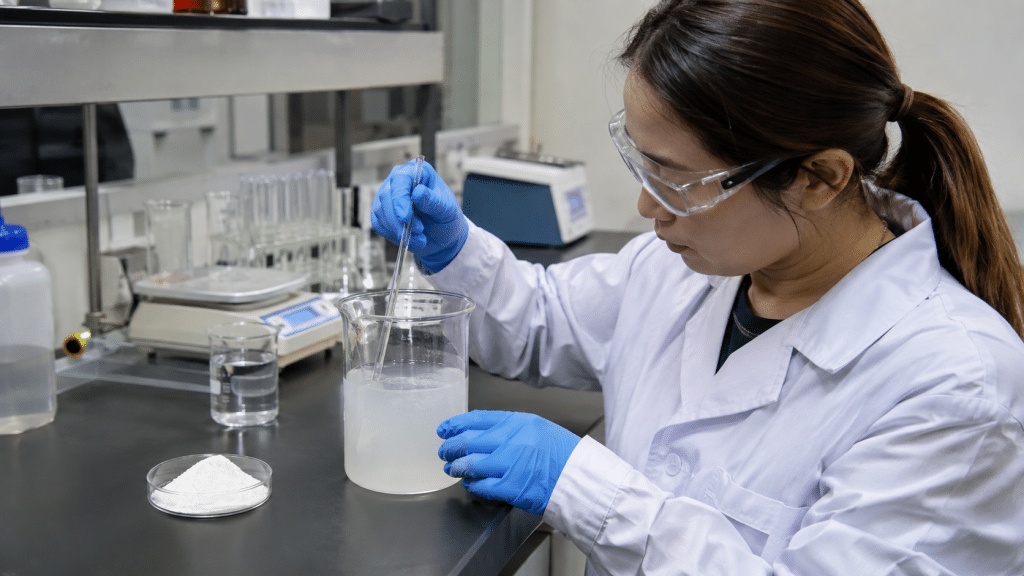
5. Polyanionic Cellulose Prices by Commercial Grade
PAC suppliers offer several product grades for different drilling needs.
For example, some mud systems need strong fluid-loss control with little change in viscosity.
In contrast, other systems require greater fluid thickness to support the movement of rock cuttings.
Therefore, each grade serves a different technical purpose.
PAC-LV Prices and Low-Viscosity Grades
PAC-LV mainly helps control fluid loss without causing a large rise in viscosity.
For instance, drilling teams may use it in weighted mud that already contains high levels of solids.
Because thick drilling mud can raise pump pressure, low-viscosity products may offer benefits in such systems.
Furthermore, suitable grades can work in freshwater and selected saltwater fluids.
However, actual performance depends on the full mud mixture.
Consequently, PAC-LV prices depend on fluid-loss limits, purity and other product needs.
PAC-HV Prices and High-Viscosity Grades
PAC-HV helps control both fluid loss and mud thickness.
Moreover, suitable grades can help keep solids and rock cuttings in suspension.
For example, engineers may use PAC-HV when the drilling fluid needs more carrying capacity.
However, greater viscosity does not always improve well performance.
Because too much thickness can raise pump pressure, drilling teams should assess the full mud system.
Therefore, PAC-HV prices should reflect the required level of technical performance.
Regular and Ultra-Low Viscosity PAC Prices
PAC-R generally refers to regular-viscosity products.
However, the exact meaning of this name may vary between suppliers.
In addition, some companies offer ultra-low-viscosity PAC, also known as PAC-ULV.
For example, this type of product may suit mud systems that require fluid-loss control with very little viscosity increase.
Similarly, PAC-ELV may refer to extra-low-viscosity products.
Nevertheless, these names do not define one universal product standard.
Consequently, buyers should request actual test results before comparing specialty PAC prices.
High-Purity and Specialty PAC Prices
Some suppliers offer PAC grades with purity levels of 95% or 98%.
Furthermore, special grades may provide better performance under certain salt or heat conditions.
However, high purity does not guarantee strong performance in every fluid.
For this reason, buyers should confirm whether a special grade provides real value in their drilling system.
| Commercial Grade | Main Purpose |
|---|---|
| PAC-LV | Fluid-loss control with limited viscosity increase |
| PAC-HV | Fluid-loss and viscosity control |
| PAC-R | Regular-viscosity drilling systems |
| PAC-ULV | Very low viscosity increase |
| PAC-ELV | Extra-low-viscosity applications |
| High-Purity PAC | Uses with tighter purity limits |
| Salt-Tolerant PAC | Selected saline drilling fluids |
| High-Temperature PAC | Uses within tested heat limits |
| Granular PAC | Alternative powder handling needs |
Consequently, polyanionic cellulose prices may differ even between products with similar commercial names.
6. Global Polyanionic Cellulose Prices and Market Trends
Polyanionic cellulose prices vary according to product grade, supplier, order size and market conditions.
Unlike some energy commodities, PAC does not have a single global exchange price.
Instead, suppliers prepare offers based on the requested product and trade terms.
Furthermore, regional production costs and drilling activity can affect supply.
International PAC Price Indicators in 2026
Public supplier listings provide a general view of advertised PAC prices.
For example, selected Chinese suppliers publish different FOB price ranges for low-viscosity and high-viscosity products.
| Advertised Product | Price Range (USD/MT) | Delivery Basis |
|---|---|---|
| PAC-LV | 1,700–2,400 | FOB |
| PAC-HV | 2,700–2,800 | FOB |
| General Oilfield PAC | 1,000–1,950 | FOB |
| General PAC Drilling Additive | 1,300–2,800 | FOB |
| Selected Industrial PAC Grades | 1,500–3,000 | FOB |
Sources: Tianjin Summit Chemical – PAC Product Listings and Made-in-China – Drilling Grade PAC Listings.
These public listings were available in November 2026.
However, they represent advertised supplier prices rather than confirmed sales.
Moreover, the listed products may have different purity levels, test limits and minimum order sizes.
Therefore, the figures cannot establish a verified global PAC price.
- Price note: These figures do not represent confirmed ATABAŞ GLOBAL offers, verified stock prices or a universal market benchmark.
Average Export Unit Values by Country – 2025
Global trade data provides another way to review the wider cellulose market.
For example, dividing the reported export value by the shipment weight gives an average value per metric ton.
| Country | Export Volume (MT) | Export Value (USD) | Average Value (USD/MT) |
|---|---|---|---|
| China | 120,951.00 | 269,085,310 | 2,225 |
| Finland | 43,166.60 | 134,336,870 | 3,112 |
| Netherlands | 14,607.40 | 85,023,790 | 5,820 |
| France | 14,131.00 | 80,498,390 | 5,697 |
| United States | 3,978.77 | 22,371,780 | 5,623 |
Source: World Bank WITS – HS 391231 Global Export Statistics 2025.
However, HS 391231 covers carboxymethyl cellulose and its salts in primary forms.
Therefore, the figures include several types of cellulose products rather than PAC alone.
Furthermore, the records do not identify the viscosity, purity or exact grade of every shipment.
Consequently, these values serve as a broad market guide rather than direct PAC prices.
Polyanionic Cellulose Prices in Türkiye
Türkiye offers access to chemical suppliers, warehouses and major shipping routes.
Moreover, buyers can compare local supply and imported product options.
However, actual PAC prices depend on stock, grade, origin and delivery terms.
For example, a warehouse offer may differ from a direct export offer at a loading port.
Similarly, small orders may have higher handling costs per ton than bulk orders.
In addition, exchange rates and freight costs can affect delivered prices.
Therefore, buyers should request current polyanionic cellulose prices based on their own product needs.
For further details, see our article on Polyanionic Cellulose (PAC) Export from Türkiye and International Trade.
7. Main Factors Affecting Polyanionic Cellulose Prices
Several technical and trade factors affect the final purchase price of PAC.
For example, changes in raw material costs may raise production costs.
Meanwhile, drilling activity can influence demand for certain grades.
Therefore, buyers should review both supply conditions and technical needs.
Raw Material and Energy Costs Affecting PAC Prices
Wood pulp, cotton-based cellulose and process chemicals represent key production inputs.
Because changes in input prices affect plant costs, they may also affect supplier offers.
Furthermore, energy costs influence drying, grinding and other production steps.
As a result, higher production costs may lead to changes in PAC prices.
Impact of Product Purity on PAC Prices
Different drilling projects require different product properties.
For example, one project may need a low-viscosity grade with a strict fluid-loss limit.
In contrast, another project may require a high-viscosity grade with strong solids suspension.
Moreover, selected saltwater systems may need special performance tests.
Therefore, buyers should compare the full product data rather than the price alone.
Consequently, the lowest polyanionic cellulose prices may not always provide the best total value.
Global Drilling Demand and PAC Prices
Oil and gas projects create much of the demand for drilling-grade PAC.
Furthermore, geothermal energy projects and other drilling works can create additional demand.
For instance, an increase in drilling activity may raise demand for mud additives.
However, demand does not change at the same rate in every region.
Similarly, PAC-LV and PAC-HV may experience different supply conditions.
Therefore, buyers should review the market for their specific product grade.
Bulk PAC Prices, Packing and Freight
Large orders may reduce certain handling and shipping costs per ton.
Moreover, regular monthly orders can help suppliers plan stock and future deliveries.
However, special packing or independent tests may add to the final cost.
For example, pallet use and extra moisture protection can affect packing costs.
In addition, sea freight and road transport charges can influence delivered prices.
Consequently, buyers should compare bulk PAC prices under the same trade terms.
8. API 13A Standards and Drilling Grade PAC Prices
The American Petroleum Institute publishes technical standards for several drilling fluid materials.
Moreover, API Specification 13A lists low-viscosity and high-viscosity PAC as separate product groups.
Because oilfield buyers often require specific test results, suppliers should confirm the relevant standard edition.
Therefore, product quality and test records play an important role in commercial supply.
API Compliance and PAC Prices
PAC products that meet strict test limits may require more quality checks during production.
For example, buyers may require specific limits for apparent viscosity and fluid loss.
Furthermore, some purchase contracts include additional purity and moisture limits.
However, a supplier’s claim of API compliance does not automatically prove that the plant holds an API Monogram license.
Consequently, customers should request the required test reports and proof of approval.
Further information is available from the American Petroleum Institute.
Saltwater Performance and Heat Stability
Salt levels can affect the behaviour of water-soluble polymers.
For example, seawater contains dissolved salts that may change fluid properties.
Similarly, calcium and magnesium may affect polymer performance.
Furthermore, long exposure to high heat can reduce the effectiveness of cellulose-based additives.
However, selected PAC grades may offer better results under tested conditions.
Therefore, buyers should request saltwater and heat test data for the intended drilling system.
Pre-Shipment Quality Tests
Quality checks help confirm whether the goods meet the agreed product limits.
First, suppliers should confirm the product identity and grade.
Next, labs can measure purity, moisture and viscosity.
Furthermore, fluid-loss tests help assess product performance.
Depending on the order, buyers may also require pH, DS and particle size tests.
However, a general Technical Data Sheet cannot replace actual batch results.
Therefore, suppliers should provide a batch-specific Certificate of Analysis.
In addition, independent labs can carry out agreed tests before shipment.
Consequently, proper quality checks can reduce the risk of trade disputes.
9. Industrial Applications of Polyanionic Cellulose
PAC mainly serves oilfield drilling and other well building projects.
Moreover, its fluid-loss and viscosity control properties support many water-based mud systems.
However, each project requires a suitable grade and fluid mixture.
Therefore, drilling teams should assess the intended use before selecting a product.
Oil and Natural Gas Drilling
Oilfield teams use PAC to control fluid loss during drilling.
For example, suitable grades help reduce water flow from drilling mud into nearby rock.
Furthermore, PAC-HV may help keep drilled solids in suspension.
Because drilling fluids contain several other additives, engineers should test PAC as part of the full mud system.
Consequently, suitable grade selection can support stable drilling fluid performance.
Offshore Drilling
Offshore drilling projects may use seawater-based fluids.
However, dissolved salts can affect polymer properties.
Therefore, engineers may select PAC grades that work well in saline fluids.
Moreover, good fluid-loss control can help limit unwanted water flow into rock.
Because offshore projects require careful stock planning, steady product supply also plays an important role.
Onshore Drilling
Onshore drilling operations face many types of rock and soil.
For instance, some wells require strong fluid-loss control, whereas others need more mud thickness.
Furthermore, drilling teams may need to adjust the mud mixture as well conditions change.
Therefore, they should select PAC-LV or PAC-HV based on the drilling plan.
In addition, regular product supply can help reduce delays.
Geothermal Energy Drilling
Geothermal drilling projects may involve high heat and deep rock formations.
Because heat can affect cellulose-based polymers, engineers should check the tested limits of each PAC grade.
Moreover, suitable products may help control fluid loss in compatible mud systems.
However, standard PAC does not offer unlimited heat resistance.
Consequently, geothermal teams should test the product under relevant well conditions.
Horizontal Directional Drilling (HDD)
Horizontal directional drilling allows firms to install pipes and cables without opening large trenches.
For example, HDD projects may involve water pipes, gas lines and utility crossings.
Suitable PAC grades can help control drilling fluid loss.
Furthermore, they may support the desired flow properties of the mud.
However, soil type and project design can affect product performance.
Therefore, teams should assess the full fluid mixture before use.
Water Well Drilling
Selected PAC grades can help control fluid loss during water well drilling.
Moreover, suitable fluid thickness can help carry rock and soil cuttings.
However, projects linked to drinking water may require special product safety approvals.
Therefore, contractors should check the relevant rules before selecting PAC.
Mining and Mineral Exploration
Mining firms often use drilling fluids during mineral search projects.
For instance, suitable PAC products may help control water loss in selected rock formations.
Similarly, viscosity control may support the movement of drilled solids.
However, different rocks and drilling methods require different fluid properties.
Consequently, mining companies should select grades according to their project needs.
Civil Engineering and Foundation Drilling
Some building projects use drilling fluids during foundation work.
Moreover, fluid-loss additives can help control water flow into the soil.
For example, selected foundation drilling systems may benefit from suitable PAC grades.
However, PAC does not replace every bentonite or synthetic polymer product.
Therefore, site teams should assess product performance and soil conditions together.
Well Completion and Workover Fluids
Selected well repair and completion projects may use water-soluble polymers.
For example, suitable PAC products can help control fluid loss.
However, some operations require materials that leave very little residue.
Furthermore, reservoir conditions, heat and salt levels may influence product performance.
Consequently, engineers should test product suitability before use in sensitive well systems.
10. PAC Prices, Technical Performance and Cost Efficiency
Polyanionic cellulose offers several potential benefits in drilling mud systems.
However, the results depend on grade, mud content and well conditions.
Therefore, buyers should compare technical performance alongside polyanionic cellulose prices.
Main Technical Benefits of PAC
| Product Property | Potential Benefit |
|---|---|
| Fluid-Loss Control | Helps reduce water flow into rock |
| Viscosity Control | Supports the required mud thickness |
| Filter Cake Formation | Helps form a thin layer along the well wall |
| Solids Suspension | May help keep drilled solids in suspension |
| Saltwater Performance | Supports selected saline systems |
| Water Solubility | Allows use in water-based drilling fluids |
| Low-Viscosity Grades | Limit unwanted viscosity increase |
| High-Viscosity Grades | Support mud thickness and carrying capacity |
For example, low-viscosity PAC may suit weighted drilling mud.
In contrast, high-viscosity PAC may offer benefits when a fluid needs greater carrying capacity.
However, one product cannot provide the best results in every drilling system.
Therefore, engineers should choose a grade based on the required fluid properties.
Fluid-Loss Control and Filter Cake Formation
PAC can help form a thin filter cake along the wall of a drilled hole.
As a result, it may reduce the amount of liquid that enters nearby rock.
Moreover, effective fluid-loss control may help reduce certain well problems linked to fluid invasion.
However, filter cake quality also depends on solids, pressure and other mud additives.
Consequently, drilling teams should evaluate the full fluid system.
Further technical details are available from SLB – POLYPAC UL Cellulose.
Comparing PAC Prices and Active Material Costs
The price per metric ton does not always show the full cost of using PAC.
For example, a product with higher active material content may contain more usable polymer per ton.
Consider two hypothetical dry PAC products.
| Cost Factor | Product A | Product B |
|---|---|---|
| Example Price (USD/MT) | 1,800 | 2,000 |
| Active Material Content | 85% | 95% |
| Cost per MT of Active Material | USD 2,118 | USD 2,105 |
Although Product A has a lower purchase price, Product B has a slightly lower cost per ton of active material.
However, this comparison does not prove that Product B will perform better in drilling mud.
Furthermore, viscosity and fluid-loss control may affect how much product engineers need.
Therefore, buyers should consider actual test results when comparing polyanionic cellulose prices.
- Calculation note: These figures are hypothetical examples on a dry-product basis. They do not represent current commercial offers.
Product Limits and Fluid Compatibility
PAC can offer useful performance in many water-based drilling systems.
However, excessive heat, high salt levels or certain other additives may affect the results.
For example, the same grade may behave differently in freshwater and strong brine.
Similarly, poor mixing can cause lumps and uneven product use.
Therefore, engineers should follow the relevant product instructions.
Consequently, suitable lab tests help buyers assess performance before large-scale use.
11. Calculating Polyanionic Cellulose Prices and Delivered Costs
Global buyers should consider the full cost of moving PAC from the supplier to the final delivery point.
For example, a low warehouse price may appear attractive at first.
However, inland transport, port costs and sea freight can increase the final cost.
Therefore, buyers should compare offers using the same delivery terms.
PAC Price Calculation
The total purchase cost may include the following items:
Product Price + Packing + Inland Transport + Export Costs + Inspection + Freight + Insurance + Destination Costs
However, buyers should avoid adding costs that the supplier already includes in the offer.
Furthermore, each delivery term has a different cost and risk structure.
Consequently, the final calculation should reflect the actual sales contract.
Example FOB and CIF PAC Price Calculation
The following example shows how freight and other costs may affect the delivered price of PAC.
| Cost Component | Example Cost (USD/MT) |
|---|---|
| Packed PAC at Warehouse | 1,900 |
| Inland Transport | 35 |
| Export and Port Costs | 25 |
| Quality Inspection | 10 |
| Illustrative FOB Cost | 1,970 |
| Ocean Freight | 100 |
| Marine Insurance | 10 |
| Illustrative CIF Cost | 2,080 |
For example, higher sea freight would raise the final CIF cost even if the product price remained stable.
Furthermore, import duties, local taxes and inland delivery may affect the final landed cost.
Therefore, CIF does not always represent the full cost at the buyer’s site.
- Price disclaimer: This calculation uses hypothetical values. It does not represent an actual PAC market price or an ATABAŞ GLOBAL quotation.
International Delivery Terms and PAC Prices
Buyers may request different delivery terms according to their needs.
For example, EXW allows customers to collect goods from the agreed supply point.
Under FCA terms, however, the seller delivers the goods to the chosen carrier at the named place.
FOB applies when the seller delivers the cargo on board the ship at the loading port.
Similarly, CFR requires the seller to arrange and pay for sea freight to the named destination port.
Under CIF terms, the seller also arranges the required marine insurance.
Nevertheless, cargo risk passes to the buyer when the goods are on board the ship at the loading port.
Furthermore, CPT, CIP and DAP offer other delivery options.
For container cargo, FCA, CPT and CIP may better reflect the actual handover point.
Consequently, buyers should confirm the named place and trade terms before comparing polyanionic cellulose prices.
Further information is available from the International Chamber of Commerce – Incoterms Rules.
12. Bulk PAC Prices, Packaging and Supply with ATABAŞ GLOBAL
Reliable PAC supply requires more than a competitive product price.
Moreover, drilling companies need steady product quality, safe packing and suitable delivery dates.
Therefore, ATABAŞ GLOBAL reviews product and trade needs together.
PAC Packaging and Storage
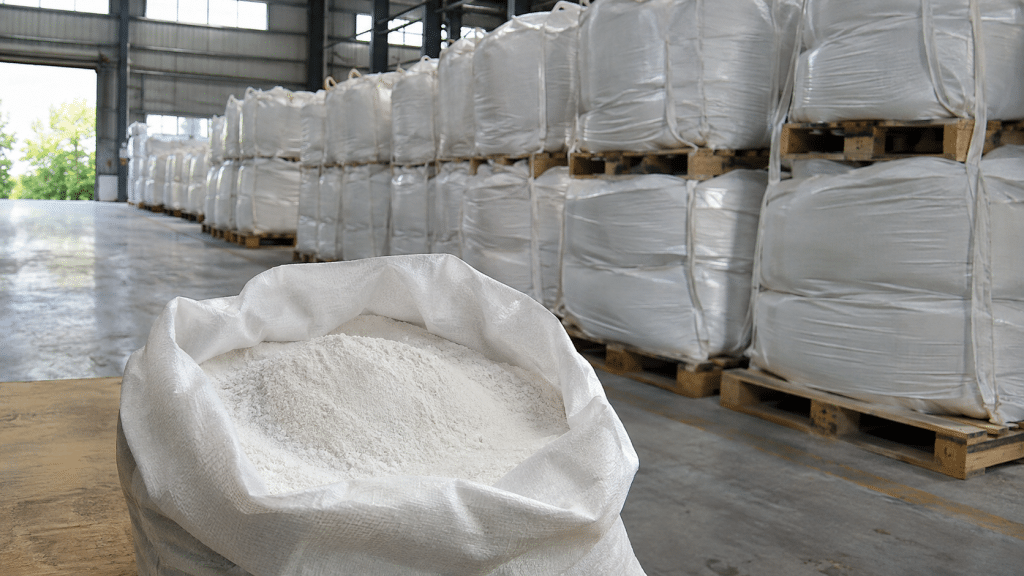
Suppliers commonly offer PAC in 25 kg multiwall paper bags.
Furthermore, polyethylene inner liners can help protect the powder from moisture.
Some suppliers also offer woven bags with suitable liners.
For example, buyers may prefer bags on pallets for easier handling.
In addition, 500–1,000 kg Big Bags may be available for selected grades.
However, packing options depend on the supplier and product.
Because PAC can absorb water from the air, warehouses should provide clean and dry storage areas.
Moreover, fine organic powders may create combustible dust hazards under certain conditions.
Therefore, workers should follow the product Safety Data Sheet and local safety rules.
Further guidance is available from OSHA – Combustible Dust.
Product Documents and Quality Control
Correct product records support technical checks and global trade.
For example, a Technical Data Sheet describes the general product properties.
Meanwhile, a Certificate of Analysis shows test results for a specific batch.
The Safety Data Sheet also provides guidance on product handling and storage.
Furthermore, buyers may require a Certificate of Origin or independent test reports.
However, the required document package may vary between projects and destination markets.
Therefore, both parties should agree on the necessary records before shipment.
Consequently, clear product documents help reduce uncertainty during bulk PAC purchases.
Global Shipping and Bulk PAC Prices
ATABAŞ GLOBAL arranges international shipments through Mersin, İzmir, Gebze and İstanbul port regions.
Moreover, we work with established shipping companies such as CMA CGM, Maersk, MSC and Hapag-Lloyd.
Our customs brokers also support trade documents and customs checks.
For example, buyers may request single container shipments or regular monthly deliveries.
However, the best shipping plan depends on cargo weight, packing and destination.
Therefore, we review suitable loading ports and ship schedules.
Furthermore, ATABAŞ GLOBAL follows applicable trade rules and sanctions requirements.
As a result, we check product origin, suppliers, buyers and shipping plans before confirming orders.
How to Request Current Polyanionic Cellulose Prices
A clear Request for Quotation (RFQ) helps us select suitable PAC products.
First, buyers should identify whether they need PAC-LV, PAC-HV or another grade.
Next, they should provide the required viscosity and fluid-loss limits.
Furthermore, purity, moisture, DS and particle size help define product quality.
For example, some drilling firms may require specific API-based test results.
In addition, buyers should identify any saltwater or heat performance needs.
After confirming product details, customers should provide the total order size and expected monthly demand.
Packing needs, destination and delivery terms also help establish freight costs.
Finally, both parties should agree on inspection needs, shipment dates and trade records.
Because clear product details reduce uncertainty, they can support faster and more accurate commercial offers.
For current polyanionic cellulose prices, PAC-LV and PAC-HV supply, drilling chemicals and global shipping solutions, contact ATABAŞ GLOBAL.
13. Frequently Asked Questions About Polyanionic Cellulose Prices
PAC Properties and Product Grades
What is polyanionic cellulose?
PAC is a modified cellulose polymer that helps control fluid loss and viscosity in water-based drilling fluids. Moreover, suitable grades can support filter cake formation.
What is the CAS number of PAC?
Many sodium CMC-based PAC products use CAS 9004-32-4. However, buyers should check the actual product Safety Data Sheet.
Which HS code applies to PAC?
Many PAC products fall under HS 391231. Nevertheless, the correct customs code depends on product content and local rules.
What is the difference between PAC-LV and PAC-HV?
PAC-LV controls fluid loss with little viscosity increase. In contrast, PAC-HV also helps increase drilling fluid thickness.
Is PAC the same as CMC?
Both materials belong to the same broad chemical family. However, oilfield PAC and technical CMC grades follow different performance limits.
Does PAC dissolve in water?
Suitable PAC grades dissolve in water under proper mixing conditions. Furthermore, water quality and product grade can affect the results.
Polyanionic Cellulose Prices and Purchase Costs
What are the current polyanionic cellulose prices?
PAC prices depend on grade, purity, viscosity, order size and delivery terms. Therefore, buyers should request a current commercial offer.
Is PAC-HV more expensive than PAC-LV?
Some supplier listings show higher prices for PAC-HV. However, the actual price difference depends on the product and trade conditions.
Does higher purity increase PAC prices?
Higher purity may require more washing and quality checks. Consequently, additional production costs may increase the final price.
Can bulk orders reduce PAC prices?
Large orders may reduce some handling and shipping costs per ton. Nevertheless, the final price depends on stock and delivery terms.
Is there a single global PAC price?
No single global exchange price applies to every PAC grade. Therefore, buyers should compare offers based on the same technical and commercial limits.
Industrial Uses and Technical Standards
Where do companies use PAC?
Main uses include oil and gas drilling, geothermal drilling, HDD and mineral exploration. In addition, selected civil engineering projects may use PAC.
What does API 13A cover?
API Specification 13A defines technical requirements for several drilling fluid materials. Moreover, it includes PAC-LV and PAC-HV as separate categories.
Can PAC work in saltwater drilling fluids?
Selected grades can work in saline mud systems. However, buyers should confirm saltwater test results before use.
Can PAC withstand high heat?
Some PAC grades offer better heat stability. Nevertheless, every product has tested operating limits.
Does PAC reduce drilling fluid loss?
Suitable PAC products can help reduce water flow into rock. Furthermore, they may support the formation of a thin filter cake.
Packaging Costs and Bulk PAC Prices
What packing options are available for PAC?
Common options include 25 kg bags with suitable inner liners. Moreover, Big Bags may be available for selected products.
Can buyers request independent product tests?
Customers can request independent quality and weight checks according to agreed trade terms. In addition, suppliers can arrange the required reports.
Does ATABAŞ GLOBAL offer regular PAC supply?
We review regular supply plans based on stock, technical needs and monthly demand. Consequently, each plan reflects the customer’s requirements.
How can international buyers obtain a PAC quotation?
First, customers should share the required grade and technical limits. Next, they should confirm quantity, packing and destination. Finally, ATABAŞ GLOBAL can review suitable supply and shipping options.
