

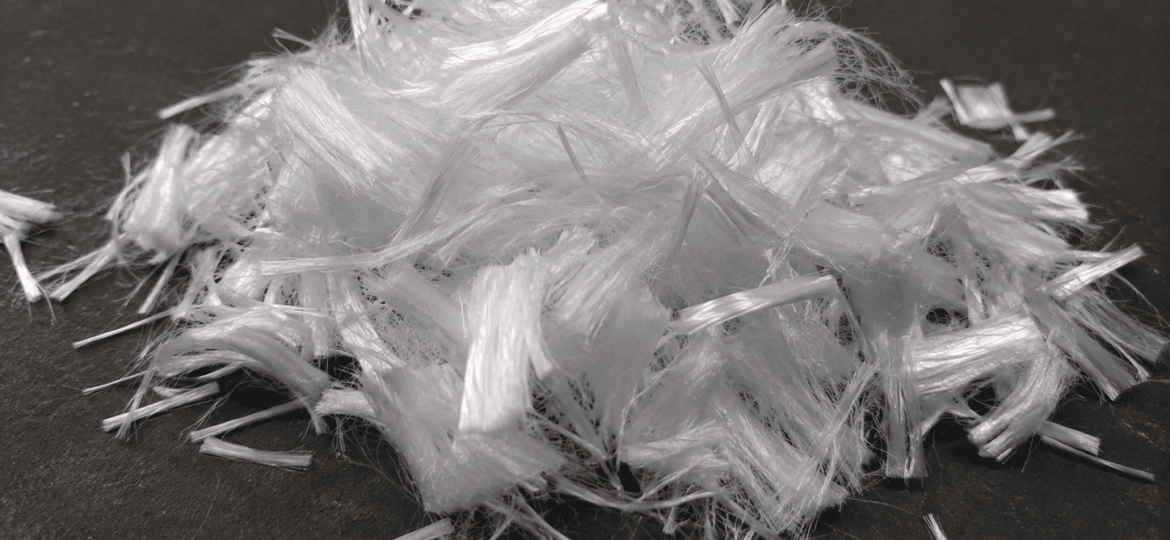
PP Homopolymer – Fiber is a polypropylene resin designed for fiber, filament and nonwoven production. Manufacturers value the material for its low density, good stiffness and efficient processing.
The product serves several industries. Hygiene products, nonwoven fabrics, textile fibers, BCF yarn, filtration materials and industrial fabrics represent important application areas.
However, buyers need to consider more than price alone. Melt flow rate, mechanical properties, processing stability, additive package and final application can all affect performance.
For industrial buyers, the right product combines suitable technical properties, consistent quality, reliable documentation and secure supply.
1. What Is PP Homopolymer – Fiber?
PP Homopolymer – Fiber is a thermoplastic polymer produced mainly from propylene monomer. Its homopolymer structure provides a useful balance between stiffness, low weight and processing efficiency.
Manufacturers develop fiber grades for extrusion processes that convert molten polypropylene into fibers or filaments.
Depending on the selected grade, producers can manufacture staple fiber, continuous filament, BCF yarn, spunbond fabric and other nonwoven products.
Melt flow rate remains one of the main selection factors. However, buyers should also review molecular weight distribution, additives, mechanical properties and processing recommendations.
Therefore, companies should select the resin according to the actual production process rather than relying only on the general “fiber grade” description.
2. Main Grades and Technical Specifications
Commercial specifications vary between producers and applications. Consequently, there is no single universal specification for every fiber-grade polypropylene.
The following table shows representative industrial values.
| Property | Representative Range / Description | Typical Test Method |
|---|---|---|
| Polymer Type | Polypropylene Homopolymer | — |
| Form | Natural pellets / granules | Visual |
| Density | Approx. 0.90–0.91 g/cm³ | ASTM D792 |
| Melt Flow Rate | Approx. 10–40 g/10 min for many conventional fiber grades | ASTM D1238 |
| MFR Test Condition | 230°C / 2.16 kg | ASTM D1238 |
| Tensile Strength at Yield | Approx. 30–38 MPa* | ASTM D638 |
| Flexural Modulus | Approx. 1,400–1,600 MPa* | ASTM D790 |
| Processing | Fiber / filament extrusion | — |
| Common Applications | Fiber, filament, spunbond, nonwoven | — |
| HS Code | 390210** | — |
* Representative values. Exact properties depend on producer and grade.
** HS 390210 covers polypropylene in primary forms and does not identify PP Homopolymer – Fiber as a separate customs category.
Buyers should always confirm the final specification through the agreed Technical Data Sheet and Certificate of Analysis.
3. Key Properties of PP Homopolymer – Fiber
Low density represents one of the material’s main advantages. Polypropylene has a density close to 0.90 g/cm³. Therefore, manufacturers can produce lightweight fibers and fabrics.
The material also provides useful stiffness and tensile properties.
| Property | Industrial Importance |
|---|---|
| Low Density | Supports lightweight finished products |
| Good Stiffness | Helps maintain structure |
| Controlled Melt Flow | Supports stable fiber formation |
| Good Processability | Enables efficient extrusion |
| Chemical Resistance | Supports many industrial applications |
| Low Moisture Absorption | Useful for textile and nonwoven products |
| Broad Grade Range | Allows different fiber processes |
| High Production Efficiency | Supports high-volume manufacturing |
Nevertheless, the final performance depends on grade selection and processing conditions.
4. How Is PP Homopolymer – Fiber Produced?
Production starts with propylene as the main feedstock. Polymer producers convert propylene into polypropylene through controlled polymerization.
Next, manufacturers control molecular structure and processing properties according to the target grade.
They may also use selected additives to improve processing stability, thermal performance or other required characteristics.
After polymer production, the material passes through finishing and pelletizing stages. Quality teams then test key parameters such as melt flow rate and mechanical properties.
Finally, suppliers package the pellets for industrial shipment.
Consistent production matters because variations in resin properties can affect fiber diameter, extrusion stability and final product quality.
5. Where Is PP Homopolymer – Fiber Used?
The material serves a broad range of fiber and nonwoven applications.
| Industry / Application | Typical Product | Main Requirement |
|---|---|---|
| Nonwoven | Spunbond fabrics | Stable spinning |
| Hygiene | Diaper and hygiene components | Lightweight structure |
| Textile | Staple fiber | Consistent fiber quality |
| Carpet | BCF yarn | Stable extrusion |
| Industrial Textile | Continuous filament | Mechanical performance |
| Filtration | Filter media | Controlled fiber structure |
| Agriculture | Protective nonwoven fabrics | Low weight and durability |
| Packaging | Nonwoven packaging | Strength-to-weight balance |
| Furniture | Fiber and nonwoven components | Consistency |
| Medical / Disposable | Selected nonwoven products | Application-specific compliance |
Regulated applications require the correct resin grade and relevant documentation.
Therefore, buyers should verify regulatory requirements before placing an order.
6. Role in Spunbond and Nonwoven Production
Spunbond represents an important application for polypropylene.
During production, the machine melts the resin and pushes it through spinnerets. The process creates continuous filaments.
Next, the line draws and distributes these filaments to form a web. The production system then bonds the web into a finished nonwoven material.
Stable melt behavior supports consistent filament formation. Moreover, the correct grade can help producers control fiber diameter and line efficiency.
As a result, polypropylene remains an important raw material for hygiene products, agricultural fabrics, filtration, packaging and many disposable products.
7. Fiber, Filament and BCF Applications
Manufacturers also use PP Homopolymer – Fiber in textile and yarn applications.
Common products include staple fibers, continuous filaments and bulk continuous filament yarn.
BCF polypropylene yarn has an important role in carpet and upholstery production. Meanwhile, continuous filament grades can serve several textile and technical applications.
Low density gives polypropylene an advantage when producers need lightweight products.
However, manufacturers should evaluate UV stability, additives, color requirements and mechanical performance according to the final product.
8. Why Melt Flow Rate Matters
Melt flow rate can strongly influence processing behavior.
Different fiber processes require different resin flow characteristics. For this reason, one fiber grade cannot automatically replace another.
Conventional filament and fiber grades often use moderate melt flow levels. Spunbond production may require higher-flow products.
Meanwhile, specialized meltblown grades can have much higher MFR values than standard fiber grades.
| Process | General MFR Requirement | Main Objective |
|---|---|---|
| Staple Fiber | Low to medium | Fiber strength and stable spinning |
| Continuous Filament | Low to medium | Stable filament formation |
| BCF | Application dependent | Yarn quality |
| Spunbond | Medium to high | Fine fibers and line efficiency |
| Meltblown | Very high | Very fine fiber formation |
These ranges remain process-dependent. Therefore, buyers should use the producer’s TDS as the main technical reference.
9. Major Global Import Markets
International customs systems do not provide a separate global HS code only for this fiber grade.
Therefore, HS 390210 — polypropylene in primary forms — provides the closest standardized indicator for global trade analysis.
Based on 2024 reported trade data, major import markets included:
| Import Market | Approx. 2024 Import Value | Approx. Quantity |
|---|---|---|
| China | US$2.43 billion | 2.36 million tonnes |
| Türkiye | US$2.26 billion | 1.92 million tonnes |
| European Union* | US$1.82 billion | — |
| Germany | US$1.37 billion | 0.90 million tonnes |
| Mexico | US$1.30 billion | 0.78 million tonnes |
| Italy | US$1.24 billion | 0.97 million tonnes |
| India | US$1.18 billion | 1.13 million tonnes |
* The European Union represents a reporting bloc rather than one country.
These figures cover polypropylene in primary forms. Therefore, they should not be interpreted as trade volumes exclusively for PP Homopolymer – Fiber.
Still, they provide a useful indicator of major global polypropylene demand centers.
10. Major Global Export Markets
International polypropylene supply connects major petrochemical production regions with industrial markets worldwide.
Reported 2024 HS 390210 data highlights several important exporters.
| Exporting Market | Approx. 2024 Export Value | Approx. Quantity |
|---|---|---|
| Saudi Arabia | US$4.67 billion | 4.26 million tonnes |
| China | US$2.30 billion | — |
| South Korea | US$2.12 billion | 1.92 million tonnes |
| United States | US$1.93 billion | — |
| Germany | US$1.32 billion | 0.92 million tonnes |
Saudi Arabia plays a particularly important role because of its large petrochemical production base.
China and South Korea also serve international polymer markets. In addition, European and American producers contribute to the global supply network.
Again, HS 390210 includes different polypropylene products. The figures do not represent fiber grade alone.
11. Türkiye and the Polypropylene Market
Türkiye is one of the world’s major polypropylene import markets.
In 2024, Türkiye reported approximately US$2.26 billion of imports and around 1.92 million tonnes under HS 390210.
Major reported origins included:
| Supplier to Türkiye | Approx. 2024 Value | Approx. Quantity |
|---|---|---|
| Saudi Arabia | US$802.3 million | 713,282 tonnes |
| Russia | US$281.1 million | 292,713 tonnes |
| Egypt | US$278.2 million | 223,348 tonnes |
| South Korea | US$254.2 million | 201,864 tonnes |
| United Arab Emirates | US$72.8 million | 58,492 tonnes |
| Oman | US$60.0 million | 52,990 tonnes |
Türkiye’s textile, packaging, nonwoven and manufacturing industries support significant polymer demand.
Moreover, its location provides access to European, Middle Eastern, North African and Central Asian markets.
For this reason, Türkiye represents both an important consumption market and a strategic regional trading point.
12. Quality Control, Packaging and Storage
Consistent quality remains essential in fiber production.
Buyers should request appropriate technical and commercial documents before shipment.
A professional quality review can include:
- Melt Flow Rate;
- density;
- mechanical properties;
- additive package;
- batch consistency;
- origin;
- Technical Data Sheet;
- Safety Data Sheet;
- Certificate of Analysis;
- relevant compliance documents;
- packaging information.
Industrial polypropylene commonly arrives in bags or larger packaging formats depending on supplier and order volume.
Companies should store the material in a clean and dry environment. In addition, they should protect packaging from contamination and damage.
13. How to Select the Right PP Homopolymer – Fiber Grade
The right grade depends on the final product and production line.
First, buyers should define the intended process.
Next, they should specify the required MFR and other technical parameters.
Then, the purchasing team should review available producers, origin, documentation and commercial conditions.
A complete request for quotation should normally include:
- Required product or grade
- Final application
- Required MFR
- Quantity
- Packaging
- Destination
- Incoterm
- Required documentation
- Compliance requirements
- Delivery schedule
Price remains important. However, the lowest quotation does not always provide the lowest production cost.
An unsuitable resin can increase fiber breaks, downtime or off-spec production.
Therefore, technical suitability and supply consistency should remain part of every purchasing decision.
14. Why PP Homopolymer – Fiber Matters to Modern Industry
Modern manufacturing needs materials that combine efficiency, performance and low weight.
Polypropylene fiber grades meet these requirements across several industries.
Nonwoven producers use the resin for high-volume production. Textile manufacturers use it for fibers and yarns. Moreover, hygiene, filtration, agriculture and packaging industries benefit from polypropylene-based materials.
International trade also supports a broad supply network. Major petrochemical regions connect with large consuming markets in Asia, Europe, Türkiye and the Americas.
For buyers, however, successful sourcing requires more than product availability.
The right material must match the process, technical specification, documentation, packaging and delivery plan.
For commercial enquiries, contact ATABAŞ GLOBAL with your required application, target grade or MFR, quantity, packaging, destination and delivery terms.
15. Conclusion
PP Homopolymer – Fiber provides an efficient raw material for fiber, filament and nonwoven manufacturing.
Its low density, useful stiffness and broad processing range support applications in textiles, carpets, hygiene products, filtration, agriculture, packaging and industrial fabrics.
However, buyers should not select the material by price or MFR alone.
Mechanical properties, processing stability, additives, batch consistency and technical documentation can all influence production performance.
Furthermore, global trade data shows strong polypropylene demand across China, Türkiye, Europe, India and Mexico, while Saudi Arabia, China, South Korea, the United States and Germany represent important supply markets.
A clear technical specification therefore creates the foundation for reliable sourcing.
By combining technical requirements with quality control, supplier evaluation and commercial planning, industrial buyers can select the right polypropylene fiber grade for their production.
