

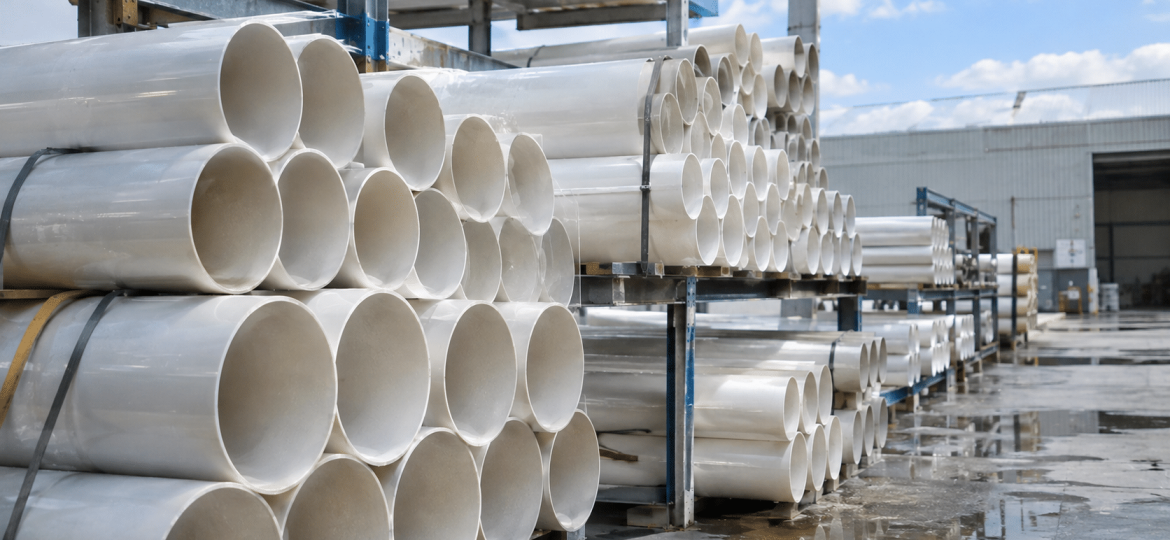
PVC (Polyvinyl Chloride) is one of the world’s most widely used thermoplastic materials. It combines durability, chemical resistance, easy processing and cost efficiency. Therefore, manufacturers use it across construction, infrastructure, electrical systems, packaging and many other industries.
In addition, PVC resin gives manufacturers a wide range of product options. For example, companies can create rigid products such as pipes and window profiles or flexible products such as cables and hoses. They achieve these different properties by selecting the right resin grade and additive system.
For industrial buyers, technical data also plays an important role. Therefore, buyers often compare K-value, bulk density, volatile matter, particle properties and residual vinyl chloride monomer. Moreover, the intended production method and final application should guide the selection process.
1. What Is PVC (Polyvinyl Chloride)?
PVC (Polyvinyl Chloride) is a synthetic thermoplastic polymer made from vinyl chloride monomer (VCM). Its repeating molecular unit has the formula (C₂H₃Cl)n.
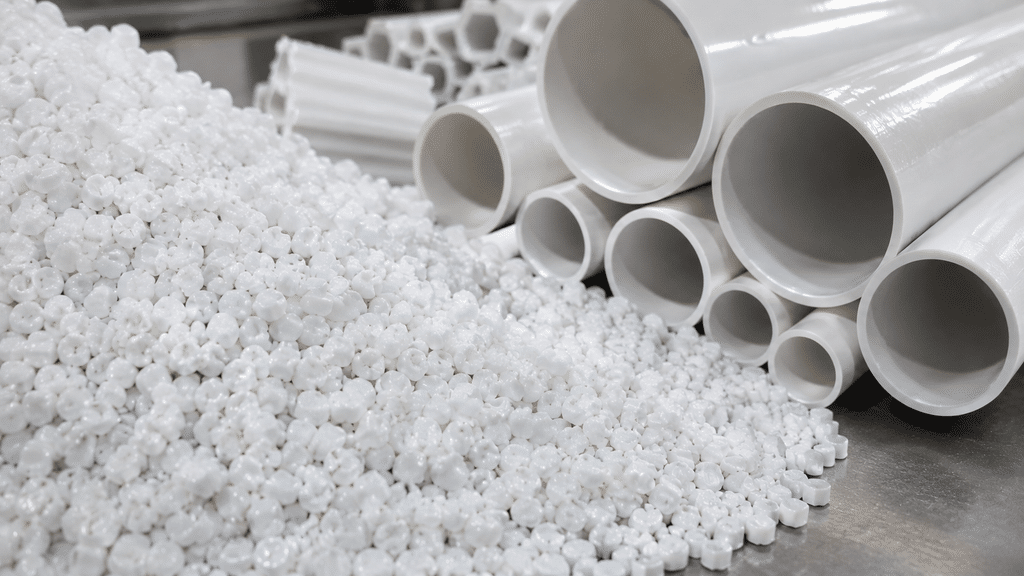
Commercial PVC resin usually comes as a fine white powder. However, its final properties can vary greatly according to the grade and formulation. As a result, manufacturers can adapt the material to many different production needs.
Manufacturers mainly work with two commercial categories:
- Suspension PVC (S-PVC): Common for pipes, fittings, profiles, sheets, cables and other high-volume products.
- Emulsion PVC (E-PVC): Common for plastisols, coatings, synthetic leather, flooring and products that need fine resin particles.
In particular, S-PVC serves many conventional thermoplastic applications. In contrast, E-PVC works well in paste-based production. Therefore, buyers should select a grade according to the production method and final application.
2. Typical Technical Properties and Specifications
The technical properties of PVC (Polyvinyl Chloride) vary between producers and grades. Therefore, buyers should compare the supplier’s current Technical Data Sheet (TDS) and Certificate of Analysis (COA) with their production needs.
For example, K-value helps buyers understand the general molecular weight range. Meanwhile, bulk density affects storage, handling and feeding. In addition, volatile matter and residual VCM can influence quality control requirements.
| Property | Typical Reference | Why It Matters |
|---|---|---|
| Appearance | White powder | Helps identify contamination and visual quality |
| Polymer Type | Thermoplastic | Defines the main processing family |
| Density | Approx. 1.38–1.45 g/cm³ | Supports material and formulation calculations |
| K-Value | Approx. 55–70 | Helps indicate molecular weight and processing behavior |
| Apparent Bulk Density | Approx. 0.45–0.60 g/cm³ | Important for storage, feeding and handling |
| Volatile Matter | Typically ≤0.30% | Relevant to processing and quality |
| Residual VCM | Depends on grade and producer | Important for safety and product control |
| Particle Size | Grade dependent | Influences fusion and processing |
| Heat Behavior | Requires controlled heat conditions | Important during production |
| Commercial Form | Fine white resin powder | Common supply form |
These figures provide general guidance rather than contractual limits. For this reason, buyers should confirm exact values through the producer’s TDS and lot-specific COA. Furthermore, buyers should compare the values with their own production requirements before placing an order.
3. Main PVC Resin Grades
Manufacturers select PVC resin grades according to K-value, molecular weight, particle properties and production method. However, the final choice also depends on the required end product.
For example, lower K-value grades generally offer easier processing. Higher K-value grades, on the other hand, can support products that require different mechanical or processing properties. Therefore, manufacturers should match the grade to both their equipment and formulation.
| Grade / Type | Typical Characteristics | Common Applications |
|---|---|---|
| S-PVC K57–K58 | Lower molecular weight and easier processing | Injection molding, fittings and rigid products |
| S-PVC K65–K67 | Balanced general-purpose grade | Pipes, profiles, sheets and construction products |
| S-PVC K70 | Higher molecular weight | Flexible products, cable compounds and extrusion |
| E-PVC | Fine particles for paste processing | Flooring, coatings, synthetic leather and plastisols |
| Rigid PVC / uPVC | Rigid formulation | Pipes, profiles, windows and fittings |
| Flexible PVC | Uses a suitable plasticizer system | Cables, hoses, flooring and flexible sheets |
Nevertheless, K-value alone does not determine whether a resin will perform well in a specific production line. In addition, buyers should consider particle size, bulk density, purity, additives and processing conditions. As a result, two grades with similar K-values may still perform differently.
4. Key Properties and Industrial Advantages
PVC (Polyvinyl Chloride) offers several practical benefits for industrial production. First, rigid formulations can provide good strength and shape stability. Therefore, manufacturers often choose them for pipes, profiles, fittings and construction products.
Second, suitable formulations can resist many chemicals, acids and alkalis. As a result, the material works well in many piping and industrial systems. In addition, this resistance can support long-term use in demanding environments.
The PVC polymer also offers useful electrical insulation. Consequently, cable manufacturers use suitable compounds for insulation and protective sheathing.
Another advantage is its wide formulation range. For example, producers can adjust hardness, flexibility, impact strength, color and weather resistance through controlled compounding. Moreover, manufacturers can select different additive systems according to the final application.
Finally, many finished products can offer a long service life. Therefore, pipes and profiles can remain in use for many years when manufacturers produce them correctly and installers follow the required standards.
5. Where Is PVC Used?
PVC serves many industries because manufacturers can adapt its properties to different applications. In particular, the construction sector uses large volumes for pipes, fittings and profiles. Meanwhile, electrical manufacturers use flexible PVC compounds for cables and related products.
In addition, manufacturers use the polymer in flooring, automotive components, industrial hoses and selected packaging products. Therefore, demand comes from several sectors rather than one single industry.
| Industry | Typical Applications |
|---|---|
| Construction | Pipes, fittings, window profiles, doors and membranes |
| Water Infrastructure | Pressure pipes, drainage systems and conduits |
| Electrical | Cable insulation, cable sheathing and conduits |
| Flooring | Vinyl flooring, tiles and resilient flooring |
| Automotive | Interior parts, cable insulation and protective trim |
| Healthcare | Selected tubing, bags and compliant components |
| Packaging | Films, sheets and selected rigid packaging |
| Industrial Products | Hoses, sheets, seals and protective covers |
| Consumer Products | Synthetic leather, household products and coated fabrics |
| Signage & Display | Rigid sheets, boards and display products |
Consequently, one resin grade cannot meet every application. For this reason, buyers need to match the resin and formulation to the final product. Furthermore, they should consider their processing equipment before approving a new grade.
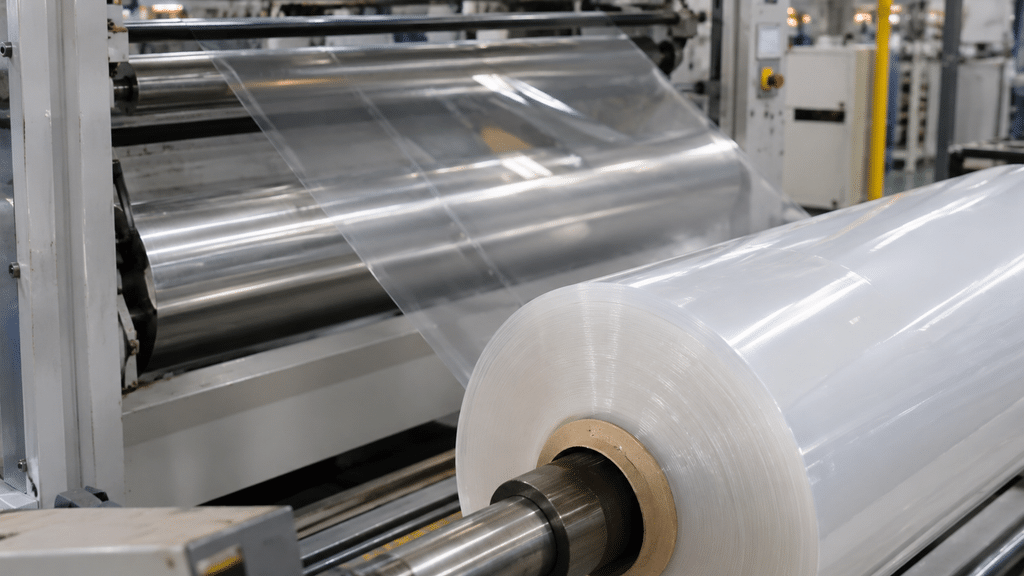
6. PVC (Polyvinyl Chloride) in Pipes, Profiles and Construction
Construction represents one of the most important markets for PVC (Polyvinyl Chloride). For example, manufacturers use rigid formulations for water pipes, drainage systems, electrical conduits, window profiles, doors and other building products.
PVC does not rust like many metal products. Therefore, it can provide an advantage in applications where corrosion resistance matters. In addition, the material has relatively low weight.
As a result, companies can often handle, transport and install finished products more easily than heavier alternatives. Moreover, smooth internal surfaces can support efficient flow in correctly designed piping systems.
However, pipe and profile production do not always require the same resin properties. For example, a window profile producer may focus on surface quality, impact strength and weather resistance. A pipe producer, by contrast, may place greater emphasis on pressure performance, processing stability and formulation consistency.
For this reason, buyers should define the exact end use before selecting a grade. Otherwise, a resin with the correct general description may still fail to meet the specific production need.
7. Suspension PVC and Emulsion PVC
S-PVC and E-PVC serve different processing needs. Suspension PVC covers many high-volume rigid and flexible applications. For example, manufacturers commonly use it in dry-blend systems before extrusion and other thermoplastic processes.
Emulsion PVC, on the other hand, has much finer resin particles. Therefore, it works well in paste and plastisol systems. In particular, manufacturers use it for coated fabrics, flooring, wall coverings, sealants and synthetic leather.
In addition, the two resin types can behave differently during mixing and processing. Consequently, buyers should not treat S-PVC and E-PVC as interchangeable materials.
In short, particle structure, processing behavior and formulation needs differ. Therefore, the intended production method should guide resin selection.
8. PVC Processing and Quality Control
PVC resin needs careful heat control during production because excessive heat can damage the polymer. Therefore, manufacturers use suitable stabilizers and manage processing temperatures carefully.
Common processing methods include:
- Extrusion
- Injection molding
- Calendaring
- Coating
- Paste and plastisol processing
- Selected blow molding processes
Quality control should start before production. First, buyers should compare the offered grade with their production process. Next, they should check technical documents and lot data. Finally, they should confirm that the product meets the required application standards.
Important documents may include:
- Technical Data Sheet (TDS)
- Safety Data Sheet (SDS/MSDS)
- Certificate of Analysis (COA)
- Certificate of Origin
- Packing details
- Regulatory documents where required
In addition, buyers should pay close attention to technical consistency when changing suppliers. For example, two products with a similar K-value may still behave differently during production. Therefore, trial production can be useful before a manufacturer changes its main raw material source.
9. Global PVC Resin Import and Export Markets
International trade in unmixed polyvinyl chloride resin commonly falls under HS Code 390410 – Polyvinyl chloride, not mixed with other substances.
Global trade patterns change according to construction demand, local production capacity, raw material costs, energy prices and freight conditions. Therefore, rankings can change from one year to another. In addition, new production capacity can change regional supply balances.
Among established and commercially relevant markets, the following countries play important roles:
| Market | Trade Role | Market Characteristics |
|---|---|---|
| India | Major Import Market | Strong demand from construction, pipes and infrastructure |
| Türkiye | Major Import Market | Large plastics processing and manufacturing base |
| Italy | Important Import Market | Established plastics conversion industry |
| Germany | Import & Export Market | Strong industrial and plastics manufacturing sector |
| United States | Major Export Market | Large domestic resin production capacity |
| China | Major Export & Processing Market | Large polymer production and manufacturing base |
| Japan | Export Market | Established chemical and polymer sector |
| South Korea | Export Market | Strong petrochemical and resin production industry |
However, HS 390410 represents a customs category rather than one specific commercial grade. For this reason, buyers should not use trade statistics alone to evaluate PVC resin availability. Instead, they should combine market data with technical specifications, producer information and current supply conditions.
10. PVC Supply and Demand in Türkiye
Türkiye has a large plastics processing industry and strong demand for PVC (Polyvinyl Chloride) from construction, infrastructure, cable and industrial manufacturing. Therefore, the country represents an important regional market for this raw material.
Key areas of demand include:
- Pipe and fitting production
- Window and door profiles
- Cable compounds
- Flooring
- Flexible compounds
- Sheets and films
- Construction materials
- Industrial profiles
- Hoses and related products
In addition, Türkiye has an important location between Europe, the Mediterranean and Central Asia. As a result, its manufacturing base also supports regional trade.
However, industrial buyers should look beyond the headline price. For example, grade consistency, technical documentation, packaging, shipment planning and supply continuity can directly affect production costs.
Therefore, a reliable sourcing strategy should balance price with technical and commercial performance. Moreover, buyers with regular demand may benefit from planning volumes and delivery schedules in advance.
11. Industrial PVC Sourcing with ATABAŞ GLOBAL
ATABAŞ GLOBAL supports international PVC resin sourcing and trade coordination according to the technical and commercial requirements of industrial buyers.
First, the sourcing process should define the required product and application. Then, the buyer and supplier can compare technical parameters, quantity, packing, delivery conditions and documentation. After that, both sides can evaluate commercial terms and shipment planning.
A professional inquiry should preferably include:
- Required resin type
- S-PVC or E-PVC
- Required K-value
- Intended application
- Required quantity
- Packaging preference
- Destination country and port
- Preferred Incoterm
- Required delivery schedule
- TDS, SDS/MSDS and COA requirements
- Inspection requirements, if applicable
- Preferred payment conditions
As a result, suppliers can evaluate the request more accurately and reduce the risk of offering an unsuitable grade. Moreover, clear technical details make price comparisons more meaningful because buyers can compare products with similar requirements.
Ultimately, effective sourcing depends on both technical suitability and commercial coordination. Therefore, ATABAŞ GLOBAL coordinates supplier communication and international trade processes to connect industrial requirements with suitable supply opportunities across its business network.
12. What Buyers Should Check Before Purchasing PVC
Industrial buyers should evaluate both technical and commercial factors before purchasing PVC resin.
First, they should confirm the resin type, grade and K-value. Next, they should compare the material with the intended production method and final application. In addition, they should review the required documentation and shipment conditions.
The main purchasing checks include:
- Resin type
- S-PVC or E-PVC
- K-value
- Intended application
- Processing method
- Bulk density
- Volatile matter
- Residual VCM requirements
- Particle properties
- Packaging format
- TDS and SDS/MSDS
- Lot-specific COA
- Country of origin
- Available quantity
- Shipment schedule
- Incoterm and destination
- Inspection requirements
Furthermore, companies that purchase regularly should consider consistency between production lots. For example, a lower purchase price may offer little benefit if changing material behavior causes production losses.
Ultimately, the best sourcing decision combines suitable specifications, reliable supply, competitive commercial terms and consistent quality.
13. Frequently Asked Questions About PVC (Polyvinyl Chloride)
What is PVC (Polyvinyl Chloride)?
PVC (Polyvinyl Chloride) is a thermoplastic polymer made from vinyl chloride monomer. Manufacturers use different grades and formulations to create rigid or flexible products. Therefore, the material can serve many different industries.
What is the difference between S-PVC and E-PVC?
S-PVC mainly serves conventional thermoplastic applications such as pipes, profiles and fittings. In contrast, E-PVC works particularly well in paste systems, coatings, flooring and synthetic leather.
What does K-value mean in PVC resin?
K-value gives an indication of the resin’s molecular-weight range and helps manufacturers compare processing characteristics. However, buyers should consider other technical values as well.
Which PVC grade is commonly used for pipes?
Manufacturers often use S-PVC grades around K65–K67 for pipe and profile production. However, the exact requirement depends on the formulation, equipment and final product standard.
Can manufacturers produce both rigid and flexible PVC products?
Yes. For example, rigid formulations serve pipes, fittings and profiles, while flexible formulations serve cables, hoses, flooring and flexible sheets.
What documents should PVC resin buyers request?
Buyers should normally request the TDS, SDS/MSDS and COA. In addition, some transactions may require a Certificate of Origin, inspection documents, packing information or other compliance records.
What is the HS code for unmixed PVC resin?
HS 390410 commonly covers polyvinyl chloride not mixed with other substances. Nevertheless, buyers and importers should confirm the correct customs code for the exact product and destination.
What information should a PVC inquiry include?
A good inquiry should include the resin type, K-value, application, quantity, packaging, destination, Incoterm, documentation requirements and delivery schedule. Consequently, suppliers can prepare a more accurate technical and commercial offer.
