

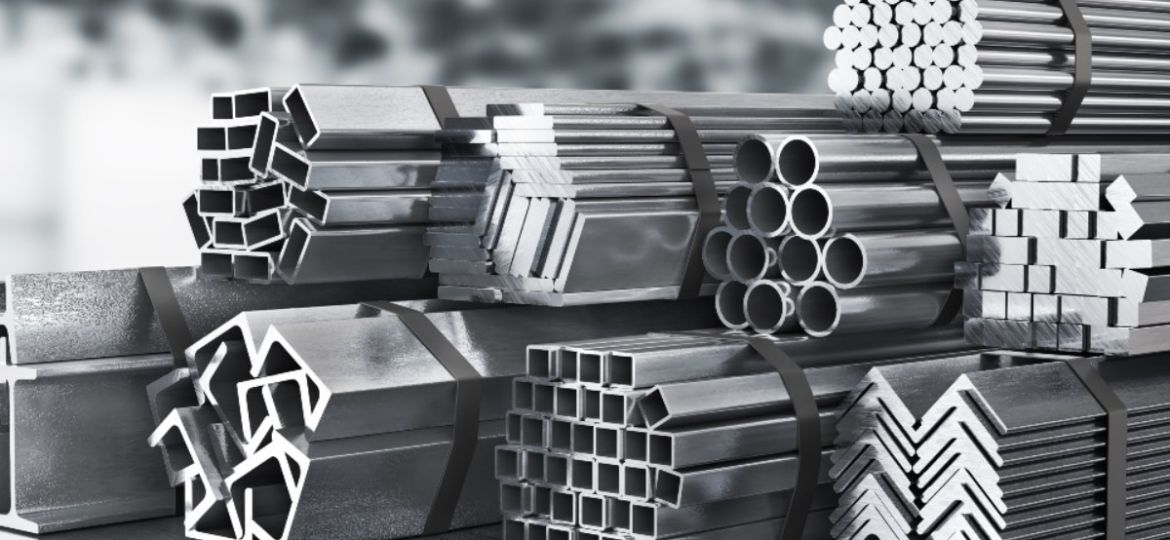
Steel profiles play an essential role in construction, manufacturing, infrastructure, machinery, and many industrial projects. Among the many available options, Rectangular Steel Profiles offer a practical combination of strength, structural efficiency, and simple geometry.
The market also uses Roll Formed Steel Profiles for a wide range of applications. Manufacturers create these profiles by gradually shaping steel strip or coil through a series of rollers. This production method can create long sections with a consistent cross-section and high repeatability.
However, buyers should understand the difference between a rectangular hollow section and a roll formed profile. These terms describe related but different concepts. “Rectangular” mainly describes the cross-sectional shape. “Roll formed” mainly describes a manufacturing method.
Product dimensions, wall thickness, steel grade, surface finish, production method, tolerance, coating, quantity, and final application can all affect product selection.
This guide explains Rectangular Steel Profiles from both technical and commercial perspectives. It covers production, materials, dimensions, applications, quality, standards, storage, pricing, global trade, and purchasing.
1. What Are Rectangular Steel Profiles?
Rectangular Steel Profiles are steel sections with a rectangular cross-sectional form. In structural steel terminology, closed rectangular profiles commonly appear under the name Rectangular Hollow Section, or RHS.
An RHS has a hollow interior and four main external faces. Its width and height differ, which creates the rectangular shape. This geometry separates RHS products from Square Hollow Sections, commonly known as SHS, and Circular Hollow Sections, known as CHS. European terminology commonly uses RHS, SHS, and CHS for these three forms.
A typical rectangular hollow section designation uses outside dimensions and wall thickness. For example, a buyer may specify a section by height, width, and thickness.
These dimensions directly affect weight and structural properties. A larger section does not automatically provide the best solution. Engineers must consider the direction and size of the expected loads.
The closed geometry provides another important feature. It gives rectangular hollow sections useful resistance to torsion while maintaining a clean external shape. RHS sections can therefore serve both structural and visual purposes.
Designers use rectangular profiles in building frames, industrial structures, machinery, fabrication, support systems, architectural elements, and many other applications.
The exact use depends on the steel grade, dimensions, wall thickness, production standard, connection design, and engineering requirements.
2. What Are Roll Formed Steel Profiles?
Roll Formed Steel Profiles get their name from their manufacturing method rather than from one specific cross-sectional shape.
During roll forming, manufacturers feed a flat strip or coil through a sequence of specially designed roller stations. Each station bends the metal a little more until it reaches the required final cross-section.
This gradual forming method can produce long profiles with a constant cross-section. It also supports repeatable high-volume production.
A roll formed profile does not have to be rectangular. Manufacturers can produce C, U, Z, hat, channel, rail, framing, and many custom shapes through roll forming.
The required geometry determines the tooling design.
Manufacturers may also integrate other operations into a production line. Depending on the equipment and product, a line can include punching, cutting, welding, embossing, or other processes. Modern roll-forming systems can combine several production steps in one continuous operation.
This flexibility makes roll forming useful across construction, automotive production, industrial equipment, storage systems, renewable energy structures, and many other industries.
The method becomes especially attractive when a company needs a large quantity of profiles with consistent dimensions.
3. Rectangular Profiles vs. Roll Formed Profiles: What Is the Difference?
Buyers sometimes treat “rectangular profile” and “roll formed profile” as two competing product categories. This comparison can create confusion.
A rectangular profile describes a shape, while a roll formed profile describes how manufacturers create a shape.
A profile can therefore be both rectangular and roll formed.
For example, a manufacturer may produce a cold-formed welded rectangular hollow section from steel strip. The finished product has a rectangular shape, while cold-forming processes play a role in its manufacture.
Roll forming also produces many open sections that do not resemble rectangular tubes at all.
This distinction becomes important when requesting a commercial quotation.
A request for “steel profile” alone may not provide enough information. The supplier needs to understand the required cross-section, dimensions, thickness, steel grade, surface condition, quantity, length, and intended use.
If the buyer needs RHS, the inquiry should clearly state Rectangular Hollow Section and provide the dimensions.
If the buyer needs a custom roll formed profile, drawings become especially useful. The drawing can define bends, angles, dimensions, holes, slots, tolerances, and other important features.
Clear terminology reduces errors and helps suppliers prepare accurate offers.
4. How Are Rectangular Steel Profiles Manufactured?
The production method depends on the type of Rectangular Steel Profile.
Cold-formed welded structural hollow sections represent an important product group. European markets commonly associate these products with EN 10219, while EN 10210 covers hot-finished structural hollow sections.
For a typical cold-formed welded hollow section, production begins with steel coil or strip. Manufacturers prepare the material to the required width and feed it through forming equipment.
Rollers gradually shape the strip. The production line then forms a closed section and creates a longitudinal weld seam.
Further forming can produce the final rectangular geometry. The exact mill design and production sequence can vary.
The line may then size and straighten the section before cutting it to the required length.
Quality control remains important throughout production. Manufacturers need to monitor dimensions, wall thickness, weld quality, straightness, surface condition, and other required properties.
The steel grade also matters. Different projects require different mechanical properties.
Production does not end when the profile leaves the final forming station. Cutting, inspection, marking, bundling, coating, and preparation for transport can all form part of the finished-product process.
Professional buyers should therefore examine the full product specification rather than focusing only on nominal dimensions.
5. How Does the Roll Forming Process Work?
Roll forming uses a continuous and gradual bending process.
Production normally begins with strip or coil material. The line feeds the material into a sequence of roll stands. Each set of rolls makes a controlled change to the cross-section.
The first stations begin the bends. Later stations continue the transformation until the profile reaches its final geometry.
This gradual approach distinguishes roll forming from processes that create major bends in a smaller number of operations.
The process works particularly well for long parts with a constant cross-section. ASM describes roll forming as the progressive bending of flat strip or sheet through contoured rollers.
Tool design plays a major role in product quality.
A complex profile may require more forming stages than a simple profile. Engineers must consider material thickness, steel properties, bend radii, profile geometry, production speed, and dimensional tolerances.
Poor process design can create distortion or other defects. Good tooling and process control help maintain consistent dimensions.
Roll forming can also support coated materials. Depending on the product and process requirements, manufacturers can work with materials such as galvanized or pre-painted steel as well as other metals.
The result is a highly flexible production method for both standard and custom profiles.
6. Materials and Steel Grades Used for Profiles
Steel profile performance begins with material selection.
Manufacturers can produce profiles from several types of steel. The right choice depends on structural requirements, forming needs, environment, welding, coating, and final application.
Carbon structural steels are common in construction and general fabrication. Higher-strength steels can provide greater mechanical performance where the design requires it.
Galvanized steel offers another option. A zinc-based protective coating can improve corrosion protection in suitable environments.
Manufacturers can also form stainless steel for applications that need greater corrosion resistance or a specific surface appearance.
Roll-forming technology is not limited to carbon steel. Industrial systems can process stainless steel and, with appropriate tooling and process design, other formable metals.
The steel grade affects more than strength.
It can influence forming behavior, welding, bend radius, surface quality, and fabrication after delivery. Engineers should therefore choose the material together with the profile geometry.
Professional buyers should clearly state the required steel grade when requesting an offer.
If a project requires compliance with a specific standard, the inquiry should also state that requirement. Buyers should not assume that every rectangular profile meets the same structural specification.
Correct material selection protects both engineering performance and commercial value.
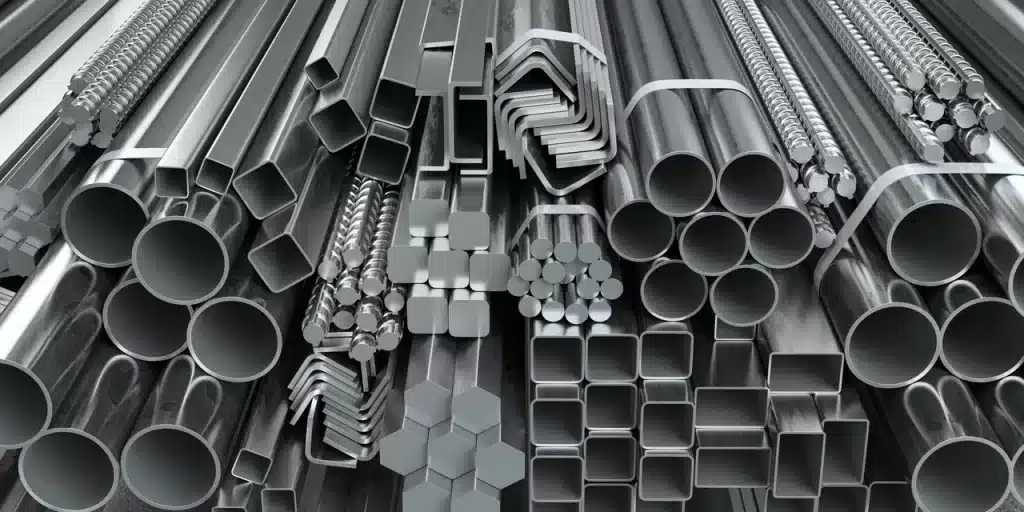
7. Dimensions, Wall Thickness, Weight, and Tolerances
Dimensions form one of the most important parts of any profile order.
For a Rectangular Hollow Section, buyers normally need to define outside height, outside width, wall thickness, and length. Section tables also include properties such as mass per meter and geometric values used in engineering calculations.
Consider a designation such as 100 × 50 × 4 mm. It generally communicates the main outside dimensions and nominal wall thickness, subject to the applicable standard and supplier specification.
Wall thickness has a major effect on weight and structural performance.
A thicker wall usually increases the amount of steel per meter. It can also change local buckling behavior and other structural properties.
Outside dimensions matter as well. Changing profile depth can significantly affect bending properties.
Engineers therefore do not select RHS products based on weight alone.
Tolerance is equally important. Real manufactured products cannot match nominal dimensions with absolute mathematical perfection. Standards and agreed specifications define acceptable variation.
Buyers should understand which tolerances apply to dimensions, thickness, straightness, length, and shape.
Custom roll formed profiles may require their own tolerance agreements. Tight tolerances can increase production difficulty and cost.
A professional inquiry should define what the application actually needs rather than demanding unnecessary precision.
8. Benefits of Rectangular Steel Profiles
Rectangular Steel Profiles combine structural efficiency with practical geometry.
Their closed shape can provide useful torsional performance. This makes them attractive for structures that face more than simple bending in one direction. Rectangular geometry also creates different stiffness characteristics along the two main axes.
The flat external faces provide another advantage.
Fabricators can connect plates, brackets, frames, and other components to flat surfaces. This geometry can simplify many fabrication and architectural details.
The clean shape also suits visible structures. Architects and designers may prefer rectangular sections when appearance matters.
Hollow geometry can provide an efficient strength-to-weight solution in suitable applications. Engineers can place material around the perimeter instead of using a fully solid rectangular bar.
The closed form may also reduce exposed surface area compared with some open sections of similar structural purpose. However, actual coating and corrosion requirements depend on the design and environment.
Rectangular profiles also integrate well with many manufacturing methods. Fabricators can cut, drill, weld, coat, and assemble them according to the material grade and project requirements.
These advantages explain their broad use across construction and manufacturing.
However, engineers must still check loads, connections, buckling, corrosion, fire requirements, and relevant design rules.
A useful geometry does not remove the need for proper engineering.
9. Advantages of Roll Formed Steel Profiles
Roll Formed Steel Profiles offer a different set of advantages.
The production process works continuously. This characteristic makes roll forming highly suitable for repeated production of long sections with a constant cross-section.
Manufacturers can achieve strong repeatability once they develop and control the tooling correctly.
The process can also create shapes that would require several separate operations with other manufacturing methods.
Custom geometry represents one of the biggest advantages.
A manufacturer can design a profile around the needs of the final product. The cross-section may include channels, lips, flanges, bends, stiffening features, and other geometry.
Modern production lines can also integrate additional processes. Punching, cutting, embossing, welding, and related operations may take place within or alongside the line, depending on equipment design.
This can reduce separate manufacturing steps.
Roll forming also supports efficient use of coil material when engineers optimize the profile and strip width.
However, tooling requires an initial investment. This means roll forming usually becomes more attractive when production volume justifies the tooling and setup cost.
For the right application, it can combine speed, consistency, design flexibility, and cost efficiency.
10. Applications of Rectangular and Roll Formed Profiles
Rectangular and roll formed steel profiles serve an extremely broad range of industries.
Construction represents one of the largest application areas.
Builders and fabricators use rectangular hollow sections in frames, beams, supports, canopies, trusses, architectural structures, industrial buildings, and other steelwork. RHS sections are especially useful where their closed geometry and directional bending properties suit the design.
Roll formed profiles also have a major place in construction. C, Z, and U sections frequently appear in light steel systems, purlins, secondary framing, and similar applications.
Industrial manufacturing creates another major market.
Machine builders can use profiles for frames, guards, supports, enclosures, rails, and equipment structures.
Storage and logistics systems also use formed sections in racks, shelving, supports, and warehouse equipment.
Automotive and transportation industries can use custom roll formed sections where high-volume production and repeatable geometry provide value.
Renewable energy has created additional demand for formed steel components. Solar support systems and related structures can require specialized profiles.
Agricultural equipment, fencing, doors, windows, furniture systems, electrical installations, and many other industries also use profile products.
The correct profile depends on the application. A building column, warehouse rack, machine frame, and solar structure do not have identical engineering needs.
11. Surface Finishes, Galvanizing, and Corrosion Protection
Surface condition can strongly affect the service life and appearance of a steel profile.
Uncoated carbon steel may require additional corrosion protection depending on the environment.
Painting provides one common option. A suitable coating system can protect the steel surface while also providing the required color and finish.
Galvanizing offers another widely used solution. Zinc coatings can help protect steel against corrosion in appropriate service conditions.
Pre-galvanized coil may also serve as the raw material for certain roll formed products. Because roll forming can process coated coil, manufacturers can create profiles from material that already carries a protective surface layer.
However, forming, cutting, welding, and punching can affect coated areas. The final corrosion strategy should therefore consider the complete manufacturing route.
Stainless steel can provide another solution for environments with greater corrosion demands. It also offers a different visual finish.
No single coating system suits every project.
Designers should consider indoor or outdoor exposure, humidity, chemicals, marine conditions, expected service life, maintenance, and aesthetic requirements.
Buyers should specify the required surface condition clearly.
Terms such as “steel profile” or “galvanized profile” may not provide enough information for a technical purchase. The coating type and relevant specification can matter just as much as the base material.
12. Quality, Standards, Storage, and Handling
Quality starts with a clear specification.
For structural rectangular hollow sections in European practice, EN 10219 covers cold-formed welded structural hollow sections, while EN 10210 applies to hot-finished structural hollow sections.
The applicable standard matters because it can define technical delivery conditions, tolerances, dimensions, material properties, and other requirements.
Buyers should therefore state the required standard and steel grade when the project demands them.
Quality control may include checks on dimensions, wall thickness, straightness, weld condition, surface appearance, length, and material documentation.
Custom roll formed products may require additional checks. The buyer may need to approve drawings or samples before full production.
Storage also matters.
Companies should store profiles in conditions that limit unnecessary moisture exposure and surface damage. Storage methods should prevent unstable stacking and physical deformation.
Handling equipment must suit the profile length and bundle weight.
Long sections can bend or suffer surface damage when workers use poor lifting methods. Coated profiles may require extra care to prevent scratches.
Good packaging and bundling help protect products during international transport.
Quality management should continue from the production line to final delivery.
13. Rectangular and Roll Formed Profiles in Global Trade
Steel profiles form part of a large international supply chain.
Raw material prices, steelmaking capacity, coil availability, energy costs, production schedules, freight, and regional demand can all influence international trade.
Buyers may source profiles from domestic mills or international suppliers.
The best option depends on quantity, specification, lead time, price, certification, and logistics.
Standard RHS products can be easier to compare because buyers can define dimensions, grade, length, and standard.
Custom Roll Formed Steel Profiles require more detailed communication.
A buyer may need to provide technical drawings before the supplier can calculate tooling and production costs. Minimum production quantities may also become more important for custom products because dedicated tooling carries an initial cost.
International shipments add further considerations.
Packaging must protect the product during loading, ocean transport, unloading, and inland delivery. Long profiles can also create special container or vessel requirements.
Buyers should define the delivery basis clearly. FOB, CFR, CIF, or other agreed Incoterms® rules allocate costs and responsibilities differently.
Importers should also review customs requirements, product documentation, applicable standards, and destination rules before shipment.
Good international procurement combines technical accuracy with strong logistics planning.
14. What Determines Rectangular and Roll Formed Profile Prices?
Steel profile prices depend on several connected factors.
Raw material represents a major part of the cost. Changes in hot-rolled coil, cold-rolled coil, galvanized coil, stainless steel, or other input prices can affect the final profile price.
Steel grade also matters. Higher-performance materials can carry different production and raw-material costs.
Dimensions and wall thickness directly influence material consumption.
A heavier section uses more steel per meter. For this reason, buyers should compare both price per metric ton and the resulting cost per meter when appropriate.
Surface treatment adds another cost factor. Galvanizing, painting, special coatings, or stainless steel material can change the final price.
Production complexity becomes especially important for custom roll formed profiles.
A simple cross-section may require fewer forming stages. A complex shape can require more advanced tooling, more roll stations, tighter process control, and longer setup time.
Tooling cost can have a major effect on small production runs. Larger volumes can spread this initial cost across more meters or pieces.
Order quantity, cutting length, punching, welding, packaging, tolerances, certification, and inspection can also influence the quotation.
Freight creates another major variable in international transactions.
A competitive ex-works or FOB price does not automatically produce the lowest delivered cost. Buyers should consider ocean freight, inland transport, port costs, customs expenses, and handling.
A meaningful price comparison therefore requires equivalent specifications and delivery terms.
15. How to Buy Rectangular Steel Profiles and Roll Formed Profiles
A professional purchase starts with an accurate product description.
For Rectangular Steel Profiles, buyers should define the section dimensions, wall thickness, length, steel grade, quantity, required standard, and surface condition.
For Roll Formed Steel Profiles, the process may require more detail.
A technical drawing can provide the best starting point for a custom product. It can show the complete cross-section, dimensions, bend radii, material thickness, holes, slots, tolerances, and other features.
The buyer should also define the raw material and surface finish.
Quantity matters because it affects both production economics and logistics. Roll forming can offer strong cost advantages in suitable volumes, but custom tooling can make very small runs less attractive. The process is particularly well suited to long, constant-cross-section products produced repeatedly.
Buyers should also clarify whether they require fixed lengths or another delivery format.
For international purchases, the destination matters. The supplier needs the delivery point or port to prepare a freight-based quotation.
Commercial terms require equal attention.
The buyer and seller should agree on price basis, Incoterms®, payment method, production lead time, shipment period, packaging, documentation, inspection, and quality requirements before production.
Professional buyers should verify the supplier and supporting documents before committing to a major transaction.
The lowest quotation does not always provide the best overall value.
A strong offer combines the correct steel grade, suitable dimensions, consistent production quality, required documentation, competitive pricing, reliable delivery, and clear commercial terms.
Companies, contractors, manufacturers, steel distributors, importers, and professional buyers who wish to order Rectangular Steel Profiles or Roll Formed Steel Profiles can contact Atabaş Global for product information, commercial quotations, supply options, and international shipment solutions.
Rectangular and roll formed profiles remain important products across construction and industry. Their value comes from more than steel alone. Geometry, material grade, production method, dimensional accuracy, surface protection, and engineering design all influence performance.
For this reason, successful purchasing requires both technical and commercial knowledge.
Atabaş Global can support professional buyers seeking suitable profile products for domestic and international projects.
