

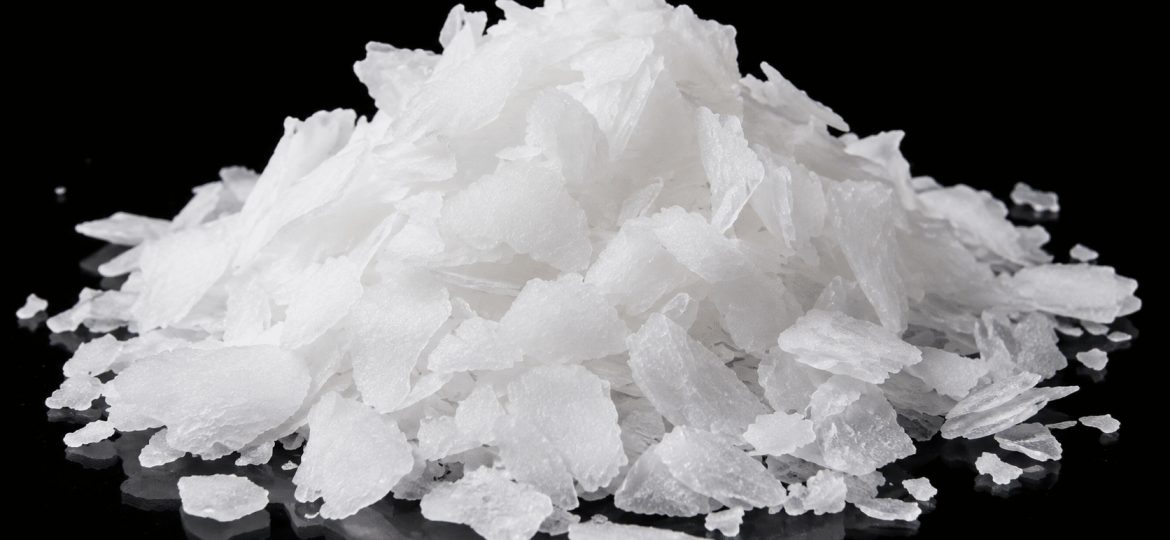
Sodium Methoxide is an important industrial chemical used as a strong base and catalyst. It is also known as sodium methylate or sodium methanolate. In addition, it supports many processes, from biodiesel production to pharmaceutical and specialty chemical production.
Its molecular formula is CH₃ONa, while its CAS number is 124-41-4. Moreover, its molecular weight is about 54.02 g/mol. Because the material reacts strongly with moisture, buyers should carefully check its concentration, purity, packaging, storage conditions and transport needs before purchase.
1. What Is Sodium Methoxide?
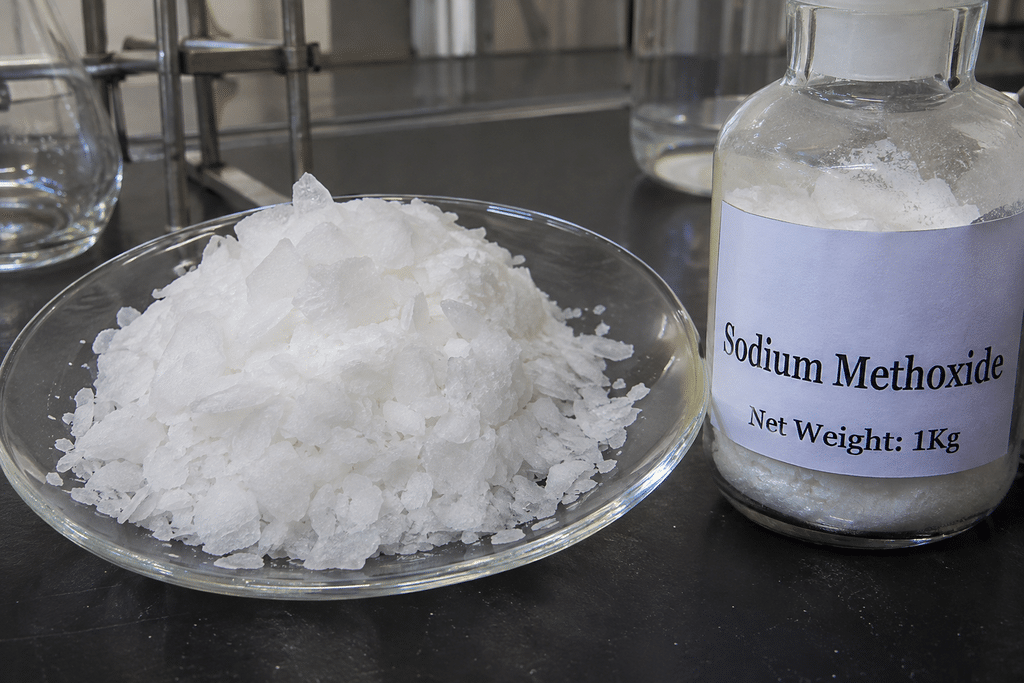
Sodium Methoxide is the sodium salt of methanol. In industrial use, suppliers generally offer it as a solid product or as a solution in methanol.
The compound works as a strong base and an effective catalyst. Therefore, manufacturers use it in transesterification, condensation, methylation and other chemical processes.
In addition, Sodium Methoxide reacts quickly with water. As a result, the reaction can produce methanol and sodium hydroxide. Therefore, moisture control is important during production, packaging, transport and storage.
The material may also appear under names such as:
- Sodium Methylate
- Sodium Methanolate
- Methoxysodium
- Methanol Sodium Salt
- Sodium Methoxide Solution
Moreover, its EC number is 204-699-5.
2. Typical Technical Properties and Specifications
Commercial specifications vary by producer, concentration, application and product form. Therefore, buyers should always review the supplier’s current Technical Data Sheet (TDS), Certificate of Analysis (COA) and Safety Data Sheet (SDS).
| Property | Typical Information |
|---|---|
| Chemical Name | Sodium Methoxide |
| Alternative Names | Sodium Methylate, Sodium Methanolate |
| CAS Number | 124-41-4 |
| EC Number | 204-699-5 |
| Molecular Formula | CH₃ONa |
| Molecular Weight | Approx. 54.02 g/mol |
| Solid Appearance | White to off-white solid/powder |
| Solution Appearance | Clear to slightly colored liquid, depending on grade |
| Typical Solution Concentration | Around 25-30% in methanol, producer dependent |
| Solid Assay | Commonly high-purity industrial grade; supplier specification applies |
| Solvent | Methanol for standard solution grades |
| Water Sensitivity | High |
| Storage Requirement | Dry, tightly closed and moisture-controlled conditions |
| CAS Identification | 124-41-4 |
According to PubChem, the substance is sensitive to moisture and reacts with water. However, the values above are general industrial references rather than one standard for every commercial product.
Therefore, buyers should use the approved COA and TDS for the selected grade and producer. In addition, contract specifications should clearly state the required quality limits.
3. Main Sodium Methoxide Grades and Forms
The right form depends on the production process, dosing system, transport method and final use. Therefore, buyers should select the grade according to their own process needs.
| Grade / Form | Typical Characteristics | Common Applications |
|---|---|---|
| Sodium Methoxide Solution | Usually supplied in methanol | Biodiesel, chemical processing |
| 30% Methanolic Solution | Common industrial concentration | Biodiesel and organic synthesis |
| 25% Methanolic Solution | Lower-concentration liquid form | Chemical synthesis and controlled dosing |
| Solid Sodium Methoxide | Concentrated solid material | Specialty chemical synthesis |
| High-Purity Grade | Tighter impurity control | Pharmaceutical and fine chemical processes |
| Industrial Grade | Commercial industrial specification | Biodiesel and chemical manufacturing |
For example, liquid grades can make dosing easier in continuous production. However, they also contain methanol. Therefore, buyers need to consider the related handling, storage and transport rules.
Solid grades, on the other hand, provide a higher amount of active material. However, they need stronger protection against moisture. As a result, the preferred form often depends on the buyer’s plant and storage system.
4. Key Chemical and Industrial Properties
Several properties explain why sodium methylate has an important role in chemical production. In particular, its strong basicity and catalyst activity support many industrial processes.
Strong Basicity
The compound works as a strong base in many chemical reactions. Therefore, manufacturers can use controlled amounts to support specific processes.
High Catalyst Activity
Sodium methylate works well as a catalyst in transesterification reactions. As a result, the material has an important role in biodiesel production.
Moisture Sensitivity
Water can quickly affect product quality. Consequently, moisture can reduce process performance and change the condition of the material. Therefore, dry handling conditions are important.
Wide Industrial Use
The material supports several chemical processes instead of only one end use. For example, demand comes from biodiesel, pharmaceutical, agrochemical and specialty chemical industries.
Reactive Nature
Sodium Methoxide needs controlled handling because it is reactive and corrosive. In addition, contact with water can produce sodium hydroxide and methanol. Therefore, users should follow the current SDS during handling and storage.
5. Where Is Sodium Methoxide Used?
The product serves both large industrial processes and more specific chemical uses. Moreover, its role can change according to the production process.
| Industry | Application | Function |
|---|---|---|
| Biodiesel | Transesterification of oils and fats | Catalyst |
| Pharmaceuticals | Active ingredient and intermediate production | Strong base / reagent |
| Agrochemicals | Chemical intermediate production | Reagent |
| Fine Chemicals | Organic synthesis | Base and catalyst |
| Edible Oils and Fats | Selected processing operations | Processing aid / catalyst |
| Specialty Chemicals | Methylation and condensation reactions | Chemical reagent |
| Chemical Intermediates | Production of downstream compounds | Reaction agent |
For example, biodiesel producers mainly use the material as a catalyst. Meanwhile, pharmaceutical and fine chemical companies may use it as a base or reaction agent.
In addition, the material has uses in selected oil and fat processing steps. Therefore, its demand comes from several industrial value chains.
6. Sodium Methoxide in Biodiesel Production
Biodiesel is one of the best-known industrial applications of Sodium Methoxide. In this process, the material mainly works as a catalyst.
During production, vegetable oils, animal fats or other suitable feedstocks react with methanol. As a result, triglycerides can be converted into fatty acid methyl esters. Sodium methylate helps support this reaction.
In addition, industrial producers may prefer ready-to-use methanolic solutions because they allow easier dosing and continuous processing. However, feedstock quality remains important.
For example, high levels of water or free fatty acids can reduce process performance. Therefore, biodiesel producers normally check moisture, acidity and catalyst dosage carefully.
Catalyst selection should consider:
- Feedstock quality
- Free fatty acid level
- Moisture content
- Methanol ratio
- Process temperature
- Reaction time
- Catalyst concentration
- Final purification needs
Therefore, buyers should not compare products only by catalyst price. Instead, they should also consider process performance, dosage and final production cost. As a result, the lowest catalyst price does not always lead to the lowest total cost.
7. Production and Quality Control
Industrial sodium methylate can be made through a controlled reaction between methanol and a suitable sodium source. However, producers must carefully control water during the process.
Because water can react with the finished material, producers need to maintain low-moisture conditions. Therefore, they closely control raw materials, reaction conditions, concentration and storage.
Quality checks commonly include:
| Quality Parameter | Why It Matters |
|---|---|
| Active Content | Determines effective catalyst concentration |
| Sodium Methoxide Concentration | Important for process dosing |
| Free Alkali | Can affect later reactions |
| Sodium Carbonate | May indicate product change or contamination |
| Water Content | Affects stability and performance |
| Methanol Content | Important for solution grades |
| Appearance | Can help identify contamination or product change |
| Batch Consistency | Supports stable production |
In addition, buyers should request a batch-specific COA whenever possible. This document gives a clearer view of the actual material than a general specification alone.
Moreover, buyers should compare the COA with the agreed TDS. As a result, they can identify any difference before accepting the shipment.
8. Packaging, Storage and Transportation
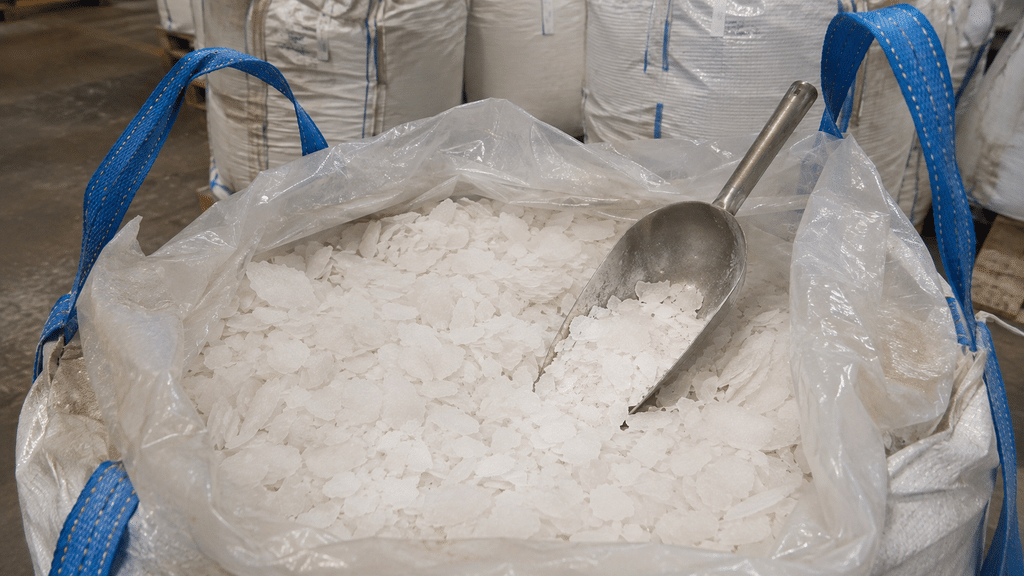
Packaging mainly depends on whether the material is supplied as a solid or as a methanolic solution. Therefore, the product form should be confirmed before logistics planning begins.
For liquid products, suppliers may use suitable drums, intermediate bulk containers or dedicated tank systems. However, the final choice depends on quantity, product grade and transport rules.
Meanwhile, solid material needs sealed packaging that limits contact with moisture. In addition, storage areas should remain dry and controlled.
Users should also separate incompatible materials according to the current SDS and local rules. Therefore, storage planning should form part of the purchasing process.
Important purchasing and logistics checks include:
- Packaging material
- Net weight
- Container compatibility
- Moisture protection
- Storage temperature requirements
- Hazard classification
- UN transport information
- SDS availability
- Loading method
- Transport mode
- Shelf-life requirements
PubChem lists UN 1431 for sodium methylate and also refers to UN 1289 for certain sodium methylate solutions in alcohol. However, transport rules can depend on the exact product form and concentration. Therefore, buyers must confirm the correct classification before shipment.
9. Global Import and Export Market
Global trade analysis for Sodium Methoxide requires care because customs databases do not always list the product under one unique global HS code. Therefore, broad customs data should be interpreted carefully.
For example, some international databases report trade under the broader HS 290519 category. Meanwhile, some Turkish shipment records for methanolic sodium methoxide solutions have used HS 381590900000.
Therefore, trade figures from a broad HS category should not automatically be treated as exact Sodium Methoxide volumes. Instead, they can help show wider trade directions and active industrial markets.
Available trade and shipment data indicate activity across several major markets:
| Market | Observed Role / Relevance | Data Context |
|---|---|---|
| Germany | Important chemical production and export market | HS 290519 trade activity |
| India | Major source and consuming market | HS 290519 trade activity |
| China | Major chemical production and purchasing market | HS 290519 trade activity |
| United States | Major import and industrial use market | HS 290519 trade activity |
| Malaysia | Active exporter and regional chemical market | 2024 HS 290519 trade |
| South Korea | Active exporter to major industrial markets | 2024 HS 290519 trade |
| Türkiye | Import and industrial use market | Product shipment records and broader chemical trade |
For example, 2024 WITS data show HS 290519 trade from Malaysia to China, India, the European Union and the United States. Likewise, South Korean exports under the same broad category reached several major industrial markets.
However, HS 290519 covers a wider product group. Therefore, these figures should be used as a guide to trade direction rather than an exact measure of the Sodium Methoxide market.
10. Sodium Methoxide Market in Türkiye
Türkiye has demand from chemical manufacturing, biodiesel, pharmaceuticals, specialty chemicals and other processing industries. Therefore, the market serves several different buyer groups.
In addition, import shipment databases show commercial movements of methanolic Sodium Methoxide solutions into Türkiye. For example, some shipment records describe products with about 30% Sodium Methoxide in methanol.
However, customs classification can change according to composition, concentration, product form and intended use. Therefore, companies should confirm the correct GTİP/HS classification with their customs consultant before import.
For Turkish industrial buyers, key commercial points include:
- Product concentration
- Origin
- Producer documents
- COA consistency
- SDS compliance
- Packaging
- Dangerous-goods transport rules
- Delivery time
- Storage conditions
- Import documents
- Customs classification
- Payment terms
Moreover, logistics planning is especially important for methanolic solutions. Because chemical handling and dangerous-goods rules can limit transport options, buyers should check logistics before confirming the order.
As a result, price should not be the only factor in supplier selection.
11. Industrial Sodium Methoxide Sourcing with ATABAŞ GLOBAL
ATABAŞ GLOBAL supports international sourcing and trade coordination for industrial chemicals and raw materials. Therefore, buyers can evaluate both technical and commercial factors during the sourcing process.
For Sodium Methoxide requirements, the process can include coordination of:
- Product specifications
- Required concentration
- Packaging
- Quantity
- Origin options
- Producer documents
- TDS and SDS
- Certificate of Analysis
- Commercial terms
- Incoterms
- Loading schedule
- International logistics
- Destination requirements
ATABAŞ GLOBAL does not position itself as the manufacturer of every product in its portfolio. Instead, the company focuses on connecting industrial demand with suitable international supply options.
In addition, ATABAŞ GLOBAL can help coordinate commercial and logistics requirements. As a result, buyers can evaluate the full supply structure rather than comparing only the quoted price per metric ton.
12. What Buyers Should Check Before Purchasing Sodium Methoxide
Before placing an industrial order, buyers should check both technical and commercial details.
First, they should determine whether the process needs a solid product or a methanolic solution.
Second, buyers should confirm the required active concentration. For example, a process designed for a 30% solution may need dosing changes if another concentration is supplied.
Third, buyers should check whether the supplier’s technical documents match the offered grade.
Buyers should request:
- Current TDS
- Current SDS
- Batch or representative COA
- CAS number confirmation
- Active content
- Methanol concentration
- Water content
- Free alkali specification
- Packaging details
- Net weight
- Production date
- Shelf life
- Storage requirements
- Country of origin
- Loading location
- Incoterm
- Delivery schedule
In addition, buyers should confirm dangerous-goods transport rules before finalizing logistics.
Moreover, technical specifications should form part of the commercial agreement. Therefore, both sides can clearly define the required quality before shipment.
Finally, buyers should review the complete supply package rather than focusing only on price. As a result, they can reduce technical, logistics and commercial risks.
13. Frequently Asked Questions About Sodium Methoxide
What is Sodium Methoxide?
Sodium Methoxide is an industrial alkoxide with the molecular formula CH₃ONa. It is mainly used as a strong base, catalyst and chemical reagent. Therefore, it serves several chemical production processes.
What is another name for Sodium Methoxide?
Common alternative names include sodium methylate and sodium methanolate. Therefore, buyers may see these names in technical and commercial documents.
What is the CAS number of Sodium Methoxide?
The CAS number is 124-41-4. In addition, its EC number is 204-699-5.
Is Sodium Methoxide available as a liquid?
Yes. Suppliers commonly offer methanolic solutions as well as solid grades. For example, concentrations around 25-30% are common in industrial supply. However, exact values depend on the producer and grade.
Why is Sodium Methoxide used in biodiesel?
It works as a catalyst in the reaction that converts suitable oils or fats into fatty acid methyl esters. Therefore, it has an important role in many biodiesel processes.
Does Sodium Methoxide react with water?
Yes. It reacts quickly with water and can form sodium hydroxide and methanol. Therefore, moisture control is essential during handling and storage.
What documents should buyers request?
Buyers should normally request a TDS, SDS, COA, origin information, packaging details and relevant transport documents. In addition, they should check whether these documents match the exact grade offered.
What is the HS code for Sodium Methoxide?
There is no single customs classification that should automatically be used for every commercial form. For example, broader HS 290519 trade data may appear in international databases, while some Turkish shipment records show methanolic solutions under 381590900000. Therefore, buyers should confirm the correct GTİP/HS code before customs declaration.
