

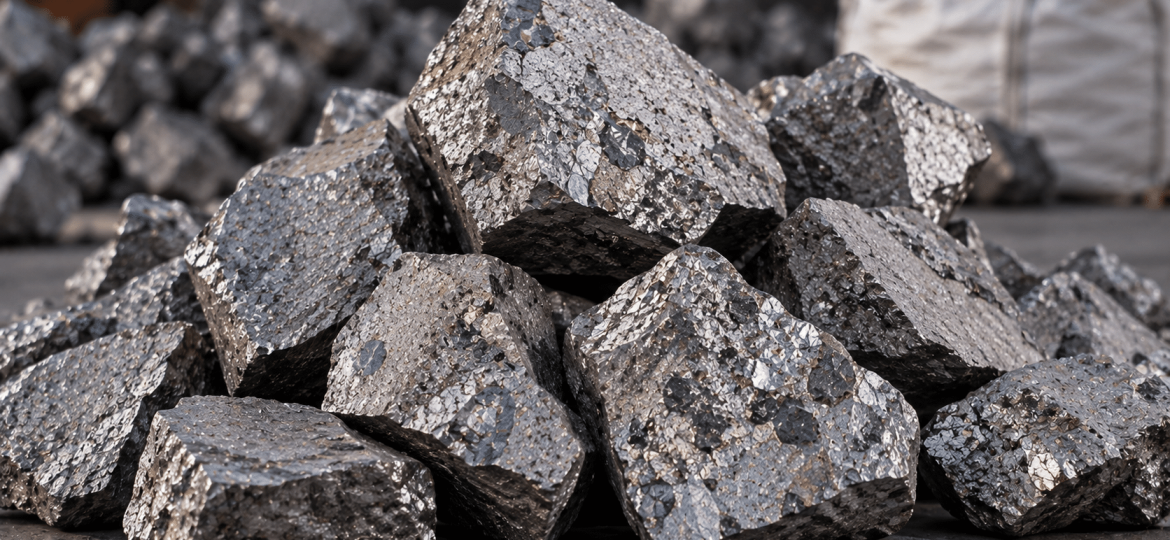
Ferro Silicon Zirconium is a specialized ferroalloy used mainly in foundry and metallurgical applications. It combines silicon, zirconium and iron to support controlled metallurgical reactions. Depending on the grade, producers may also control elements such as calcium, aluminium and manganese.
The alloy has an important role in cast iron treatment. In particular, zirconium-bearing ferrosilicon inoculants can support graphite nucleation, reduce chill and improve consistency during solidification. Therefore, foundries use these materials when standard ferrosilicon does not provide the required inoculation performance.
Atabas Global supplies ferroalloys and metallurgical materials for international industrial requirements. Product chemistry, particle size, packaging and commercial terms can be evaluated according to the customer’s process and purchasing specifications.
What Is Ferro Silicon Zirconium?
Ferro Silicon Zirconium, also known as FeSiZr, belongs to the ferroalloy family. Manufacturers combine silicon and zirconium with an iron-bearing base to create a material suitable for controlled addition to molten metal.
In foundry applications, zirconium contributes to the formation of stable nucleation sites. As a result, the alloy can support graphite formation and help limit unwanted carbide structures. Moreover, zirconium can interact with oxygen, nitrogen and sulfur during metallurgical processing.
The exact chemistry depends on the intended application. For example, a foundry inoculant may contain a high silicon level with a smaller zirconium addition. Other specialty grades can contain significantly more zirconium. Consequently, buyers should define the required chemistry rather than purchase only by product name.
Ferro Silicon Zirconium Chemical Composition and Specifications
Specifications can vary considerably between producers and applications. A typical zirconium-bearing foundry inoculant may use the following composition as a commercial reference:
| Parameter | Typical / Reference Range |
|---|---|
| Silicon (Si) | 73–78% |
| Zirconium (Zr) | 1–3% |
| Calcium (Ca) | 0.8–1.5% |
| Aluminium (Al) | 0.8–1.5% |
| Manganese (Mn) | 1–3% |
| Iron (Fe) | Balance |
| Typical Fine Size | 0.2–0.7 mm |
| Typical Ladle Size | 1–3 mm |
These figures describe a common FeSiZr foundry inoculant rather than a universal international grade. Commercial formulations can differ. For instance, specialty silicon-zirconium alloys with higher zirconium levels are also available. Therefore, customers should confirm the chemical analysis, sizing and intended process before ordering.
Particle size is equally important. Fine material can suit stream or late inoculation, whereas larger particles can work better for ladle addition. Thus, correct sizing helps the material dissolve and react at the required stage of production.
Key Properties and Metallurgical Benefits
The main value of this alloy comes from the combined effects of silicon and zirconium. Silicon supports graphitization, while zirconium provides additional metallurgical control.
Key potential benefits include:
- improved graphite nucleation in cast iron;
- lower chill and carbide formation;
- better inoculation stability;
- support for more uniform graphite distribution;
- deoxidation and nitrogen-control effects;
- improved consistency in section-sensitive castings;
- support for grey and ductile iron production.
In addition, zirconium-bearing nuclei can remain effective during the inoculation window. This characteristic can be valuable when a foundry needs stable performance between treatment and pouring.
However, results depend on base-metal chemistry, temperature, holding time, section thickness and addition practice. Therefore, foundries should establish the final addition rate through production trials and metallurgical control.
Where Is Ferro Silicon Zirconium Used?
The alloy serves several areas of ferrous metallurgy. Foundries represent one of its most important markets because controlled inoculation directly affects casting structure and quality.
| Application | Main Function | Potential Benefit |
|---|---|---|
| Grey Cast Iron | Inoculation and graphite nucleation | Supports uniform graphite structure and reduces chill |
| Ductile Cast Iron | Inoculation after treatment | Helps increase graphite nucleation sites |
| Section-Sensitive Castings | Solidification control | Helps limit carbide formation in critical sections |
| Automotive Cast Components | Metallurgical consistency | Supports repeatable casting properties |
| Heavy Engineering Castings | Melt treatment | Improves control during solidification |
| Machinery Components | Foundry inoculation | Supports consistent microstructure |
| Steelmaking Applications | Deoxidation and metallurgical treatment | Zirconium can interact with oxygen, nitrogen and sulfur |
| Specialty Ferroalloy Production | Alloy adjustment | Provides controlled Si and Zr addition |
Grey Iron and Ductile Iron Applications
In grey iron, good inoculation encourages a controlled graphite structure. This helps the foundry reduce excessive chill and unwanted carbides. Consequently, manufacturers can achieve more stable casting results.
In ductile iron, the alloy acts as an inoculant rather than the main nodularizing agent. Magnesium treatment primarily controls graphite nodularity. The inoculant, however, can increase available nucleation sites and support the final graphite structure.
Therefore, foundries should select the product as part of the complete melt-treatment system rather than as an isolated additive.
Advantages in Foundry Production
Modern foundries need repeatability as much as they need chemical compliance. A material that performs differently from batch to batch can increase scrap rates and process variation.
For this reason, buyers commonly evaluate chemical consistency, particle-size distribution and impurity limits together.
A suitable zirconium-bearing inoculant can help a foundry:
- control chill formation;
- improve graphite nucleation;
- maintain a more stable inoculation effect;
- manage difficult casting sections;
- improve process repeatability;
- reduce the risk of undesirable microstructures.
Moreover, controlled particle sizing supports predictable dissolution. Consistent chemistry also makes dosing easier to manage from one production batch to another.
How Is Ferro Silicon Zirconium Added to Molten Metal?
Foundries can introduce inoculants through several methods. The correct method depends on furnace practice, casting design, production volume and the required inoculation timing.
Ladle inoculation is one common option. In this process, operators add a controlled quantity while molten iron enters the ladle. Stream inoculation provides another option, especially when the process requires a later addition.
Some plants also use late or in-stream inoculation to reduce the time between treatment and casting. As a result, they can limit inoculation fade before the metal enters the mould.
For certain FeSiZr foundry grades, typical ladle additions may fall around 0.1–0.4% of the molten-metal weight. Nevertheless, this figure should serve only as a process reference. The foundry must determine the correct rate through its own metallurgical trials and quality controls.
Quality Factors Buyers Should Check
Price alone does not define ferroalloy value. A professional purchasing process should also examine chemistry, size, consistency and documentation.
Buyers should check the following points before placing an order:
- target silicon and zirconium content;
- calcium, aluminium and manganese levels where relevant;
- limits for unwanted elements;
- particle-size range;
- oversize and fines tolerance;
- batch consistency;
- certificate of analysis availability;
- packaging type;
- production origin;
- required Incoterm and destination.
Furthermore, the supplier and customer should agree on the specification before shipment. This approach reduces commercial risk and prevents misunderstandings about grades that share similar product names.
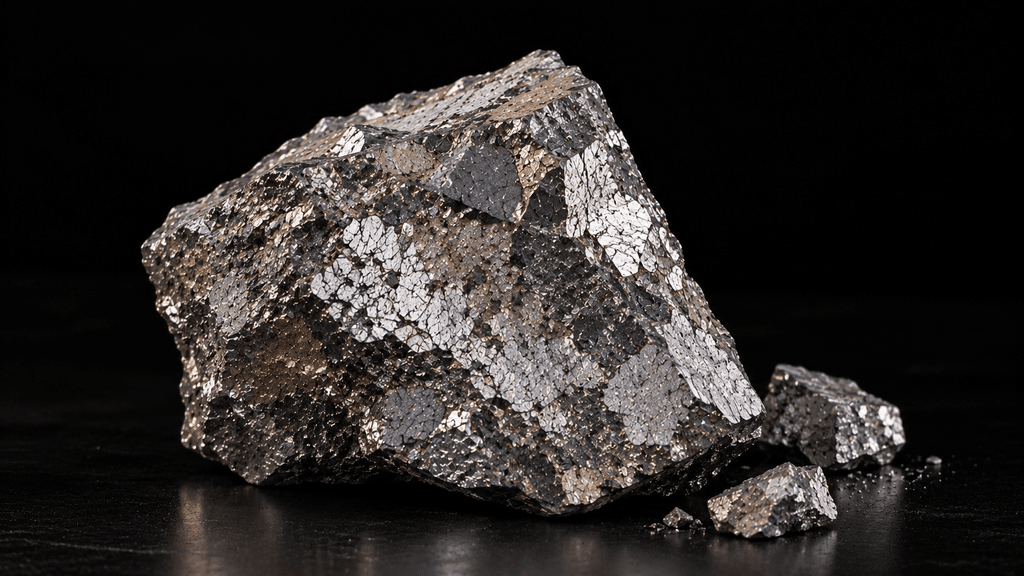
Packaging, Storage and Handling
Packaging depends on particle size, order volume and customer requirements. Industrial ferroalloys commonly move in strong bags, drums or bulk packaging designed for international transport.
The material should remain dry during storage. Moisture can create handling problems and may affect safe use around molten metal. Therefore, warehouses should protect bags from rain, standing water and excessive humidity.
Workers should also follow the applicable safety data sheet and plant procedures. Appropriate personal protective equipment, dust control and safe molten-metal practices remain essential during handling.
Global Import Markets
There is an important trade-data limitation when evaluating this product. International HS statistics do not provide a clean, dedicated HS-6 category exclusively for FeSiZr. Therefore, the following figures use HS 720221 — ferrosilicon containing more than 55% silicon as a broad market indicator. They should not be interpreted as Ferro Silicon Zirconium-only trade volumes.
Based on 2024 WITS/UN Comtrade data, major importing markets in this broader ferrosilicon category include:
| Major Import Market | 2024 Import Value* | 2024 Quantity* |
|---|---|---|
| Japan | USD 550.93 million | 349.73 million kg |
| South Korea | USD 329.39 million | 238.87 million kg |
| United States | USD 275.90 million | 155.70 million kg |
| Germany | USD 246.97 million | 175.15 million kg |
| India | USD 246.38 million | 181.13 million kg |
| Türkiye | USD 132.28 million | 109.92 million kg |
*HS 720221 market data; not product-exclusive FeSiZr statistics.
These markets have significant steel, foundry, automotive or industrial manufacturing activity. Consequently, they can represent relevant commercial markets for ferroalloys and specialized inoculants. Actual FeSiZr demand, however, must be evaluated separately through customer, customs and industry-level market research.
Global Export Markets
Production capacity, energy availability, raw-material access and ferroalloy infrastructure strongly influence international supply.
For the same broad HS 720221 category, leading exporters in 2024 included:
| Major Exporting Country | 2024 Export Value* | 2024 Quantity* |
|---|---|---|
| China | USD 507.60 million | 405.09 million kg |
| Brazil | USD 309.06 million | 178.96 million kg |
| Malaysia | USD 276.69 million | 232.36 million kg |
| Norway | USD 264.29 million | 164.05 million kg |
| Iceland | USD 188.98 million | 104.08 million kg |
| Kazakhstan | USD 153.67 million | 121.10 million kg |
*HS 720221 market data; not product-exclusive FeSiZr statistics.
China is a major participant in the international ferroalloy market. Brazil, Malaysia, Norway, Iceland and Kazakhstan also hold strong positions in the broader ferrosilicon trade. Nevertheless, the supply map for zirconium-bearing specialty grades can differ from the standard ferrosilicon market.
Therefore, professional sourcing should examine the actual producer, grade, chemistry, production capacity and quality system instead of relying only on national trade rankings.
Why International Buyers Source Ferro Silicon Zirconium
Industrial buyers normally focus on stable chemistry, reliable supply and predictable metallurgical performance. In addition, international procurement teams need accurate documentation and efficient logistics.
A strong sourcing program should combine:
- clearly defined chemical specifications;
- controlled particle sizing;
- reliable batch documentation;
- suitable packaging;
- consistent shipment planning;
- transparent commercial terms.
As a result, buyers can reduce supply-chain uncertainty while maintaining the technical requirements of their foundry or metallurgical process.
Atabas Global supports international sourcing and supply requirements for ferroalloys and industrial raw materials. Customers can submit their required chemistry, sizing, quantity, destination and delivery terms for a commercial evaluation.
How to Select the Right Grade
The correct grade depends on the customer’s process. A foundry producing thin grey iron castings may have different needs from a plant producing heavy ductile iron components.
First, the buyer should define the target chemistry. Next, the technical team should select the particle size and addition method. The foundry should then test the material under actual production conditions.
Customers should provide at least the following information when requesting a quotation:
- required Si and Zr percentages;
- limits for Ca, Al, Mn and other elements;
- required particle size;
- monthly or annual quantity;
- packaging preference;
- destination port or delivery location;
- required certificates;
- preferred Incoterm.
This information allows the supplier to match the commercial offer with the actual process requirement.
Ferro Silicon Zirconium Supply from Atabas Global
Atabas Global approaches ferroalloy supply with a B2B focus. The objective is to match technical requirements with suitable sourcing, documentation and international logistics.
For Ferro Silicon Zirconium enquiries, customers can specify their target chemical composition, particle size, packaging and required volume. The commercial team can then evaluate sourcing and delivery options according to the destination market.
Because specialty ferroalloys may use different compositions under similar commercial names, a clear technical specification remains essential. Therefore, sharing a target analysis or current material specification can make the quotation process faster and more accurate.
Frequently Asked Questions
What is Ferro Silicon Zirconium used for?
It is mainly used as a specialty ferroalloy and foundry inoculant. Common applications include grey iron, ductile iron and section-sensitive castings. Zirconium can support graphite nucleation, reduce chill and contribute to metallurgical control.
Is FeSiZr the same as standard ferrosilicon?
No. Standard ferrosilicon mainly supplies silicon and iron. FeSiZr also contains a controlled zirconium addition. Therefore, it can provide different inoculation and metallurgical effects.
What is the typical zirconium content?
The answer depends on the grade. Some foundry inoculants contain approximately 1–3% Zr, while other specialty silicon-zirconium alloys can contain much higher levels. Buyers should always specify the required chemistry.
What particle sizes are available?
Fine grades such as 0.2–0.7 mm and ladle grades around 1–3 mm are available for some foundry inoculants. Other industrial grades can use larger particle sizes. The correct size depends on the addition method and application.
Which countries are important in international trade?
For the broader high-silicon ferrosilicon market represented by HS 720221, Japan, South Korea, the United States, Germany and India rank among major import markets, while China, Brazil, Malaysia, Norway and Iceland rank among major exporters based on 2024 trade data. These figures are market indicators rather than FeSiZr-only statistics.
Conclusion
Ferro Silicon Zirconium provides foundries and metallurgical plants with a specialized route to control inoculation and solidification. Its combination of silicon and zirconium can support graphite nucleation, reduce chill and improve process stability when the correct grade and addition practice are used.
However, chemical composition and particle size can vary significantly between products. Therefore, professional buyers should define the required specification before comparing offers. They should also review certificates, packaging, supply consistency and logistics as part of the purchasing decision.
For international sourcing requirements, Atabas Global can evaluate the requested grade, quantity, sizing, packaging and destination to develop a suitable commercial supply solution.
