

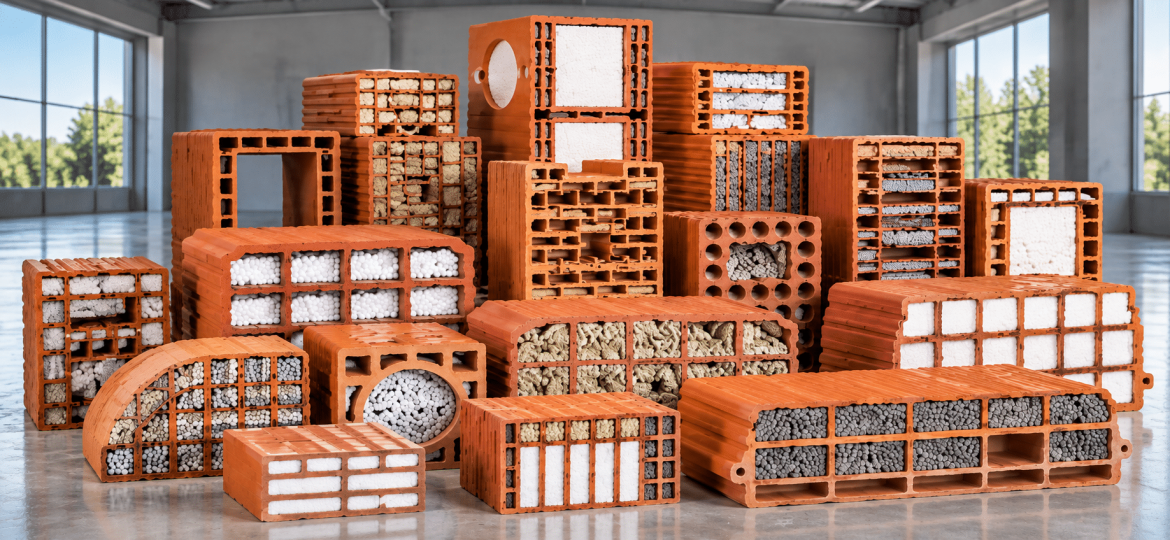
Insulated Bricks have become an important building material for projects that aim to improve wall performance and reduce unwanted heat transfer. They combine masonry construction with a design that supports better thermal insulation than many conventional solid masonry units.
The term can describe several products. Some insulated bricks use hollow clay structures with carefully designed air cavities. Others contain insulation materials such as mineral wool or expanded perlite. Manufacturers can also improve thermal behavior through porous clay bodies and optimized internal geometry. Research confirms that cavity layout, density, and insulation fillers can strongly affect heat transfer through masonry units.
However, thermal performance is only one part of product selection. Buyers must also consider compressive strength, wall thickness, moisture behavior, fire performance, acoustic requirements, dimensions, installation method, local building rules, and total project cost.
This complete guide explains Insulated Bricks from technical, construction, commercial, and purchasing perspectives.
1. What Are Insulated Bricks?
Insulated Bricks are masonry units designed to reduce heat transfer through a building wall while also performing the basic functions expected from masonry.
They can take several forms. Some products use vertically perforated clay bodies. The cavities increase the heat-flow path and reduce the amount of solid material through which heat can travel.
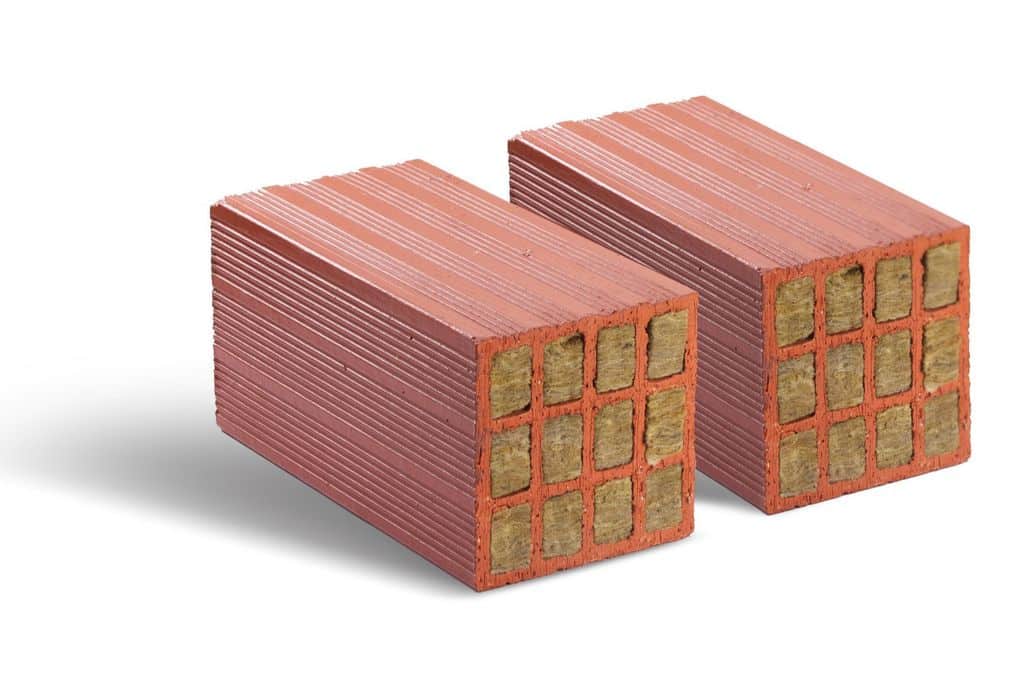
Other products go further by placing insulating material inside those cavities. Mineral wool and expanded perlite are examples found in insulated masonry research and commercial systems.
The phrase “insulated brick” therefore does not identify one universal chemical composition or product specification.
This distinction is important for buyers. Two products sold as thermal bricks may have very different thermal conductivity, density, strength, dimensions, internal geometry, and installation requirements.
For this reason, professional buyers should never evaluate an insulated brick by its product name alone.
They should review the complete technical data sheet and the performance of the proposed wall system.
Modern insulated masonry can serve both residential and commercial projects. Applications may include exterior walls, internal walls, load-bearing construction, non-load-bearing partitions, and other building-envelope systems.
The exact application depends on the product certification and structural design.
2. How Do Insulated Bricks Provide Thermal Insulation?
Heat can move through a wall by several mechanisms. The design of an insulated masonry unit aims to limit this heat flow.
A solid, dense material can conduct heat more easily than a well-designed unit that includes low-conductivity regions and optimized cavities.
For this reason, many thermal clay blocks use multiple internal voids.
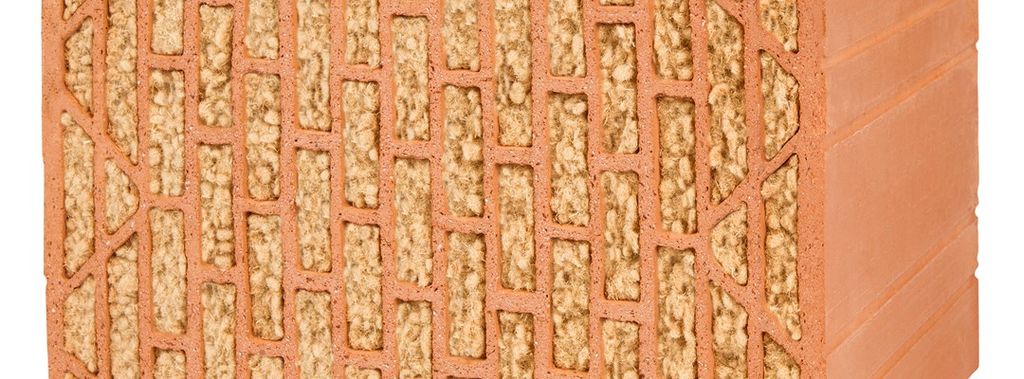
The geometry matters. The number, shape, size, and direction of the cavities can affect heat transfer. Research on hollow masonry has shown that changing cavity geometry can improve thermal performance.
Material density also matters.
Research comparing different clay densities found clear differences in thermal conductivity. Lower-density clay can provide lower conductivity than denser clay under comparable test assumptions.
Insulation fillers can provide another thermal barrier.
Expanded perlite contains a cellular internal structure after processing and has long been used for masonry insulation. The Perlite Institute notes that loose-fill expanded perlite can fill hollow masonry cores and cavities.
Mineral wool can also appear inside specialized clay blocks.
The final result depends on the whole system rather than a single material. Clay geometry, filler, mortar joints, wall thickness, workmanship, finishes, moisture, and thermal bridges all influence real wall performance.
3. What Materials Are Used in Insulated Bricks?
Clay is one of the major materials used for insulated masonry blocks.
Manufacturers form the clay into a carefully designed shape and fire it to create the finished ceramic unit. Internal perforations can reduce weight and improve thermal behavior.
Manufacturers can also modify the clay body itself.
Porous materials and additives may reduce density and thermal conductivity. A 2026 study conducted for different Turkish climate zones examined porous clay bricks enhanced with pumice and vermiculite. The tested modified bricks showed lower thermal conductivity than the standard brick used for comparison.
Perlite provides another option.
Expanded perlite is lightweight and has useful insulation properties because of its cellular structure. It can serve as a loose-fill material in masonry cavities or contribute to specialized masonry products.
Mineral wool is another established insulation filler for certain high-performance clay block systems.
Some masonry insulation designs also use expanded polystyrene. Research has compared perlite, mineral wool, and expanded polystyrene as cavity insulation materials.
Each material has different thermal, fire, moisture, mechanical, environmental, and cost characteristics.
The best choice therefore depends on the required wall performance.
4. Thermal Conductivity, R-Value, and U-Value Explained
Three concepts frequently appear when discussing Insulated Bricks: thermal conductivity, thermal resistance, and thermal transmittance.
Thermal conductivity is commonly represented by the Greek letter λ (lambda). It describes how readily a material conducts heat and is usually expressed in W/(m·K).
A lower thermal conductivity generally indicates better insulating ability for a given material.
However, buyers should not judge a complete wall only by the conductivity of one component.
Wall thickness matters. Mortar joints matter. Internal and external finishes matter. Thermal bridges matter.
Thermal resistance, often called R-value, considers resistance to heat flow. Greater thermal resistance generally means better insulation performance.
U-value describes the rate of heat transfer through an entire building element under defined conditions. Lower U-values indicate less heat transfer.
This distinction is critical.
A manufacturer may provide the thermal conductivity of the masonry unit, while an architect may need the U-value of the complete finished wall.
They are not the same measurement.
Commercial clay blocks demonstrate how widely thermal properties can vary between designs. For example, current Porotherm product information lists different conductivity values across its block range, including products designed specifically for stronger thermal performance.
Buyers should therefore compare like with like and confirm the relevant test method.
5. Types of Insulated Bricks and Thermal Blocks
The market contains several categories of insulated masonry.
Hollow clay blocks use internal cells or perforations to improve thermal behavior while reducing material weight.
Insulation-filled clay blocks add a thermal material inside some or all internal cavities. Mineral wool represents one commercial and research-backed approach.
Perlite-filled masonry units use expanded perlite to reduce heat transfer through cavities. Experimental research has studied perlite-filled hollow bricks and reported strong thermal performance for specific tested designs.
Porous clay bricks use changes in the clay body to reduce density and heat conduction. Materials such as pumice, vermiculite, and perlite have been studied for this purpose.
Concrete masonry can also incorporate insulation strategies. Researchers have investigated cavity geometry and lightweight insulation materials to reduce heat transfer through concrete hollow blocks.
These products should not automatically be treated as interchangeable.
A project should specify the required masonry type, thermal performance, strength, dimensions, fire behavior, and applicable standard.
6. What Are the Main Benefits of Insulated Bricks?
The primary purpose of Insulated Bricks is to improve thermal performance.
Better wall insulation can reduce unwanted heat flow between indoor and outdoor environments. This can support lower heating or cooling demand when the complete building envelope is properly designed.
Indoor comfort can also improve because wall surface temperatures and heat transfer affect the indoor environment.
Another potential advantage is system integration.
A high-performance masonry unit can combine several functions within the wall. Depending on the product, it may contribute to structure, thermal performance, fire safety, acoustic performance, and enclosure.
Some clay block systems also offer strong fire characteristics. For example, Porotherm clay blocks in the cited UK system carry an A1 reaction-to-fire classification. Specific wall assemblies can achieve defined fire-resistance ratings depending on their construction.
Durability can provide another advantage when designers choose the correct system for the environment.
However, buyers should avoid broad claims.
An insulated brick does not automatically make an entire building energy efficient. Windows, doors, roofs, floors, air leakage, thermal bridges, HVAC systems, orientation, climate, and workmanship all affect building performance.
7. Insulated Bricks vs. Traditional Bricks
Traditional solid bricks and modern insulated masonry units can perform very differently.
A conventional brick may have a relatively simple solid or perforated geometry. An insulated block may use many optimized cavities, a porous body, an insulation filler, or a combination of these features.
The thermal difference can be significant.
Research into porous clay bricks in Türkiye found that modified brick compositions containing pumice and vermiculite achieved lower thermal conductivity than the standard comparison brick.
Insulated blocks can also be much larger than traditional bricks.
Larger units can reduce the number of individual masonry pieces required for a wall. This can affect construction speed and the amount of mortar joints.
However, traditional bricks remain suitable for many applications.
The correct choice depends on architecture, structure, local construction practice, wall design, thermal regulations, availability, cost, and labor experience.
A buyer should therefore compare complete wall solutions rather than comparing individual units only.
The cheapest brick per piece may not produce the cheapest finished wall.
Labor, mortar, insulation, finishing, transport, wall thickness, construction speed, and long-term building performance all contribute to total cost.
8. Energy Efficiency and Indoor Comfort
Building envelopes separate indoor conditions from the external environment.
Walls with better thermal resistance can reduce the rate at which heat moves through the envelope.
In winter, this can help limit heat loss from heated spaces. In hot climates, it can help reduce heat entering cooled spaces.
Research into thermal masonry has long linked improved wall insulation with lower cooling requirements in hot climates.
However, climate strongly affects the result.
A wall solution that performs well in one climate may require different moisture, insulation, or detailing strategies in another.
Thermal mass also deserves attention.
Masonry can absorb and release heat over time. This dynamic behavior means steady-state conductivity does not always tell the complete story of how a wall responds throughout a daily temperature cycle.
Research on insulated masonry has specifically examined these dynamic thermal effects.
For this reason, professional building design should consider the complete climate and building system.
Insulated masonry performs best as part of a coordinated energy strategy rather than as an isolated product choice.
9. Fire, Acoustic, and Moisture Performance
Thermal performance receives the most attention, but walls must perform several jobs at the same time.
Fire performance is one of them.
Fired clay itself can provide strong reaction-to-fire characteristics. Commercial clay block systems can achieve A1 classifications, although the fire resistance of a complete wall depends on the wall build-up and tested or classified system.
Acoustic performance is another consideration.
Wall mass, density, thickness, internal geometry, joints, finishes, and connections can all affect sound insulation.
A product with excellent thermal conductivity does not automatically provide the highest acoustic performance.
Moisture requires equal attention.
Insulation-filled masonry must manage rain, vapor, condensation, and drying conditions correctly.
Research into mineral-wool-filled masonry has shown why designers need to consider hygrothermal behavior, not only thermal conductivity. Moisture can move through wall systems and may create temporary condensation under certain climate conditions.
Good design therefore considers heat, air, and moisture together.
Buyers should request verified data for the properties that matter to their project rather than assuming that one performance value represents the whole product.
10. Where Are Insulated Bricks Used?
Insulated Bricks can serve a wide range of building projects.
Residential construction represents an important application. Houses, apartment buildings, and residential developments need wall systems that balance thermal performance, structural requirements, cost, and construction speed.
Commercial buildings can also use thermal masonry systems.
Schools, offices, healthcare facilities, hotels, and public buildings may benefit from high-performance masonry when it matches the architectural and engineering design.
Some products can form load-bearing walls. Others serve non-load-bearing walls or infill construction.
The manufacturer must clearly state the permitted application.
Insulated masonry may also suit projects that aim to reduce the number of separate wall layers.
Monolithic wall concepts, for example, can use high-performance masonry to create a simpler wall build-up. Commercial clay block manufacturers offer both cavity-wall and monolithic solutions.
Renovation requires a different approach.
Large thermal blocks may not suit every existing building. Structural conditions, available space, foundations, façade requirements, and moisture behavior can limit their use.
The project designer should evaluate these factors before selection.
11. How Are Insulated Bricks Installed?
Good products can perform poorly when installation quality is weak.
The first course of masonry is especially important because it establishes the level and alignment for the wall above.
Workers should follow the system manufacturer’s installation method.
Some modern precision clay blocks use thin-joint mortar systems. Others may require conventional mortar or a product-specific bonding system.
Vertical joints can also differ by product. Tongue-and-groove designs may use interlocking side faces, while other systems require mortar.
Cut blocks require careful treatment.
Workers should use suitable tools and follow manufacturer instructions so that cut areas, joints, and corners maintain the intended wall performance.
Openings around windows and doors need special attention.
Lintels, sills, anchors, structural connections, and penetrations can create thermal bridges if designers and installers do not detail them correctly.
Electrical and plumbing work also requires planning. Excessive cutting can damage the masonry and affect wall performance.
Installation should also protect insulation materials from unnecessary moisture.
For example, guidance for loose-fill perlite masonry insulation states that the material should remain dry during installation.
Correct workmanship is therefore part of thermal performance.
12. How to Evaluate Insulated Brick Quality
A professional buyer should evaluate Insulated Bricks through measurable technical data.
Thermal conductivity is an obvious starting point, but it should not be the only one.
Buyers should review compressive strength, dimensions, dimensional tolerances, density, water absorption, reaction to fire, durability, and any declared acoustic properties.
They should also determine whether the values refer to an individual masonry unit or a complete wall system.
The applicable product standard matters.
For clay masonry units in European markets, manufacturers may declare product characteristics under EN 771-1. Current commercial Porotherm data, for example, provides compressive strength, water absorption, fire rating, thermal conductivity, density, and dimensions with reference to relevant standards.
Documentation should match the exact product offered.
Buyers should not rely on a test certificate from a different block size, density, production plant, or product family without confirming its relevance.
Large commercial orders may also require inspection procedures.
Packaging quality deserves attention as well. Broken corners, cracked blocks, water exposure, and poor pallet stability can create losses before installation begins.
Quality control should continue from the factory to the construction site.
13. Sustainability and Environmental Performance
Energy-efficient wall systems can contribute to lower operational energy demand, but sustainability requires a wider view.
Raw materials matter.
Manufacturing energy matters.
Transport distance matters.
Product life, maintenance, construction waste, building energy demand, and end-of-life options also matter.
Clay products require firing, which consumes energy. This production impact should be considered alongside long service life and operational building performance.
Improved thermal walls may help reduce heating and cooling energy over the building’s life. The scale of that benefit depends on climate, building design, energy source, occupancy, and actual wall performance.
Material efficiency can also support sustainability.
Large-format blocks may reduce the number of units and joints required in a wall. Optimized geometry can reduce material use while maintaining required performance.
Natural mineral insulation materials provide another area of interest. Expanded perlite, pumice, and vermiculite have been studied or used to improve masonry thermal properties.
Buyers with environmental targets should request verified environmental data when available.
A broad “eco-friendly” label provides less value than measurable and documented information.
14. What Determines Insulated Brick Prices?
The Insulated Brick price depends on much more than the cost of clay.
Product design affects manufacturing cost. A simple hollow block and an insulation-filled high-performance block require different materials and production processes.
Insulation type can influence price.
Mineral wool, expanded perlite, polystyrene-based systems, porous clay formulations, and other technologies have different cost structures.
Dimensions also matter.
Large blocks contain more material per unit but may reduce the number of pieces needed per square meter.
Strength and thermal performance can influence pricing as well.
A specialized product with strict tolerances and certified performance may cost more than basic masonry.
Packaging, pallet quantity, order volume, and transport can create major differences in delivered cost.
Masonry products are relatively bulky. Freight therefore deserves careful attention, especially in international trade.
Import duties, local taxes, port costs, inland transport, currency movements, and Incoterms® can further affect the final commercial price.
Professional buyers should not compare quotations only by price per piece.
A better comparison considers cost per square meter of finished wall.
For some projects, it can be useful to go further and compare the total installed wall cost. This can include masonry, mortar, additional insulation, labor, coatings, accessories, transport, and installation time.
The lowest unit price does not always create the lowest project cost.
15. How to Buy Insulated Bricks
A professional Insulated Brick inquiry should provide enough information for the supplier to identify the correct product.
The buyer should define the intended application first. Exterior wall, load-bearing wall, partition, residential building, commercial project, and industrial building may require different products.
Required wall thickness should also be clear.
The buyer should state any target thermal performance. If the project requires a specific U-value, the supplier needs to know whether the target applies to the complete wall.
Structural requirements also matter. The inquiry should state required compressive strength or relevant engineering specifications where necessary.
Buyers should request dimensions, unit weight, thermal conductivity, density, water absorption, fire classification, applicable standards, certificates, and product data sheets.
Quantity and packaging are essential commercial details.
International buyers should provide the destination or discharge port when requesting a delivered quotation.
The inquiry should also define the required Incoterms® basis, such as FOB, CFR, or CIF, where appropriate.
Shipment period, payment terms, inspection, documentation, packaging, and delivery schedule should become clear before the parties finalize an order.
Professional buyers should also verify the supplier, company documents, product certificates, payment information, and contractual conditions.
Most importantly, buyers should compare wall systems, not marketing claims.
A good insulated masonry solution balances thermal performance, structural strength, moisture management, fire behavior, installation, durability, availability, and total project cost.
Construction companies, contractors, developers, building-material distributors, importers, wholesalers, and professional buyers seeking Insulated Bricks can contact Atabaş Global for product information, technical specifications, commercial quotations, supply options, and international shipment solutions.
Insulated masonry has developed far beyond the traditional idea of a simple brick. Modern systems can combine engineered cavities, porous materials, and dedicated insulation fillers to improve thermal performance. Research and commercial products show that material density, cavity geometry, wall thickness, and insulation choice can all change heat-transfer performance significantly.
For buyers, the key is to select a product that fits the complete building design. Thermal conductivity matters, but so do strength, moisture, fire performance, installation quality, certification, logistics, and cost. When these factors work together, insulated bricks can provide a practical solution for modern energy-conscious construction.
