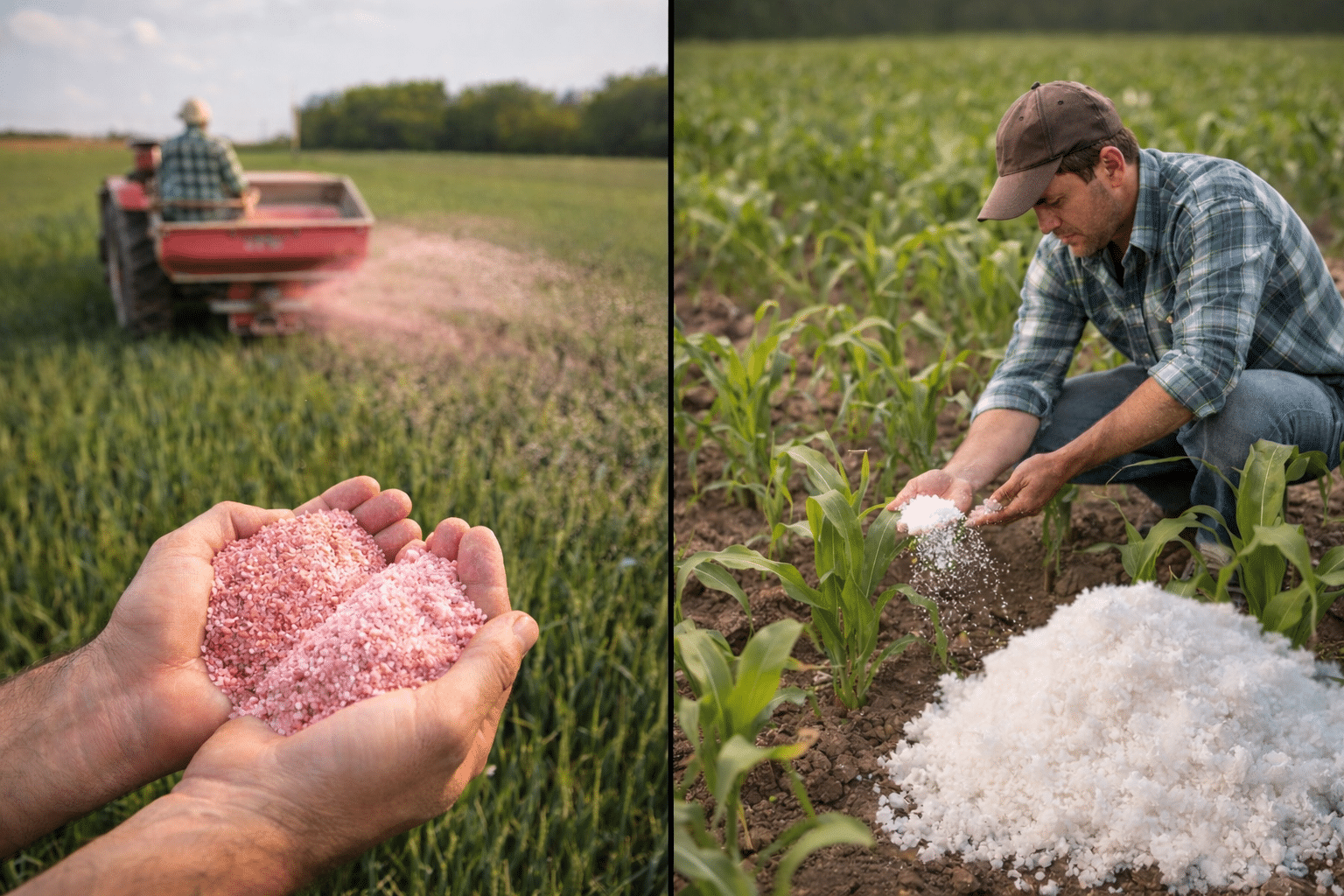
Muriate of Potash (MOP) is one of the most important potassium fertilizers in global agriculture. The fertilizer industry also knows it as potassium chloride or KCl. Farmers use MOP to supply potassium, one of the three primary nutrients that plants need in large amounts. Potassium supports water balance, enzyme activity, nutrient movement, and many other plant functions.
MOP also has major commercial importance. Producers, fertilizer companies, importers, distributors, traders, and agricultural businesses buy and sell large volumes across international markets. Product grade, particle size, origin, freight, packaging, and delivery terms can all affect a commercial transaction.
This guide provides a detailed look at Muriate of Potash, from its chemical properties and production to agricultural use and global trade. It also explains MOP 0-0-60, crop use, soil behavior, MOP vs. SOP, storage, pricing, quality, and purchasing.
1. What Is Muriate of Potash (MOP)?
Muriate of Potash is the common commercial name for potassium chloride fertilizer. Its chemical formula is KCl. The fertilizer industry commonly uses the abbreviation MOP.
The term “potash” covers several potassium-containing products. MOP represents the most widely traded potassium fertilizer within this group. Its high potassium content and broad availability make it an important product for modern agriculture.
Potassium belongs to the three primary plant macronutrients. Nitrogen and phosphorus are the other two. Farmers need all three nutrients in suitable amounts to support crop growth.
MOP mainly supplies potassium rather than nitrogen or phosphorus. The fertilizer market commonly sells it as 0-0-60. This grade indicates a high potassium concentration expressed as potassium oxide equivalent, or K₂O.
MOP usually reaches agricultural markets in granular or standard forms. The required form depends on the final use. Granular material often works well in fertilizer blends and mechanical spreading systems. Standard material may serve other agricultural and fertilizer production needs.
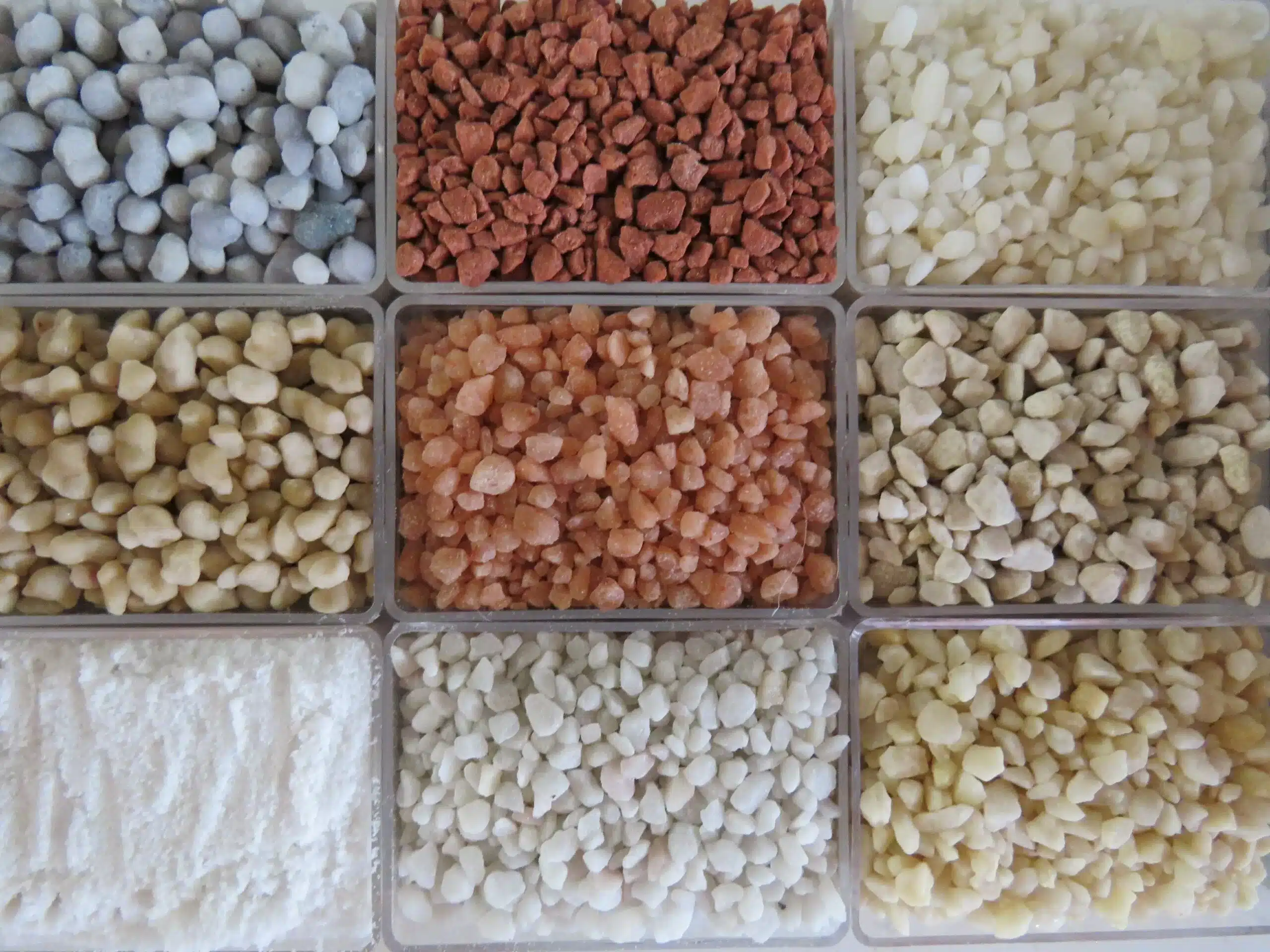
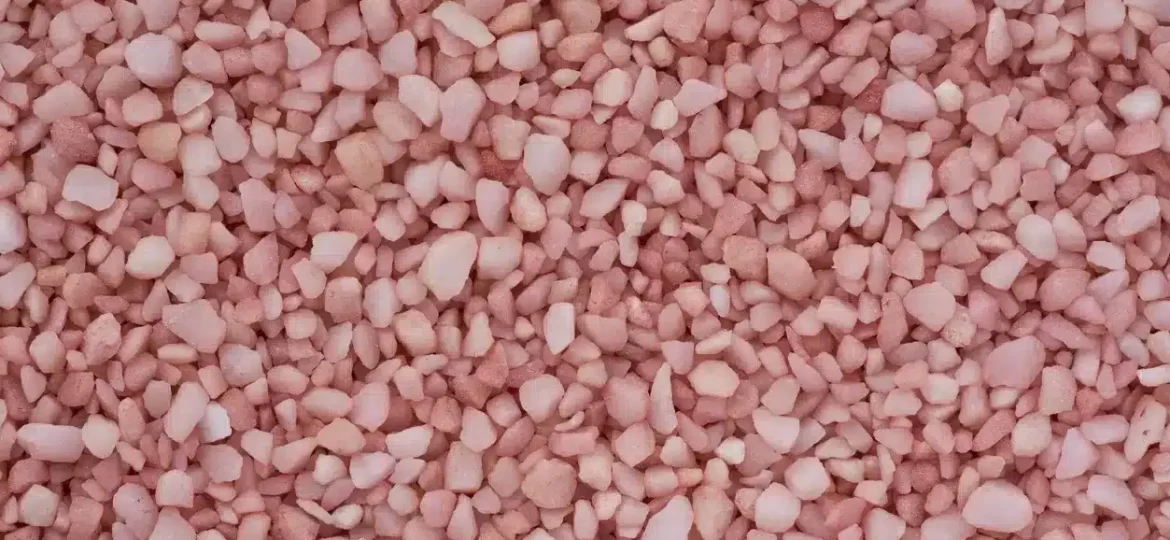
Commercial products can also differ in appearance. Some MOP products have a reddish or pink color, while others appear lighter. Mineral composition and processing methods can influence these differences.
Color alone does not determine quality. Professional buyers should focus on the agreed technical specification, nutrient content, physical condition, particle size, moisture, origin, and other contract requirements.
2. Chemical Composition and Properties of Muriate of Potash
The chemical formula of potassium chloride is KCl, and its molar mass is about 74.55 g/mol. The compound contains potassium and chloride ions.
When MOP comes into contact with enough soil moisture, it dissolves and releases these ions into the soil solution. Plant roots can then take up potassium according to crop demand and soil conditions.
The fertilizer industry expresses the potassium value of MOP as K₂O equivalent. A common fertilizer-grade product contains about 60% K₂O equivalent, although buyers should always check the exact guaranteed analysis.
This measurement system sometimes causes confusion. MOP does not consist of 60% potassium oxide. Its main chemical compound is potassium chloride. The K₂O figure provides a standard way to report and compare potassium fertilizer value.
MOP has a high nutrient concentration. This characteristic gives the product an important logistical advantage because each metric ton carries a significant amount of potassium nutrient value.
Physical properties also matter in commercial use. Granule size can affect blending, spreading, handling, and storage. Moisture can influence product flow and caking. Particle strength may also become important during repeated loading and unloading.
For this reason, professional buyers should examine both chemical and physical specifications. Nutrient analysis alone does not provide a complete picture of commercial quality.
3. What Does MOP 0-0-60 Mean?
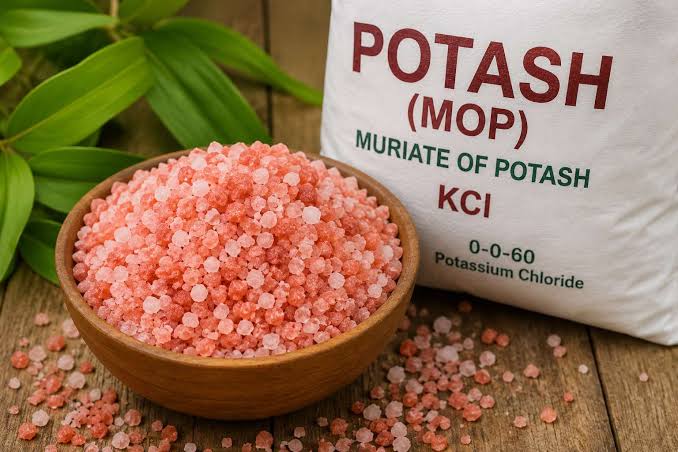
The fertilizer market often describes Muriate of Potash as 0-0-60. These three numbers follow the standard N-P-K fertilizer labeling system.
The first number represents nitrogen. Since MOP does not provide a declared nitrogen content, the first number is zero. The second number represents phosphate as P₂O₅. MOP does not provide a declared phosphate content, so the second number is also zero.
The third number represents potassium as K₂O equivalent. A typical MOP grade therefore appears as 0-0-60.
This does not mean that a bag of MOP contains 60% actual potassium oxide. The fertilizer industry uses K₂O equivalent as a standard reporting method for potassium.
This distinction matters when buyers compare MOP with other potassium fertilizers. Different products can supply potassium through different chemical compounds, but the K₂O system provides a common basis for nutrient comparison.
MOP is also not a complete N-P-K fertilizer. It mainly provides potassium. A crop that needs nitrogen, phosphorus, and potassium may require MOP together with other nutrient sources.
Farmers should therefore view 0-0-60 as a nutrient analysis rather than a complete fertilizer recommendation.
Buyers should also verify the guaranteed analysis of the specific product before purchase. Commercial specifications can differ by supplier, source, market, and contract.
4. How Is Muriate of Potash Produced?
Most Muriate of Potash originates from natural mineral deposits that contain potassium salts. Geological processes created many of these deposits over very long periods.
Producers use different mining methods according to the geology of each deposit. Conventional underground mining is common in some regions. Solution mining provides another option where geological conditions support the process.
After extraction, producers process the mineral material to separate potassium-bearing components from unwanted materials.
Production plants may crush, screen, separate, dry, compact, or granulate the material. The exact process depends on the raw material and the required final product.
Manufacturers also control particle size because different markets need different physical grades. Granular MOP generally contains larger particles. Standard MOP normally has a smaller particle size.
Quality control continues throughout production. Producers monitor potassium content, moisture, particle size, and other physical properties to keep the final product within the required specification.
The production location has commercial importance as well. Mining costs, energy, labor, rail access, inland transport, storage capacity, and distance to export terminals can influence the final cost.
This makes the MOP supply chain closely connected to both geology and logistics. A competitive production site needs mineral resources, but efficient transportation can also make a major difference in international trade.
5. Why Is Potassium Important for Plant Growth?
Potassium is one of the primary nutrients that plants need in large amounts. It performs many important functions during plant growth.
One of its key roles involves water regulation. Potassium helps plants control the opening and closing of stomata. These small openings on leaf surfaces affect gas exchange and water loss.
Potassium also helps activate many enzymes. Plants depend on these enzymes for important metabolic processes.
The nutrient supports the movement of sugars and other materials within the plant. It also contributes to normal cell function and helps plants maintain proper water relations.
Good potassium nutrition can support plant development when other growth factors remain favorable. It can also help crops use available resources more effectively.
However, potassium cannot replace nitrogen, phosphorus, or other essential nutrients. Plants need a balanced nutrient supply.
A field can have enough nitrogen and phosphorus but still produce poor results if potassium becomes the limiting nutrient. The same principle works in the opposite direction. Adding more potassium cannot solve a serious nitrogen or phosphorus shortage.
Farmers should therefore base potassium programs on crop requirements and soil conditions.
Soil testing provides useful information about existing nutrient levels. Crop removal data can also help farmers understand how much potassium leaves the field during harvest.
Balanced nutrition remains the central goal.
6. Agricultural Uses of Muriate of Potash
Farmers use Muriate of Potash in many agricultural systems around the world. Its high potassium concentration makes it an efficient nutrient source when soils cannot meet crop demand.
Cereal crops, oilseeds, fiber crops, forage crops, and many other agricultural plants may receive MOP. The correct choice depends on soil conditions, crop needs, local climate, and farming practices.
Farmers may apply MOP before planting or during soil preparation. Other application schedules may work better in certain farming systems. Local agronomic conditions should guide the timing.
Soil texture can influence potassium behavior. Clay content and mineral composition affect how soils hold and release potassium.
Water also plays an important role. Soil moisture helps dissolve the fertilizer and supports nutrient movement toward plant roots.
Farmers should also consider the amount of potassium that crops remove at harvest. High-yield crops can remove significant quantities of potassium from a field. Repeated harvests without enough nutrient replacement can reduce soil fertility over time.
A sound fertilizer program therefore considers both current crop demand and long-term soil fertility.
The goal is not simply to add MOP every season. Farmers should determine whether the field needs potassium and then select an appropriate rate.
This approach improves nutrient efficiency and can reduce unnecessary fertilizer costs.
7. Benefits of Muriate of Potash Fertilizer
Muriate of Potash offers several agricultural and commercial advantages. Its high potassium concentration is one of the most important.
A typical 0-0-60 product carries a large amount of potassium nutrient value in each metric ton. This can make transportation, storage, and application more efficient.
MOP also dissolves in soil moisture and supplies potassium in a form that can enter the soil solution. Plant roots can then take up potassium when conditions allow.
Adequate potassium nutrition supports several plant functions. These include water regulation, enzyme activity, movement of nutrients and sugars, and normal cell processes.
MOP also benefits from a mature global supply chain. Large production and trading networks make it widely recognized across international fertilizer markets.
Its established market position can make procurement easier for importers, distributors, fertilizer blenders, and agricultural companies.
However, buyers and farmers should avoid viewing MOP as a product that automatically increases yield.
Fertilizer performance depends on many factors. Soil fertility, crop genetics, rainfall, irrigation, temperature, pest pressure, disease, planting methods, and other nutrients can all affect the final result.
The greatest benefit comes when farmers use MOP where a real potassium need exists.
8. Which Crops Can Use Muriate of Potash?
Many crops can use Muriate of Potash as a potassium source under suitable conditions.
Farmers may use MOP in production systems that include wheat, corn, rice, barley, soybean, canola, cotton, sugar crops, forage crops, and other field crops. Local recommendations should always guide specific use.
Crop type alone cannot determine whether MOP is the right choice.
Chloride deserves special attention because MOP supplies potassium as potassium chloride. Crops differ in their tolerance to chloride. Soil conditions and water quality can also change the importance of this factor.
Some crops and production systems may benefit from a lower-chloride potassium source. In such cases, growers may consider alternatives such as Sulfate of Potash.
The final decision should consider crop sensitivity, soil chloride, irrigation water, rainfall, drainage, nutrient requirements, expected yield, and fertilizer cost.
Farmers should also consider the full nutrient program. A crop may need potassium together with nitrogen, phosphorus, sulfur, or micronutrients.
There is no universal fertilizer program that works for every crop and field.
Soil testing, plant analysis, local agronomic knowledge, and yield targets provide a stronger basis for fertilizer decisions than crop name alone.
9. How Does Muriate of Potash Work in Soil?
MOP begins to dissolve after it comes into contact with soil moisture. The process releases potassium and chloride ions into the soil solution.
Plant roots can absorb potassium from this solution. However, not all potassium behaves in exactly the same way after application.
Soil particles can hold some potassium on exchange sites. This process can help keep potassium within the root zone while still allowing exchange with the soil solution.
Certain clay minerals can also hold potassium more strongly. Soil type therefore influences potassium availability and fertilizer behavior.
Sandy soils generally have different nutrient-holding properties from clay-rich soils. Rainfall and irrigation can also affect nutrient movement.
Chloride behaves differently from potassium. It moves more freely with soil water in many conditions. Drainage and rainfall can therefore influence chloride levels in the root zone.
This becomes important in dry regions or poorly drained soils. Irrigation water may also add chloride to the production system.
Farmers should consider the total chloride load rather than looking only at the fertilizer source.
Correct fertilizer placement also matters. Excessive salt concentration close to seeds or young roots may create problems in some conditions.
Good nutrient management combines soil knowledge with suitable rate, timing, and placement.
10. MOP vs. SOP: What Is the Difference?
One of the most common comparisons in the potassium fertilizer market is MOP vs. SOP.
MOP means Muriate of Potash and mainly consists of potassium chloride, or KCl. SOP means Sulfate of Potash and mainly consists of potassium sulfate, or K₂SO₄.
Both products supply potassium, but their secondary components differ.
MOP supplies chloride. SOP supplies sulfur and contains much less chloride. This difference can affect fertilizer selection.
Many field crops can use MOP effectively under suitable soil and management conditions. However, growers may prefer SOP for certain chloride-sensitive crops or specialized production systems.
SOP also provides sulfur. This can add value when the crop or soil needs sulfur.
Price represents another important difference. MOP often provides a more economical potassium source because of its large global production base and high market availability. SOP commonly trades at a premium.
However, the cheapest fertilizer per metric ton is not always the best agronomic choice.
Farmers should compare the cost of usable nutrients and consider crop requirements. Soil conditions, chloride sensitivity, sulfur demand, water quality, and expected crop value can all influence the decision.
Commercial buyers should also state the product clearly when requesting a quotation. MOP and SOP are different commodities and should never be treated as interchangeable without considering the final use.
11. How to Apply Muriate of Potash Correctly
Correct MOP application begins with a simple question: how much potassium does the crop actually need?
Soil testing can provide an important part of the answer. It helps farmers understand existing potassium levels and build a suitable nutrient program.
Crop demand also matters. Different crops remove different amounts of potassium, and higher yields can increase nutrient removal.
Application timing depends on local conditions. Farmers may apply MOP before planting and incorporate it into the soil. Other systems may use different schedules.
Soil type, climate, rainfall, irrigation, and crop management can influence the best approach.
Placement also requires care. Farmers should avoid excessive fertilizer concentration near seeds. High salt levels near germinating seeds can create problems under some conditions.
Large potassium requirements may require a more detailed strategy. Local agronomic advice can help determine whether farmers should adjust timing or placement.
Irrigated farms should also examine water quality. Irrigation water can contribute salts and chloride to the root zone.
Farmers need to view fertilizer and irrigation as parts of the same production system.
Regular soil testing can improve long-term management. Farmers can monitor nutrient changes and adjust future applications instead of relying on the same fertilizer rate every year.
The best MOP program supplies enough potassium to meet crop needs without unnecessary use.
12. MOP Quality, Grades, Storage, and Handling
Commercial MOP quality involves more than potassium content.
The market commonly offers granular and standard grades. Particle size represents an important difference between these products.
Granular MOP often works well in bulk fertilizer blends because its larger particles can match other granular fertilizers. Better particle compatibility can help reduce separation during transport and handling.
Standard MOP generally has smaller particles and may suit other applications or processing requirements.
Buyers should define the required grade before requesting a quotation. A granular MOP price and a standard MOP price may not represent the same commercial product.
Moisture also matters. Excess moisture can affect flow and contribute to caking during storage.
Companies should store MOP in a dry and suitable area. They should protect the product from unnecessary water exposure and contamination.
Packaging must also remain in good condition. Bulk storage requires proper warehouse management, while bagged material needs protection from damage and moisture.
The product may pass through several handling points before reaching the farm. Mines, processing plants, rail terminals, ports, vessels, trucks, warehouses, and distributors can all form part of the supply chain.
Each transfer creates a potential quality risk.
Professional buyers may therefore include inspection requirements in large contracts. Independent inspection can verify agreed parameters when the parties require additional assurance.
Companies should also follow the supplier’s Safety Data Sheet and all applicable safety, storage, transport, and environmental rules.
13. Muriate of Potash in Global Trade
Muriate of Potash is a major international fertilizer commodity. Global agriculture depends on a complex network of mines, processing plants, rail systems, ports, vessels, warehouses, importers, and distributors.
Potash reserves are not evenly distributed around the world. Some regions have large mineral resources and strong production capacity. Other agricultural markets rely heavily on imports.
This geographic difference creates major international trade flows.
Logistics can strongly influence competitiveness. A producer may have a low production cost but face expensive inland transport. Another supplier may benefit from better access to railways or export terminals.
Ocean freight can also change the final cost for importers. The distance between the loading port and destination market matters, especially for large bulk shipments.
Seasonal agricultural demand can influence trade flows as well. Importers may increase purchases before major fertilizer application periods.
Inventory levels create another factor. Distributors with large stocks may delay purchases, while low inventories can increase demand.
Government decisions can affect trade too. Tariffs, sanctions, import rules, export measures, customs procedures, and other policies can change supply routes.
Currency movements may also influence purchasing decisions in importing countries.
For professional buyers, understanding the global MOP market therefore requires more than following mine output. Freight, inventories, agricultural demand, currency conditions, trade rules, and logistics all deserve attention.
14. What Determines Muriate of Potash Prices?
The Muriate of Potash price can change significantly over time and between markets.
Global supply is one of the main factors. Production changes, mine maintenance, new capacity, operational problems, and logistics disruptions can affect available volumes.
Demand creates the other side of the market. Large agricultural regions can influence global purchasing activity during key fertilizer seasons.
Crop economics also matter. Strong agricultural returns may support fertilizer demand. Weaker farm economics may lead some buyers to delay or reduce purchases.
Inventory levels can change market behavior. Large stocks can reduce short-term import demand. Low stocks may encourage buyers to return to the market more quickly.
Freight represents another important cost. Ocean transport can create a large difference between the price at the loading point and the price at the destination.
Inland logistics also matter. Port charges, storage, trucking, rail transport, and final delivery can affect the total cost.
Currency exchange rates can influence import economics, especially when international contracts use one currency and domestic sales use another.
Trade policy can also change regional prices. Tariffs, sanctions, taxes, import restrictions, and export measures can influence availability and cost.
Product grade matters as well. Granular and standard MOP may trade at different values. Packaging and order size can also affect quotations.
Buyers should always compare prices on the same delivery basis.
An FOB quotation covers a different commercial scope from a CFR or CIF quotation. Comparing them without adjusting for freight and other included costs can create a misleading result.
Professional buyers should therefore focus on the total delivered cost for the required grade, quantity, destination, and shipment period.
15. How to Buy Muriate of Potash
A professional Muriate of Potash purchase should begin with a clear request.
The buyer should identify the required product grade. Granular and standard MOP can serve different market needs, so this detail should appear clearly in the inquiry.
The required nutrient specification should also be clear. Buyers should confirm potassium content and any other important quality parameters.
Quantity directly affects logistics and pricing. A container shipment has a different commercial structure from a large bulk vessel cargo.
The buyer should also state the destination port or delivery location. This allows the supplier to calculate the correct logistics costs when the quotation includes freight.
Delivery terms require careful attention. International buyers may request prices under terms such as FOB, CFR, or CIF. Each term allocates costs and duties differently between buyer and seller.
Packaging should match the destination market and handling system. Port facilities, warehouses, local transport, and final distribution can all influence the best choice.
Buyers should review product documents before they commit to a large order. The agreed specification should clearly define the product that the seller must deliver.
Payment terms also deserve close attention. Both parties should understand the payment method, timing, required documents, and banking process.
Professional due diligence remains essential. Buyers should verify the counterparty, company information, commercial authority, banking details, product documents, and contract terms.
Price should form only one part of the decision.
A strong commercial offer combines suitable product quality, competitive cost, reliable supply, workable payment terms, proper documentation, and dependable logistics.
International buyers should also consider inspection requirements, shipment schedules, port conditions, freight availability, and local import rules before finalizing a contract.
For large fertilizer transactions, clear communication reduces risk. Both parties should agree on product grade, quantity, quality, origin, packaging, delivery basis, shipment period, payment, documentation, and inspection requirements before execution.
Companies, fertilizer distributors, agricultural businesses, importers, and professional buyers who wish to order Muriate of Potash can contact Atabaş Global for product information, commercial quotations, supply opportunities, and international shipment solutions.
Muriate of Potash remains one of the world’s key potassium fertilizers because it combines high nutrient concentration with broad commercial availability. Its value extends from soil fertility and crop nutrition to global fertilizer trade.
Successful use begins with understanding the crop and soil. Successful procurement begins with understanding the product and commercial terms. When buyers evaluate both sides carefully, they can make better purchasing decisions and build more reliable fertilizer supply chains.