

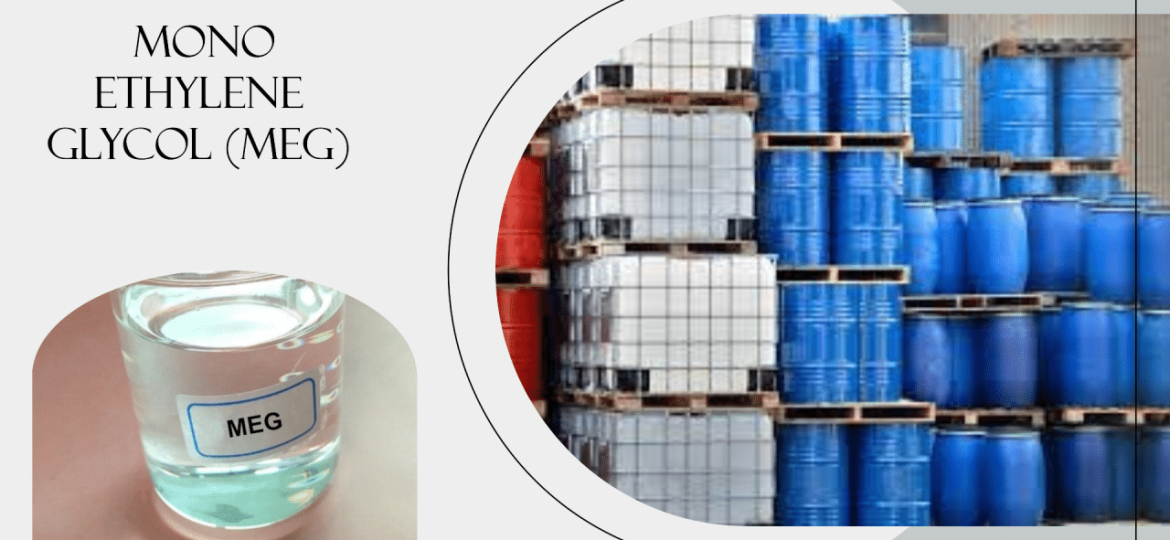
From the fibers in modern textiles to the PET used in packaging, one chemical connects several manufacturing chains: Mono Ethylene Glycol (MEG). It also plays an important role in coolant systems, heat-transfer fluids and chemical production.
Its value comes from a useful combination of properties. MEG mixes with water, participates in polymer production and performs well in formulated thermal fluids. Therefore, manufacturers across very different industries rely on the same molecule for different purposes.
Still, knowing the name of the chemical is not enough. Industrial users need to understand what MEG does, why its properties matter and which quality factors deserve attention.
This guide approaches Mono Ethylene Glycol from that perspective. It explains the chemistry behind the product, connects its properties with real applications and shows what industrial users should know before selecting a grade or discussing supply.
1. What Is Mono Ethylene Glycol and Why Does It Matter?
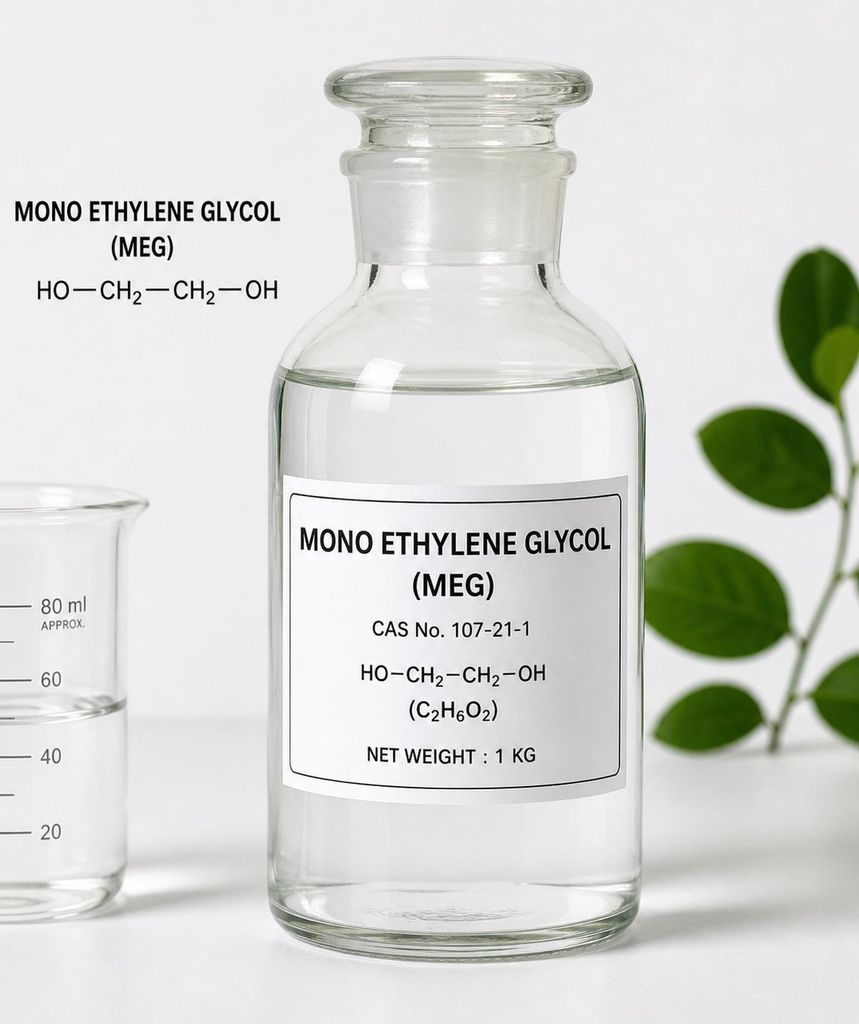
Mono Ethylene Glycol is a colorless organic liquid from the glycol family with the molecular formula C₂H₆O₂. It is commonly known as MEG or ethylene glycol.
The compound has a molecular weight of approximately 62.07 g/mol and carries CAS No. 107-21-1.
What makes this relatively simple molecule so important?
MEG contains two hydroxyl groups. This structure gives the material characteristics that manufacturers can use in polymer chemistry and liquid formulations. In addition, MEG mixes completely with water.
Its importance becomes clearer when we follow the products made from it.
A textile manufacturer may depend on MEG indirectly through polyester fiber. A packaging company encounters it through PET resin. Meanwhile, a coolant producer uses its thermal properties in formulated products.
Therefore, the real value of MEG lies not in one single application but in its ability to support several large industrial value chains.
2. Which Properties Make MEG Industrially Useful?
The commercial importance of a chemical often starts with its physical behavior.
Mono Ethylene Glycol combines high water miscibility with a relatively high boiling point and useful low-temperature behavior. These characteristics create opportunities in both chemical reactions and fluid systems.
Representative physical properties include:
| Property | Reference Value |
|---|---|
| Chemical Formula | C₂H₆O₂ |
| CAS Number | 107-21-1 |
| Molecular Weight | Approx. 62.07 g/mol |
| Appearance | Clear, colorless liquid |
| Normal Boiling Point | Approx. 197°C |
| Freezing Point of Pure MEG | Approx. -13°C |
| Specific Gravity at 20/20°C | Approx. 1.115 |
| Refractive Index | Approx. 1.43 |
| Water Solubility | Completely miscible |
| Chemical Family | Glycol / Diol |
These are reference properties rather than a purchase specification. Commercial acceptance should rely on the actual grade specification and analytical documents supplied for the product.
That distinction is important.
A physical constant describes the substance. A commercial specification defines the quality limits of the material offered for a particular transaction.
3. How Does MEG Become Part of Polyester?
One of MEG’s most important roles begins inside a polymer plant.
Polyester production requires chemical building blocks that can form long molecular chains. MEG provides the glycol component needed for this process.
When manufacturers react it with suitable terephthalate-based feedstocks, they can produce polyester polymers. Those polymers then move into different manufacturing routes.
Some become polyester fibers.
Others become PET resin.
Still others enter film and industrial polyester applications.
This means that MEG can sit several production stages away from the final consumer while remaining essential to the finished product.
A shirt, a PET beverage bottle and an industrial polyester film may look unrelated. Chemically, however, their supply chains can share the same glycol building block.
That connection explains why polyester markets have such a close relationship with global MEG demand.
4. Where Do Consumers Encounter MEG-Derived Materials?
Most people never buy MEG directly, yet products linked to its chemistry appear throughout daily life.
Polyester fibers enter clothing, upholstery, carpets, home textiles and technical fabrics. PET resin reaches beverage bottles, food packaging, containers and other molded products.
Industrial polyester also serves applications that consumers rarely notice.
Therefore, Mono Ethylene Glycol occupies an unusual position in the value chain. It remains primarily a business-to-business petrochemical, but the materials made from it reach enormous consumer markets.
This relationship also helps explain why buyers watch downstream demand.
Growth in polyester fiber production can influence glycol consumption. Likewise, changes in PET packaging demand can affect the broader market.
MEG is therefore more than a standalone chemical. It is part of an interconnected manufacturing system.
5. Why Does MEG Work in Coolant and Heat-Transfer Systems?
MEG has another important identity outside polymer production.
When formulators combine ethylene glycol with water in suitable proportions, the resulting mixture behaves differently from pure water. In particular, the mixture can provide useful freeze protection while also serving as a heat-transfer medium.
This makes glycol chemistry valuable in thermal-management applications.
Automotive coolant represents the most familiar example. However, industrial facilities can also use properly engineered glycol-based heat-transfer fluids in suitable systems.
One distinction is essential:
Industrial MEG is a raw material. Finished coolant is a formulated product.
A commercial coolant may contain demineralized water, corrosion inhibitors and other additives. Those components help the formulation meet the needs of the intended equipment.
Therefore, users should never assume that raw MEG can simply replace an approved finished coolant.
The formulation and the application must match.
6. Is Mono Ethylene Glycol the Same as DEG or TEG?
No. MEG, DEG and TEG belong to the ethylene glycol family, but they are different substances.
MEG stands for Mono Ethylene Glycol.
DEG stands for Diethylene Glycol.
TEG stands for Triethylene Glycol.
Their molecular structures, physical properties and industrial uses differ. As a result, buyers should not treat the names as interchangeable.
This distinction also matters when reading a commercial MEG specification.
A high-purity grade may place a strict limit on DEG because DEG can appear as a related component from the production process. Therefore, DEG content can become an important quality parameter for certain downstream users.
For purchasing teams, the lesson is straightforward: specify the exact glycol required rather than asking only for “ethylene glycol.”
Precision at the inquiry stage prevents confusion later.
7. What Does MEG Purity Actually Tell a Buyer?
Purity is one of the first numbers buyers notice, but it should not become the only number they consider.
A commercial grade may offer 99.8% or higher MEG content, depending on the producer and specification. Yet two products with similar headline purity can still differ in other analytical parameters.
Water deserves attention because MEG readily interacts with moisture.
Color can matter in sensitive downstream production.
DEG content helps describe the presence of a related glycol.
Acidity, aldehydes and trace components may also appear in commercial quality specifications.
Therefore, a better question is not simply:
“Is this 99.9% MEG?”
A more useful question is:
“Does the complete analytical profile match the needs of my process?”
That change in perspective helps purchasing teams evaluate material based on fitness for use rather than a single marketing number.
8. How Can MEG Quality Influence the Final Product?
Raw-material consistency becomes especially important when manufacturers operate continuous processes.
Imagine a polyester facility receiving large MEG volumes over several shipments. Even if every cargo falls within a broad commercial definition, significant variation between batches may force the plant to make process adjustments.
Stable feedstock helps reduce that uncertainty.
In PET and polyester applications, manufacturers may monitor parameters such as purity, water, color, acidity and related glycol content according to their production needs.
The same principle applies outside polymer production.
A formulation manufacturer needs raw materials that behave predictably from batch to batch. Otherwise, the producer may have to compensate elsewhere in the formula or process.
For this reason, quality should not mean only “passing a test.”
For an industrial customer, quality also means repeatability.
9. Which MEG Grade Fits Which Application?
There is no useful answer to “What is the best MEG?” without knowing the intended application.
A polyester producer may focus on tight control of impurities and color.
A PET resin manufacturer may have its own feedstock acceptance criteria.
A coolant formulator may evaluate the raw material according to its formulation and product standard.
Other chemical users can require different limits again.
Therefore, application should come before grade selection.
A buyer can start by answering three questions:
What will we manufacture?
Which parameters affect our process most?
Which limits does our technical team require?
Once those answers are clear, commercial sourcing becomes much more precise.
This approach also prevents unnecessary over-specification. Buying a tighter grade than the process requires can add cost without creating meaningful production value.
The correct grade is the one that reliably meets the intended use.
10. Why Do Water, Color and DEG Levels Matter?
These parameters may look like small details on a specification sheet, but they can provide useful information about product quality.
Water content matters because MEG is hygroscopic and can absorb moisture. Storage and transfer conditions therefore deserve attention after production as well as before delivery.
Color provides another visible quality indicator. Some downstream applications require particularly low-color feedstock to support final product requirements.
DEG content indicates the level of a related glycol present in the material. Certain manufacturing processes establish limits for it.
However, no single parameter should be judged in isolation.
The correct limits depend on the grade, producer, process and contract.
That is why experienced buyers compare the complete specification with their technical requirement before confirming suitability.
11. What Should Industrial Users Know About MEG Safety?
Useful industrial chemistry still requires responsible handling.
Ethylene glycol can cause serious harm if swallowed. Therefore, industrial users need controlled handling procedures, suitable personal protective equipment and appropriate workplace practices.
Personnel should work from the current Safety Data Sheet (SDS) supplied for the material.
Facilities should also consider exposure control, spill response, emergency procedures and waste management according to local rules and their own risk assessments.
Storage systems should protect the material from contamination and unnecessary moisture exposure.
Furthermore, tanks, transfer lines, pumps and related equipment must suit the product and operating conditions.
Safety should never depend on a general online article.
The current SDS, applicable regulations and site-specific procedures remain the correct operational references.
12. How Does MEG Move Through the Global Supply Chain?
MEG connects large petrochemical production centers with manufacturing regions that consume polyester, PET and industrial chemicals.
This creates an international supply chain in which origin, cargo size, destination and delivery structure all matter.
Large-volume users may receive MEG through bulk chemical logistics. Other commercial arrangements may use suitable ISO tanks, drums, IBCs or other approved formats depending on the supplier, route and volume.
Yet transport is not simply a matter of choosing a container.
Equipment cleanliness can protect product integrity. Moisture control may also matter. In addition, buyers need to consider loading conditions, discharge capability and destination requirements.
International supply therefore combines two separate goals:
Move the product efficiently.
Keep the product within the agreed quality requirements while it moves.
A successful logistics plan must achieve both.
13. What Shapes the Commercial Value of MEG?
MEG pricing reflects a wider industrial chain rather than one isolated number.
Upstream feedstock economics can influence production costs. Plant operating rates can change availability. Meanwhile, polyester and PET demand can affect consumption.
Regional inventories also matter.
So do freight markets.
As a result, the commercial value of MEG can move even when the chemical itself remains unchanged.
The delivered economics of a transaction also depend on quantity, origin, destination, shipment period and Incoterm.
For this reason, comparing two offers requires context.
A buyer should understand what grade is offered, where the material originates, how it will reach the destination and which commercial terms apply.
Only then does the price become truly comparable.
14. Where Can Buyers Source Mono Ethylene Glycol?
Industrial sourcing works best when the technical requirement and commercial structure support each other.
Atabaş Global has operated in international physical commodity trading since 1981, with activities that include petrochemicals and industrial raw materials.
Companies seeking Mono Ethylene Glycol can approach Atabaş with a defined requirement that includes the grade, specification, volume, destination and preferred delivery basis.
From there, the parties can evaluate the commercial terms and relevant shipment requirements.
This approach is especially important for industrial raw materials because the buyer does not simply need “MEG.”
The buyer needs the appropriate MEG grade, in the required quantity, under workable delivery terms.
For safe and professionally structured sourcing, buyers can discuss their Mono Ethylene Glycol requirements with Atabaş before placing an order.
If your business requires MEG for polyester, PET, coolant, heat-transfer or another industrial application, contact Atabaş Global to request a commercial offer and discuss the supply structure that fits your requirement.
