

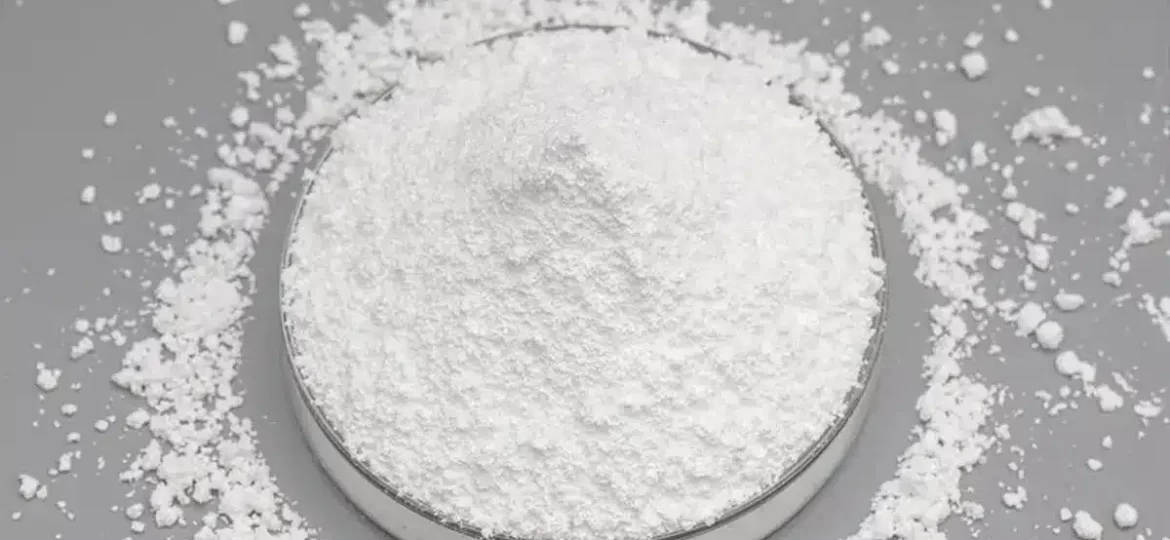
Aluminum Hydroxide is an important raw material for many industries. Manufacturers use it in plastics, rubber, cables, coatings, construction materials, and alumina production. Its chemical formula is Al(OH)₃, and the industry often calls it Aluminum Trihydroxide, Alumina Trihydrate, or ATH.
Its wide range of uses makes Aluminum Hydroxide an important product in global trade. However, each industry may need a different grade. Purity, particle size, moisture level, and other physical features can affect how the material performs.
For this reason, companies should choose the right grade according to their production needs, technical targets, and final product.
1. What Is Aluminum Hydroxide?
Aluminum Hydroxide is an inorganic compound that contains aluminum, oxygen, and hydrogen. It has the chemical formula Al(OH)₃ and a molar mass of about 78.00 g/mol. It usually comes as a white powder or solid material.
The compound has amphoteric properties. In simple terms, it can react with both acids and strong bases under suitable conditions. This behavior makes it useful in different chemical processes.
Industrial grades may differ in purity, particle size, moisture, and other physical features. Therefore, buyers should check the technical details of each product before placing an order.
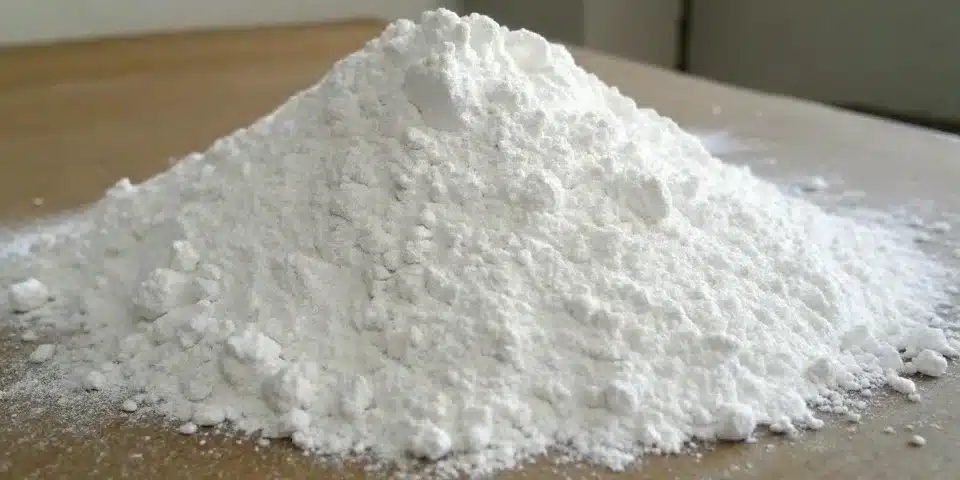
2. Main Properties of Aluminum Hydroxide
The chemical formula alone does not define the quality of Aluminum Hydroxide. Physical properties also play an important role in industrial use.
Particle size can affect how the material mixes with other raw materials. Purity can influence the quality of the final product. Moisture, whiteness, and surface properties may also matter, depending on the application.
As a result, buyers should compare the product specifications with their own production needs. This approach helps companies choose a suitable grade and maintain stable production.
3. How Do Manufacturers Produce Aluminum Hydroxide?
The Bayer process plays a major role in the production of alumina from bauxite. During this process, producers treat bauxite with a caustic solution to separate aluminum-bearing compounds from other materials.
After several process stages, aluminum hydroxide forms through precipitation. Producers can then heat this material to make alumina, or aluminum oxide (Al₂O₃).
This process gives Aluminum Hydroxide an important place in the aluminum industry. It connects bauxite processing with alumina and, later, aluminum production.
Production conditions can also affect particle size and other product features. Therefore, manufacturers can offer different grades for different industrial needs.
4. What Is Aluminum Hydroxide Used For?
Many industries use Aluminum Hydroxide because it offers useful physical and chemical properties.
The aluminum industry uses it as an important material in alumina production. Plastic and polymer producers can use it as a mineral filler and as part of flame-retardant systems. Rubber, cable, coating, paper, and construction industries also use selected grades.
Each application has different needs. A grade that works well in a cable compound may not provide the same results in another production process.
Companies should therefore select the product according to the application instead of choosing only by price or chemical name.
5. Use in Plastics and Polymers
Plastic and polymer manufacturers use Aluminum Hydroxide in many formulations. It can act as a mineral filler and can also support flame-retardant systems.
Several factors affect its performance. These include particle size, polymer type, processing temperature, filler level, and the other additives in the formula.
Good dispersion also plays an important role. A suitable grade can help manufacturers create a more stable production process and achieve the required product features.
For this reason, producers should test the selected material under their actual production conditions before large-scale use.
6. Aluminum Hydroxide as a Flame Retardant
One of the best-known uses of Aluminum Hydroxide is in flame-retardant systems.
When exposed to enough heat, Aluminum Hydroxide starts to break down and releases water. This process absorbs heat. As a result, the material can support the fire performance of suitable polymer systems.
Manufacturers may use ATH in cables, plastics, composites, and construction products where flame-retardant properties are important.
However, the additive alone does not determine the fire rating of a finished product. Manufacturers must consider the full formula and test the final product according to the required standards.
7. Use in the Cable Industry
The cable industry needs materials that provide stable processing and suitable mechanical, electrical, and fire-related properties.
Cable manufacturers can add Aluminum Hydroxide to selected polymer compounds. In these formulas, the material can work as a mineral filler and support flame-retardant performance.
Particle size can affect mixing and extrusion. It can also influence the surface quality and processing behavior of the cable compound.
Therefore, cable producers should choose the grade according to the polymer type, production method, product design, and required technical standards.
8. Use in Rubber and Elastomers
Rubber producers use mineral fillers to control product and processing properties. Aluminum Hydroxide can serve this purpose in suitable rubber and elastomer formulas.
The results depend on the type of rubber, particle size, filler level, processing method, and other ingredients in the formula.
No single grade can meet every production need. Manufacturers should compare technical data and run production tests when necessary.
A careful product selection process helps reduce unexpected changes during manufacturing and supports stable final product quality.
9. Role in Alumina Production
Aluminum Hydroxide also plays a key role in the alumina industry.
During bauxite processing, producers obtain hydrated aluminum material. They can heat this material through a process called calcination to produce alumina (Al₂O₃).
Alumina then serves as the main raw material for primary aluminum production.
For this reason, Aluminum Hydroxide forms an important link between bauxite mining and aluminum production. Its role extends from mining and chemical processing to metal production and international raw material trade.
10. Paper, Coating, and Construction Applications
Several industries can use Aluminum Hydroxide as a mineral filler or functional raw material.
Paper and coating producers may use selected grades to support specific product features. Construction and composite manufacturers may also include the material in suitable formulas.
In these applications, particle size, purity, moisture, and whiteness can influence the final result. Compatibility with other raw materials also matters.
Companies should always match the technical properties of the product with their production process. This helps improve consistency and reduces the risk of using an unsuitable grade.
11. Why Does Particle Size Matter?
Particle size plays an important role in many Aluminum Hydroxide applications.
It can affect dispersion, surface area, viscosity, mixing, and processing. These effects become especially important in plastics, rubber, coatings, cables, and composite materials.
A finer product does not always mean a better product. Some production processes may perform better with a different particle size range.
Buyers should therefore choose particle size according to the needs of the application. They should also consider processing conditions and the desired properties of the finished product.
12. How to Check Aluminum Hydroxide Quality
Industrial buyers should review both chemical and physical properties when checking Aluminum Hydroxide quality.
Purity is an important factor, but it is not the only one. Particle size, moisture, appearance, consistency, and other application-related properties can also affect production.
Batch consistency matters especially for companies that run continuous production lines. Changes in raw material quality can affect processing conditions and final product performance.
Buyers should review the Technical Data Sheet (TDS) and Safety Data Sheet (SDS) before ordering. They may also request a Certificate of Analysis (CoA) when needed.
These documents help buyers compare the product with their technical needs and purchasing standards.
13. Storage, Handling, and Safety
Proper storage helps protect the quality of Aluminum Hydroxide.
Companies should keep the product in suitable conditions and protect the packaging from damage. They should also prevent contamination and control dust during handling.
Good workplace ventilation can help reduce dust exposure. Companies should select suitable personal protective equipment according to their risk assessment and the latest SDS.
Local laws may set additional rules for storage, handling, labeling, and transport. Buyers and users should check the rules that apply in their market and follow the product supplier’s current safety information.
14. How to Buy Aluminum Hydroxide Safely
Companies should consider more than price when buying Aluminum Hydroxide. The right purchasing process starts with a clear technical requirement.
Buyers should check purity, particle size, moisture, packaging, origin, product documents, supply capacity, and delivery conditions. Companies that use large volumes should also consider long-term supply stability.
International buyers should review shipping terms, customs requirements, lead times, and required trade documents. Clear communication between the buyer and supplier can reduce delays and purchasing risks.
For safe and reliable ordering, you can choose Atabaş. Atabaş supports industrial buyers by bringing product requirements, supply conditions, documentation, and logistics needs together in a well-managed purchasing process.
15. Why Is Aluminum Hydroxide Important for Industry?
Aluminum Hydroxide has an important place in modern industry because it serves several different markets.
It supports the alumina production chain and offers useful functions in plastics, cables, rubber, coatings, composites, and construction materials. This wide range of uses creates demand across many industrial sectors.
Still, successful use starts with the right product choice. Companies should consider purity, particle size, moisture, processing needs, technical documents, and supply stability before making a purchase.
A strong supply process also matters. Reliable sourcing, clear product specifications, correct documents, and well-planned logistics can help companies protect production continuity and product quality.
For businesses that value secure sourcing and professional supply management, Atabaş offers a reliable choice for Aluminum Hydroxide procurement.
